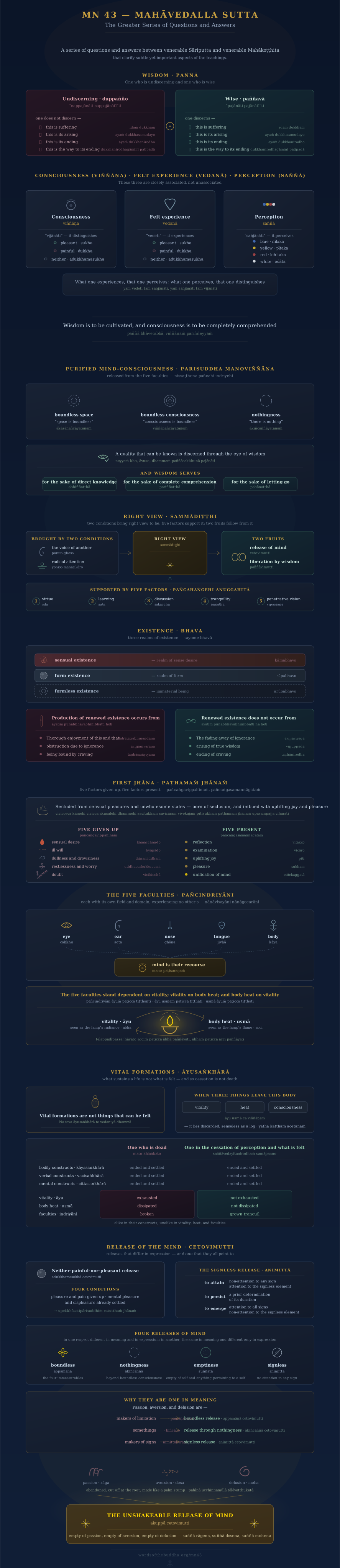
Evaṁ me sutaṁ— ekaṁ samayaṁ bhagavā sāvatthiyaṁ viharati jetavane anāthapiṇḍikassa ārāme.
Thus have I heard—At one time, the Blessed One was dwelling at Sāvatthi, in Jeta’s Grove, Anāthapiṇḍika’s Park.
Atha kho āyasmā mahākoṭṭhiko sāyanhasamayaṁ paṭisallānā vuṭṭhito yenāyasmā sāriputto tenupasaṅkami; upasaṅkamitvā āyasmatā sāriputtena saddhiṁ sammodi. Sammodanīyaṁ kathaṁ sāraṇīyaṁ vītisāretvā ekamantaṁ nisīdi. Ekamantaṁ nisinno kho āyasmā mahākoṭṭhiko āyasmantaṁ sāriputtaṁ etadavoca:
Then when it was late afternoon, the venerable Mahākoṭṭhika, having emerged from seclusion, approached venerable Sāriputta. Having approached, he exchanged greetings with the venerable Sāriputta. After the exchange of a courteous and polite conversation, he sat down to one side. Seated to one side, the venerable Mahākoṭṭhika said this to venerable Sāriputta:
Wisdom
“‘Duppañño duppañño’ti, āvuso, vuccati. Kittāvatā nu kho, āvuso, duppaññoti vuccatī”ti?
“‘One who is undiscerning, one who is undiscerning,’ friend, it is said. In what way, friend, is one said to be undiscerning?”
“‘Nappajānāti nappajānātī’ti kho, āvuso, tasmā duppaññoti vuccati. Kiñca nappajānāti? ‘Idaṁ dukkhan’ti nappajānāti, ‘ayaṁ dukkhasamudayo’ti nappajānāti, ‘ayaṁ dukkhanirodho’ti nappajānāti, ‘ayaṁ dukkhanirodhagāminī paṭipadā’ti nappajānāti. ‘Nappajānāti nappajānātī’ti kho, āvuso, tasmā duppaññoti vuccatī”ti.
“‘One does not discern, one does not discern,’ friend, that is why one is called undiscerning. And what does one not discern? One does not discern: ‘This is suffering.’ One does not discern: ‘This is the arising of suffering.’ One does not discern: ‘This is the cessation of suffering.’ One does not discern: ‘This is the way of practice leading to the cessation of suffering.’ ‘One does not discern, one does not discern,’ friend, that is why one is called undiscerning.”
“Sādhāvuso”ti kho āyasmā mahākoṭṭhiko āyasmato sāriputtassa bhāsitaṁ abhinanditvā anumoditvā āyasmantaṁ sāriputtaṁ uttariṁ pañhaṁ apucchi:
Saying, “Good, friend,” the venerable Mahākoṭṭhika approved and rejoiced in the words of venerable Sāriputta. Then, he asked him a further question:
“‘Paññavā paññavā’ti, āvuso, vuccati. Kittāvatā nu kho, āvuso, paññavāti vuccatī”ti?
“‘One who is wise, one who is wise,’ friend, it is said. In what way, friend, is one said to be wise?”
“‘Pajānāti pajānātī’ti kho, āvuso, tasmā paññavāti vuccati. Kiñca pajānāti? ‘Idaṁ dukkhan’ti pajānāti, ‘ayaṁ dukkhasamudayo’ti pajānāti, ‘ayaṁ dukkhanirodho’ti pajānāti, ‘ayaṁ dukkhanirodhagāminī paṭipadā’ti pajānāti. ‘Pajānāti pajānātī’ti kho, āvuso, tasmā paññavāti vuccatī”ti.
“‘One discerns, one discerns,’ friend, that is why one is called wise. And what does one discern? One discerns: ‘This is suffering.’ One discerns: ‘This is the arising of suffering.’ One discerns: ‘This is the cessation of suffering.’ One discerns: ‘This is the way of practice leading to the cessation of suffering.’ ‘One discerns, one discerns,’ friend, that is why one is called wise.”
Consciousness
“‘Viññāṇaṁ viññāṇan’ti, āvuso, vuccati. Kittāvatā nu kho, āvuso, viññāṇanti vuccatī”ti?
“‘Consciousness, consciousness,’ friend, it is said. In what way, friend, is consciousness called so?”
“‘Vijānāti vijānātī’ti kho, āvuso, tasmā viññāṇanti vuccati. Kiñca vijānāti? Sukhantipi vijānāti, dukkhantipi vijānāti, adukkhamasukhantipi vijānāti. ‘Vijānāti vijānātī’ti kho, āvuso, tasmā viññāṇanti vuccatī”ti.
“‘It distinguishes, it distinguishes,’ friend, that is why consciousness is called so. And what does it distinguish? It distinguishes: ‘This is pleasant,’ it distinguishes: ‘This is painful,’ it distinguishes: ‘This is neither-painful-nor-pleasant.’ ‘It distinguishes, it distinguishes,’ friend, what is why consciousness is called so.”
“Yā cāvuso, paññā yañca viññāṇaṁ— ime dhammā saṁsaṭṭhā udāhu visaṁsaṭṭhā? Labbhā ca panimesaṁ dhammānaṁ vinibbhujitvā vinibbhujitvā nānākaraṇaṁ paññāpetun”ti?
“Friend, wisdom and consciousness—are these qualities closely associated or unassociated? And can these qualities be unpacked, unraveled, and their differences be explained?”
“Yā cāvuso, paññā yañca viññāṇaṁ— ime dhammā saṁsaṭṭhā, no visaṁsaṭṭhā. Na ca labbhā imesaṁ dhammānaṁ vinibbhujitvā vinibbhujitvā nānākaraṇaṁ paññāpetuṁ. Yaṁ hāvuso, pajānāti taṁ vijānāti, yaṁ vijānāti taṁ pajānāti. Tasmā ime dhammā saṁsaṭṭhā, no visaṁsaṭṭhā. Na ca labbhā imesaṁ dhammānaṁ vinibbhujitvā vinibbhujitvā nānākaraṇaṁ paññāpetun”ti.
“Friend, wisdom and consciousness—these qualities are closely associated, not unassociated. And it is not possible to unpack them, unravel them, and explain their differences. For what one discerns, that one distinguishes; and what one distinguishes, that one discerns. That is why these qualities are closely associated, not unassociated. And it is not possible to unpack them, unravel them, and explain their differences.”
“Yā cāvuso, paññā yañca viññāṇaṁ— imesaṁ dhammānaṁ saṁsaṭṭhānaṁ no visaṁsaṭṭhānaṁ kiṁ nānākaraṇan”ti?
“Friend, wisdom and consciousness—if these qualities are closely associated, not unassociated, what is the basis for their distinction?”
“Yā cāvuso, paññā yañca viññāṇaṁ— imesaṁ dhammānaṁ saṁsaṭṭhānaṁ no visaṁsaṭṭhānaṁ paññā bhāvetabbā, viññāṇaṁ pariññeyyaṁ. Idaṁ nesaṁ nānākaraṇan”ti.
“Friend, wisdom and consciousness—these qualities are closely associated, not unassociated. Wisdom should be cultivated, and consciousness should be completely comprehended. This is their distinction.”
Felt Experience
“‘Vedanā vedanā’ti, āvuso, vuccati. Kittāvatā nu kho, āvuso, vedanāti vuccatī”ti?
“‘Felt experience, felt experience,’ friend, it is said. In what way, friend, is felt experience so called?”
“‘Vedeti vedetī’ti kho, āvuso, tasmā vedanāti vuccati. Kiñca vedeti? Sukhampi vedeti, dukkhampi vedeti, adukkhamasukhampi vedeti. ‘Vedeti vedetī’ti kho, āvuso, tasmā vedanāti vuccatī”ti.
“‘Experiences, experiences,” friend, that is why it is called felt experience. And what does one experience? One experiences: ‘This is pleasant,’ one experiences: ‘This is painful,’ one experiences: ‘This is neither-painful-nor-pleasant.’ ‘Experiences, experiences,’ friend, that is why felt experience is called so.”
Perception
“‘Saññā saññā’ti, āvuso, vuccati. Kittāvatā nu kho, āvuso, saññāti vuccatī”ti?
“‘Perception, perception,’ friend, it is said. In what way, friend, is perception so called?”
“‘Sañjānāti sañjānātī’ti kho, āvuso, tasmā saññāti vuccati. Kiñca sañjānāti? Nīlakampi sañjānāti, pītakampi sañjānāti, lohitakampi sañjānāti, odātampi sañjānāti. ‘Sañjānāti sañjānātī’ti kho, āvuso, tasmā saññāti vuccatī”ti.
“‘Perceives, perceives,’ friend, that is why it is called perception. And what does one perceive? One perceives blue, one perceives yellow, one perceives red, one perceives white. ‘Perceives, perceives,’ friend, that is why perception is called so.”
“Yā cāvuso, vedanā yā ca saññā yañca viññāṇaṁ— ime dhammā saṁsaṭṭhā udāhu visaṁsaṭṭhā? Labbhā ca panimesaṁ dhammānaṁ vinibbhujitvā vinibbhujitvā nānākaraṇaṁ paññāpetun”ti?
“Friend, felt experience, perception, and consciousness—are these qualities closely associated or unassociated? And can these qualities be unpacked, unraveled, and their differences be explained?”
“Yā cāvuso, vedanā yā ca saññā yañca viññāṇaṁ— ime dhammā saṁsaṭṭhā, no visaṁsaṭṭhā. Na ca labbhā imesaṁ dhammānaṁ vinibbhujitvā vinibbhujitvā nānākaraṇaṁ paññāpetuṁ. Yaṁ hāvuso, vedeti taṁ sañjānāti, yaṁ sañjānāti taṁ vijānāti. Tasmā ime dhammā saṁsaṭṭhā no visaṁsaṭṭhā. Na ca labbhā imesaṁ dhammānaṁ vinibbhujitvā vinibbhujitvā nānākaraṇaṁ paññāpetun”ti.
“Friend, felt experience, perception, and consciousness—these qualities are closely associated, not unassociated. And it is not possible to unpack them, unravel them, and explain their differences. For what one experiences, that one perceives; and what one perceives, that one distinguishes. That is why, these qualities are closely associated, not unassociated. And it is not possible to unpack them, unravel them, and explain their differences.”
Purified Mind-Consciousness
“Nissaṭṭhena hāvuso, pañcahi indriyehi parisuddhena manoviññāṇena kiṁ neyyan”ti?
“Friend, what can be cognized with a purified mind-consciousness, released from the five faculties?”
“Nissaṭṭhena, āvuso, pañcahi indriyehi parisuddhena manoviññāṇena ‘ananto ākāso’ti ākāsānañcāyatanaṁ neyyaṁ, ‘anantaṁ viññāṇan’ti viññāṇañcāyatanaṁ neyyaṁ, ‘natthi kiñcī’ti ākiñcaññāyatanaṁ neyyan”ti.
“Friend, with a purified mind-consciousness, released from the five faculties, the base of boundless space can be cognized as ‘space is boundless’; the base of boundless consciousness can be cognized as ‘consciousness is boundless’; and the base of nothingness can be cognized as ‘there is nothing.’”
“Neyyaṁ panāvuso, dhammaṁ kena pajānātī”ti?
“And friend, by what does one discern a quality that can be known?”
“Neyyaṁ kho, āvuso, dhammaṁ paññācakkhunā pajānātī”ti.
“Friend, one discerns a quality that can be known through the eye of wisdom.”
“Paññā panāvuso, kimatthiyā”ti?
“And friend, what is the purpose of wisdom?”
“Paññā kho, āvuso, abhiññatthā pariññatthā pahānatthā”ti.
“Friend, wisdom is for the purpose of direct knowledge, for the purpose of full understanding, and for the purpose of letting go.”
Right View
“Kati panāvuso, paccayā sammādiṭṭhiyā uppādāyā”ti?
“And friend, how many conditions are there for the arising of right view?”
“Dve kho, āvuso, paccayā sammādiṭṭhiyā uppādāya— parato ca ghoso, yoniso ca manasikāro. Ime kho, āvuso, dve paccayā sammādiṭṭhiyā uppādāyā”ti.
“Friend, there are two conditions for the arising of right view: the words of another and radical attention. These, friend, are the two conditions for the arising of right view.”
“Katihi panāvuso, aṅgehi anuggahitā sammādiṭṭhi cetovimuttiphalā ca hoti cetovimuttiphalānisaṁsā ca, paññāvimuttiphalā ca hoti paññāvimuttiphalānisaṁsā cā”ti?
“And friend, by how many factors is right view supported such that it leads to the fruit and benefit of release of mind and the fruit and benefit of liberation by wisdom?”
“Pañcahi kho, āvuso, aṅgehi anuggahitā sammādiṭṭhi cetovimuttiphalā ca hoti cetovimuttiphalānisaṁsā ca, paññāvimuttiphalā ca hoti paññāvimuttiphalānisaṁsā ca. Idhāvuso, sammādiṭṭhi sīlānuggahitā ca hoti, sutānuggahitā ca hoti, sākacchānuggahitā ca hoti, samathānuggahitā ca hoti, vipassanānuggahitā ca hoti. Imehi kho, āvuso, pañcahaṅgehi anuggahitā sammādiṭṭhi cetovimuttiphalā ca hoti cetovimuttiphalānisaṁsā ca, paññāvimuttiphalā ca hoti paññāvimuttiphalānisaṁsā cā”ti.
“Friend, supported by five factors, right view leads to the fruit and benefit of release of mind and the fruit and benefit of liberation by wisdom. Here, friend, right view is supported by virtue, by learning, by discussion, by tranquility and by penetrative vision. Friend, supported by these five factors, right view leads to the fruit and benefit of release of mind and the fruit and benefit of liberation by wisdom.”
Existence
“Kati panāvuso, bhavā”ti?
“And friend, how many realms of existence are there?”
“Tayome, āvuso, bhavā— kāmabhavo, rūpabhavo, arūpabhavo”ti.
“Friend, there are three realms of existence: the realm of sensual existence, the realm of form existence, and the realm of formless existence.”
“Kathaṁ panāvuso, āyatiṁ punabbhavābhinibbatti hotī”ti?
“And friend, how does the production of renewed existence occur in the future?”
“Avijjānīvaraṇānaṁ kho, āvuso, sattānaṁ taṇhāsaṁyojanānaṁ tatratatrābhinandanā— evaṁ āyatiṁ punabbhavābhinibbatti hotī”ti.
“Friend, through thorough enjoyment of this and that on the part of beings obstructed by ignorance and bound by craving, the production of renewed existence occurs in the future.”
“Kathaṁ panāvuso, āyatiṁ punabbhavābhinibbatti na hotī”ti?
“And friend, how does the production of renewed existence not occur in the future?”
“Avijjāvirāgā kho, āvuso, vijjuppādā taṇhānirodhā— evaṁ āyatiṁ punabbhavābhinibbatti na hotī”ti.
“Friend, through the fading away of ignorance, through the arising of wisdom, and the ending of craving—thus, the production of renewed existence does not occur in the future.”
First Jhāna
“Katamaṁ panāvuso, paṭhamaṁ jhānan”ti?
“And friend, what is the first jhāna?”
“Idhāvuso, bhikkhu vivicceva kāmehi vivicca akusalehi dhammehi savitakkaṁ savicāraṁ vivekajaṁ pītisukhaṁ paṭhamaṁ jhānaṁ upasampajja viharati— idaṁ vuccati, āvuso, paṭhamaṁ jhānan”ti.
“Here, friend, a bhikkhu, entirely secluded from sensual pleasures and unwholesome mental states, enters and dwells in the first jhāna, which is accompanied by thought and examination, born of seclusion, and imbued with uplifting joy and pleasure.”
“Paṭhamaṁ panāvuso, jhānaṁ katiaṅgikan”ti?
“And friend, how many factors does the first jhāna have?”
“Paṭhamaṁ kho, āvuso, jhānaṁ pañcaṅgikaṁ. Idhāvuso, paṭhamaṁ jhānaṁ samāpannassa bhikkhuno vitakko ca vattati, vicāro ca pīti ca sukhañca cittekaggatā ca. Paṭhamaṁ kho, āvuso, jhānaṁ evaṁ pañcaṅgikan”ti.
“Friend, the first jhāna has five factors. Here, friend, for a bhikkhu who has attained the first jhāna, there occur thinking, examination, uplifting joy, pleasure, and mental unification. Thus, friend, the first jhāna has five factors.”
“Paṭhamaṁ panāvuso, jhānaṁ kataṅgavippahīnaṁ kataṅgasamannāgatan”ti?
“And friend, how many factors are given up in the first jhāna, and how many factors is it endowed with?”
“Paṭhamaṁ kho, āvuso, jhānaṁ pañcaṅgavippahīnaṁ, pañcaṅgasamannāgataṁ. Idhāvuso, paṭhamaṁ jhānaṁ samāpannassa bhikkhuno kāmacchando pahīno hoti, byāpādo pahīno hoti, thinamiddhaṁ pahīnaṁ hoti, uddhaccakukkuccaṁ pahīnaṁ hoti, vicikicchā pahīnā hoti; vitakko ca vattati, vicāro ca pīti ca sukhañca cittekaggatā ca. Paṭhamaṁ kho, āvuso, jhānaṁ evaṁ pañcaṅgavippahīnaṁ pañcaṅgasamannāgatan”ti.
“Friend, in the first jhāna, five factors are given up and it is endowed with five factors. Here, friend, for a bhikkhu who has attained the first jhāna, sensual desire is given up, ill will is given up, dullness and drowsiness are given up, restlessness and worry are given up, and doubt is given up; and there occur thinking, examination, joy, pleasure, and mental unification. Thus, friend, in the first jhāna, five factors are given up and it is endowed with five factors.”
The Five Faculties
“Pañcimāni, āvuso, indriyāni nānāvisayāni nānāgocarāni, na aññamaññassa gocaravisayaṁ paccanubhonti, seyyathidaṁ— cakkhundriyaṁ, sotindriyaṁ, ghānindriyaṁ, jivhindriyaṁ, kāyindriyaṁ. Imesaṁ kho, āvuso, pañcannaṁ indriyānaṁ nānāvisayānaṁ nānāgocarānaṁ, na aññamaññassa gocaravisayaṁ paccanubhontānaṁ, kiṁ paṭisaraṇaṁ, ko ca nesaṁ gocaravisayaṁ paccanubhotī”ti?
“Friend, these five faculties each have a distinct field and a distinct domain, and do not experience each other’s fields and domains, i.e.—the eye faculty, the ear faculty, the nose faculty, the tongue faculty, and the body faculty. Now, for these five faculties, each having a distinct field, a distinct domain, not experiencing each other’s field and domain, what is their recourse, and what experiences their fields and domains?”
“Pañcimāni, āvuso, indriyāni nānāvisayāni nānāgocarāni, na aññamaññassa gocaravisayaṁ paccanubhonti, seyyathidaṁ— cakkhundriyaṁ, sotindriyaṁ, ghānindriyaṁ, jivhindriyaṁ, kāyindriyaṁ. Imesaṁ kho, āvuso, pañcannaṁ indriyānaṁ nānāvisayānaṁ nānāgocarānaṁ, na aññamaññassa gocaravisayaṁ paccanubhontānaṁ, mano paṭisaraṇaṁ, mano ca nesaṁ gocaravisayaṁ paccanubhotī”ti.
“Friend, these five faculties each have a distinct field and a distinct domain, and they do not experience each other’s fields and domains, i.e.—the eye faculty, the ear faculty, the nose faculty, the tongue faculty, and the body faculty. Now, for these five faculties, each having a distinct field, a distinct domain, not experiencing each other’s fields and domains, mind is their recourse, and mind experiences their fields and domains.”
“Pañcimāni, āvuso, indriyāni, seyyathidaṁ— cakkhundriyaṁ, sotindriyaṁ, ghānindriyaṁ, jivhindriyaṁ, kāyindriyaṁ. Imāni kho, āvuso, pañcindriyāni kiṁ paṭicca tiṭṭhantī”ti?
“Friend, these five faculties, i.e.—the eye faculty, the ear faculty, the nose faculty, the tongue faculty, and the body faculty—dependent on what do these five faculties exist?
“Pañcimāni, āvuso, indriyāni, seyyathidaṁ— cakkhundriyaṁ, sotindriyaṁ, ghānindriyaṁ, jivhindriyaṁ, kāyindriyaṁ. Imāni kho, āvuso, pañcindriyāni āyuṁ paṭicca tiṭṭhantī”ti.
“Friend, these five faculties, i.e.—the eye faculty, the ear faculty, the nose faculty, the tongue faculty, and the body faculty—exist dependent on vitality.”
“Āyu panāvuso, kiṁ paṭicca tiṭṭhatī”ti?
“And friend, dependent on what does vitality exist?”
“Āyu usmaṁ paṭicca tiṭṭhatī”ti.
“Friend, vitality exists dependent on body heat.”
“Usmā panāvuso, kiṁ paṭicca tiṭṭhatī”ti?
“And friend, dependent on what does body heat exist?”
“Usmā āyuṁ paṭicca tiṭṭhatī”ti.
“Friend, body heat exists dependent on vitality.”
“Idāneva kho mayaṁ, āvuso, āyasmato sāriputtassa bhāsitaṁ evaṁ ājānāma: ‘āyu usmaṁ paṭicca tiṭṭhatī’ti. Idāneva pana mayaṁ, āvuso, āyasmato sāriputtassa bhāsitaṁ evaṁ ājānāma: ‘usmā āyuṁ paṭicca tiṭṭhatī’ti. Yathā kathaṁ panāvuso, imassa bhāsitassa attho daṭṭhabbo”ti?
“Just now, friend, we learned the venerable Sāriputta’s statement as follows: ‘Body heat exists dependent on vitality.’ And just now, friend, we also learned the venerable Sāriputta’s statement as follows: ‘Vitality exists dependent on body heat.’ How should the meaning of these statements be seen?”
“Tena hāvuso, upamaṁ te karissāmi; upamāyapidhekacce viññū purisā bhāsitassa atthaṁ ājānanti. Seyyathāpi, āvuso, telappadīpassa jhāyato acciṁ paṭicca ābhā paññāyati, ābhaṁ paṭicca acci paññāyati; evameva kho, āvuso, āyu usmaṁ paṭicca tiṭṭhati, usmā āyuṁ paṭicca tiṭṭhatī”ti.
“In that case, friend, I shall give you a simile, for there are some wise persons who understand the meaning of a statement through a simile. Just as, friend, in the case of a burning oil lamp, its radiance is seen in dependence on its flame and its flame is seen in dependence on its radiance; in the same way, friend, vitality exists dependent on body heat and body heat exists dependent on vitality.”
Vital Formations
“Teva nu kho, āvuso, āyusaṅkhārā, te vedaniyā dhammā udāhu aññe āyusaṅkhārā aññe vedaniyā dhammā”ti?
“Friend, are the vital formations things that can be felt, or are the vital formations one thing and the things that can be felt another?”
“Na kho, āvuso, teva āyusaṅkhārā te vedaniyā dhammā. Te ca hāvuso, āyusaṅkhārā abhaviṁsu te vedaniyā dhammā, na yidaṁ saññāvedayitanirodhaṁ samāpannassa bhikkhuno vuṭṭhānaṁ paññāyetha. Yasmā ca kho, āvuso, aññe āyusaṅkhārā aññe vedaniyā dhammā, tasmā saññāvedayitanirodhaṁ samāpannassa bhikkhuno vuṭṭhānaṁ paññāyatī”ti.
“Friend, the vital formations are not things that can be felt. For if, friend, vital formations were things that can be felt, then a bhikkhu who has entered upon the cessation of perception and what is felt would not be seen to emerge from it. However, friend, because the vital formations are one thing and the things that can be felt are another, a bhikkhu who has entered upon the cessation of perception and what is felt is seen to emerge from it.”
“Yadā nu kho, āvuso, imaṁ kāyaṁ kati dhammā jahanti; athāyaṁ kāyo ujjhito avakkhitto seti, yathā kaṭṭhaṁ acetanan”ti?
“Friend, when how many things leave this body, it is abandoned and discarded, left lying senseless like a log?”
“Yadā kho, āvuso, imaṁ kāyaṁ tayo dhammā jahanti—āyu usmā ca viññāṇaṁ; athāyaṁ kāyo ujjhito avakkhitto seti, yathā kaṭṭhaṁ acetanan”ti.
“Friend, when three things leave this body—vitality, heat, and consciousness—then this body is abandoned and discarded, left lying senseless like a log.”
“Yvāyaṁ, āvuso, mato kālaṅkato, yo cāyaṁ bhikkhu saññāvedayitanirodhaṁ samāpanno—imesaṁ kiṁ nānākaraṇan”ti?
“Friend, what is the distinction between one who is dead, who has completed his time, and a bhikkhu who has entered upon the cessation of perception and what is felt?”
“Yvāyaṁ, āvuso, mato kālaṅkato tassa kāyasaṅkhārā niruddhā paṭippassaddhā, vacīsaṅkhārā niruddhā paṭippassaddhā, cittasaṅkhārā niruddhā paṭippassaddhā, āyu parikkhīṇo, usmā vūpasantā, indriyāni paribhinnāni. Yo cāyaṁ bhikkhu saññāvedayitanirodhaṁ samāpanno tassapi kāyasaṅkhārā niruddhā paṭippassaddhā, vacīsaṅkhārā niruddhā paṭippassaddhā, cittasaṅkhārā niruddhā paṭippassaddhā, āyu na parikkhīṇo, usmā avūpasantā, indriyāni vippasannāni. Yvāyaṁ, āvuso, mato kālaṅkato, yo cāyaṁ bhikkhu saññāvedayitanirodhaṁ samāpanno—idaṁ nesaṁ nānākaraṇan”ti.
“Friend, in the case of one who is dead, who has completed his time, his bodily constructs have ended and settled, his verbal constructs have ended and settled, his mental constructs have ended and settled, his vitality is exhausted, his heat has been dissipated, and his faculties are broken. In the case of a bhikkhu who has entered upon the cessation of perception and what is felt, his bodily constructs have ended and settled, his verbal constructs have ended and settled, his mental constructs have ended and settled, but his vitality is not exhausted, his heat has not been dissipated, and his faculties become tranquil. This is the distinction between one who is dead, who has completed his time, and a bhikkhu who has entered upon the cessation of perception and what is felt.”
Release Of The Mind
“Kati panāvuso, paccayā adukkhamasukhāya cetovimuttiyā samāpattiyā”ti?
“And friend, how many conditions are there for the attainment of the neither-painful-nor-pleasant release of the mind?”
“Cattāro kho, āvuso, paccayā adukkhamasukhāya cetovimuttiyā samāpattiyā. Idhāvuso, bhikkhu sukhassa ca pahānā dukkhassa ca pahānā pubbeva somanassadomanassānaṁ atthaṅgamā adukkhamasukhaṁ upekkhāsatipārisuddhiṁ catutthaṁ jhānaṁ upasampajja viharati. Ime kho, āvuso, cattāro paccayā adukkhamasukhāya cetovimuttiyā samāpattiyā”ti.
“Friend, there are four conditions for the attainment of the neither-painful-nor-pleasant release of the mind. Here, friend, a bhikkhu, with the abandoning of [bodily] pleasure and pain, and with the prior settling down of mental pleasure and displeasure, enters and dwells in the fourth jhāna, which is characterized by purification of mindfulness through equanimity, experiencing a neither-painful-nor-pleasant feeling.”
“Kati panāvuso, paccayā animittāya cetovimuttiyā samāpattiyā”ti?
“And friend, how many conditions are there for the attainment of the signless release of the mind?”
“Dve kho, āvuso, paccayā animittāya cetovimuttiyā samāpattiyā— sabbanimittānañca amanasikāro, animittāya ca dhātuyā manasikāro. Ime kho, āvuso, dve paccayā animittāya cetovimuttiyā samāpattiyā”ti.
“Friend, there are two conditions for the attainment of the signless release of the mind: non-attention to all signs and attention to the signless element. These, friend, are the two conditions for the attainment of the signless release of the mind.”
“Kati panāvuso, paccayā animittāya cetovimuttiyā ṭhitiyā”ti?
“And friend, how many conditions are there for the persistence of the signless release of the mind?”
“Tayo kho, āvuso, paccayā animittāya cetovimuttiyā ṭhitiyā— sabbanimittānañca amanasikāro, animittāya ca dhātuyā manasikāro, pubbe ca abhisaṅkhāro. Ime kho, āvuso, tayo paccayā animittāya cetovimuttiyā ṭhitiyā”ti.
“Friend, there are three conditions for the persistence of the signless release of the mind: non-attention to all signs, attention to the signless element, and a prior determination [of its duration]. These, friend, are the three conditions for the persistence of the signless release of the mind.”
“Kati panāvuso, paccayā animittāya cetovimuttiyā vuṭṭhānāyā”ti?
“And friend, how many conditions are there for the emergence from the signless release of the mind?”
“Dve kho, āvuso, paccayā animittāya cetovimuttiyā vuṭṭhānāya— sabbanimittānañca manasikāro, animittāya ca dhātuyā amanasikāro. Ime kho, āvuso, dve paccayā animittāya cetovimuttiyā vuṭṭhānāyā”ti.
“Friend, there are two conditions for the emergence from the signless release of the mind: attention to all signs and non-attention to the signless element. These, friend, are the two conditions for the emergence from the signless release of the mind.”
“Yā cāyaṁ, āvuso, appamāṇā cetovimutti, yā ca ākiñcaññā cetovimutti, yā ca suññatā cetovimutti, yā ca animittā cetovimutti—ime dhammā nānātthā ceva nānābyañjanā ca udāhu ekatthā byañjanameva nānan”ti?
“Friend, the boundless release of the mind, the release of the mind through nothingness, the release of the mind through emptiness, and the signless release of the mind—are these states different in meaning and different in expression, or are they the same in meaning but different only in expression?”
“Yā cāyaṁ, āvuso, appamāṇā cetovimutti, yā ca ākiñcaññā cetovimutti, yā ca suññatā cetovimutti, yā ca animittā cetovimutti—atthi kho, āvuso, pariyāyo yaṁ pariyāyaṁ āgamma ime dhammā nānātthā ceva nānābyañjanā ca; atthi ca kho, āvuso, pariyāyo yaṁ pariyāyaṁ āgamma ime dhammā ekatthā, byañjanameva nānaṁ.
“Friend, the boundless release of the mind, the release of the mind through nothingness, the release of the mind through emptiness, and the signless release of the mind—there is a context in which these states are different in meaning and different in expression, and there is a context in which these states are the same in meaning but different only in expression.”
Katamo cāvuso, pariyāyo yaṁ pariyāyaṁ āgamma ime dhammā nānātthā ceva nānābyañjanā ca?
“Friend, in what context are these states different in meaning and different in expression?”
Idhāvuso, bhikkhu mettāsahagatena cetasā ekaṁ disaṁ pharitvā viharati, tathā dutiyaṁ, tathā tatiyaṁ, tathā catutthaṁ. Iti uddhamadho tiriyaṁ sabbadhi sabbattatāya sabbāvantaṁ lokaṁ mettāsahagatena cetasā vipulena mahaggatena appamāṇena averena abyābajjhena pharitvā viharati. Karuṇāsahagatena cetasā …pe… muditāsahagatena cetasā … upekkhāsahagatena cetasā ekaṁ disaṁ pharitvā viharati, tathā dutiyaṁ, tathā tatiyaṁ, tathā catutthaṁ. Iti uddhamadho tiriyaṁ sabbadhi sabbattatāya sabbāvantaṁ lokaṁ upekkhāsahagatena cetasā vipulena mahaggatena appamāṇena averena abyābajjhena pharitvā viharati. Ayaṁ vuccatāvuso, appamāṇā cetovimutti.
“Here, friend, a bhikkhu abides pervading one direction with a mind imbued with loving-kindness, likewise the second, the third, and the fourth. Thus above, below, across, everywhere, encompassing all living beings, he abides pervading the entire world with a mind imbued with loving-kindness, expansive, exalted, immeasurable, without hatred and free of affliction. He does the same with a mind imbued with compassion, with appreciative joy, with equanimity, pervading one direction, likewise the second, the third, and the fourth. Thus above, below, across, everywhere, encompassing all living beings, he abides pervading the entire world with a mind imbued with equanimity, expansive, exalted, immeasurable, without hatred and free of affliction. This, friend, is called the boundless release of the mind.
Katamā cāvuso, ākiñcaññā cetovimutti? Idhāvuso, bhikkhu sabbaso viññāṇañcāyatanaṁ samatikkamma natthi kiñcīti ākiñcaññāyatanaṁ upasampajja viharati. Ayaṁ vuccatāvuso, ākiñcaññā cetovimutti.
And friend, what is the release of the mind through nothingness? Here, friend, a bhikkhu, having completely transcended the base of boundless consciousness, enters and dwells in the base of nothingness. This, friend, is called the release of the mind through nothingness.
Katamā cāvuso, suññatā cetovimutti? Idhāvuso, bhikkhu araññagato vā rukkhamūlagato vā suññāgāragato vā iti paṭisañcikkhati: ‘suññamidaṁ attena vā attaniyena vā’ti. Ayaṁ vuccatāvuso, suññatā cetovimutti.
And friend, what is the release of the mind through emptiness? Here, friend, a bhikkhu who has gone to the forest, to the foot of a tree, or to an empty dwelling reflects thus: ‘This is empty of a self or anything pertaining to a self.’ This, friend, is called the release of the mind through emptiness.
Katamā cāvuso, animittā cetovimutti? Idhāvuso, bhikkhu sabbanimittānaṁ amanasikārā animittaṁ cetosamādhiṁ upasampajja viharati. Ayaṁ vuccatāvuso, animittā cetovimutti.
And friend, what is the signless release of the mind? Here, friend, a bhikkhu, through non-attention to all signs, attains and dwells in the signless stillness of mind. This, friend, is called the signless release of the mind.
Ayaṁ kho, āvuso, pariyāyo yaṁ pariyāyaṁ āgamma ime dhammā nānātthā ceva nānābyañjanā ca.
Friend, this is the context in which these states are different in meaning and different in expression.”
Katamo cāvuso, pariyāyo yaṁ pariyāyaṁ āgamma ime dhammā ekatthā byañjanameva nānaṁ?
“And friend, in what context are these states the same in meaning but different only in expression?”
Rāgo kho, āvuso, pamāṇakaraṇo, doso pamāṇakaraṇo, moho pamāṇakaraṇo. Te khīṇāsavassa bhikkhuno pahīnā ucchinnamūlā tālāvatthukatā anabhāvaṅkatā āyatiṁ anuppādadhammā. Yāvatā kho, āvuso, appamāṇā cetovimuttiyo, akuppā tāsaṁ cetovimutti aggamakkhāyati. Sā kho panākuppā cetovimutti suññā rāgena, suññā dosena, suññā mohena.
“Friend, passion is a maker of limitation, aversion is a maker of limitation, and delusion is a maker of limitation. In a bhikkhu whose taints have worn away, these [passion, aversion, and delusion] are abandoned, cut off at the root, made like a palm stump, utterly obliterated, and rendered incapable of arising in the future. Friends, as far as boundless releases of the mind extend, the unshakeable release of the mind is considered the best. And that unshakeable release of the mind is empty of passion, empty of aversion, and empty of delusion.
Rāgo kho, āvuso, kiñcano, doso kiñcano, moho kiñcano. Te khīṇāsavassa bhikkhuno pahīnā ucchinnamūlā tālāvatthukatā anabhāvaṅkatā āyatiṁ anuppādadhammā. Yāvatā kho, āvuso, ākiñcaññā cetovimuttiyo, akuppā tāsaṁ cetovimutti aggamakkhāyati. Sā kho panākuppā cetovimutti suññā rāgena, suññā dosena, suññā mohena.
Friend, passion is a something, aversion is a something, and delusion is a something. In a bhikkhu whose taints have worn away, these [passion, aversion, and delusion] are abandoned, cut off at the root, made like a palm stump, utterly obliterated, and rendered incapable of arising in the future. Friends, as far as releases of the mind through nothingness extend, the unshakeable release of the mind is considered the best. And that unshakeable release of the mind is empty of passion, empty of aversion, and empty of delusion.
Rāgo kho, āvuso, nimittakaraṇo, doso nimittakaraṇo, moho nimittakaraṇo. Te khīṇāsavassa bhikkhuno pahīnā ucchinnamūlā tālāvatthukatā anabhāvaṅkatā āyatiṁ anuppādadhammā. Yāvatā kho, āvuso, animittā cetovimuttiyo, akuppā tāsaṁ cetovimutti aggamakkhāyati. Sā kho panākuppā cetovimutti suññā rāgena, suññā dosena, suññā mohena.
Friend, passion is a maker of signs, aversion is a maker of signs, and delusion is a maker of signs. In a bhikkhu whose taints have worn away, these [passion, aversion, and delusion] are abandoned, cut off at the root, made like a palm stump, utterly obliterated, and rendered incapable of arising in the future. Friends, as far as the signless releases of the mind extend, the unshakeable release of the mind is considered the best. And that unshakeable release of the mind is empty of passion, empty of aversion, and empty of delusion.
Ayaṁ kho, āvuso, pariyāyo yaṁ pariyāyaṁ āgamma ime dhammā ekatthā byañjanameva nānan”ti.
Friend, this is the context in which these states are the same in meaning but different only in expression.”
Idamavocāyasmā sāriputto. Attamano āyasmā mahākoṭṭhiko āyasmato sāriputtassa bhāsitaṁ abhinandīti.
Venerable Sāriputta said this. The venerable Mahākoṭṭhika was delighted and pleased with the words of venerable Sāriputta.