Ekaṁ samayaṁ bhagavā kosambiyaṁ viharati ghositārāme.
At one time, the Blessed One was dwelling at Kosambi in Ghosita’s park.
Atha kho bhagavā pubbaṇhasamayaṁ nivāsetvā pattacīvaramādāya kosambiṁ piṇḍāya pāvisi. Kosambiyaṁ piṇḍāya caritvā pacchābhattaṁ piṇḍapātapaṭikkanto sāmaṁ senāsanaṁ saṁsāmetvā pattacīvaramādāya anāmantetvā upaṭṭhāke anapaloketvā bhikkhusaṅghaṁ eko adutiyo cārikaṁ pakkāmi.
Then the Blessed One, having dressed early in the morning, taking his alms bowl and outer robe, entered Kosambi for alms. Having wandered through Kosambi for alms and after the meal, having returned from the alms round, he put his lodging in order. Then, taking his alms bowl and outer robe, without informing his attendant and without taking leave of the |Saṅgha::The community of monks and nuns practicing in line with the Buddha’s teachings. In the broader sense, this is the community of disciples who have realized the noble path and fruition through the Buddha’s teachings [saṅgha]| of bhikkhus, he set out on a walking tour alone, without a companion.
Atha kho aññataro bhikkhu acirapakkantassa bhagavato yenāyasmā ānando tenupasaṅkami; upasaṅkamitvā āyasmantaṁ ānandaṁ etadavoca: “esāvuso ānanda, bhagavā sāmaṁ senāsanaṁ saṁsāmetvā pattacīvaramādāya anāmantetvā upaṭṭhāke anapaloketvā bhikkhusaṅghaṁ eko adutiyo cārikaṁ pakkanto”ti.
Then, not long after the Blessed One had departed, a certain bhikkhu approached the venerable Ānanda and said to him: “Friend Ānanda, the Blessed One has put his lodging in order by himself, taken his alms bowl and outer robe, and without informing his attendant and without taking leave of the Saṅgha of bhikkhus, he has set out on a walking tour alone, without a companion.”
“Yasmiṁ, āvuso, samaye bhagavā sāmaṁ senāsanaṁ saṁsāmetvā pattacīvaramādāya anāmantetvā upaṭṭhāke anapaloketvā bhikkhusaṅghaṁ eko adutiyo cārikaṁ pakkamati, ekova bhagavā tasmiṁ samaye viharitukāmo hoti; na bhagavā tasmiṁ samaye kenaci anubandhitabbo hotī”ti.
“Friend, at any time when the Blessed One puts his lodging in order by himself, takes his alms bowl and outer robe, and without informing his attendant and without taking leave of the Saṅgha of bhikkhus, sets out on a walking tour alone, without a companion, the Blessed One wishes to dwell alone at that time; the Blessed One should not be followed by anyone at such a time.”
Atha kho bhagavā anupubbena cārikaṁ caramāno yena pālileyyakaṁ tadavasari. Tatra sudaṁ bhagavā pālileyyake viharati bhaddasālamūle. Atha kho sambahulā bhikkhū yenāyasmā ānando tenupasaṅkamiṁsu; upasaṅkamitvā āyasmatā ānandena saddhiṁ sammodiṁsu.
Then, wandering on tour by stages, the Blessed One arrived at |Pālileyyaka::name of a town near Kosambi [pālileyyaka]|. There the Blessed One dwelt in Pālileyyaka at the foot of an auspicious |sal tree::a tall, majestic hardwood tree known for its strength, durability, and grandeur; Shorea robusta [sāla]|. Then a number of bhikkhus approached the venerable Ānanda and exchanged friendly greetings with him.
Sammodanīyaṁ kathaṁ sāraṇīyaṁ vītisāretvā ekamantaṁ nisīdiṁsu. Ekamantaṁ nisinnā kho te bhikkhū āyasmantaṁ ānandaṁ etadavocuṁ: “cirassutā kho no, āvuso ānanda, bhagavato sammukhā dhammī kathā; icchāma mayaṁ, āvuso ānanda, bhagavato sammukhā dhammiṁ kathaṁ sotun”ti.
After exchanging courteous and polite conversation, they sat down to one side. Sitting to one side, those bhikkhus said to the venerable Ānanda: “Friend Ānanda, it has been a long time since we heard a Dhamma talk from the Blessed One’s own lips. We desire, friend Ānanda, to hear a Dhamma talk from the Blessed One’s own lips.”
Atha kho āyasmā ānando tehi bhikkhūhi saddhiṁ yena pālileyyakaṁ bhaddasālamūlaṁ yena bhagavā tenupasaṅkami; upasaṅkamitvā bhagavantaṁ abhivādetvā ekamantaṁ nisīdi. Ekamantaṁ nisinne kho te bhikkhū bhagavā dhammiyā kathāya sandassesi samādapesi samuttejesi sampahaṁsesi.
Then the venerable Ānanda, together with those bhikkhus, went to Pālileyyaka, to the auspicious sal tree where the Blessed One was. Having approached, he paid homage to the Blessed One and sat down to one side. As they were sitting to one side, the Blessed One gave the bhikkhus a talk on the |Dhamma::teachings of the Buddha that point to the nature of reality, the ultimate truth [dhamma]|—instructing, encouraging, inspiring, and gladdening them.
Tena kho pana samayena aññatarassa bhikkhuno evaṁ cetaso parivitakko udapādi: “kathaṁ nu kho jānato kathaṁ passato anantarā āsavānaṁ khayo hotī”ti?
At that time, this |reflection::contemplation, train of thought [parivitakka]| arose in the mind of a certain bhikkhu: “How should one know and see for the immediate |wearing away::exhaustion, depletion, gradual destruction [khaya]| of the |taints::outflows, discharges; (comm) mental defilements [āsavā]|?”
Atha kho bhagavā tassa bhikkhuno cetasā cetoparivitakkamaññāya bhikkhū āmantesi:
Then, the Blessed One, knowing with his mind the reflection in that bhikkhu’s mind, addressed the bhikkhus:
“vicayaso desito, bhikkhave, mayā dhammo; vicayaso desitā cattāro satipaṭṭhānā; vicayaso desitā cattāro sammappadhānā; vicayaso desitā cattāro iddhipādā; vicayaso desitāni pañcindriyāni; vicayaso desitāni pañca balāni; vicayaso desitā sattabojjhaṅgā; vicayaso desito ariyo aṭṭhaṅgiko maggo. Evaṁ vicayaso desito, bhikkhave, mayā dhammo. Evaṁ vicayaso desite kho, bhikkhave, mayā dhamme atha ca panidhekaccassa bhikkhuno evaṁ cetaso parivitakko udapādi: ‘kathaṁ nu kho jānato kathaṁ passato anantarā āsavānaṁ khayo hotī’ti?
“|Bhikkhus,::::| the Dhamma has been taught by me |discriminately::analytically, in a highly discerning manner [vicayaso]|; the four establishments of mindfulness have been taught discriminately; the four right efforts have been taught discriminately; the four bases of psychic power have been taught discriminately; the five faculties have been taught discriminately; the five powers have been taught discriminately; the seven factors of awakening have been taught discriminately; the noble eightfold path has been taught discriminately. Thus, |bhikkhus,::::| the Dhamma has been taught by me discriminately. Even when the Dhamma has been thus discriminately taught by me, this reflection arose in the mind of a certain bhikkhu: ‘How should one know and see for the immediate wearing away of the taints?’
Kathañca, bhikkhave, jānato kathaṁ passato anantarā āsavānaṁ khayo hoti? Idha bhikkhave, assutavā puthujjano ariyānaṁ adassāvī ariyadhammassa akovido ariyadhamme avinīto, sappurisānaṁ adassāvī sappurisadhammassa akovido sappurisadhamme avinīto
And how|, bhikkhus,::::| should one know and see for the immediate wearing away of the taints? Here, |bhikkhus,::::| an |uninstructed::uninitiated, untaught, untrained [assutavant]| ordinary person—|who has no regard for::lit. who has not seen [adassāvī]| the Noble Ones and is unskilled and untrained in the |Dhamma::teachings of the Buddha that point to the nature of reality, the ultimate truth [dhamma]| of the Noble Ones; who has no regard for persons of integrity and is unskilled and untrained in the Dhamma of persons of integrity—
Form as Self
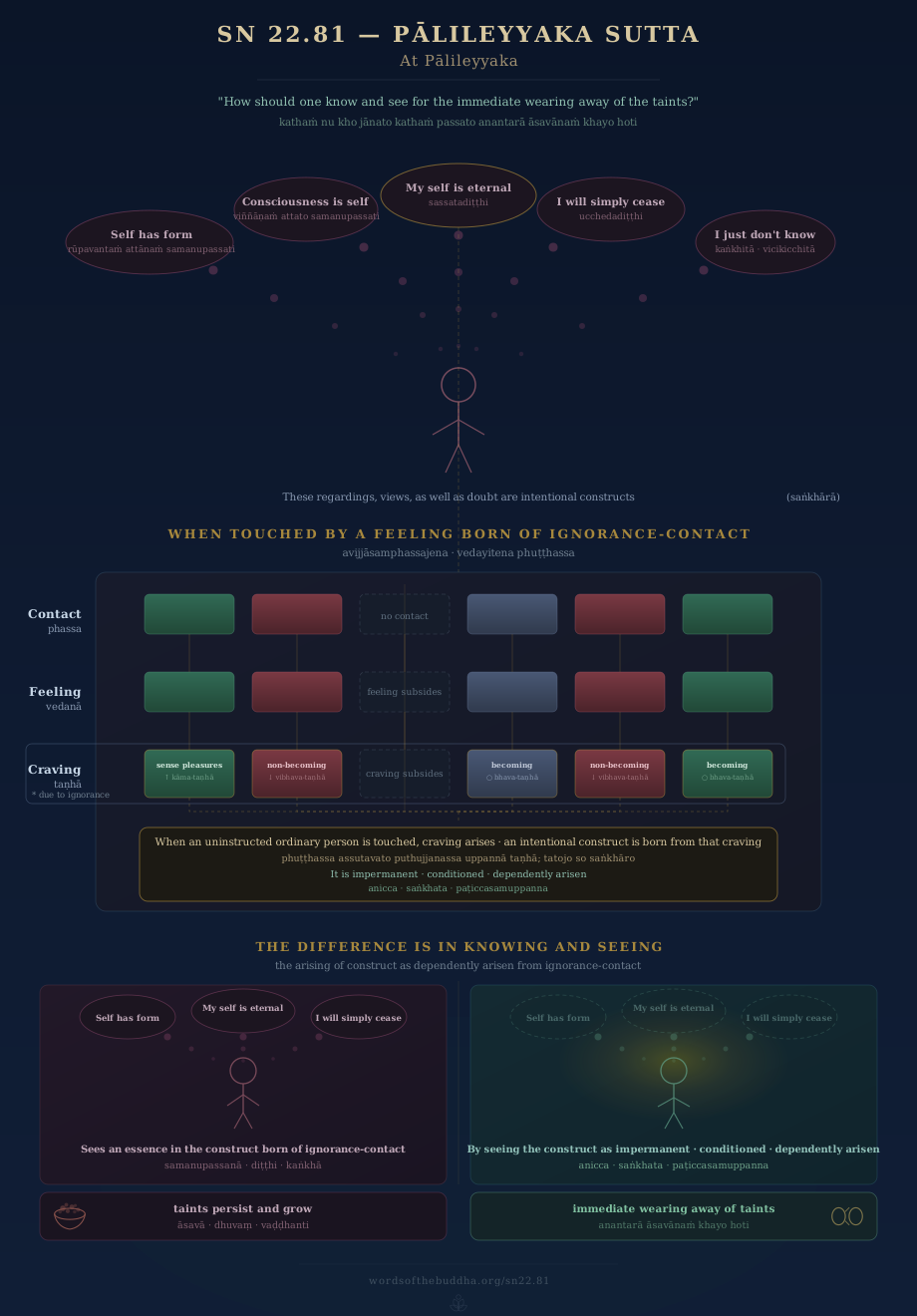
rūpaṁ attato samanupassati. Yā kho pana sā, bhikkhave, samanupassanā saṅkhāro so. So pana saṅkhāro kiṁnidāno kiṁsamudayo kiṁjātiko kiṁpabhavo? Avijjāsamphassajena, bhikkhave, vedayitena phuṭṭhassa assutavato puthujjanassa uppannā taṇhā; tatojo so saṅkhāro. Iti kho, bhikkhave, sopi saṅkhāro anicco saṅkhato paṭiccasamuppanno. Sāpi taṇhā aniccā saṅkhatā paṭiccasamuppannā. Sāpi vedanā, sopi phasso anicco saṅkhato paṭiccasamuppanno. Sāpi avijjā aniccā saṅkhatā paṭiccasamuppannā. Evampi kho, bhikkhave, jānato evaṁ passato anantarā āsavānaṁ khayo hoti.
|regards::perceives; lit. sees along together [samanupassati]| form as self. This |way of regarding::mode of seeing; lit. seeing along together [samanupassanā]||, bhikkhus,::::| is an |intentional construct::a constructive activity that shapes experience, expressed as a bodily, verbal, or mental formation; a conditioned pattern, tendency, or habit produced by prior action [saṅkhāra]|. And that intentional construct|, bhikkhus,::::| has what as its source, what as its arising, what as its birth, and from what does it come into being? When an uninstructed ordinary person |is touched by::experiences, is contacted by [phuṭṭha]| a |feeling::pleasant, neutral, or painful sensation, the experience felt on contact through eye, ear, nose, tongue, body, mind; second of the five aggregates [vedanā]| born of ignorance-contact, |craving::wanting, yearning, longing, attachment, lit. thirst [taṇha]| arises; that intentional construct is born from that. Thus, |bhikkhus,::::| that intentional construct is |impermanent::not lasting, transient, unreliable [anicca]|, |conditioned::constructed, created, fabricated [saṅkhata]|, and |dependently arisen::casually produced, arisen together from a cause [paṭiccasamuppanna]|. That craving too is impermanent, conditioned, and dependently arisen. That feeling too is impermanent, conditioned, and dependently arisen. That |contact::sense impingement, raw experience, touch [phassa]| too is impermanent, conditioned, and dependently arisen. That |ignorance::fundamental unawareness or misunderstanding of the true nature of reality, not experientially understanding the four noble truths [avijjā]| too is impermanent, conditioned, and dependently arisen. It is for one who knows and sees in this way|, bhikkhus,::::| that the immediate wearing away of the taints occurs.
Self as Possessing Form
Na heva kho rūpaṁ attato samanupassati; api ca kho rūpavantaṁ attānaṁ samanupassati. Yā kho pana sā, bhikkhave, samanupassanā saṅkhāro so. So pana saṅkhāro kiṁnidāno kiṁsamudayo kiṁjātiko kiṁpabhavo? Avijjāsamphassajena, bhikkhave, vedayitena phuṭṭhassa assutavato puthujjanassa uppannā taṇhā; tatojo so saṅkhāro. Iti kho, bhikkhave, sopi saṅkhāro anicco saṅkhato paṭiccasamuppanno. Sāpi taṇhā … sāpi vedanā … sopi phasso … sāpi avijjā aniccā saṅkhatā paṭiccasamuppannā. Evampi kho, bhikkhave, jānato evaṁ passato anantarā āsavānaṁ khayo hoti.
He does not regard form as self; but he regards self as possessing form. This way of regarding|, bhikkhus,::::| is an intentional construct. And that intentional construct|, bhikkhus,::::| has what as its source, what as its arising, what as its birth, and from what does it come into being? When an uninstructed ordinary person is touched by a feeling born of ignorance-contact, craving arises; and that intentional construct is born from that. Thus, |bhikkhus,::::| that intentional construct too is impermanent, conditioned, and dependently arisen. That craving ... That feeling ... That contact ... That ignorance too is impermanent, conditioned, and dependently arisen. It is for one who knows and sees in this way|, bhikkhus,::::| that the immediate wearing away of the taints occurs.
Form as Being in Self
Na heva kho rūpaṁ attato samanupassati, na rūpavantaṁ attānaṁ samanupassati; api ca kho attani rūpaṁ samanupassati. Yā kho pana sā, bhikkhave, samanupassanā saṅkhāro so. So pana saṅkhāro kiṁnidāno kiṁsamudayo kiṁjātiko kiṁpabhavo? Avijjāsamphassajena, bhikkhave, vedayitena phuṭṭhassa assutavato puthujjanassa uppannā taṇhā; tatojo so saṅkhāro. Iti kho, bhikkhave, sopi saṅkhāro anicco saṅkhato paṭiccasamuppanno. Sāpi taṇhā … sāpi vedanā … sopi phasso … sāpi avijjā aniccā saṅkhatā paṭiccasamuppannā. Evampi kho, bhikkhave, jānato evaṁ passato anantarā āsavānaṁ khayo hoti.
He does not regard form as self, nor self as possessing form; but he regards form as being in self. This way of regarding|, bhikkhus,::::| is an intentional construct. And that intentional construct|, bhikkhus,::::| has what as its source, what as its arising, what as its birth, and from what does it come into being? When an uninstructed ordinary person is touched by a feeling born of ignorance-contact, craving arises; and that intentional construct is born from that. Thus, |bhikkhus,::::| that intentional construct too is impermanent, conditioned, and dependently arisen. That craving ... That feeling ... That contact ... That ignorance too is impermanent, conditioned, and dependently arisen. It is for one who knows and sees in this way|, bhikkhus,::::| that the immediate wearing away of the taints occurs.
Self as Being in Form
Na heva kho rūpaṁ attato samanupassati, na rūpavantaṁ attānaṁ samanupassati, na attani rūpaṁ samanupassati; api ca kho rūpasmiṁ attānaṁ samanupassati. Yā kho pana sā, bhikkhave, samanupassanā saṅkhāro so. So pana saṅkhāro kiṁnidāno kiṁsamudayo kiṁjātiko kiṁpabhavo? Avijjāsamphassajena, bhikkhave, vedayitena phuṭṭhassa assutavato puthujjanassa uppannā taṇhā; tatojo so saṅkhāro. Iti kho, bhikkhave, sopi saṅkhāro anicco saṅkhato paṭiccasamuppanno. Sāpi taṇhā … sāpi vedanā … sopi phasso … sāpi avijjā aniccā saṅkhatā paṭiccasamuppannā. Evampi kho, bhikkhave, jānato …pe… āsavānaṁ khayo hoti.
He does not regard form as self, nor self as possessing form, nor form as being in self; but he regards self as being in form. This way of regarding|, bhikkhus,::::| is an intentional construct. And that intentional construct|, bhikkhus,::::| has what as its source, what as its arising, what as its birth, and from what does it come into being? When an uninstructed ordinary person is touched by a feeling born of ignorance-contact, craving arises; and that intentional construct is born from that. Thus, |bhikkhus,::::| that intentional construct too is impermanent, conditioned, and dependently arisen. That craving ... That feeling ... That contact ... That ignorance too is impermanent, conditioned, and dependently arisen. It is for one who knows and sees in this way|, bhikkhus,::::| ... that the immediate wearing away of the taints occurs.
Other Personal Existence Views
Na heva kho rūpaṁ attato samanupassati, na rūpavantaṁ attānaṁ, na attani rūpaṁ, na rūpasmiṁ attānaṁ samanupassati; api ca kho vedanaṁ attato samanupassati, api ca kho vedanāvantaṁ attānaṁ samanupassati, api ca kho attani vedanaṁ samanupassati, api ca kho vedanāya attānaṁ samanupassati; api ca kho saññaṁ … api ca kho saṅkhāre attato samanupassati, api ca kho saṅkhāravantaṁ attānaṁ samanupassati, api ca kho attani saṅkhāre samanupassati, api ca kho saṅkhāresu attānaṁ samanupassati; api ca kho viññāṇaṁ attato samanupassati, api ca kho viññāṇavantaṁ attānaṁ, api ca kho attani viññāṇaṁ, api ca kho viññāṇasmiṁ attānaṁ samanupassati. Yā kho pana sā, bhikkhave, samanupassanā saṅkhāro so. So pana saṅkhāro kiṁnidāno …pe… kiṁpabhavo? Avijjāsamphassajena, bhikkhave, vedayitena phuṭṭhassa assutavato puthujjanassa uppannā taṇhā; tatojo so saṅkhāro. Iti kho, bhikkhave, sopi saṅkhāro anicco saṅkhato paṭiccasamuppanno. Sāpi taṇhā … sāpi vedanā … sopi phasso … sāpi avijjā aniccā saṅkhatā paṭiccasamuppannā. Evaṁ kho, bhikkhave, jānato evaṁ passato anantarā āsavānaṁ khayo hoti.
He does not regard form as self, nor self as possessing form, nor form as being in self, nor self as being in form; but he regards feeling as self, or he regards self as possessing feeling, or he regards feeling as being in self, or he regards self as being in feeling; or he regards perception ... or he regards intentional constructs as self, or he regards self as possessing intentional constructs, or intentional constructs as being in self, or he regards self as being in intentional constructs; or he regards consciousness as self, or he regards self as possessing consciousness, or consciousness as being in self, or he regards self as being in consciousness. This way of regarding|, bhikkhus,::::| is an intentional construct. And that intentional construct|, bhikkhus,::::| has what as its source ... from what does it come into being? When an uninstructed ordinary person is touched by a feeling born of ignorance-contact, craving arises; and that intentional construct is born from that. Thus, |bhikkhus,::::| that intentional construct too is impermanent, conditioned, and dependently arisen. That craving ... That feeling ... That contact ... That ignorance too is impermanent, conditioned, and dependently arisen. It is for one who knows and sees in this way|, bhikkhus,::::| that the immediate wearing away of the taints occurs.
Eternalist View
Na heva kho rūpaṁ attato samanupassati, na vedanaṁ attato samanupassati, na saññaṁ … na saṅkhāre … na viññāṇaṁ attato samanupassati; api ca kho evaṁdiṭṭhi hoti: ‘so attā so loko, so pecca bhavissāmi nicco dhuvo sassato avipariṇāmadhammo’ti. Yā kho pana sā, bhikkhave, sassatadiṭṭhi saṅkhāro so. So pana saṅkhāro kiṁnidāno …pe… evampi kho, bhikkhave, jānato evaṁ passato anantarā āsavānaṁ khayo hoti.
He does not regard form as self, nor feeling as self, nor perception as self, nor intentional constructs as self, nor consciousness as self; but he holds such a view as this: “That self is the world; after death I will become |permanent::stable, not in flux [nicca]|, |enduring::continuous, regular [dhuva]|, |eternal::everlasting [sassata]|, |not subject to change::with unchanging nature [avipariṇāmadhamma]|.” This |eternalist view::doctrine of an everlasting soul [sassatadiṭṭhi]||, bhikkhus,::::| is an intentional construct. And that intentional construct|, bhikkhus,::::| has what as its source ... from what does it come into being? When an uninstructed ordinary person is touched by a feeling born of ignorance-contact, craving arises; and that intentional construct is born from that. Thus, |bhikkhus,::::| that intentional construct too is impermanent, conditioned, and dependently arisen. That craving ... That feeling ... That contact ... That ignorance too is impermanent, conditioned, and dependently arisen. It is for one who knows and sees in this way|, bhikkhus,::::| that the immediate wearing away of the taints occurs.
Annihilationist View
Na heva kho rūpaṁ attato samanupassati, na vedanaṁ … na saññaṁ … na saṅkhāre … na viññāṇaṁ attato samanupassati; nāpi evaṁdiṭṭhi hoti: ‘so attā so loko, so pecca bhavissāmi nicco dhuvo sassato avipariṇāmadhammo’ti. Api ca kho evaṁdiṭṭhi hoti: ‘no cassaṁ no ca me siyā nābhavissaṁ na me bhavissatī’ti. Yā kho pana sā, bhikkhave, ucchedadiṭṭhi saṅkhāro so. So pana saṅkhāro kiṁnidāno kiṁsamudayo kiṁjātiko kiṁpabhavo? Avijjāsamphassajena, bhikkhave, vedayitena phuṭṭhassa assutavato puthujjanassa uppannā taṇhā; tatojo so saṅkhāro. Iti kho, bhikkhave, sopi saṅkhāro anicco …pe… evampi kho, bhikkhave, jānato evaṁ passato anantarā āsavānaṁ khayo hoti.
He does not regard form as self, nor feeling as self, nor perception as self, nor intentional constructs as self, nor consciousness as self; nor does he hold such a view as this: “That self is the world; after death I will become permanent, enduring, eternal, not subject to change.” But he holds such a view as this: “It might not be, and it might not be mine; it will not be, and it will not be mine.” This |annihilationist view::doctrine of annihilation at death, doctrine of materialism [ucchedadiṭṭhi]||, bhikkhus,::::| is an intentional construct. And that intentional construct|, bhikkhus,::::| has what as its source, what as its arising, what as its birth, and from what does it come into being? When an uninstructed ordinary person is touched by a feeling born of ignorance-contact, craving arises; and that intentional construct is born from that. Thus, |bhikkhus,::::| that intentional construct too is impermanent, conditioned, and dependently arisen. That craving ... That feeling ... That contact ... That ignorance too is impermanent, conditioned, and dependently arisen. It is for one who knows and sees in this way|, bhikkhus,::::| that the immediate wearing away of the taints occurs.
Doubting View
Na heva kho rūpaṁ attato samanupassati, na vedanaṁ … na saññaṁ … na saṅkhāre … na viññāṇaṁ attato samanupassati …pe… na viññāṇasmiṁ attato samanupassati, nāpi evaṁdiṭṭhi hoti: ‘so attā so loko, so pecca bhavissāmi nicco dhuvo sassato avipariṇāmadhammo’ti; nāpi evaṁdiṭṭhi hoti: ‘no cassaṁ no ca me siyā nābhavissaṁ na me bhavissatī’ti; api ca kho kaṅkhī hoti vicikicchī aniṭṭhaṅgato saddhamme. Yā kho pana sā, bhikkhave, kaṅkhitā vicikicchitā aniṭṭhaṅgatatā saddhamme saṅkhāro so. So pana saṅkhāro kiṁnidāno kiṁsamudayo kiṁjātiko kiṁpabhavo? Avijjāsamphassajena, bhikkhave, vedayitena phuṭṭhassa assutavato puthujjanassa uppannā taṇhā; tatojo so saṅkhāro. Iti kho, bhikkhave, sopi saṅkhāro anicco saṅkhato paṭiccasamuppanno. Sāpi taṇhā aniccā saṅkhatā paṭiccasamuppannā. Sāpi vedanā aniccā saṅkhatā paṭiccasamuppannā. Sopi phasso anicco saṅkhato paṭiccasamuppanno. Sāpi avijjā aniccā saṅkhatā paṭiccasamuppannā. Evaṁ kho, bhikkhave, jānato evaṁ passato anantarā āsavānaṁ khayo hotī”ti.
He does not regard form as self, nor feeling as self, nor perception as self, nor intentional constructs as self, nor consciousness as self ... nor does he hold such a view as this: “That self is the world; after death I will become permanent, enduring, eternal, not subject to change”; nor does he hold such a view as this: “It might not be, and it might not be mine; it will not be, and it will not be mine”; but he is doubting, skeptical, and undecided regarding the true Dhamma. This |doubting::perplexity; lit. doubted state [kaṅkhitā]|, |skepticism::uncertainty [vicikicchitā]|, and |indecision::fact of not having come to a conclusion; lit. not gone to the end state [aniṭṭhaṅgatatā]| regarding the |true Dhamma::good teaching [saddhamma]||, bhikkhus,::::| is an intentional construct. And that intentional construct|, bhikkhus,::::| has what as its source, what as its arising, what as its birth, and from what does it come into being? When an uninstructed ordinary person is touched by a feeling born of ignorance-contact, craving arises; and that intentional construct is born from that. Thus, |bhikkhus,::::| that intentional construct too is impermanent, conditioned, and dependently arisen. That craving is impermanent, conditioned, and dependently arisen. That feeling is impermanent, conditioned, and dependently arisen. That contact is impermanent, conditioned, and dependently arisen. That ignorance is impermanent, conditioned, and dependently arisen. It is for one who knows and sees in this way|, bhikkhus,::::| that the immediate wearing away of the taints occurs.”