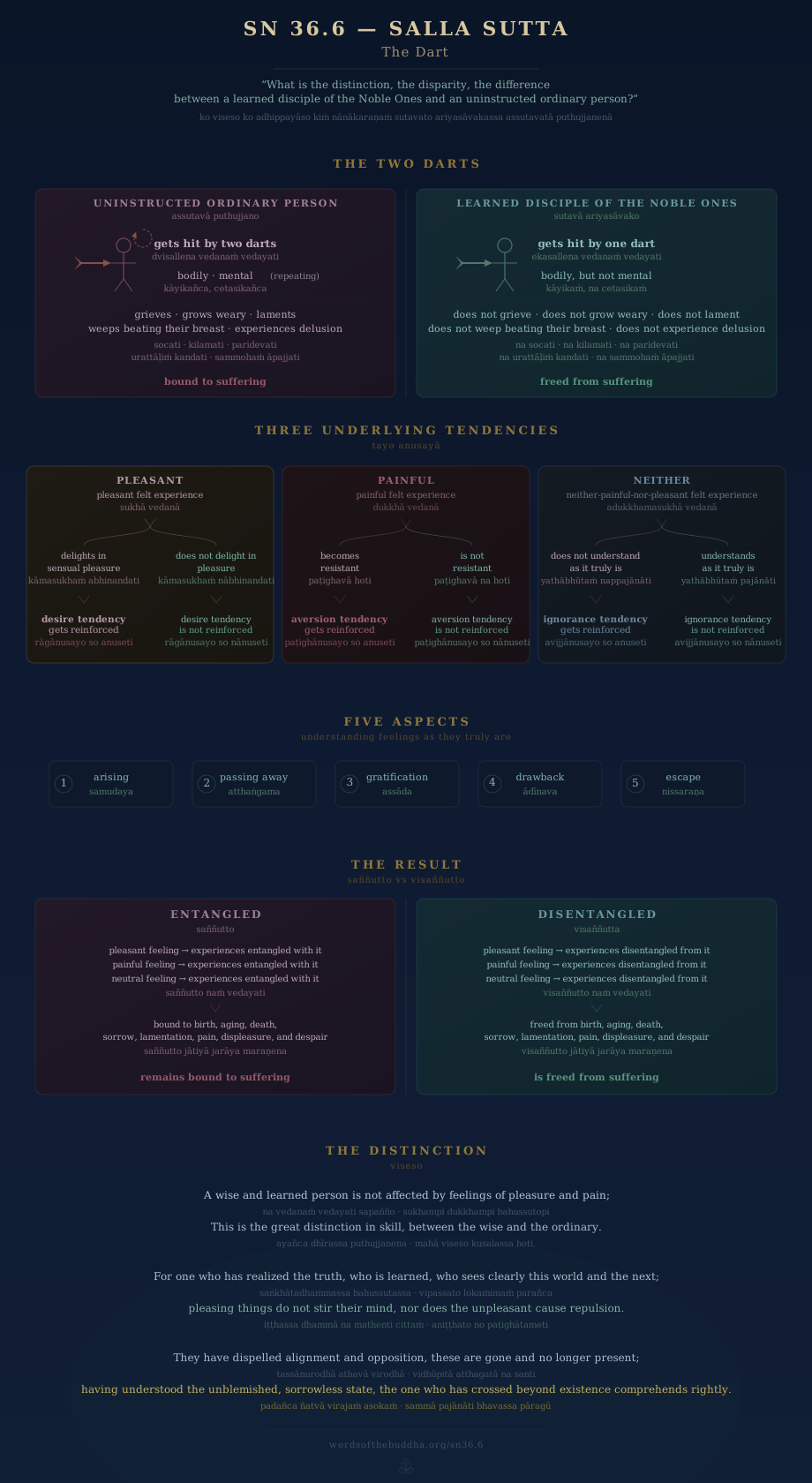
“Assutavā, bhikkhave, puthujjano sukhampi vedanaṁ vedayati, dukkhampi vedanaṁ vedayati, adukkhamasukhampi vedanaṁ vedayati. Sutavā, bhikkhave, ariyasāvako sukhampi vedanaṁ vedayati, dukkhampi vedanaṁ vedayati, adukkhamasukhampi vedanaṁ vedayati. Tatra, bhikkhave, ko viseso ko adhippayāso kiṁ nānākaraṇaṁ sutavato ariyasāvakassa assutavatā puthujjanenā”ti?
“Bhikkhus, an uninstructed ordinary person experiences a pleasant feeling, a painful feeling, and a feeling which is neither-painful-nor-pleasant. Similarly, bhikkhus, a learned disciple of the Noble Ones experiences a pleasant feeling, a painful feeling, and a feeling which is neither-painful-nor-pleasant. Therein, bhikkhus, what is the distinction, the disparity, the difference between a learned disciple of the Noble Ones and an uninstructed ordinary person?”
Bhagavaṁmūlakā no, bhante, dhammā bhagavaṁnettikā bhagavaṁpaṭisaraṇā. Sādhu vata, bhante, bhagavantaṁyeva paṭibhātu etassa bhāsitassa attho. Bhagavato sutvā bhikkhū dhāressantī”ti.
“Venerable sir, our teachings are rooted in the Blessed One, guided by the Blessed One, and have the Blessed One as their refuge. It would be good, venerable sir, if the Blessed One himself would clarify the meaning of this statement.”
“Tena hi, bhikkhave, suṇātha, sādhukaṁ manasi karotha, bhāsissāmī”ti.
“Then listen, bhikkhus, and pay close attention, I will speak.”
“Evaṁ, bhante”ti kho te bhikkhū bhagavato paccassosuṁ. Bhagavā etadavoca:
“Yes, venerable sir,” those bhikkhus replied to the Blessed One. The Blessed One said this:
assutavā, bhikkhave, puthujjano dukkhāya vedanāya phuṭṭho samāno socati kilamati paridevati urattāḷiṁ kandati sammohaṁ āpajjati. So dve vedanā vedayati—kāyikañca, cetasikañca.
“Bhikkhus, an uninstructed ordinary person, when touched by a painful feeling, grieves, grows weary, laments, weeps beating their breast, and experiences |delusion::bewilderment, confusion [sammoha]|. That person experiences two kinds of feelings—bodily and mental.
Seyyathāpi, bhikkhave, purisaṁ sallena vijjheyya. Tamenaṁ dutiyena sallena anuvedhaṁ vijjheyya. Evañhi so, bhikkhave, puriso dvisallena vedanaṁ vedayati.
Suppose a man were struck by a dart. Then, a second dart were to strike him immediately afterwards in the same spot. In this way, the man would experience a feeling from two darts.
Evameva kho, bhikkhave, assutavā puthujjano dukkhāya vedanāya phuṭṭho samāno socati kilamati paridevati urattāḷiṁ kandati sammohaṁ āpajjati. So dve vedanā vedayati—kāyikañca, cetasikañca.
In the same way, bhikkhus, an uninstructed ordinary person, when touched by a painful feeling, grieves, grows weary, laments, weeps beating their breast, and experiences delusion. That person experiences two kinds of feelings—bodily and mental.
Tassāyeva kho pana dukkhāya vedanāya phuṭṭho samāno paṭighavā hoti. Tamenaṁ dukkhāya vedanāya paṭighavantaṁ, yo dukkhāya vedanāya paṭighānusayo, so anuseti.
Furthermore, bhikkhus, when an uninstructed ordinary person is touched by a painful feeling, they become |resistant::aversive [paṭighavant]|. In one who resists painful feeling, the underlying tendency of aversion associated with painful feeling |gets reinforced::persists [anuseti]|.
So dukkhāya vedanāya phuṭṭho samāno kāmasukhaṁ abhinandati. Taṁ kissa hetu? Na hi so, bhikkhave, pajānāti assutavā puthujjano aññatra kāmasukhā dukkhāya vedanāya nissaraṇaṁ, tassa kāmasukhañca abhinandato, yo sukhāya vedanāya rāgānusayo, so anuseti.
Being touched by painful feeling, they delight in sensual pleasure. And why is that? Because, bhikkhus, an uninstructed ordinary person does not understand an escape from painful feeling apart from sensual pleasure. As they delight in sensual pleasure, the underlying tendency of lust towards pleasant feeling gets reinforced.
So tāsaṁ vedanānaṁ samudayañca atthaṅgamañca assādañca ādīnavañca nissaraṇañca yathābhūtaṁ nappajānāti. Tassa tāsaṁ vedanānaṁ samudayañca atthaṅgamañca assādañca ādīnavañca nissaraṇañca yathābhūtaṁ appajānato, yo adukkhamasukhāya vedanāya avijjānusayo, so anuseti.
They do not understand, as it truly is, the |arising::origin, source [sambhava]|, the |passing away::disappearance, vanishing, subsiding [atthaṅgama]|, the |gratification::satisfaction, pleasure, enjoyment, sweetness [assāda]|, the |drawback::disadvantage, unsatisfactoriness, inadequacy, danger [ādīnava]|, and the escape in regard to these feelings. Since they do not understand this as it truly is, the underlying tendency of ignorance associated with neither-painful-nor-pleasant feeling gets reinforced.
So sukhañce vedanaṁ vedayati, saññutto naṁ vedayati. Dukkhañce vedanaṁ vedayati, saññutto naṁ vedayati. Adukkhamasukhañce vedanaṁ vedayati, saññutto naṁ vedayati.
If they experience a pleasant feeling, they experience it while being |bound to::entangled with, linked with, identified with [saññutta]| it. If they experience a painful feeling, they experience it while being bound to it. If they experience a neither-painful-nor-pleasant feeling, they experience it while being bound to it.
Ayaṁ vuccati, bhikkhave, ‘assutavā puthujjano saññutto jātiyā jarāya maraṇena sokehi paridevehi dukkhehi domanassehi upāyāsehi, saññutto dukkhasmā’ti vadāmi.
Bhikkhus, this is called an uninstructed ordinary person—one who is bound to birth, aging, death, sorrow, lamentation, pain, displeasure, and despair. I say that they are bound to suffering.
Sutavā ca kho, bhikkhave, ariyasāvako dukkhāya vedanāya phuṭṭho samāno na socati, na kilamati, na paridevati, na urattāḷiṁ kandati, na sammohaṁ āpajjati. So ekaṁ vedanaṁ vedayati—kāyikaṁ, na cetasikaṁ.
Bhikkhus, when a learned disciple of the Noble Ones is touched by a painful feeling, they do not grieve, do not grow weary, do not lament, do not weep beating their breast, and do not experience delusion. They experience only one kind of feeling—bodily, not mental.
Seyyathāpi, bhikkhave, purisaṁ sallena vijjheyya. Tamenaṁ dutiyena sallena anuvedhaṁ na vijjheyya. Evañhi so, bhikkhave, puriso ekasallena vedanaṁ vedayati.
Bhikkhus, suppose a man were struck by a dart, but then a second dart did not strike him in the same spot. In this way, that man would experience a feeling from only one dart.
Evameva kho, bhikkhave, sutavā ariyasāvako dukkhāya vedanāya phuṭṭho samāno na socati, na kilamati, na paridevati, na urattāḷiṁ kandati, na sammohaṁ āpajjati. So ekaṁ vedanaṁ vedayati—kāyikaṁ, na cetasikaṁ.
In the same way, bhikkhus, when a learned disciple of the Noble Ones is touched by a painful feeling, they do not grieve, do not grow weary, do not lament, do not weep beating their breast, and do not experience delusion. They experience only one kind of feeling—bodily, not mental.
Tassāyeva kho pana dukkhāya vedanāya phuṭṭho samāno paṭighavā na hoti. Tamenaṁ dukkhāya vedanāya appaṭighavantaṁ, yo dukkhāya vedanāya paṭighānusayo, so nānuseti.
Furthermore, when touched by a painful feeling, they are not resistant. Since they do not resist painful feeling, the underlying tendency to aversion associated with painful feeling is not reinforced.
So dukkhāya vedanāya phuṭṭho samāno kāmasukhaṁ nābhinandati. Taṁ kissa hetu? Pajānāti hi so, bhikkhave, sutavā ariyasāvako aññatra kāmasukhā dukkhāya vedanāya nissaraṇaṁ. Tassa kāmasukhaṁ nābhinandato yo sukhāya vedanāya rāgānusayo, so nānuseti.
Being touched by painful feeling, they do not delight in sensual pleasure. And why is that? Because, bhikkhus, a learned disciple of the Noble Ones understands an escape from painful feeling apart from sensual pleasure. Since they do not delight in sensual pleasure, the underlying tendency to lust associated with pleasant feeling is not reinforced.
So tāsaṁ vedanānaṁ samudayañca atthaṅgamañca assādañca ādīnavaṁ ca nissaraṇañca yathābhūtaṁ pajānāti. Tassa tāsaṁ vedanānaṁ samudayañca atthaṅgamañca assādañca ādīnavañca nissaraṇañca yathābhūtaṁ pajānato, yo adukkhamasukhāya vedanāya avijjānusayo, so nānuseti.
They understand, as it truly is, the arising, the passing away, the gratification, the drawback, and the escape in regard to these feelings. Since they understand this as it truly is, the underlying tendency to ignorance associated with neither-painful-nor-pleasant feeling is not reinforced.
So sukhañce vedanaṁ vedayati, visaññutto naṁ vedayati. Dukkhañce vedanaṁ vedayati, visaññutto naṁ vedayati. Adukkhamasukhañce vedanaṁ vedayati, visaññutto naṁ vedayati.
If they experience a pleasant feeling, they experience it while being |not bound to::detached from, disengaged from, disentangled with, free from [visaññutta]| it. If they experience a painful feeling, they experience it while being not bound to it. If they experience a neither-painful-nor-pleasant feeling, they experience it while being not bound to it.
Ayaṁ vuccati, bhikkhave, ‘sutavā ariyasāvako visaññutto jātiyā jarāya maraṇena sokehi paridevehi dukkhehi domanassehi upāyāsehi, visaññutto dukkhasmā’ti vadāmi.
Bhikkhus, this is called a learned disciple of the Noble Ones—one who is freed from birth, aging, death, sorrow, lamentation, pain, displeasure, and despair. I say that they are freed from suffering.
Ayaṁ kho, bhikkhave, viseso, ayaṁ adhippayāso, idaṁ nānākaraṇaṁ sutavato ariyasāvakassa assutavatā puthujjanenāti.
This is the distinction, the disparity, the difference between a learned disciple of the Noble Ones and an uninstructed ordinary person.
Na vedanaṁ vedayati sapañño,
Sukhampi dukkhampi bahussutopi;
Ayañca dhīrassa puthujjanena,
Mahā viseso kusalassa hoti.
A |wise::intelligent, discerning [sapañña]| and learned person is not affected
by feelings of pleasure and pain;
This is the great distinction in |skill::expertise, adeptness, competence [kusala]|,
between the wise and the ordinary.
Saṅkhātadhammassa bahussutassa,
Vipassato lokamimaṁ parañca;
Iṭṭhassa dhammā na mathenti cittaṁ,
Aniṭṭhato no paṭighātameti.
For one who has realized the truth, who is learned,
who sees clearly this world and the next;
pleasing things do not |stir::agitate, disturb, or excite [matheti]| their mind,
nor does the |unpleasant::dislikeable, disagreeable [aniṭṭha]| cause |repulsion::resistance [paṭighātameti]|.
Tassānurodhā athavā virodhā,
Vidhūpitā atthagatā na santi;
Padañca ñatvā virajaṁ asokaṁ,
Sammā pajānāti bhavassa pāragū”ti.
They have dispelled |alignment::favor [anurodha]| and |opposition::aversion, resistance, hostility [virodha]|,
these are gone and no longer present;
having understood the |unblemished::pure, stainless [viraja]|, sorrowless state,
they comprehend rightly, having crossed beyond |existence::being, becoming; continued conditional existence, the karmically conditioned mode of being that leads to future rebirth [bhava]|.”