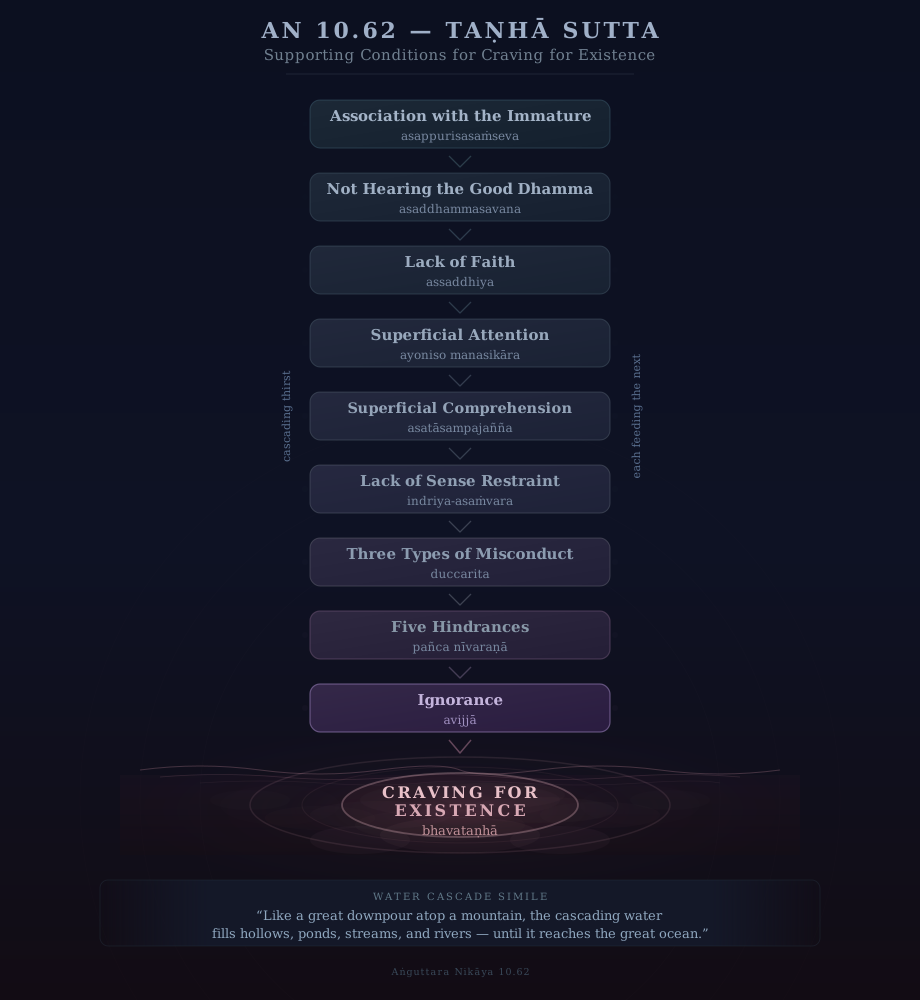

Supporting Conditions for Craving for Existence
“Purimā, bhikkhave, koṭi na paññāyati bhavataṇhāya: ‘ito pubbe bhavataṇhā nāhosi, atha pacchā samabhavī’ti. Evañcetaṁ, bhikkhave, vuccati, atha ca pana paññāyati: ‘idappaccayā bhavataṇhā’ti.
“A first point of craving for existence is not discerned such that one could say, ‘Before this, craving for existence did not exist; then afterwards it came into being.’ And although this is said, nevertheless it can be discerned: ‘Craving for existence has a supporting condition.’
Bhavataṇhampāhaṁ, bhikkhave, sāhāraṁ vadāmi, no anāhāraṁ. Ko cāhāro bhavataṇhāya? ‘Avijjā’tissa vacanīyaṁ.
I say that craving for existence has a nutriment; it is not without nutriment. And what is the nutriment for craving for existence? It should be said: ‘Ignorance.’
Avijjampāhaṁ, bhikkhave, sāhāraṁ vadāmi, no anāhāraṁ. Ko cāhāro avijjāya? ‘Pañca nīvaraṇā’tissa vacanīyaṁ.
I say that ignorance has a nutriment; it is not without nutriment. And what is the nutriment for ignorance? It should be said: ‘The five hindrances.’
Pañca nīvaraṇepāhaṁ, bhikkhave, sāhāre vadāmi, no anāhāre. Ko cāhāro pañcannaṁ nīvaraṇānaṁ? ‘Tīṇi duccaritānī’tissa vacanīyaṁ.
I say that the five hindrances have a nutriment; they are not without nutriment. And what is the nutriment for the five hindrances? It should be said: ‘The three types of misconduct.’
Tīṇipāhaṁ, bhikkhave, duccaritāni sāhārāni vadāmi, no anāhārāni. Ko cāhāro tiṇṇannaṁ duccaritānaṁ? ‘Indriyaasaṁvaro’tissa vacanīyaṁ.
I say that the three types of misconduct have a nutriment; they are not without nutriment. And what is the nutriment for the three types of misconduct? It should be said: ‘Lack of sense restraint.’
Indriyaasaṁvarampāhaṁ, bhikkhave, sāhāraṁ vadāmi, no anāhāraṁ. Ko cāhāro indriyaasaṁvarassa? ‘Asatāsampajaññan’tissa vacanīyaṁ.
I say that lack of sense restraint has a nutriment; it is not without nutriment. And what is the nutriment for lack of sense restraint? It should be said: ‘Superficial comprehension.’
Asatāsampajaññampāhaṁ, bhikkhave, sāhāraṁ vadāmi, no anāhāraṁ. Ko cāhāro asatā sampajaññassa? ‘Ayonisomanasikāro’tissa vacanīyaṁ.
I say that superficial comprehension has a nutriment; it is not without nutriment. And what is the nutriment for superficial comprehension? It should be said: ‘Superficial attention.’
Ayonisomanasikārampāhaṁ, bhikkhave, sāhāraṁ vadāmi, no anāhāraṁ. Ko cāhāro ayonisomanasikārassa? ‘Assaddhiyan’tissa vacanīyaṁ.
I say that superficial attention has a nutriment; it is not without nutriment. And what is the nutriment for superficial attention? It should be said: ‘Lack of faith.’
Assaddhiyampāhaṁ, bhikkhave, sāhāraṁ vadāmi, no anāhāraṁ. Ko cāhāro assaddhiyassa? ‘Assaddhammassavanan’tissa vacanīyaṁ.
I say that lack of faith has a nutriment; it is not without nutriment. And what is the nutriment for lack of faith? It should be said: ‘Not hearing the good Dhamma.’
Assaddhammassavanampāhaṁ, bhikkhave, sāhāraṁ vadāmi, no anāhāraṁ. Ko cāhāro assaddhammassavanassa? ‘Asappurisasaṁsevo’tissa vacanīyaṁ.
I say that not hearing the good Dhamma has a nutriment; it is not without nutriment. And what is the nutriment for not hearing the good Dhamma? It should be said: ‘Association with the immature.’
Iti kho, bhikkhave, asappurisasaṁsevo paripūro assaddhammassavanaṁ paripūreti, assaddhammassavanaṁ paripūraṁ assaddhiyaṁ paripūreti, assaddhiyaṁ paripūraṁ ayonisomanasikāraṁ paripūreti, ayonisomanasikāro paripūro asatāsampajaññaṁ paripūreti, asatāsampajaññaṁ paripūraṁ indriyaasaṁvaraṁ paripūreti, indriyaasaṁvaro paripūro tīṇi duccaritāni paripūreti, tīṇi duccaritāni paripūrāni pañca nīvaraṇe paripūrenti, pañca nīvaraṇā paripūrā avijjaṁ paripūrenti, avijjā paripūrā bhavataṇhaṁ paripūreti; evametissā bhavataṇhāya āhāro hoti, evañca pāripūri.
Thus, when association with the immature is fulfilled, it fulfills not hearing the good Dhamma. When not hearing the good Dhamma is fulfilled, it fulfills lack of faith. When lack of faith is fulfilled, it fulfills superficial attention. When superficial attention is fulfilled, it fulfills superficial comprehension. When superficial comprehension is fulfilled, it fulfills lack of sense restraint. When lack of sense restraint is fulfilled, it fulfills the three types of misconduct. When the three types of misconduct are fulfilled, they fulfill the five hindrances. When the five hindrances are fulfilled, they fulfill ignorance. When ignorance is fulfilled, it fulfills craving for existence. Thus there is nutriment for this craving for existence, and in this way, it comes to fulfillment.
Seyyathāpi, bhikkhave, uparipabbate thullaphusitake deve vassante taṁ udakaṁ yathāninnaṁ pavattamānaṁ pabbatakandarapadarasākhā paripūreti, pabbatakandarapadarasākhā paripūrā kusobbhe paripūrenti, kusobbhā paripūrā mahāsobbhe paripūrenti, mahāsobbhā paripūrā kunnadiyo paripūrenti, kunnadiyo paripūrā mahānadiyo paripūrenti, mahānadiyo paripūrā mahāsamuddaṁ sāgaraṁ paripūrenti; evametassa mahāsamuddassa sāgarassa āhāro hoti, evañca pāripūri.
Just as when a great downpour occurs atop a mountain, the cascading water naturally progresses, filling up the mountain’s hollows, gullies, and crevices. These, once filled, replenish the small ponds. The small ponds, upon reaching their capacity, replenish the larger ponds. The larger ponds, once full, replenish the streams. The streams, having been replenished, fill the rivers. The rivers, upon being filled, replenish the great ocean. Thus there is nutriment for this great ocean, and in this way, it comes to fulfillment.
Evamevaṁ kho, bhikkhave, asappurisasaṁsevo paripūro assaddhammassavanaṁ paripūreti, assaddhammassavanaṁ paripūraṁ assaddhiyaṁ paripūreti, assaddhiyaṁ paripūraṁ ayonisomanasikāraṁ paripūreti, ayonisomanasikāro paripūro asatāsampajaññaṁ paripūreti, asatāsampajaññaṁ paripūraṁ indriyaasaṁvaraṁ paripūreti, indriyaasaṁvaro paripūro tīṇi duccaritāni paripūreti, tīṇi duccaritāni paripūrāni pañca nīvaraṇe paripūrenti, pañca nīvaraṇā paripūrā avijjaṁ paripūrenti, avijjā paripūrā bhavataṇhaṁ paripūreti; evametissā bhavataṇhāya āhāro hoti, evañca pāripūri.
Similarly, when association with the immature is fulfilled, it fulfills not hearing the good Dhamma. When not hearing the good Dhamma is fulfilled, it fulfills lack of faith. When lack of faith is fulfilled, it fulfills superficial attention. When superficial attention is fulfilled, it fulfills superficial comprehension. When superficial comprehension is fulfilled, it fulfills lack of sense restraint. When lack of sense restraint is fulfilled, it fulfills the three types of misconduct. When the three types of misconduct are fulfilled, they fulfill the five hindrances. When the five hindrances are fulfilled, they fulfill ignorance. When ignorance is fulfilled, it fulfills craving for existence. Thus there is nutriment for this craving for existence, and in this way, it comes to fulfillment.
Supporting Conditions for True Knowledge and Liberation
Vijjāvimuttimpāhaṁ, bhikkhave, sāhāraṁ vadāmi, no anāhāraṁ. Ko cāhāro vijjāvimuttiyā? ‘Satta bojjhaṅgā’tissa vacanīyaṁ.
I say that true knowledge and liberation have a nutriment; they are not without nutriment. And what is the nutriment for true knowledge and liberation? It should be said: ‘The seven factors of awakening.’
Sattapāhaṁ, bhikkhave, bojjhaṅge sāhāre vadāmi, no anāhāre. Ko cāhāro sattannaṁ bojjhaṅgānaṁ? ‘Cattāro satipaṭṭhānā’tissa vacanīyaṁ.
I say that the seven factors of awakening have a nutriment; they are not without nutriment. And what is the nutriment for the seven factors of awakening? It should be said: ‘The four establishments of mindfulness.’
Cattāropāhaṁ, bhikkhave, satipaṭṭhāne sāhāre vadāmi, no anāhāre. Ko cāhāro catunnaṁ satipaṭṭhānānaṁ? ‘Tīṇi sucaritānī’tissa vacanīyaṁ.
I say that the four establishments of mindfulness have a nutriment; they are not without nutriment. And what is the nutriment for the four establishments of mindfulness? It should be said: ‘The three types of good conduct.’
Tīṇipāhaṁ, bhikkhave, sucaritāni sāhārāni vadāmi, no anāhārāni. Ko cāhāro tiṇṇannaṁ sucaritānaṁ? ‘Indriyasaṁvaro’tissa vacanīyaṁ.
I say that the three types of good conduct have a nutriment; they are not without nutriment. And what is the nutriment for the three types of good conduct? It should be said: ‘Sense restraint.’
Indriyasaṁvarampāhaṁ, bhikkhave, sāhāraṁ vadāmi, no anāhāraṁ. Ko cāhāro indriyasaṁvarassa? ‘Satisampajaññan’tissa vacanīyaṁ.
I say that sense restraint has a nutriment; it is not without nutriment. And what is the nutriment for sense restraint? It should be said: ‘Radical comprehension.’
Satisampajaññampāhaṁ, bhikkhave, sāhāraṁ vadāmi, no anāhāraṁ. Ko cāhāro satisampajaññassa? ‘Yonisomanasikāro’tissa vacanīyaṁ.
I say that radical comprehension has a nutriment; it is not without nutriment. And what is the nutriment for radical comprehension? It should be said: ‘Radical attention.’
Yonisomanasikārampāhaṁ, bhikkhave, sāhāraṁ vadāmi, no anāhāraṁ. Ko cāhāro yonisomanasikārassa? ‘Saddhā’tissa vacanīyaṁ.
I say that radical attention has a nutriment; it is not without nutriment. And what is the nutriment for radical attention? It should be said: ‘Faith.’
Saddhampāhaṁ, bhikkhave, sāhāraṁ vadāmi, no anāhāraṁ. Ko cāhāro saddhāya? ‘Saddhammassavanan’tissa vacanīyaṁ.
I say that faith has a nutriment; it is not without nutriment. And what is the nutriment for faith? It should be said: ‘Hearing the good Dhamma.’
Saddhammassavanampāhaṁ, bhikkhave, sāhāraṁ vadāmi, no anāhāraṁ. Ko cāhāro saddhammassavanassa? ‘Sappurisasaṁsevo’tissa vacanīyaṁ.
I say that hearing the good Dhamma has a nutriment; it is not without nutriment. And what is the nutriment for hearing the good Dhamma? It should be said: ‘Association with persons of integrity.’
Iti kho, bhikkhave, sappurisasaṁsevo paripūro saddhammassavanaṁ paripūreti, saddhammassavanaṁ paripūraṁ saddhaṁ paripūreti, saddhā paripūrā yonisomanasikāraṁ paripūreti, yonisomanasikāro paripūro satisampajaññaṁ paripūreti, satisampajaññaṁ paripūraṁ indriyasaṁvaraṁ paripūreti, indriyasaṁvaro paripūro tīṇi sucaritāni paripūreti, tīṇi sucaritāni paripūrāni cattāro satipaṭṭhāne paripūrenti, cattāro satipaṭṭhānā paripūrā satta bojjhaṅge paripūrenti, satta bojjhaṅgā paripūrā vijjāvimuttiṁ paripūrenti; evametissā vijjāvimuttiyā āhāro hoti, evañca pāripūri.
Thus, when association with persons of integrity is fulfilled, it fulfills hearing the good Dhamma. When hearing the good Dhamma is fulfilled, it fulfills faith. When faith is fulfilled, it fulfills radical attention. When radical attention is fulfilled, it fulfills radical comprehension. When radical comprehension is fulfilled, it fulfills sense restraint. When sense restraint is fulfilled, it fulfills the three types of good conduct. When the three types of good conduct are fulfilled, they fulfill the four establishments of mindfulness. When the four establishments of mindfulness are fulfilled, they fulfill the seven factors of awakening. When the seven factors of awakening are fulfilled, they fulfill true knowledge and liberation. Thus there is nutriment for true knowledge and liberation, and in this way, it comes to fulfillment.
Seyyathāpi, bhikkhave, uparipabbate thullaphusitake deve vassante taṁ udakaṁ yathāninnaṁ pavattamānaṁ …pe… evametassa mahāsamuddassa sāgarassa āhāro hoti, evañca pāripūri. Evamevaṁ kho, bhikkhave, sappurisasaṁsevo paripūro saddhammassavanaṁ paripūreti …pe… evametissā vijjāvimuttiyā āhāro hoti, evañca pāripūrī”ti.
Just as when a great downpour occurs atop a mountain, the cascading water naturally progresses ․․․ Thus there is nutriment for this great ocean, and in this way, it comes to fulfillment. Similarly, when association with persons of integrity is fulfilled, it fulfills hearing the good Dhamma. ․․․ Thus there is nutriment for true knowledge and liberation, and in this way, it comes to fulfillment.”