Evaṁ me sutaṁ— ekaṁ samayaṁ bhagavā sāvatthiyaṁ viharati jetavane anāthapiṇḍikassa ārāme. Tatra kho bhagavā bhikkhū āmantesi: “bhikkhavo”ti.
Thus have I heard—At one time, the Blessed One was dwelling at Sāvatthi, in Jeta’s Grove, Anāthapiṇḍika’s Park. There, he addressed the bhikkhus: “Bhikkhus.”
“Bhadante”ti te bhikkhū bhagavato paccassosuṁ. Bhagavā etadavoca:
“Venerable sir,” those bhikkhus replied to the Blessed One. The Blessed One said this:
“sappurisadhammañca vo, bhikkhave, desessāmi asappurisadhammañca. Taṁ suṇātha, sādhukaṁ manasi karotha, bhāsissāmī”ti.
“I will teach you|, bhikkhus,::::| the qualities of a |person of integrity::virtuous person [sappurisa]| and the qualities of a |person without integrity::unethical person, inferior person [asappurisa]|. Listen to this and pay close attention; I will speak.”
“Evaṁ, bhante”ti kho te bhikkhū bhagavato paccassosuṁ. Bhagavā etadavoca:
“Yes, venerable sir,” those bhikkhus replied to the Blessed One. The Blessed One then said this:
High Birth and Wealth
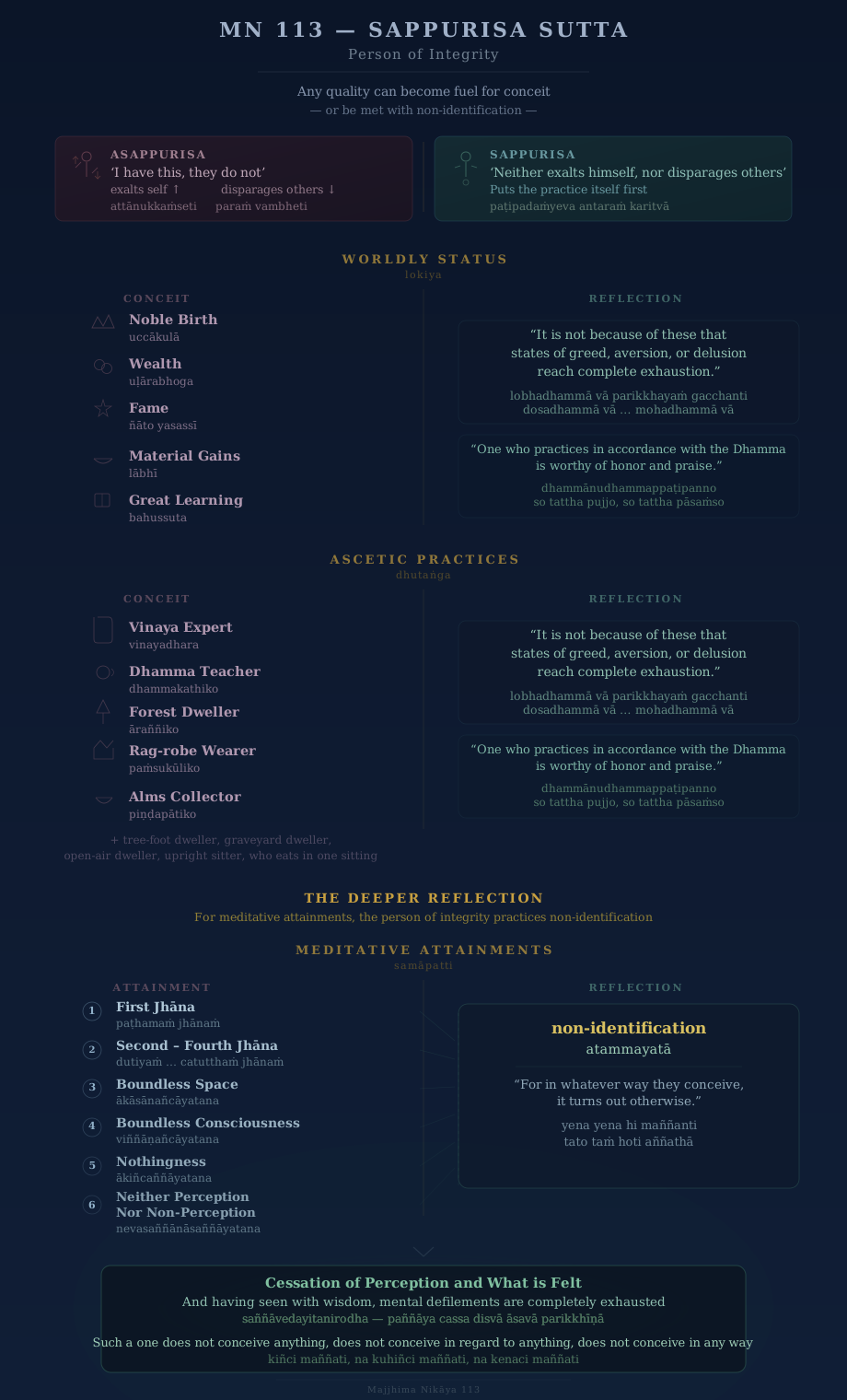
“Katamo ca, bhikkhave, asappurisadhammo? Idha, bhikkhave, asappuriso uccākulā pabbajito hoti. So iti paṭisañcikkhati: ‘ahaṁ khomhi uccākulā pabbajito, ime panaññe bhikkhū na uccākulā pabbajitā’ti. So tāya uccākulīnatāya attānukkaṁseti, paraṁ vambheti. Ayaṁ, bhikkhave, asappurisadhammo. Sappuriso ca kho, bhikkhave, iti paṭisañcikkhati: ‘na kho uccākulīnatāya lobhadhammā vā parikkhayaṁ gacchanti, dosadhammā vā parikkhayaṁ gacchanti, mohadhammā vā parikkhayaṁ gacchanti. No cepi uccākulā pabbajito hoti; so ca hoti dhammānudhammappaṭipanno sāmīcippaṭipanno anudhammacārī, so tattha pujjo, so tattha pāsaṁso’ti. So paṭipadaṁyeva antaraṁ karitvā tāya uccākulīnatāya nevattānukkaṁseti na paraṁ vambheti. Ayaṁ, bhikkhave, sappurisadhammo.
“And what|, bhikkhus,::::| is the quality of a person without integrity? Here, |bhikkhus,::::| a person without integrity has gone forth from a |noble family::good family; lit. high family [uccākula]|. He reflects like this: ‘I have gone forth from a noble family, but these other bhikkhus have not.’ Because of that noble birth, he |exalts::glorifies, praises; lit. causes to drag up [ukkaṁseti]| himself and |disparages::derides, holds in contempt [vambheti]| others. This|, bhikkhus,::::| is the quality of a person without integrity. But a person of integrity|, bhikkhus,::::| reflects like this: ‘It is not because of noble birth that states of |greed::a grasping mental quality of craving, possessiveness, or lustful wanting that clings to objects or experiences; it fuels attachment and obstructs renunciation and contentment [lobha]|, |aversion::hatred, hostility, mental attitude of rejection, fault-finding, resentful disapproval [dosa]|, or |delusion::illusion, misperception, erroneous belief, false idea, misapprehension; a fundamental distortion of reality that sustains confusion, clouds discernment, and fuels further doubt [moha]| reach |complete exhaustion::gradual and complete wearing away [parikkhaya]|. Even if one has not gone forth from a noble family, if they practice the |Dhamma::teachings of the Buddha that point to the nature of reality, the ultimate truth [dhamma]| in accordance with the Dhamma, follow the right way, and live according to the Dhamma, they are to be honored and praised for that.’ Putting the practice itself first, he neither exalts himself nor disparages others because of noble birth. This|, bhikkhus,::::| is the quality of a person of integrity.
Puna caparaṁ, bhikkhave, asappuriso mahākulā pabbajito hoti …pe… mahābhogakulā pabbajito hoti …pe… uḷārabhogakulā pabbajito hoti. So iti paṭisañcikkhati: ‘ahaṁ khomhi uḷārabhogakulā pabbajito, ime panaññe bhikkhū na uḷārabhogakulā pabbajitā’ti. So tāya uḷārabhogatāya attānukkaṁseti, paraṁ vambheti. Ayampi, bhikkhave, asappurisadhammo. Sappuriso ca kho, bhikkhave, iti paṭisañcikkhati: ‘na kho uḷārabhogatāya lobhadhammā vā parikkhayaṁ gacchanti, dosadhammā vā parikkhayaṁ gacchanti, mohadhammā vā parikkhayaṁ gacchanti. No cepi uḷārabhogakulā pabbajito hoti; so ca hoti dhammānudhammappaṭipanno sāmīcippaṭipanno anudhammacārī, so tattha pujjo, so tattha pāsaṁso’ti. So paṭipadaṁyeva antaraṁ karitvā tāya uḷārabhogatāya nevattānukkaṁseti, na paraṁ vambheti. Ayampi, bhikkhave, sappurisadhammo.
Furthermore, |bhikkhus,::::| a person without integrity has gone forth from a great family ... has gone forth from a family of great wealth ... has gone forth from a family of abundant wealth. He reflects like this: ‘I have gone forth from a family of abundant wealth, but these other bhikkhus have not.’ Because of that abundant wealth, he exalts himself and disparages others. This too|, bhikkhus,::::| is the quality of a person without integrity. But a person of integrity|, bhikkhus,::::| reflects like this: ‘It is not because of abundant wealth that states of greed, aversion, or delusion reach complete exhaustion. Even if one has not gone forth from a family of abundant wealth, if they practice the Dhamma in accordance with the Dhamma, follow the right way, and live according to the Dhamma, they are to be honored and praised for that.’ Putting the practice itself first, he neither exalts himself nor disparages others because of abundant wealth. This too|, bhikkhus,::::| is the quality of a person of integrity.
Fame
Puna caparaṁ, bhikkhave, asappuriso ñāto hoti yasassī. So iti paṭisañcikkhati: ‘ahaṁ khomhi ñāto yasassī, ime panaññe bhikkhū appaññātā appesakkhā’ti. So tena ñattena attānukkaṁseti, paraṁ vambheti. Ayampi, bhikkhave, asappurisadhammo. Sappuriso ca kho, bhikkhave, iti paṭisañcikkhati: ‘na kho ñattena lobhadhammā vā parikkhayaṁ gacchanti, dosadhammā vā parikkhayaṁ gacchanti, mohadhammā vā parikkhayaṁ gacchanti. No cepi ñāto hoti yasassī; so ca hoti dhammānudhammappaṭipanno sāmīcippaṭipanno anudhammacārī, so tattha pujjo, so tattha pāsaṁso’ti. So paṭipadaṁyeva antaraṁ karitvā tena ñattena nevattānukkaṁseti, na paraṁ vambheti. Ayampi, bhikkhave, sappurisadhammo.
Furthermore|, bhikkhus,::::| a person without integrity is |well-known::recognized [ñāta]| and |famous::illustrious, renowned [yasassī]|. He reflects like this: ‘I am well-known and famous, but these other bhikkhus are unknown and |of little influence::who are insignificant, unimportant [appesakkha]|.’ Because of that fame, he exalts himself and disparages others. This too|, bhikkhus,::::| is the quality of a person without integrity. But a person of integrity, bhikkhus, reflects like this: ‘It is not because of fame that states of greed, aversion, or delusion reach complete exhaustion. Even if one is not well-known and famous, if they practice the Dhamma in accordance with the Dhamma, follow the right way, and live according to the Dhamma, they are to be honored and praised for that.’ Putting the practice itself first, he neither exalts himself nor disparages others because of fame. This too|, bhikkhus,::::| is the quality of a person of integrity.
Gains
Puna caparaṁ, bhikkhave, asappuriso lābhī hoti cīvarapiṇḍapātasenāsanagilānappaccayabhesajjaparikkhārānaṁ. So iti paṭisañcikkhati: ‘ahaṁ khomhi lābhī cīvarapiṇḍapātasenāsanagilānappaccayabhesajjaparikkhārānaṁ, ime panaññe bhikkhū na lābhino cīvarapiṇḍapātasenāsanagilānappaccayabhesajjaparikkhārānan’ti. So tena lābhena attānukkaṁseti, paraṁ vambheti. Ayampi, bhikkhave, asappurisadhammo. Sappuriso ca kho, bhikkhave, iti paṭisañcikkhati: ‘na kho lābhena lobhadhammā vā parikkhayaṁ gacchanti, dosadhammā vā parikkhayaṁ gacchanti, mohadhammā vā parikkhayaṁ gacchanti. No cepi lābhī hoti cīvarapiṇḍapātasenāsanagilānappaccayabhesajjaparikkhārānaṁ; so ca hoti dhammānudhammappaṭipanno sāmīcippaṭipanno anudhammacārī, so tattha pujjo, so tattha pāsaṁso’ti. So paṭipadaṁyeva antaraṁ karitvā tena lābhena nevattānukkaṁseti, na paraṁ vambheti. Ayampi, bhikkhave, sappurisadhammo.
Furthermore, |bhikkhus,::::| a person without integrity is a recipient of robes, alms food, lodgings, and medicinal requisites for the sick. He reflects like this: ‘I am a recipient of robes, alms food, lodgings, and medicinal requisites for the sick, but these other bhikkhus are not recipients of robes, alms food, lodgings, and medicinal requisites for the sick.’ Because of those gains, he exalts himself and disparages others. This too|, bhikkhus,::::| is the quality of a person without integrity. But a person of integrity|, bhikkhus,::::| reflects like this: ‘It is not because of gains that states of greed, aversion, or delusion reach complete exhaustion. Even if one is not a recipient of robes, alms food, lodgings, and medicinal requisites for the sick, if they practice the Dhamma in accordance with the Dhamma, follow the right way, and live according to the Dhamma, they are to be honored and praised for that.’ Putting the practice itself first, he neither exalts himself nor disparages others because of those gains. This too|, bhikkhus,::::| is the quality of a person of integrity.
Great Learning
Puna caparaṁ, bhikkhave, asappuriso bahussuto hoti. So iti paṭisañcikkhati: ‘ahaṁ khomhi bahussuto, ime panaññe bhikkhū na bahussutā’ti. So tena bāhusaccena attānukkaṁseti, paraṁ vambheti. Ayampi, bhikkhave, asappurisadhammo. Sappuriso ca kho, bhikkhave, iti paṭisañcikkhati: ‘na kho bāhusaccena lobhadhammā vā parikkhayaṁ gacchanti, dosadhammā vā parikkhayaṁ gacchanti, mohadhammā vā parikkhayaṁ gacchanti. No cepi bahussuto hoti; so ca hoti dhammānudhammappaṭipanno sāmīcippaṭipanno anudhammacārī, so tattha pujjo, so tattha pāsaṁso’ti. So paṭipadaṁyeva antaraṁ karitvā tena bāhusaccena nevattānukkaṁseti, na paraṁ vambheti. Ayampi, bhikkhave, sappurisadhammo.
Furthermore, |bhikkhus,::::| a person without integrity is |very learned::well educated, knowledgeable [bahussuta]|. He reflects like this: ‘I am very learned, but these other bhikkhus are not very learned.’ Because of that great learning, he exalts himself and disparages others. This too|, bhikkhus,::::| is the quality of a person without integrity. But a person of integrity, bhikkhus, reflects like this: ‘It is not because of great learning that states of greed, aversion, or delusion reach complete exhaustion. Even if one is not very learned, if they practice the Dhamma in accordance with the Dhamma, follow the right way, and live according to the Dhamma, they are to be honored and praised for that.’ Putting the practice itself first, he neither exalts himself nor disparages others because of that great learning. This, too, bhikkhus, is the quality of a person of integrity.
Expert in Vinaya
Puna caparaṁ, bhikkhave, asappuriso vinayadharo hoti. So iti paṭisañcikkhati: ‘ahaṁ khomhi vinayadharo, ime panaññe bhikkhū na vinayadharā’ti. So tena vinayadharattena attānukkaṁseti, paraṁ vambheti. Ayampi, bhikkhave, asappurisadhammo. Sappuriso ca kho, bhikkhave, iti paṭisañcikkhati: ‘na kho vinayadharattena lobhadhammā vā parikkhayaṁ gacchanti, dosadhammā vā parikkhayaṁ gacchanti, mohadhammā vā parikkhayaṁ gacchanti. No cepi vinayadharo hoti; so ca hoti dhammānudhammappaṭipanno sāmīcippaṭipanno anudhammacārī, so tattha pujjo, so tattha pāsaṁso’ti. So paṭipadaṁyeva antaraṁ karitvā tena vinayadharattena nevattānukkaṁseti, na paraṁ vambheti. Ayampi, bhikkhave, sappurisadhammo.
Furthermore, |bhikkhus,::::| a person without integrity is an |expert in Vinaya::keeper of the monastic law [vinayadhara]|. He reflects like this: ‘I am an expert in Vinaya, but these other bhikkhus are not experts in Vinaya.’ Because of that expertise in Vinaya, he exalts himself and disparages others. This too|, bhikkhus,::::| is the quality of a person without integrity. But a person of integrity|, bhikkhus,::::| reflects like this: ‘It is not because of expertise in Vinaya that states of greed, aversion, or delusion reach complete exhaustion. Even if one is not an expert in Vinaya, if they practice the Dhamma in accordance with the Dhamma, follow the right way, and live according to the Dhamma, they are to be honored and praised for that.’ Putting the practice itself first, he neither exalts himself nor disparages others because of expertise in Vinaya. This too|, bhikkhus,::::| is the quality of a person of integrity.
Dhamma Teacher
Puna caparaṁ, bhikkhave, asappuriso dhammakathiko hoti. So iti paṭisañcikkhati: ‘ahaṁ khomhi dhammakathiko, ime panaññe bhikkhū na dhammakathikā’ti. So tena dhammakathikattena attānukkaṁseti, paraṁ vambheti. Ayampi, bhikkhave, asappurisadhammo. Sappuriso ca kho, bhikkhave, iti paṭisañcikkhati: ‘na kho dhammakathikattena lobhadhammā vā parikkhayaṁ gacchanti, dosadhammā vā parikkhayaṁ gacchanti, mohadhammā vā parikkhayaṁ gacchanti. No cepi dhammakathiko hoti; so ca hoti dhammānudhammappaṭipanno sāmīcippaṭipanno anudhammacārī, so tattha pujjo, so tattha pāsaṁso’ti. So paṭipadaṁyeva antaraṁ karitvā tena dhammakathikattena nevattānukkaṁseti, na paraṁ vambheti. Ayampi, bhikkhave, sappurisadhammo.
Furthermore, |bhikkhus,::::| a person without integrity is a Dhamma teacher. He reflects like this: ‘I am a Dhamma teacher, but these other bhikkhus are not Dhamma teachers.’ Because of being a Dhamma teacher, he exalts himself and disparages others. This too|, bhikkhus,::::| is the quality of a person without integrity. But a person of integrity, bhikkhus, reflects like this: ‘It is not because of being a Dhamma teacher that states of greed, aversion, or delusion reach complete exhaustion. Even if one is not a Dhamma teacher, if they practice the Dhamma in accordance with the Dhamma, follow the right way, and live according to the Dhamma, they are to be honored and praised for that.’ Putting the practice itself first, he neither exalts himself nor disparages others because of being a Dhamma teacher. This too|, bhikkhus,::::| is the quality of a person of integrity.
Ascetic Practices
Puna caparaṁ, bhikkhave, asappuriso āraññiko hoti. So iti paṭisañcikkhati: ‘ahaṁ khomhi āraññiko ime panaññe bhikkhū na āraññikā’ti. So tena āraññikattena attānukkaṁseti, paraṁ vambheti. Ayampi, bhikkhave, asappurisadhammo. Sappuriso ca kho, bhikkhave, iti paṭisañcikkhati: ‘na kho āraññikattena lobhadhammā vā parikkhayaṁ gacchanti, dosadhammā vā parikkhayaṁ gacchanti, mohadhammā vā parikkhayaṁ gacchanti. No cepi āraññiko hoti; so ca hoti dhammānudhammappaṭipanno sāmīcippaṭipanno anudhammacārī, so tattha pujjo, so tattha pāsaṁso’ti. So paṭipadaṁyeva antaraṁ karitvā tena āraññikattena nevattānukkaṁseti, na paraṁ vambheti. Ayampi, bhikkhave, sappurisadhammo.
Furthermore, |bhikkhus,::::| a person without integrity is a forest dweller. He reflects like this: ‘I am a forest dweller, but these other bhikkhus are not forest dwellers.’ Because of dwelling in the forest, he exalts himself and disparages others. This too|, bhikkhus,::::| is the quality of a person without integrity. But a person of integrity|, bhikkhus,::::| reflects like this: ‘It is not because of dwelling in the forest that states of greed, aversion, or delusion reach complete exhaustion. Even if one is not a forest dweller, if they practice the Dhamma in accordance with the Dhamma, follow the right way, and live according to the Dhamma, they are to be honored and praised for that.’ Putting the practice itself first, he neither exalts himself nor disparages others because of dwelling in the forest. This too|, bhikkhus,::::| is the quality of a person of integrity.
Puna caparaṁ, bhikkhave, asappuriso paṁsukūliko hoti. So iti paṭisañcikkhati: ‘ahaṁ khomhi paṁsukūliko, ime panaññe bhikkhū na paṁsukūlikā’ti. So tena paṁsukūlikattena attānukkaṁseti, paraṁ vambheti. Ayampi, bhikkhave, asappurisadhammo. Sappuriso ca kho, bhikkhave, iti paṭisañcikkhati: ‘na kho paṁsukūlikattena lobhadhammā vā parikkhayaṁ gacchanti, dosadhammā vā parikkhayaṁ gacchanti, mohadhammā vā parikkhayaṁ gacchanti. No cepi paṁsukūliko hoti; so ca hoti dhammānudhammappaṭipanno sāmīcippaṭipanno anudhammacārī, so tattha pujjo, so tattha pāsaṁso’ti. So paṭipadaṁyeva antaraṁ karitvā tena paṁsukūlikattena nevattānukkaṁseti, na paraṁ vambheti. Ayampi, bhikkhave, sappurisadhammo.
Furthermore, |bhikkhus,::::| a person without integrity is a wearer of rag robes. He reflects like this: ‘I am a wearer of rag robes, but these other bhikkhus are not wearers of rag robes.’ Because of wearing rag robes, he exalts himself and disparages others. This too|, bhikkhus,::::| is the quality of a person without integrity. But a person of integrity|, bhikkhus,::::| reflects like this: ‘It is not because of wearing rag robes that states of greed, aversion, or delusion reach complete exhaustion. Even if one is not a wearer of rag robes, if they practice the Dhamma in accordance with the Dhamma, follow the right way, and live according to the Dhamma, they are to be honored and praised for that.’ Putting the practice itself first, he neither exalts himself nor disparages others because of wearing rag robes. This too|, bhikkhus,::::| is the quality of a person of integrity.
Puna caparaṁ, bhikkhave, asappuriso piṇḍapātiko hoti. So iti paṭisañcikkhati: ‘ahaṁ khomhi piṇḍapātiko, ime panaññe bhikkhū na piṇḍapātikā’ti. So tena piṇḍapātikattena attānukkaṁseti, paraṁ vambheti. Ayampi, bhikkhave, asappurisadhammo. Sappuriso ca kho, bhikkhave, iti paṭisañcikkhati: ‘na kho piṇḍapātikattena lobhadhammā vā parikkhayaṁ gacchanti, dosadhammā vā parikkhayaṁ gacchanti, mohadhammā vā parikkhayaṁ gacchanti. No cepi piṇḍapātiko hoti; so ca hoti dhammānudhammappaṭipanno sāmīcippaṭipanno anudhammacārī, so tattha pujjo, so tattha pāsaṁso’ti. So paṭipadaṁyeva antaraṁ karitvā tena piṇḍapātikattena nevattānukkaṁseti, na paraṁ vambheti. Ayampi, bhikkhave, sappurisadhammo.
Furthermore, |bhikkhus,::::| a person without integrity lives on alms food. He reflects like this: ‘I live on alms food, but these other bhikkhus do not live on alms food.’ Because of living on alms food, he exalts himself and disparages others. This too|, bhikkhus,::::| is the quality of a person without integrity. But a person of integrity|, bhikkhus,::::| reflects like this: ‘It is not because of living on alms food that states of greed, aversion, or delusion reach complete exhaustion. Even if one does not live on alms food, if they practice the Dhamma in accordance with the Dhamma, follow the right way, and live according to the Dhamma, they are to be honored and praised for that.’ Putting the practice itself first, he neither exalts himself nor disparages others because of living on alms food. This too|, bhikkhus,::::| is the quality of a person of integrity.
Puna caparaṁ, bhikkhave, asappuriso rukkhamūliko hoti. So iti paṭisañcikkhati: ‘ahaṁ khomhi rukkhamūliko, ime panaññe bhikkhū na rukkhamūlikā’ti. So tena rukkhamūlikattena attānukkaṁseti, paraṁ vambheti. Ayampi, bhikkhave, asappurisadhammo. Sappuriso ca kho, bhikkhave, iti paṭisañcikkhati: ‘na kho rukkhamūlikattena lobhadhammā vā parikkhayaṁ gacchanti, dosadhammā vā parikkhayaṁ gacchanti, mohadhammā vā parikkhayaṁ gacchanti. No cepi rukkhamūliko hoti; so ca hoti dhammānudhammappaṭipanno sāmīcippaṭipanno anudhammacārī, so tattha pujjo, so tattha pāsaṁso’ti. So paṭipadaṁyeva antaraṁ karitvā tena rukkhamūlikattena nevattānukkaṁseti, na paraṁ vambheti. Ayampi, bhikkhave, sappurisadhammo.
Furthermore, |bhikkhus,::::| a person without integrity is a dweller at the foot of a tree. He reflects like this: ‘I am a dweller at the foot of a tree, but these other bhikkhus are not dwellers at the foot of a tree.’ Because of dwelling at the foot of a tree, he exalts himself and disparages others. This too|, bhikkhus,::::| is the quality of a person without integrity. But a person of integrity|, bhikkhus,::::| reflects like this: ‘It is not because of dwelling at the foot of a tree that states of greed, aversion, or delusion reach complete exhaustion. Even if one is not a dweller at the foot of a tree, if they practice the Dhamma in accordance with the Dhamma, follow the right way, and live according to the Dhamma, they are to be honored and praised for that.’ Putting the practice itself first, he neither exalts himself nor disparages others because of dwelling at the foot of a tree. This too|, bhikkhus,::::| is the quality of a person of integrity.
Puna caparaṁ, bhikkhave, asappuriso sosāniko hoti …pe… abbhokāsiko hoti … nesajjiko hoti …pe… yathāsanthatiko hoti …pe… ekāsaniko hoti. So iti paṭisañcikkhati: ‘ahaṁ khomhi ekāsaniko, ime panaññe bhikkhū na ekāsanikā’ti. So tena ekāsanikattena attānukkaṁseti, paraṁ vambheti. Ayampi, bhikkhave, asappurisadhammo. Sappuriso ca kho, bhikkhave, iti paṭisañcikkhati: ‘na kho ekāsanikattena lobhadhammā vā parikkhayaṁ gacchanti, dosadhammā vā parikkhayaṁ gacchanti, mohadhammā vā parikkhayaṁ gacchanti. No cepi ekāsaniko hoti; so ca hoti dhammānudhammappaṭipanno sāmīcippaṭipanno anudhammacārī, so tattha pujjo, so tattha pāsaṁso’ti. So paṭipadaṁyeva antaraṁ karitvā tena ekāsanikattena nevattānukkaṁseti, na paraṁ vambheti. Ayampi, bhikkhave, sappurisadhammo.
Furthermore, |bhikkhus,::::| a person without integrity is a graveyard dweller ... an open-air dweller ... an |upright sitter::one who maintains the sitting position [nesajjika]| ... one who accepts any dwelling ... one who eats in one sitting. He reflects like this: ‘I eat in one sitting, but these other bhikkhus do not eat in one sitting.’ Because of eating in one sitting, he exalts himself and disparages others. This too|, bhikkhus,::::| is the quality of a person without integrity. But a person of integrity|, bhikkhus,::::| reflects like this: ‘It is not because of eating in one sitting that states of greed, aversion, or delusion reach complete exhaustion. Even if one does not eat in one sitting, if they practice the Dhamma in accordance with the Dhamma, follow the right way, and live according to the Dhamma, they are to be honored and praised for that.’ Putting the practice itself first, he neither exalts himself nor disparages others because of eating in one sitting. This too|, bhikkhus,::::| is the quality of a person of integrity.
Four Jhānas
Puna caparaṁ, bhikkhave, asappuriso vivicceva kāmehi vivicca akusalehi dhammehi savitakkaṁ savicāraṁ vivekajaṁ pītisukhaṁ paṭhamaṁ jhānaṁ upasampajja viharati. So iti paṭisañcikkhati: ‘ahaṁ khomhi paṭhamajjhānasamāpattiyā lābhī, ime panaññe bhikkhū paṭhamajjhānasamāpattiyā na lābhino’ti. So tāya paṭhamajjhānasamāpattiyā attānukkaṁseti, paraṁ vambheti. Ayampi, bhikkhave, asappurisadhammo. Sappuriso ca kho, bhikkhave, iti paṭisañcikkhati: ‘paṭhamajjhānasamāpattiyāpi kho atammayatā vuttā bhagavatā. Yena yena hi maññanti tato taṁ hoti aññathā’ti. So atammayataññeva antaraṁ karitvā tāya paṭhamajjhānasamāpattiyā nevattānukkaṁseti, na paraṁ vambheti. Ayampi, bhikkhave, sappurisadhammo.
Furthermore, |bhikkhus,::::| entirely secluded from sensual pleasures and |unwholesome::unhealthy, unskillful, unbeneficial, or karmically unprofitable [akusala]| mental states, a person without integrity enters and dwells in the first jhāna, which is |accompanied by thought::with thinking, with reflection [savitakka]| and |examination::with investigation, evaluation [savicāra]|, |born of seclusion::secluded from the defilements [vivekaja]|, and imbued with |uplifting joy and pleasure::delight and ease; sometimes experienced as ecstasy, intense exhilaration or rapture [pītisukha]|. He reflects like this: ‘I am one who has attained the first jhāna, but these other bhikkhus have not attained the first jhāna.’ Because of that attainment of the first jhāna, he exalts himself and disparages others. This too|, bhikkhus,::::| is the quality of a person without integrity. But a person of integrity|, bhikkhus,::::| reflects like this: ‘The Blessed One has taught |non-identification::no craving [atammayatā]| even with the attainment of the first jhāna. For in whatever way they conceive, it turns out otherwise.’ Putting non-identification itself first, he neither exalts himself nor disparages others because of the attainment of the first jhāna. This too|, bhikkhus,::::| is the quality of a person of integrity.
Puna caparaṁ, bhikkhave, asappuriso vitakkavicārānaṁ vūpasamā ajjhattaṁ sampasādanaṁ cetaso ekodibhāvaṁ avitakkaṁ avicāraṁ samādhijaṁ pītisukhaṁ dutiyaṁ jhānaṁ …pe… tatiyaṁ jhānaṁ … catutthaṁ jhānaṁ upasampajja viharati. So iti paṭisañcikkhati: ‘ahaṁ khomhi catutthajjhānasamāpattiyā lābhī, ime panaññe bhikkhū catutthajjhānasamāpattiyā na lābhino’ti. So tāya catutthajjhānasamāpattiyā attānukkaṁseti, paraṁ vambheti. Ayampi, bhikkhave, asappurisadhammo. Sappuriso ca kho, bhikkhave, iti paṭisañcikkhati: ‘catutthajjhānasamāpattiyāpi kho atammayatā vuttā bhagavatā. Yena yena hi maññanti tato taṁ hoti aññathā’ti. So atammayataññeva antaraṁ karitvā tāya catutthajjhānasamāpattiyā nevattānukkaṁseti, na paraṁ vambheti. Ayampi, bhikkhave, sappurisadhammo.
Furthermore, |bhikkhus,::::| with the |settling::calming, conciliation, subsiding [vūpasama]| of thought and examination, a person without integrity enters and dwells in the second jhāna, which is characterized by internal |tranquility::calming, settling, confidence [sampasādana]| and |unification::singleness, integration [ekodibhāva]| of mind, free from thought and examination, |born of collectedness::born from a stable mind [samādhija]|, and imbued with |uplifting joy and pleasure::delight and ease; sometimes experienced as ecstasy, intense exhilaration or rapture [pītisukha]|. He then enters and dwells in the third jhāna, and then enters and dwells in the fourth jhāna. He reflects like this: ‘I am one who has attained the fourth jhāna, but these other bhikkhus have not attained the fourth jhāna.’ Because of that attainment of the fourth jhāna, he exalts himself and disparages others. This too|, bhikkhus,::::| is the quality of a person without integrity. But a person of integrity|, bhikkhus,::::| reflects like this: ‘The Blessed One has taught non-identification even with the attainment of the fourth jhāna. For in whatever way they conceive, it turns out otherwise.’ Putting non-identification itself first, he neither exalts himself nor disparages others because of the attainment of the fourth jhāna. This too|, bhikkhus,::::| is the quality of a person of integrity.
Formless Attainments
Puna caparaṁ, bhikkhave, asappuriso sabbaso rūpasaññānaṁ samatikkamā paṭighasaññānaṁ atthaṅgamā nānattasaññānaṁ amanasikārā ‘ananto ākāso’ti ākāsānañcāyatanaṁ upasampajja viharati. So iti paṭisañcikkhati: ‘ahaṁ khomhi ākāsānañcāyatanasamāpattiyā lābhī, ime panaññe bhikkhū ākāsānañcāyatanasamāpattiyā na lābhino’ti. So tāya ākāsānañcāyatanasamāpattiyā attānukkaṁseti, paraṁ vambheti. Ayampi, bhikkhave, asappurisadhammo. Sappuriso ca kho, bhikkhave, iti paṭisañcikkhati: ‘ākāsānañcāyatanasamāpattiyāpi kho atammayatā vuttā bhagavatā. Yena yena hi maññanti tato taṁ hoti aññathā’ti. So atammayataññeva antaraṁ karitvā tāya ākāsānañcāyatanasamāpattiyā nevattānukkaṁseti, na paraṁ vambheti. Ayampi, bhikkhave, sappurisadhammo.
Furthermore, |bhikkhus,::::| with the complete surpassing of |perceptions of form::recognition of matter, concept of materiality [rūpasaññā]|, with the disappearance of |perception of sensory impact::recognition of sense impression, aversion; lit. striking against perception [paṭighasaññā]|, and non-attention to |perception of diversity::recognition of diversity, perception of multiplicity [nānattasaññā]|, aware that ‘space is boundless,’ a person without integrity enters and dwells in the |base of boundless space::field of boundless expanse, dimension of infinite space [ākāsānañcāyatana]|. He reflects like this: ‘I am one who has attained the base of boundless space, but these other bhikkhus have not attained the base of boundless space.’ Because of that attainment of the base of boundless space, he exalts himself and disparages others. This too|, bhikkhus,::::| is the quality of a person without integrity. But a person of integrity|, bhikkhus,::::| reflects like this: ‘The Blessed One has taught non-identification even with the attainment of the base of boundless space. For in whatever way they conceive, it turns out otherwise.’ Putting non-identification itself first, he neither exalts himself nor disparages others because of the attainment of the base of boundless space. This too|, bhikkhus,::::| is the quality of a person of integrity.
Puna caparaṁ, bhikkhave, asappuriso sabbaso ākāsānañcāyatanaṁ samatikkamma ‘anantaṁ viññāṇan’ti viññāṇañcāyatanaṁ upasampajja viharati. So iti paṭisañcikkhati: ‘ahaṁ khomhi viññāṇañcāyatanasamāpattiyā lābhī, ime panaññe bhikkhū viññāṇañcāyatanasamāpattiyā na lābhino’ti. So tāya viññāṇañcāyatanasamāpattiyā attānukkaṁseti, paraṁ vambheti. Ayampi, bhikkhave, asappurisadhammo. Sappuriso ca kho, bhikkhave, iti paṭisañcikkhati: ‘viññāṇañcāyatanasamāpattiyāpi kho atammayatā vuttā bhagavatā. Yena yena hi maññanti tato taṁ hoti aññathā’ti. So atammayataññeva antaraṁ karitvā tāya viññāṇañcāyatanasamāpattiyā nevattānukkaṁseti, na paraṁ vambheti. Ayampi, bhikkhave, sappurisadhammo.
Furthermore, |bhikkhus,::::| with the complete surpassing of the base of boundless space, aware that ‘consciousness is boundless,’ a person without integrity enters and dwells in the |base of boundless consciousness::field of limitless awareness [viññāṇañcāyatana]|. He reflects like this: ‘I am one who has attained the base of boundless consciousness, but these other bhikkhus have not attained the base of boundless consciousness.’ Because of that attainment of the base of boundless consciousness, he exalts himself and disparages others. This too|, bhikkhus,::::| is the quality of a person without integrity. But a person of integrity|, bhikkhus,::::| reflects like this: ‘The Blessed One has taught non-identification even with the attainment of the base of boundless consciousness. For in whatever way they conceive, it turns out otherwise.’ Putting non-identification itself first, he neither exalts himself nor disparages others because of the attainment of the base of boundless consciousness. This too|, bhikkhus,::::| is the quality of a person of integrity.
Puna caparaṁ, bhikkhave, asappuriso sabbaso viññāṇañcāyatanaṁ samatikkamma ‘natthi kiñcī’ti ākiñcaññāyatanaṁ upasampajja viharati. So iti paṭisañcikkhati: ‘ahaṁ khomhi ākiñcaññāyatanasamāpattiyā lābhī, ime panaññe bhikkhū ākiñcaññāyatanasamāpattiyā na lābhino’ti. So tāya ākiñcaññāyatanasamāpattiyā attānukkaṁseti, paraṁ vambheti. Ayampi, bhikkhave, asappurisadhammo. Sappuriso ca kho, bhikkhave, iti paṭisañcikkhati: ‘ākiñcaññāyatanasamāpattiyāpi kho atammayatā vuttā bhagavatā. Yena yena hi maññanti tato taṁ hoti aññathā’ti. So atammayataññeva antaraṁ karitvā tāya ākiñcaññāyatanasamāpattiyā nevattānukkaṁseti, na paraṁ vambheti. Ayampi, bhikkhave, sappurisadhammo.
Furthermore, |bhikkhus,::::| with the complete surpassing of the base of boundless consciousness, aware that ‘there is nothing,’ a person without integrity enters and dwells in the |base of nothingness::field of awareness centered on the absence of any distinct “something” to grasp or hold onto [ākiñcaññāyatana]|. He reflects like this: ‘I am one who has attained the base of nothingness, but these other bhikkhus have not attained the base of nothingness.’ Because of that attainment of the base of nothingness, he exalts himself and disparages others. This too|, bhikkhus,::::| is the quality of a person without integrity. But a person of integrity|, bhikkhus,::::| reflects like this: ‘The Blessed One has taught non-identification even with the attainment of the base of nothingness. For in whatever way they conceive, it turns out otherwise.’ Putting non-identification itself first, he neither exalts himself nor disparages others because of the attainment of the base of nothingness. This too|, bhikkhus,::::| is the quality of a person of integrity.
Puna caparaṁ, bhikkhave, asappuriso sabbaso ākiñcaññāyatanaṁ samatikkamma nevasaññānāsaññāyatanaṁ upasampajja viharati. So iti paṭisañcikkhati: ‘ahaṁ khomhi nevasaññānāsaññāyatanasamāpattiyā lābhī, ime panaññe bhikkhū nevasaññānāsaññāyatanasamāpattiyā na lābhino’ti. So tāya nevasaññānāsaññāyatanasamāpattiyā attānukkaṁseti, paraṁ vambheti. Ayampi, bhikkhave, asappurisadhammo. Sappuriso ca kho, bhikkhave, iti paṭisañcikkhati: ‘nevasaññānāsaññāyatanasamāpattiyāpi kho atammayatā vuttā bhagavatā. Yena yena hi maññanti tato taṁ hoti aññathā’ti. So atammayataññeva antaraṁ karitvā tāya nevasaññānāsaññāyatanasamāpattiyā nevattānukkaṁseti, na paraṁ vambheti. Ayampi, bhikkhave, sappurisadhammo.
Furthermore, |bhikkhus,::::| with the complete surpassing of the base of nothingness, a person without integrity enters and dwells in the |base of neither perception nor non-perception::field of awareness of subtle mental activity that do not arise to the level of forming a perception [nevasaññānāsaññāyatana]|. He reflects like this: ‘I am one who has attained the base of neither perception nor non-perception, but these other bhikkhus have not attained the base of neither perception nor non-perception.’ Because of that attainment of the base of neither perception nor non-perception, he exalts himself and disparages others. This too|, bhikkhus,::::| is the quality of a person without integrity. But a person of integrity|, bhikkhus,::::| reflects like this: ‘The Blessed One has taught non-identification even with the attainment of the base of neither perception nor non-perception. For in whatever way they conceive, it turns out otherwise.’ Putting non-identification itself first, he neither exalts himself nor disparages others because of the attainment of the base of neither perception nor non-perception. This too|, bhikkhus,::::| is the quality of a person of integrity.
Cessation of Perception and What is Felt
Puna caparaṁ, bhikkhave, sappuriso sabbaso nevasaññānāsaññāyatanaṁ samatikkamma saññāvedayitanirodhaṁ upasampajja viharati. Paññāya cassa disvā āsavā parikkhīṇā honti. Ayaṁ, bhikkhave, bhikkhu na kiñci maññati, na kuhiñci maññati, na kenaci maññatī”ti.
Furthermore, |bhikkhus,::::| with the complete surpassing of the base of neither perception nor non-perception, a person of integrity enters and dwells in the |cessation of perception and what is felt::ending of recognition and felt experience, cessation of conception and what is felt [saññāvedayitanirodha]|. And having seen with wisdom, his |taints::outflows, discharges; (comm) mental defilements [āsavā]| are completely exhausted. This bhikkhu|, bhikkhus,::::| does not conceive anything, he does not conceive in regard to anything, he does not conceive in any way.”
Idamavoca bhagavā. Attamanā te bhikkhū bhagavato bhāsitaṁ abhinandunti.
The Blessed One said this. The bhikkhus were delighted and pleased with the Blessed One’s words.