Evaṁ me sutaṁ—ekaṁ samayaṁ bhagavā sāvatthiyaṁ viharati pubbārāme migāramātupāsāde sambahulehi abhiññātehi abhiññātehi therehi sāvakehi saddhiṁ—āyasmatā ca sāriputtena āyasmatā ca mahāmoggallānena āyasmatā ca mahākassapena āyasmatā ca mahākaccāyanena āyasmatā ca mahākoṭṭhikena āyasmatā ca mahākappinena āyasmatā ca mahācundena āyasmatā ca anuruddhena āyasmatā ca revatena āyasmatā ca ānandena, aññehi ca abhiññātehi abhiññātehi therehi sāvakehi saddhiṁ.
Thus have I heard—At one time, the Blessed One was dwelling at Sāvatthi, in the Eastern Park, at Migāramātā’s mansion together with a large gathering of well-known elder disciples—namely, the venerable Sāriputta, the venerable Mahāmoggallāna, the venerable Mahākassapa, the venerable Mahākaccāyana, the venerable Mahākoṭṭhika, the venerable Mahākappina, the venerable Mahācunda, the venerable Anuruddha, the venerable Revata, the venerable Ānanda, and many other distinguished elder disciples.
Tena kho pana samayena therā bhikkhū nave bhikkhū ovadanti anusāsanti. Appekacce therā bhikkhū dasapi bhikkhū ovadanti anusāsanti, appekacce therā bhikkhū vīsampi bhikkhū ovadanti anusāsanti, appekacce therā bhikkhū tiṁsampi bhikkhū ovadanti anusāsanti, appekacce therā bhikkhū cattārīsampi bhikkhū ovadanti anusāsanti. Te ca navā bhikkhū therehi bhikkhūhi ovadiyamānā anusāsiyamānā uḷāraṁ pubbenāparaṁ visesaṁ jānanti.
Now on that occasion elder bhikkhus were teaching and instructing new bhikkhus; some elder bhikkhus were teaching and instructing ten bhikkhus, some elder bhikkhus were teaching and instructing twenty, thirty, or even forty bhikkhus. And the new bhikkhus, having been taught and instructed by the elder bhikkhus, were attaining successive stages of noble distinction.
Tena kho pana samayena bhagavā tadahuposathe pannarase pavāraṇāya puṇṇāya puṇṇamāya rattiyā bhikkhusaṅghaparivuto abbhokāse nisinno hoti. Atha kho bhagavā tuṇhībhūtaṁ tuṇhībhūtaṁ bhikkhusaṅghaṁ anuviloketvā bhikkhū āmantesi:
On that occasion, the Blessed One was seated in the open air, surrounded by the Saṅgha of bhikkhus on the Uposatha day of the fifteenth, on the full moon night of the Pavāraṇā ceremony. Then, surveying the silent Saṅgha of bhikkhus, the Blessed One addressed the bhikkhus:
“āraddhosmi, bhikkhave, imāya paṭipadāya; āraddhacittosmi, bhikkhave, imāya paṭipadāya. Tasmātiha, bhikkhave, bhiyyoso mattāya vīriyaṁ ārabhatha appattassa pattiyā, anadhigatassa adhigamāya, asacchikatassa sacchikiriyāya. Idhevāhaṁ sāvatthiyaṁ komudiṁ cātumāsiniṁ āgamessāmī”ti.
“I am accomplished by this way of practice; my mind is firmly settled by this way of practice. Therefore, arouse your energy even further, for the accomplishment of what has not yet been accomplished, for the attainment of what has not yet been attained, for the personal realization of what has not yet been personally realized. I shall remain here at Sāvatthi until the Komudī full moon of the fourth month.”
Assosuṁ kho jānapadā bhikkhū: “bhagavā kira tattheva sāvatthiyaṁ komudiṁ cātumāsiniṁ āgamessatī”ti. Te jānapadā bhikkhū sāvatthiṁ osaranti bhagavantaṁ dassanāya.
The bhikkhus from the countryside heard: “The Blessed One will remain at Sāvatthi until the Komudī full moon of the fourth month.” And the bhikkhus of the countryside left in due course for Sāvatthi to see the Blessed One.
Te ca kho therā bhikkhū bhiyyoso mattāya nave bhikkhū ovadanti anusāsanti. Appekacce therā bhikkhū dasapi bhikkhū ovadanti anusāsanti, appekacce therā bhikkhū vīsampi bhikkhū ovadanti anusāsanti, appekacce therā bhikkhū tiṁsampi bhikkhū ovadanti anusāsanti, appekacce therā bhikkhū cattārīsampi bhikkhū ovadanti anusāsanti. Te ca navā bhikkhū therehi bhikkhūhi ovadiyamānā anusāsiyamānā uḷāraṁ pubbenāparaṁ visesaṁ jānanti.
And those elder bhikkhus taught and instructed new bhikkhus to an even greater extent. Some elder bhikkhus taught and instructed ten bhikkhus, some elder bhikkhus taught and instructed twenty, some thirty, and some even forty bhikkhus. And those new bhikkhus, being taught and instructed by the elder bhikkhus, attained successive stages of noble distinction.
Tena kho pana samayena bhagavā tadahuposathe pannarase komudiyā cātumāsiniyā puṇṇāya puṇṇamāya rattiyā bhikkhusaṅghaparivuto abbhokāse nisinno hoti. Atha kho bhagavā tuṇhībhūtaṁ tuṇhībhūtaṁ bhikkhusaṅghaṁ anuviloketvā bhikkhū āmantesi:
On that occasion—the Uposatha day of the fifteenth, on the full moon night of the Komudī full moon of the fourth month—the Blessed One was seated in the open air, surrounded by the Saṅgha of bhikkhus. Then, surveying the silent Saṅgha of bhikkhus, the Blessed One addressed the bhikkhus:
“Apalāpāyaṁ, bhikkhave, parisā; nippalāpāyaṁ, bhikkhave, parisā; suddhā sāre patiṭṭhitā. Tathārūpo ayaṁ, bhikkhave, bhikkhusaṅgho; tathārūpā ayaṁ, bhikkhave, parisā yathārūpā parisā āhuneyyā pāhuneyyā dakkhiṇeyyā añjalikaraṇīyā anuttaraṁ puññakkhettaṁ lokassa. Tathārūpo ayaṁ, bhikkhave, bhikkhusaṅgho; tathārūpā ayaṁ, bhikkhave, parisā yathārūpāya parisāya appaṁ dinnaṁ bahu hoti, bahu dinnaṁ bahutaraṁ. Tathārūpo ayaṁ, bhikkhave, bhikkhusaṅgho; tathārūpā ayaṁ, bhikkhave, parisā yathārūpā parisā dullabhā dassanāya lokassa. Tathārūpo ayaṁ, bhikkhave, bhikkhusaṅgho; tathārūpā ayaṁ, bhikkhave, parisā yathārūpaṁ parisaṁ alaṁ yojanagaṇanāni dassanāya gantuṁ puṭosenāpi.
“This assembly is free from chaff; this assembly is free from chatter; it is firmly grounded in pure essence. Such is this Saṅgha of bhikkhus; such is this assembly, that it is worthy of offerings, worthy of hospitality, worthy of gifts, worthy of reverent salutation with joined palms, an unsurpassed field of merit for the world. Such is this Saṅgha of bhikkhus; such is this assembly, that even a small gift given to it becomes abundant, and a large gift becomes even greater. Such is this Saṅgha of bhikkhus; such is this assembly, that it is rare to encounter in the world. Such is this Saṅgha of bhikkhus; such is this assembly, that it is worth journeying long distances, even carrying one’s provisions in a bag, to behold it.
Santi, bhikkhave, bhikkhū imasmiṁ bhikkhusaṅghe arahanto khīṇāsavā vusitavanto katakaraṇīyā ohitabhārā anuppattasadatthā parikkhīṇabhavasaṁyojanā sammadaññāvimuttā—evarūpāpi, bhikkhave, santi bhikkhū imasmiṁ bhikkhusaṅghe.
In this Saṅgha of bhikkhus, there are bhikkhus who are arahants whose taints have worn away, who have fulfilled the spiritual life, who have done what needs to be done, who have put down the burden, who have achieved the highest goal, who have exhausted the fetter of existence, and who are liberated through complete comprehension—such bhikkhus are found in this Saṅgha of bhikkhus.
Santi, bhikkhave, bhikkhū imasmiṁ bhikkhusaṅghe pañcannaṁ orambhāgiyānaṁ saṁyojanānaṁ parikkhayā opapātikā tattha parinibbāyino anāvattidhammā tasmā lokā—evarūpāpi, bhikkhave, santi bhikkhū imasmiṁ bhikkhusaṅghe.
In this Saṅgha of bhikkhus, there are bhikkhus who, through the complete exhaustion of the five lower fetters, are spontaneously reborn, where they attain final Nibbāna without returning to this world—such bhikkhus are found in this Saṅgha of bhikkhus.
Santi, bhikkhave, bhikkhū imasmiṁ bhikkhusaṅghe tiṇṇaṁ saṁyojanānaṁ parikkhayā rāgadosamohānaṁ tanuttā sakadāgāmino sakideva imaṁ lokaṁ āgantvā dukkhassantaṁ karissanti—evarūpāpi, bhikkhave, santi bhikkhū imasmiṁ bhikkhusaṅghe.
In this Saṅgha of bhikkhus, there are bhikkhus who, with the complete exhaustion of three fetters and with the weakening of passion, aversion, and delusion, are once-returners, who, after returning to this world only once more, will make an end of suffering—such bhikkhus are found in this Saṅgha of bhikkhus.
Santi, bhikkhave, bhikkhū imasmiṁ bhikkhusaṅghe tiṇṇaṁ saṁyojanānaṁ parikkhayā sotāpannā avinipātadhammā niyatā sambodhiparāyanā—evarūpāpi, bhikkhave, santi bhikkhū imasmiṁ bhikkhusaṅghe.
In this Saṅgha of bhikkhus, there are bhikkhus who, through the complete exhaustion of three fetters, are stream-enterers, no longer subject to downfall, fixed in destiny, and headed for full awakening—such bhikkhus are found in this Saṅgha of bhikkhus.
Santi, bhikkhave, bhikkhū imasmiṁ bhikkhusaṅghe catunnaṁ satipaṭṭhānānaṁ bhāvanānuyogamanuyuttā viharanti—evarūpāpi, bhikkhave, santi bhikkhū imasmiṁ bhikkhusaṅghe. Santi, bhikkhave, bhikkhū imasmiṁ bhikkhusaṅghe catunnaṁ sammappadhānānaṁ bhāvanānuyogamanuyuttā viharanti …pe… catunnaṁ iddhipādānaṁ … pañcannaṁ indriyānaṁ … pañcannaṁ balānaṁ … sattannaṁ bojjhaṅgānaṁ … ariyassa aṭṭhaṅgikassa maggassa bhāvanānuyogamanuyuttā viharanti—evarūpāpi, bhikkhave, santi bhikkhū imasmiṁ bhikkhusaṅghe. Santi, bhikkhave, bhikkhū imasmiṁ bhikkhusaṅghe mettābhāvanānuyogamanuyuttā viharanti … karuṇābhāvanānuyogamanuyuttā viharanti … muditābhāvanānuyogamanuyuttā viharanti … upekkhābhāvanānuyogamanuyuttā viharanti … asubhabhāvanānuyogamanuyuttā viharanti … aniccasaññābhāvanānuyogamanuyuttā viharanti—evarūpāpi, bhikkhave, santi bhikkhū imasmiṁ bhikkhusaṅghe. Santi, bhikkhave, bhikkhū imasmiṁ bhikkhusaṅghe ānāpānassatibhāvanānuyogamanuyuttā viharanti.
In this Saṅgha of bhikkhus, there are bhikkhus who are devoted to the cultivation of the four establishments of mindfulness—such bhikkhus are found in this Saṅgha of bhikkhus. In this Saṅgha of bhikkhus, there are bhikkhus who are devoted to the cultivation of the four right efforts, the four bases of spiritual power, the five faculties, the five powers, the seven factors of awakening, and the Noble Eightfold Path—such bhikkhus are found in this Saṅgha of bhikkhus. In this Saṅgha of bhikkhus, there are bhikkhus who are devoted to the cultivation of loving-kindness, to the cultivation of compassion, to the cultivation of sympathetic joy, to the cultivation of equanimity, to the cultivation of the perception of unattractiveness, to the cultivation of the recognition of impermanence—such bhikkhus are found in this Saṅgha of bhikkhus. In this Saṅgha of bhikkhus, there are bhikkhus who are devoted to the cultivation of mindfulness while breathing in and out—such bhikkhus are found in this Saṅgha of bhikkhus.
Mindfulness while Breathing In and Out
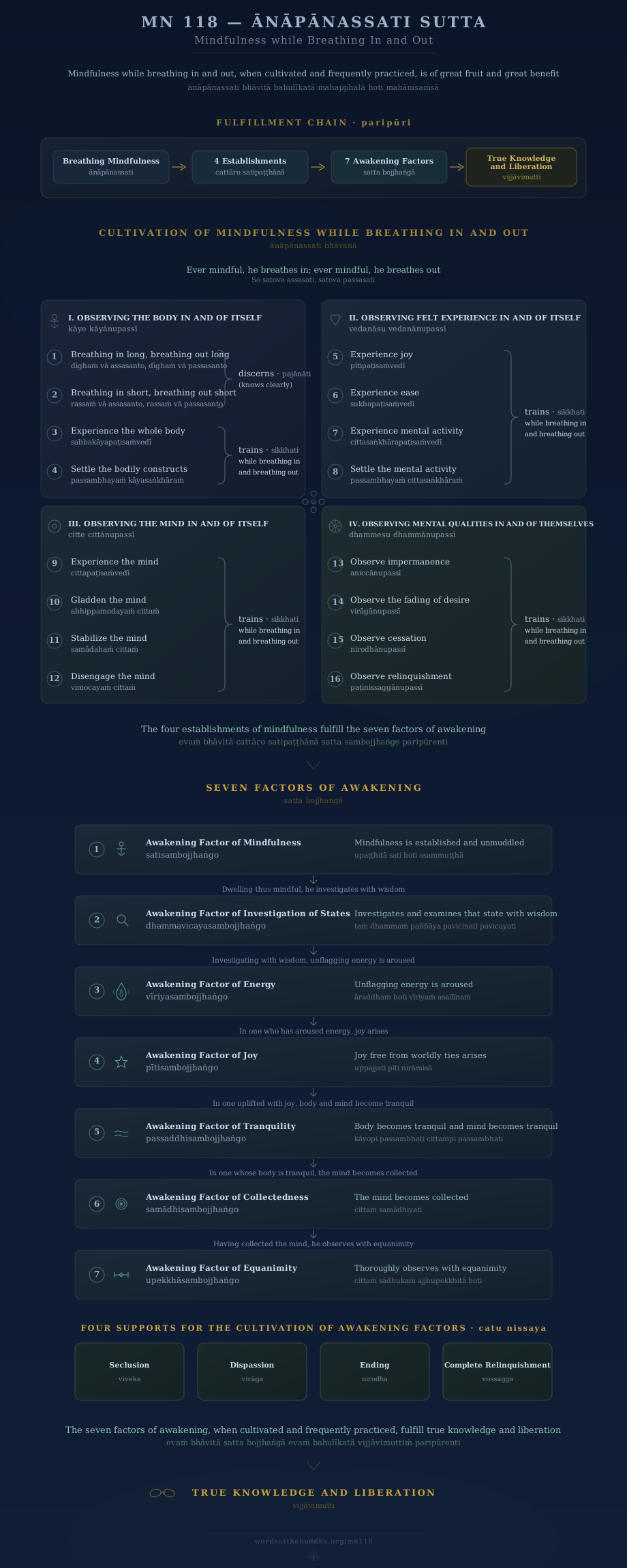
Ānāpānassati, bhikkhave, bhāvitā bahulīkatā mahapphalā hoti mahānisaṁsā. Ānāpānassati, bhikkhave, bhāvitā bahulīkatā cattāro satipaṭṭhāne paripūreti. Cattāro satipaṭṭhānā bhāvitā bahulīkatā satta bojjhaṅge paripūrenti. Satta bojjhaṅgā bhāvitā bahulīkatā vijjāvimuttiṁ paripūrenti.
Mindfulness while breathing in and out, when cultivated and frequently practiced, is of great fruit and great benefit. Mindfulness while breathing in and out, when cultivated and frequently practiced, leads to the fulfillment of the four establishments of mindfulness. The four establishments of mindfulness when cultivated and frequently practiced lead to the fulfillment of the seven factors of awakening. The seven factors of awakening when cultivated and frequently practiced lead to the fulfillment of true knowledge and liberation.
Kathaṁ bhāvitā ca, bhikkhave, ānāpānassati kathaṁ bahulīkatā mahapphalā hoti mahānisaṁsā?
And how is mindfulness while breathing in and out cultivated and frequently practiced so that it is of great fruit and great benefit?
Idha, bhikkhave, bhikkhu araññagato vā rukkhamūlagato vā suññāgāragato vā nisīdati pallaṅkaṁ ābhujitvā ujuṁ kāyaṁ paṇidhāya parimukhaṁ satiṁ upaṭṭhapetvā. So satova assasati satova passasati.
Here, a bhikkhu, having gone to the forest, to the foot of a tree, or to an empty dwelling, sits down, folding his legs crosswise, aligning his body upright, establishing mindfulness as his primary focal point. Just mindful, he breathes in; just mindful, he breathes out.
Mindfulness of Body
Dīghaṁ vā assasanto ‘dīghaṁ assasāmī’ti pajānāti, dīghaṁ vā passasanto ‘dīghaṁ passasāmī’ti pajānāti;
rassaṁ vā assasanto ‘rassaṁ assasāmī’ti pajānāti, rassaṁ vā passasanto ‘rassaṁ passasāmī’ti pajānāti;
‘sabbakāyapaṭisaṁvedī assasissāmī’ti sikkhati, ‘sabbakāyapaṭisaṁvedī passasissāmī’ti sikkhati;
‘passambhayaṁ kāyasaṅkhāraṁ assasissāmī’ti sikkhati, ‘passambhayaṁ kāyasaṅkhāraṁ passasissāmī’ti sikkhati.
1.) Breathing in long, he discerns the long in-breath; breathing out long, he discerns the long out-breath.
2.) Breathing in short, he discerns the short in-breath; breathing out short, he discerns the short out-breath.
3.) He trains to experience the whole body while breathing in; he trains to experience the whole body while breathing out.
4.) He trains to settle the bodily constructs while breathing in; he trains to settle the bodily constructs while breathing out.
Mindfulness of Felt Experience
‘Pītipaṭisaṁvedī assasissāmī’ti sikkhati, ‘pītipaṭisaṁvedī passasissāmī’ti sikkhati;
‘sukhapaṭisaṁvedī assasissāmī’ti sikkhati, ‘sukhapaṭisaṁvedī passasissāmī’ti sikkhati;
‘cittasaṅkhārapaṭisaṁvedī assasissāmī’ti sikkhati, ‘cittasaṅkhārapaṭisaṁvedī passasissāmī’ti sikkhati;
‘passambhayaṁ cittasaṅkhāraṁ assasissāmī’ti sikkhati, ‘passambhayaṁ cittasaṅkhāraṁ passasissāmī’ti sikkhati.
1.) He trains to experience uplifting joy while breathing in; he trains to experience uplifting joy while breathing out.
2.) He trains to experience ease while breathing in; he trains to experience ease while breathing out.
3.) He trains to experience mental constructs while breathing in; he trains to experience mental constructs while breathing out.
4.) He trains to settle the mental constructs while breathing in; he trains to settle the mental constructs while breathing out.
Mindfulness of Mind
‘Cittapaṭisaṁvedī assasissāmī’ti sikkhati, ‘cittapaṭisaṁvedī passasissāmī’ti sikkhati;
‘abhippamodayaṁ cittaṁ assasissāmī’ti sikkhati, ‘abhippamodayaṁ cittaṁ passasissāmī’ti sikkhati;
‘samādahaṁ cittaṁ assasissāmī’ti sikkhati, ‘samādahaṁ cittaṁ passasissāmī’ti sikkhati;
‘vimocayaṁ cittaṁ assasissāmī’ti sikkhati, ‘vimocayaṁ cittaṁ passasissāmī’ti sikkhati.
1.) He trains to experience the mind while breathing in; he trains to experience the mind while breathing out.
2.) He trains to gladden the mind while breathing in; he trains to gladden the mind while breathing out.
3.) He trains to collect the mind while breathing in; he trains to collect the mind while breathing out.
4.) He trains to disengage the mind while breathing in; he trains to disengage the mind while breathing out.
Mindfulness of Mental Qualities
‘Aniccānupassī assasissāmī’ti sikkhati, ‘aniccānupassī passasissāmī’ti sikkhati;
‘virāgānupassī assasissāmī’ti sikkhati, ‘virāgānupassī passasissāmī’ti sikkhati;
‘nirodhānupassī assasissāmī’ti sikkhati, ‘nirodhānupassī passasissāmī’ti sikkhati;
‘paṭinissaggānupassī assasissāmī’ti sikkhati, ‘paṭinissaggānupassī passasissāmī’ti sikkhati.
1.) He trains to observe impermanence while breathing in; he trains to observe impermanence while breathing out.
2.) He trains to observe fading of desire while breathing in; he trains to observe fading of desire while breathing out.
3.) He trains to observe cessation while breathing in; he trains to observe cessation while breathing out.
4.) He trains to observe relinquishment while breathing in; he trains to observe relinquishment while breathing out.
Evaṁ bhāvitā kho, bhikkhave, ānāpānassati evaṁ bahulīkatā mahapphalā hoti mahānisaṁsā.
Mindfulness while breathing in and out when cultivated and frequently practiced in this way, is of great fruit and great benefit.
Fulfillment of the Four Establishments of Mindfulness
Kathaṁ bhāvitā ca, bhikkhave, ānāpānassati kathaṁ bahulīkatā cattāro satipaṭṭhāne paripūreti?
And how is mindfulness while breathing in and out cultivated and frequently practiced so that it fulfills the four establishments of mindfulness?
Yasmiṁ samaye, bhikkhave, bhikkhu dīghaṁ vā assasanto ‘dīghaṁ assasāmī’ti pajānāti, dīghaṁ vā passasanto ‘dīghaṁ passasāmī’ti pajānāti; rassaṁ vā assasanto ‘rassaṁ assasāmī’ti pajānāti, rassaṁ vā passasanto ‘rassaṁ passasāmī’ti pajānāti; ‘sabbakāyapaṭisaṁvedī assasissāmī’ti sikkhati, ‘sabbakāyapaṭisaṁvedī passasissāmī’ti sikkhati; ‘passambhayaṁ kāyasaṅkhāraṁ assasissāmī’ti sikkhati, ‘passambhayaṁ kāyasaṅkhāraṁ passasissāmī’ti sikkhati; kāye kāyānupassī, bhikkhave, tasmiṁ samaye bhikkhu viharati ātāpī sampajāno satimā vineyya loke abhijjhādomanassaṁ. Kāyesu kāyaññatarāhaṁ, bhikkhave, evaṁ vadāmi yadidaṁ—assāsapassāsā. Tasmātiha, bhikkhave, kāye kāyānupassī tasmiṁ samaye bhikkhu viharati ātāpī sampajāno satimā vineyya loke abhijjhādomanassaṁ.
On whatever occasion a bhikkhu, breathing in long, discerns the long in-breath, or breathing out long, discerns the long out-breath; breathing in short, discerns the short in-breath, or breathing out short, discerns the short out-breath; trains to experience the whole body while breathing in, and to experience the whole body while breathing out; trains to settle the bodily constructs while breathing in, and to settle the bodily constructs while breathing out—on that occasion, the bhikkhu dwells observing the body in and of itself, with continuous effort, clearly aware, mindful, having removed craving and distress with regard to the world. I say that this is a certain body among the bodies, namely, breathing in and out. Therefore, on that occasion, the bhikkhu dwells observing the body in and of itself, with continuous effort, clearly aware, mindful, having removed craving and distress with regard to the world.
Yasmiṁ samaye, bhikkhave, bhikkhu ‘pītipaṭisaṁvedī assasissāmī’ti sikkhati, ‘pītipaṭisaṁvedī passasissāmī’ti sikkhati; ‘sukhapaṭisaṁvedī assasissāmī’ti sikkhati, ‘sukhapaṭisaṁvedī passasissāmī’ti sikkhati; ‘cittasaṅkhārapaṭisaṁvedī assasissāmī’ti sikkhati, ‘cittasaṅkhārapaṭisaṁvedī passasissāmī’ti sikkhati; ‘passambhayaṁ cittasaṅkhāraṁ assasissāmī’ti sikkhati, ‘passambhayaṁ cittasaṅkhāraṁ passasissāmī’ti sikkhati; vedanāsu vedanānupassī, bhikkhave, tasmiṁ samaye bhikkhu viharati ātāpī sampajāno satimā vineyya loke abhijjhādomanassaṁ. Vedanāsu vedanāññatarāhaṁ, bhikkhave, evaṁ vadāmi yadidaṁ—assāsapassāsānaṁ sādhukaṁ manasikāraṁ. Tasmātiha, bhikkhave, vedanāsu vedanānupassī tasmiṁ samaye bhikkhu viharati ātāpī sampajāno satimā vineyya loke abhijjhādomanassaṁ.
On whatever occasion a bhikkhu trains to experience uplifting joy while breathing in, and to experience uplifting joy while breathing out; trains to experience ease while breathing in, and to experience ease while breathing out; trains to experience mental constructs while breathing in, and to experience mental constructs while breathing out; trains to settle the mental constructs while breathing in, and to settle the mental constructs while breathing out—on that occasion, the bhikkhu dwells observing felt experiences in and of themselves, with continuous effort, clearly aware, mindful, having removed craving and distress with regard to the world. I say that this is a certain felt experience among the felt experiences, namely, giving close attention to breathing in and out. Therefore, on that occasion, the bhikkhu dwells observing felt experiences in and of themselves, with continuous effort, clearly aware, mindful, having removed craving and distress with regard to the world.
Yasmiṁ samaye, bhikkhave, bhikkhu ‘cittapaṭisaṁvedī assasissāmī’ti sikkhati, ‘cittapaṭisaṁvedī passasissāmī’ti sikkhati; ‘abhippamodayaṁ cittaṁ assasissāmī’ti sikkhati, ‘abhippamodayaṁ cittaṁ passasissāmī’ti sikkhati; ‘samādahaṁ cittaṁ assasissāmī’ti sikkhati, ‘samādahaṁ cittaṁ passasissāmī’ti sikkhati; ‘vimocayaṁ cittaṁ assasissāmī’ti sikkhati, ‘vimocayaṁ cittaṁ passasissāmī’ti sikkhati; citte cittānupassī, bhikkhave, tasmiṁ samaye bhikkhu viharati ātāpī sampajāno satimā vineyya loke abhijjhādomanassaṁ. Nāhaṁ, bhikkhave, muṭṭhassatissa asampajānassa ānāpānassatiṁ vadāmi. Tasmātiha, bhikkhave, citte cittānupassī tasmiṁ samaye bhikkhu viharati ātāpī sampajāno satimā vineyya loke abhijjhādomanassaṁ.
On whatever occasion a bhikkhu trains to experience the mind while breathing in, and to experience the mind while breathing out; trains to gladden the mind while breathing in, and to gladden the mind while breathing out; trains to collect the mind while breathing in, and to collect the mind while breathing out; trains to disengage the mind while breathing in, and to disengage the mind while breathing out—on that occasion, the bhikkhu dwells observing the mind in and of itself, with continuous effort, clearly aware, mindful, having removed craving and distress with regard to the world. I do not say that there is the cultivation of mindfulness while breathing in and out for one who is muddle-minded and lacking clear awareness. Therefore, on that occasion, the bhikkhu dwells observing the mind in and of itself, with continuous effort, clearly aware, mindful, having removed craving and distress with regard to the world.
Yasmiṁ samaye, bhikkhave, bhikkhu ‘aniccānupassī assasissāmī’ti sikkhati, ‘aniccānupassī passasissāmī’ti sikkhati; ‘virāgānupassī assasissāmī’ti sikkhati, ‘virāgānupassī passasissāmī’ti sikkhati; ‘nirodhānupassī assasissāmī’ti sikkhati, ‘nirodhānupassī passasissāmī’ti sikkhati; ‘paṭinissaggānupassī assasissāmī’ti sikkhati, ‘paṭinissaggānupassī passasissāmī’ti sikkhati; dhammesu dhammānupassī, bhikkhave, tasmiṁ samaye bhikkhu viharati ātāpī sampajāno satimā vineyya loke abhijjhādomanassaṁ. So yaṁ taṁ abhijjhādomanassānaṁ pahānaṁ taṁ paññāya disvā sādhukaṁ ajjhupekkhitā hoti. Tasmātiha, bhikkhave, dhammesu dhammānupassī tasmiṁ samaye bhikkhu viharati ātāpī sampajāno satimā vineyya loke abhijjhādomanassaṁ.
On whatever occasion a bhikkhu trains to observe impermanence while breathing in, and to observe impermanence while breathing out; trains to observe the fading of desire while breathing in, and to observe the fading of desire while breathing out; trains to observe cessation while breathing in, and to observe cessation while breathing out; trains to observe relinquishment while breathing in, and to observe relinquishment while breathing out—on that occasion, the bhikkhu dwells observing mental qualities in and of themselves, with continuous effort, clearly aware, mindful, having removed craving and distress with regard to the world. Having seen with wisdom the abandoning of craving and distress, he closely looks on with equanimity. Therefore, on that occasion, the bhikkhu dwells observing mental qualities in and of themselves, with continuous effort, clearly aware, mindful, having removed craving and distress with regard to the world.
Evaṁ bhāvitā kho, bhikkhave, ānāpānassati evaṁ bahulīkatā cattāro satipaṭṭhāne paripūreti.
Mindfulness while breathing in and out when cultivated and frequently practiced in this way fulfills the four establishments of mindfulness.
Fulfillment of the Seven Factors of Awakening
Kathaṁ bhāvitā ca, bhikkhave, cattāro satipaṭṭhānā kathaṁ bahulīkatā satta bojjhaṅge paripūrenti?
And how do the four establishments of mindfulness, cultivated and frequently practiced, fulfill the seven factors of awakening?
Yasmiṁ samaye, bhikkhave, bhikkhu kāye kāyānupassī viharati ātāpī sampajāno satimā vineyya loke abhijjhādomanassaṁ, upaṭṭhitāssa tasmiṁ samaye sati hoti asammuṭṭhā. Yasmiṁ samaye, bhikkhave, bhikkhuno upaṭṭhitā sati hoti asammuṭṭhā, satisambojjhaṅgo tasmiṁ samaye bhikkhuno āraddho hoti. Satisambojjhaṅgaṁ tasmiṁ samaye bhikkhu bhāveti, satisambojjhaṅgo tasmiṁ samaye bhikkhuno bhāvanāpāripūriṁ gacchati.
On whatever occasion a bhikkhu dwells observing the body in and of itself, with continuous effort, clearly aware, mindful, having removed craving and distress with regard to the world, on that occasion his mindfulness is established and unmuddled. When a bhikkhu’s mindfulness is established and unmuddled, on that occasion the awakening factor of mindfulness is aroused in him. He cultivates the awakening factor of mindfulness, and by cultivation the awakening factor of mindfulness comes to fulfillment in him.
So tathāsato viharanto taṁ dhammaṁ paññāya pavicinati pavicayati parivīmaṁsaṁ āpajjati. Yasmiṁ samaye, bhikkhave, bhikkhu tathāsato viharanto taṁ dhammaṁ paññāya pavicinati pavicayati parivīmaṁsaṁ āpajjati, dhammavicayasambojjhaṅgo tasmiṁ samaye bhikkhuno āraddho hoti, dhammavicayasambojjhaṅgaṁ tasmiṁ samaye bhikkhu bhāveti, dhammavicayasambojjhaṅgo tasmiṁ samaye bhikkhuno bhāvanāpāripūriṁ gacchati.
Dwelling thus mindful, he investigates and examines that state with wisdom and undertakes a full inquiry into it. On whatever occasion, dwelling thus mindful, a bhikkhu investigates and examines that state with wisdom and undertakes a full inquiry into it—on that occasion the awakening factor of investigation of states is aroused in him. He cultivates the awakening factor of investigation of states, and by cultivation it comes to fulfillment in him.
Tassa taṁ dhammaṁ paññāya pavicinato pavicayato parivīmaṁsaṁ āpajjato āraddhaṁ hoti vīriyaṁ asallīnaṁ. Yasmiṁ samaye, bhikkhave, bhikkhuno taṁ dhammaṁ paññāya pavicinato pavicayato parivīmaṁsaṁ āpajjato āraddhaṁ hoti vīriyaṁ asallīnaṁ, vīriyasambojjhaṅgo tasmiṁ samaye bhikkhuno āraddho hoti, vīriyasambojjhaṅgaṁ tasmiṁ samaye bhikkhu bhāveti, vīriyasambojjhaṅgo tasmiṁ samaye bhikkhuno bhāvanāpāripūriṁ gacchati.
As he investigates, examines, and undertakes full inquiry into that state with wisdom, unflagging energy is aroused in him. On whatever occasion a bhikkhu, investigating, examining, and undertaking full inquiry into that state with wisdom, arouses unflagging energy—on that occasion the awakening factor of energy is aroused in him. He cultivates the awakening factor of energy, and by cultivation it comes to fulfillment in him.
Āraddhavīriyassa uppajjati pīti nirāmisā. Yasmiṁ samaye, bhikkhave, bhikkhuno āraddhavīriyassa uppajjati pīti nirāmisā, pītisambojjhaṅgo tasmiṁ samaye bhikkhuno āraddho hoti, pītisambojjhaṅgaṁ tasmiṁ samaye bhikkhu bhāveti, pītisambojjhaṅgo tasmiṁ samaye bhikkhuno bhāvanāpāripūriṁ gacchati.
In one who has aroused energy, joy that is free from worldly ties arises. On whatever occasion joy that is free from worldly ties arises in a bhikkhu who has aroused energy—on that occasion the awakening factor of joy is aroused in him. He cultivates the awakening factor of joy, and by cultivation it comes to fulfillment in him.
Pītimanassa kāyopi passambhati, cittampi passambhati. Yasmiṁ samaye, bhikkhave, bhikkhuno pītimanassa kāyopi passambhati, cittampi passambhati, passaddhisambojjhaṅgo tasmiṁ samaye bhikkhuno āraddho hoti, passaddhisambojjhaṅgaṁ tasmiṁ samaye bhikkhu bhāveti, passaddhisambojjhaṅgo tasmiṁ samaye bhikkhuno bhāvanāpāripūriṁ gacchati.
In one who is uplifted with joy, the body becomes tranquil and the mind becomes tranquil. On whatever occasion the body and mind of a bhikkhu who is uplifted with joy become tranquil—on that occasion the awakening factor of tranquility is aroused in him. He cultivates the awakening factor of tranquility, and by cultivation it comes to fulfillment in him.
Passaddhakāyassa sukhino cittaṁ samādhiyati. Yasmiṁ samaye, bhikkhave, bhikkhuno passaddhakāyassa sukhino cittaṁ samādhiyati, samādhisambojjhaṅgo tasmiṁ samaye bhikkhuno āraddho hoti, samādhisambojjhaṅgaṁ tasmiṁ samaye bhikkhu bhāveti, samādhisambojjhaṅgo tasmiṁ samaye bhikkhuno bhāvanāpāripūriṁ gacchati.
In one whose body is tranquil and at ease, the mind becomes collected. On whatever occasion the mind of a bhikkhu whose body is tranquil and at ease becomes collected—on that occasion the awakening factor of collectedness is aroused in him. He cultivates the awakening factor of collectedness, and by cultivation it comes to fulfillment in him.
So tathāsamāhitaṁ cittaṁ sādhukaṁ ajjhupekkhitā hoti. Yasmiṁ samaye, bhikkhave, bhikkhu tathāsamāhitaṁ cittaṁ sādhukaṁ ajjhupekkhitā hoti, upekkhāsambojjhaṅgo tasmiṁ samaye bhikkhuno āraddho hoti, upekkhāsambojjhaṅgaṁ tasmiṁ samaye bhikkhu bhāveti, upekkhāsambojjhaṅgo tasmiṁ samaye bhikkhuno bhāvanāpāripūriṁ gacchati.
Having thus collected the mind, he thoroughly observes it with equanimity. On whatever occasion a bhikkhu, having thus collected the mind, thoroughly observes it with equanimity—on that occasion the awakening factor of equanimity is aroused in him. He cultivates the awakening factor of equanimity, and by cultivation it comes to fulfillment in him.
Yasmiṁ samaye, bhikkhave, bhikkhu vedanāsu …pe… citte … dhammesu dhammānupassī viharati ātāpī sampajāno satimā vineyya loke abhijjhādomanassaṁ, upaṭṭhitāssa tasmiṁ samaye sati hoti asammuṭṭhā. Yasmiṁ samaye, bhikkhave, bhikkhuno upaṭṭhitā sati hoti asammuṭṭhā, satisambojjhaṅgo tasmiṁ samaye bhikkhuno āraddho hoti, satisambojjhaṅgaṁ tasmiṁ samaye bhikkhu bhāveti, satisambojjhaṅgo tasmiṁ samaye bhikkhuno bhāvanāpāripūriṁ gacchati.
On whatever occasion a bhikkhu dwells observing felt experiences in and of themselves, or the mind in and of itself, or mental qualities in and of themselves, with continuous effort, clearly aware, mindful, having removed craving and distress with regard to the world, on that occasion his mindfulness is established and unmuddled. When a bhikkhu’s mindfulness is established and unmuddled, on that occasion the awakening factor of mindfulness is aroused in him. He cultivates the awakening factor of mindfulness, and by cultivation the awakening factor of mindfulness comes to fulfillment in him.
So tathāsato viharanto taṁ dhammaṁ paññāya pavicinati pavicayati parivīmaṁsaṁ āpajjati. Yasmiṁ samaye, bhikkhave, bhikkhu tathāsato viharanto taṁ dhammaṁ paññāya pavicinati pavicayati parivīmaṁsaṁ āpajjati, dhammavicayasambojjhaṅgo tasmiṁ samaye bhikkhuno āraddho hoti, dhammavicayasambojjhaṅgaṁ tasmiṁ samaye bhikkhu bhāveti, dhammavicayasambojjhaṅgo tasmiṁ samaye bhikkhuno bhāvanāpāripūriṁ gacchati.
Dwelling thus mindful, he investigates and examines that state with wisdom and undertakes a full inquiry into it. On whatever occasion, dwelling thus mindful, a bhikkhu investigates and examines that state with wisdom and undertakes a full inquiry into it—on that occasion the awakening factor of investigation of states is aroused in him. He cultivates the awakening factor of investigation of states, and by cultivation it comes to fulfillment in him.
Tassa taṁ dhammaṁ paññāya pavicinato pavicayato parivīmaṁsaṁ āpajjato āraddhaṁ hoti vīriyaṁ asallīnaṁ. Yasmiṁ samaye, bhikkhave, bhikkhuno taṁ dhammaṁ paññāya pavicinato pavicayato parivīmaṁsaṁ āpajjato āraddhaṁ hoti vīriyaṁ asallīnaṁ, vīriyasambojjhaṅgo tasmiṁ samaye bhikkhuno āraddho hoti, vīriyasambojjhaṅgaṁ tasmiṁ samaye bhikkhu bhāveti, vīriyasambojjhaṅgo tasmiṁ samaye bhikkhuno bhāvanāpāripūriṁ gacchati.
As he investigates, examines, and undertakes full inquiry into that state with wisdom, unflagging energy is aroused in him. On whatever occasion a bhikkhu, investigating, examining, and undertaking full inquiry into that state with wisdom, arouses unflagging energy—on that occasion the awakening factor of energy is aroused in him. He cultivates the awakening factor of energy, and by cultivation it comes to fulfillment in him.
Āraddhavīriyassa uppajjati pīti nirāmisā. Yasmiṁ samaye, bhikkhave, bhikkhuno āraddhavīriyassa uppajjati pīti nirāmisā, pītisambojjhaṅgo tasmiṁ samaye bhikkhuno āraddho hoti, pītisambojjhaṅgaṁ tasmiṁ samaye bhikkhu bhāveti, pītisambojjhaṅgo tasmiṁ samaye bhikkhuno bhāvanāpāripūriṁ gacchati.
In one who has aroused energy, joy that is free from worldly ties arises. On whatever occasion joy that is free from worldly ties arises in a bhikkhu who has aroused energy—on that occasion the awakening factor of joy is aroused in him. He cultivates the awakening factor of joy, and by cultivation it comes to fulfillment in him.
Pītimanassa kāyopi passambhati, cittampi passambhati. Yasmiṁ samaye, bhikkhave, bhikkhuno pītimanassa kāyopi passambhati, cittampi passambhati, passaddhisambojjhaṅgo tasmiṁ samaye bhikkhuno āraddho hoti, passaddhisambojjhaṅgaṁ tasmiṁ samaye bhikkhu bhāveti, passaddhisambojjhaṅgo tasmiṁ samaye bhikkhuno bhāvanāpāripūriṁ gacchati.
In one who is uplifted with joy, the body becomes tranquil and the mind becomes tranquil. On whatever occasion the body and mind of a bhikkhu who is uplifted with joy become tranquil—on that occasion the awakening factor of tranquility is aroused in him. He cultivates the awakening factor of tranquility, and by cultivation it comes to fulfillment in him.
Passaddhakāyassa sukhino cittaṁ samādhiyati. Yasmiṁ samaye, bhikkhave, bhikkhuno passaddhakāyassa sukhino cittaṁ samādhiyati, samādhisambojjhaṅgo tasmiṁ samaye bhikkhuno āraddho hoti, samādhisambojjhaṅgaṁ tasmiṁ samaye bhikkhu bhāveti, samādhisambojjhaṅgo tasmiṁ samaye bhikkhuno bhāvanāpāripūriṁ gacchati.
In one whose body is tranquil and at ease, the mind becomes collected. On whatever occasion the mind of a bhikkhu whose body is tranquil and at ease becomes collected—on that occasion the awakening factor of collectedness is aroused in him. He cultivates the awakening factor of collectedness, and by cultivation it comes to fulfillment in him.
So tathāsamāhitaṁ cittaṁ sādhukaṁ ajjhupekkhitā hoti. Yasmiṁ samaye, bhikkhave, bhikkhu tathāsamāhitaṁ cittaṁ sādhukaṁ ajjhupekkhitā hoti, upekkhāsambojjhaṅgo tasmiṁ samaye bhikkhuno āraddho hoti, upekkhāsambojjhaṅgaṁ tasmiṁ samaye bhikkhu bhāveti, upekkhāsambojjhaṅgo tasmiṁ samaye bhikkhuno bhāvanāpāripūriṁ gacchati.
Having thus collected the mind, he thoroughly observes it with equanimity. On whatever occasion a bhikkhu, having thus collected the mind, thoroughly observes it with equanimity—on that occasion the awakening factor of equanimity is aroused in him. He cultivates the awakening factor of equanimity, and by cultivation it comes to fulfillment in him.
Evaṁ bhāvitā kho, bhikkhave, cattāro satipaṭṭhānā evaṁ bahulīkatā satta sambojjhaṅge paripūrenti.
That is how the four establishments of mindfulness, when cultivated and frequently practiced, fulfill the seven factors of awakening.
Fulfillment of True Knowledge and Liberation
Kathaṁ bhāvitā ca, bhikkhave, satta bojjhaṅgā kathaṁ bahulīkatā vijjāvimuttiṁ paripūrenti?
And how do the seven factors of awakening, when cultivated and frequently practiced, fulfill true knowledge and liberation?
Idha, bhikkhave, bhikkhu satisambojjhaṅgaṁ bhāveti vivekanissitaṁ virāganissitaṁ nirodhanissitaṁ vossaggapariṇāmiṁ. Dhammavicayasambojjhaṅgaṁ bhāveti …pe… vīriyasambojjhaṅgaṁ bhāveti … pītisambojjhaṅgaṁ bhāveti … passaddhisambojjhaṅgaṁ bhāveti … samādhisambojjhaṅgaṁ bhāveti … upekkhāsambojjhaṅgaṁ bhāveti vivekanissitaṁ virāganissitaṁ nirodhanissitaṁ vossaggapariṇāmiṁ.
Here, a bhikkhu cultivates the awakening factor of mindfulness, which is supported by seclusion, supported by dispassion, supported by cessation, and culminates in complete relinquishment. He cultivates the awakening factor of investigation of states ... awakening factor of energy ... awakening factor of joy ... awakening factor of tranquility ... awakening factor of collectedness ... awakening factor of equanimity, which is supported by seclusion, supported by dispassion, supported by cessation, and culminates in complete relinquishment.
Evaṁ bhāvitā kho, bhikkhave, satta bojjhaṅgā evaṁ bahulīkatā vijjāvimuttiṁ paripūrentī”ti.
That is how the seven factors of awakening, when cultivated and frequently practiced, fulfill true knowledge and liberation.
Idamavoca bhagavā. Attamanā te bhikkhū bhagavato bhāsitaṁ abhinandunti.
The Blessed One said this. The bhikkhus were delighted and pleased with the Blessed One’s words.