Evaṁ me sutaṁ— ekaṁ samayaṁ bhagavā bhaggesu viharati susumāragire bhesakaḷāvane migadāye.
Thus have I heard—At one time, the Blessed One was dwelling among the |Bhaggans::name of the people of Bhagga [bhaggā]| in |Crocodile Mountain::name of the capital city of Bhagga [susumāragira]|, in the Deer Park at Bhesakaḷā Grove.
Tena kho pana samayena āyasmā mahāmoggallāno magadhesu kallavāḷaputtagāme pacalāyamāno nisinno hoti. Addasā kho bhagavā dibbena cakkhunā visuddhena atikkantamānusakena āyasmantaṁ mahāmoggallānaṁ magadhesu kallavāḷaputtagāme pacalāyamānaṁ nisinnaṁ. Disvā— seyyathāpi nāma balavā puriso samiñjitaṁ vā bāhaṁ pasāreyya, pasāritaṁ vā bāhaṁ samiñjeyya; evamevaṁ—bhaggesu susumāragire bhesakaḷāvane migadāye antarahito magadhesu kallavāḷaputtagāme āyasmato mahāmoggallānassa sammukhe pāturahosi.
Now, at that time, the venerable |Mahāmoggallāna::foremost disciple of the Buddha in psychic power; lit. Moggallāna the great [mahāmoggallāna]| was sitting and dozing in the Magadhan |village of Kallavāḷaputta::name of a village in Magadha; lit. son of the liquor dealer village [kallavāḷaputtagāma]|. The Blessed One, with the |divine eye::the faculty of clairvoyance, the ability to see beyond the ordinary human range [dibbacakkhu]|, purified and surpassing human vision, saw Venerable Mahāmoggallāna sitting and dozing. Having seen—just as a strong man might extend his flexed arm or flex his extended arm—the Blessed One disappeared from the Deer Park at Bhesakaḷā Grove in Crocodile Mountain among the Bhaggans and reappeared in front of venerable Mahāmoggallāna in the Magadhan village of Kallavāḷaputta.
Nisīdi bhagavā paññatte āsane. Nisajja kho bhagavā āyasmantaṁ mahāmoggallānaṁ etadavoca: “Pacalāyasi no tvaṁ, moggallāna, pacalāyasi no tvaṁ, moggallānā”ti?
The Blessed One sat on the prepared seat. Having sat down, the Blessed One said to venerable Mahāmoggallāna: “Are you dozing, Moggallāna? Are you dozing, Moggallāna?”
“Evaṁ, bhante”.
“Yes, venerable sir.”
“Tasmātiha, moggallāna, yathāsaññissa te viharato taṁ middhaṁ okkamati, taṁ saññaṁ mā manasākāsi, taṁ saññaṁ mā bahulamakāsi. Ṭhānaṁ kho panetaṁ, moggallāna, vijjati yaṁ te evaṁ viharato taṁ middhaṁ pahīyetha.
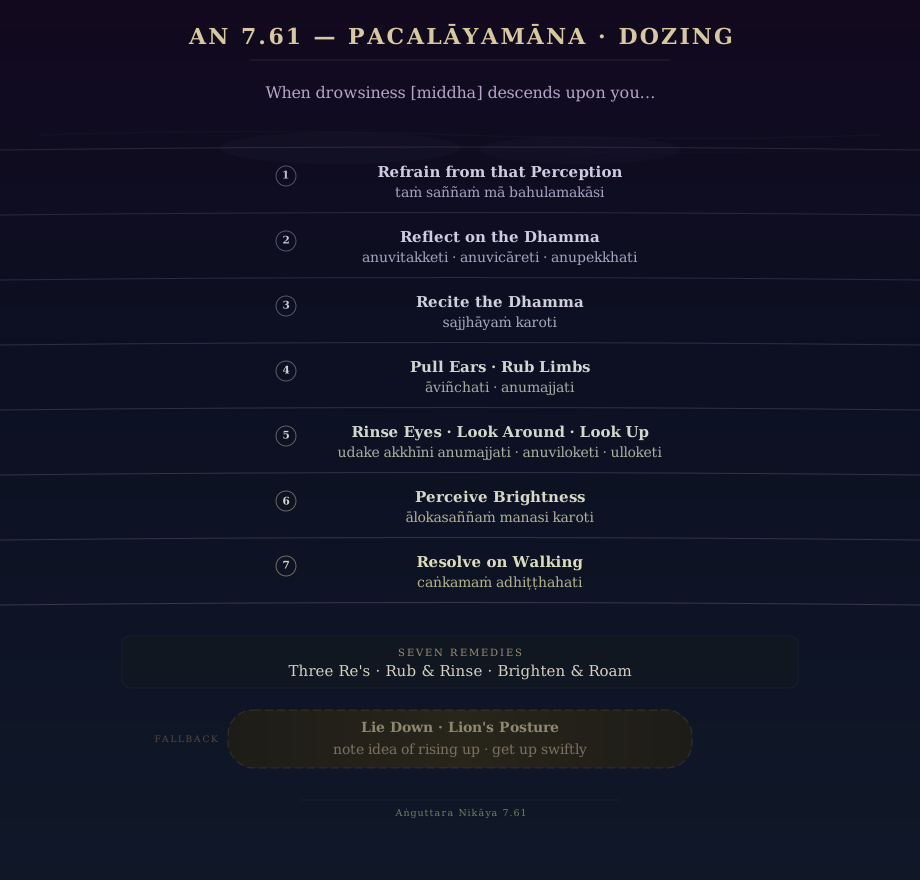
“1.) Therefore, Moggallāna, whatever |perception::conception; recognition, representation, symbol; third of the five aggregates [saññā]| you are attending to when that |drowsiness::sluggishness, feeling lethargic; lit. stiffness [middha]| descends upon you, do not attend to that perception, do not |cultivate::develop, often practice in [bahulamakāsi]| it. It is possible that by dwelling in this way, that drowsiness will be abandoned.”
No ce te evaṁ viharato taṁ middhaṁ pahīyetha, tato tvaṁ, moggallāna, yathāsutaṁ yathāpariyattaṁ dhammaṁ cetasā anuvitakkeyyāsi anuvicāreyyāsi, manasā anupekkheyyāsi. Ṭhānaṁ kho panetaṁ vijjati yaṁ te evaṁ viharato taṁ middhaṁ pahīyetha.
2.) If, while dwelling in this way, that drowsiness is not abandoned, then, Moggallāna, you should |ponder over::reflect on, rethink [anuvitakketi]|, |re-examine::relook at [anuvicāreti]|, and |mentally investigate::mentally recollect; lit. reconsider in mind [manasānupekkhati]| the |Dhamma::teachings of the Buddha that point to the nature of reality, the ultimate truth [dhamma]| just as you have heard it and learned it. It is possible that by dwelling in this way, that drowsiness will be abandoned.
No ce te evaṁ viharato taṁ middhaṁ pahīyetha, tato tvaṁ, moggallāna, yathāsutaṁ yathāpariyattaṁ dhammaṁ vitthārena sajjhāyaṁ kareyyāsi. Ṭhānaṁ kho panetaṁ vijjati yaṁ te evaṁ viharato taṁ middhaṁ pahīyetha.
3.) If, while dwelling in this way, that drowsiness is not abandoned, then, Moggallāna, you should |recite::rehearse, repeat [sajjhāya]| the Dhamma in detail just as you have heard it and learned it. It is possible that by dwelling in this way, that drowsiness will be abandoned.
No ce te evaṁ viharato taṁ middhaṁ pahīyetha, tato tvaṁ, moggallāna, ubho kaṇṇasotāni āviñcheyyāsi, pāṇinā gattāni anumajjeyyāsi. Ṭhānaṁ kho panetaṁ vijjati yaṁ te evaṁ viharato taṁ middhaṁ pahīyetha.
4.) If, while dwelling in this way, that drowsiness is not abandoned, then, Moggallāna, you should pull both earlobes and rub your limbs with your hands. It is possible that by dwelling in this way, that drowsiness will be abandoned.
No ce te evaṁ viharato taṁ middhaṁ pahīyetha, tato tvaṁ, moggallāna, uṭṭhāyāsanā udakena akkhīni anumajjitvā disā anuvilokeyyāsi, nakkhattāni tārakarūpāni ullokeyyāsi. Ṭhānaṁ kho panetaṁ vijjati yaṁ te evaṁ viharato taṁ middhaṁ pahīyetha.
5.) If, while dwelling in this way, that drowsiness is not abandoned, then, Moggallāna, rising from your seat, you should wash your eyes with water, look around in all directions, and look up at the stars and constellations. It is possible that by dwelling in this way, that drowsiness will be abandoned.
No ce te evaṁ viharato taṁ middhaṁ pahīyetha, tato tvaṁ, moggallāna, ālokasaññaṁ manasi kareyyāsi, divāsaññaṁ adhiṭṭhaheyyāsi— yathā divā tathā rattiṁ yathā rattiṁ tathā divā. Iti vivaṭena cetasā apariyonaddhena sappabhāsaṁ cittaṁ bhāveyyāsi. Ṭhānaṁ kho panetaṁ vijjati yaṁ te evaṁ viharato taṁ middhaṁ pahīyetha.
6.) If, while dwelling in this way, that drowsiness is not abandoned, then, Moggallāna, you should attend to the |perception of brightness::perception of light [ālokasaññā]| and |resolve::determine; lit. stand firmly [adhiṭṭhāti]| on the |perception of daylight::concept of day [divāsaññā]|: as by day, so by night; as by night, so by day. Thus, with an |open::clarified, made clear; lit. uncovered [vivaṭa]| and |unentangled::unbound, unhampered [apariyonaddha]| awareness, you should develop a |radiant::brightened, luminous [sappabhāsa]| mind. It is possible that by dwelling in this way, that drowsiness will be abandoned.
No ce te evaṁ viharato taṁ middhaṁ pahīyetha, tato tvaṁ, moggallāna, pacchāpuresaññī caṅkamaṁ adhiṭṭhaheyyāsi antogatehi indriyehi abahigatena mānasena. Ṭhānaṁ kho panetaṁ vijjati yaṁ te evaṁ viharato taṁ middhaṁ pahīyetha.
7.) If, while dwelling in this way, that drowsiness is not abandoned, then, Moggallāna, you should resolve on |walking meditation::walking back and forth [caṅkama]|, |continuously aware::maintaining spatial focus on the meditation path, not drifting into the past or future; lit. aware of what is in front and behind [pacchāpuresaññī]|, with your senses |directed inward::internally focused; lit. gone inside [antogata]| and your mind |not straying outward::not wandering externally; lit. not gone outside [abahigata]|. It is possible that by dwelling in this way, that drowsiness will be abandoned.
No ce te evaṁ viharato taṁ middhaṁ pahīyetha, tato tvaṁ, moggallāna, dakkhiṇena passena sīhaseyyaṁ kappeyyāsi pāde pādaṁ accādhāya sato sampajāno uṭṭhānasaññaṁ manasi karitvā. Paṭibuddhena ca te, moggallāna, khippaññeva paccuṭṭhātabbaṁ: ‘na seyyasukhaṁ na passasukhaṁ na middhasukhaṁ anuyutto viharissāmī’ti. Evañhi te, moggallāna, sikkhitabbaṁ.
If, while dwelling in this way, that drowsiness is not abandoned, then, Moggallāna, you should lie down on your right side in the lion’s posture, placing one leg overlapping the other, |mindful::remembering to be present with continuous effort, observing the body in and of itself, feelings in and of itself, mind in and of itself, mental qualities in and of themselves [sata]| and |clearly aware::with attentiveness, with clear and full comprehension, intentional, deliberate, purposeful [sampajāna]|, having attended to the idea of rising up. Upon waking up, Moggallāna, you should get up swiftly, thinking: ‘I will not dwell |indulging in::engaged in; lit. yoked alongside [anuyutta]| the pleasure of lying down, the pleasure of resting, the |pleasure of dozing::pleasure of sleeping [middhasukha]|.’ Moggallāna, this is how you should train yourself.
Tasmātiha, moggallāna, evaṁ sikkhitabbaṁ: ‘na uccāsoṇḍaṁ paggahetvā kulāni upasaṅkamissāmī’ti. Evañhi te, moggallāna, sikkhitabbaṁ. Sace, moggallāna, bhikkhu uccāsoṇḍaṁ paggahetvā kulāni upasaṅkamati, santi hi, moggallāna, kulesu kiccakaraṇīyāni. Yehi manussā āgataṁ bhikkhuṁ na manasi karonti, tatra bhikkhussa evaṁ hoti: ‘kosu nāma idāni maṁ imasmiṁ kule paribhindi, virattarūpā dānime mayi manussā’ti. Itissa alābhena maṅkubhāvo, maṅkubhūtassa uddhaccaṁ, uddhatassa asaṁvaro, asaṁvutassa ārā cittaṁ samādhimhā.
Therefore, Moggallāna, you should train yourself thus: ‘We will not approach families [for alms] with a head swollen with pride.’ Moggallāna, this is how you should train yourself. It may be, Moggallāna, that a bhikkhu approaches families with a head swollen with pride. Now there are chores to be done in the families, and for this reason, when a bhikkhu turns up, people may not pay attention to him. In such a case the bhikkhu might think: ‘Who has turned this family against me? It seems these people have now become indifferent toward me.’ In this way, through lack of gain one feels |humiliated::ashamed, embarrassed [maṅku]|; when feeling humiliated, one experiences |restlessness::mental agitation, distraction, excitement [uddhacca]|; when one is |restless::agitated, unbalanced, confused about what is right and wrong [uddhata]|, one lacks restraint. For one who is |unrestrained::uncontrolled, unguarded [asaṁvuta]|, the mind is far from |collectedness::stability of mind, stillness of mind, mental composure [samādhi]|.
Tasmātiha, moggallāna, evaṁ sikkhitabbaṁ: ‘na viggāhikakathaṁ kathessāmī’ti. Evañhi te, moggallāna, sikkhitabbaṁ. Viggāhikāya, moggallāna, kathāya sati kathābāhullaṁ pāṭikaṅkhaṁ, kathābāhulle sati uddhaccaṁ, uddhatassa asaṁvaro, asaṁvutassa ārā cittaṁ samādhimhā. Nāhaṁ, moggallāna, sabbeheva saṁsaggaṁ vaṇṇayāmi. Na panāhaṁ, moggallāna, sabbeheva saṁsaggaṁ na vaṇṇayāmi. Sagahaṭṭhapabbajitehi kho ahaṁ, moggallāna, saṁsaggaṁ na vaṇṇayāmi. Yāni ca kho tāni senāsanāni appasaddāni appanigghosāni vijanavātāni manussarāhasseyyakāni paṭisallānasāruppāni tathārūpehi senāsanehi saṁsaggaṁ vaṇṇayāmī”ti.
Therefore, Moggallāna, you should train yourself thus: ‘We will not engage in |contentious talk::argumentative discussion, quarrelsome speech [viggāhikakathā]|.’ Moggallāna, this is how you should train yourself. When there is contentious talk, Moggallāna, excess of talk is to be expected. When there is an excess of talk, there is restlessness; when one is restless, one lacks restraint. For one who is unrestrained, the mind is far from collectedness. Moggallāna, I do not praise |associating::bonding, mingling, mixing [saṁsagga]| with everyone whatsoever, nor do I praise associating with no one at all. I do not praise associating with householders and those gone forth. But as for those lodgings that are quiet, free from noise, with an atmosphere of seclusion, hidden from people, and suitable for retreat, I praise associating with lodgings of that sort.”
Evaṁ vutte, āyasmā mahāmoggallāno bhagavantaṁ etadavoca: “kittāvatā nu kho, bhante, bhikkhu saṅkhittena taṇhāsaṅkhayavimutto hoti accantaniṭṭho accantayogakkhemī accantabrahmacārī accantapariyosāno seṭṭho devamanussānan”ti?
When this was said, venerable Mahāmoggallāna said to the Blessed One: “Briefly, venerable sir, in what way is a bhikkhu liberated by the |exhaustion of craving::extinction of wanting [taṇhāsaṅkhaya]|, being one who is absolutely done, completely free from bondage, who has completed the spiritual life, who has reached the complete conclusion, and who is the best among gods and humans?”
“Idha, moggallāna, bhikkhuno sutaṁ hoti: ‘sabbe dhammā nālaṁ abhinivesāyā’ti; evañcetaṁ, moggallāna, bhikkhuno sutaṁ hoti: ‘sabbe dhammā nālaṁ abhinivesāyā’ti. So sabbaṁ dhammaṁ abhijānāti, sabbaṁ dhammaṁ abhiññāya sabbaṁ dhammaṁ parijānāti. Sabbaṁ dhammaṁ pariññāya yaṁ kiñci vedanaṁ vediyati sukhaṁ vā dukkhaṁ vā adukkhamasukhaṁ vā. So tāsu vedanāsu aniccānupassī viharati, virāgānupassī viharati, nirodhānupassī viharati, paṭinissaggānupassī viharati. So tāsu vedanāsu aniccānupassī viharanto virāgānupassī viharanto nirodhānupassī viharanto paṭinissaggānupassī viharanto na kiñci loke upādiyati, anupādiyaṁ na paritassati, aparitassaṁ paccattaṁyeva parinibbāyati.
Here, Moggallāna, a bhikkhu has learned: ‘Nothing is worth |holding on::adhering, clinging, sticking [abhinivesa]| to.’ When a bhikkhu has learned: ‘Nothing is worth holding on to,’ he |directly knows::understands experientially; lit. completely knows [abhijānāti]| all things. Having directly known all things, he |completely comprehends::fully understands [parijānāti]| all things. Having completely comprehended all things, whatever feeling he experiences—whether pleasant, painful, or neither-painful-nor-pleasant—he dwells |observing impermanence::watching instability [aniccānupassī]| in those feelings, he dwells |observing dispassion::watching fading of desire [virāgānupassī]| in them, he dwells |observing cessation::watching the natural ending of phenomena [nirodhānupassī]| of them, he dwells |observing letting go::watching relinquishment [paṭinissaggānupassī]| of them. Dwelling observing impermanence in those feelings, observing dispassion, observing cessation, and observing letting go, he does not |cling to::grasp, hold onto, take possession of [upādiyati]| anything in the world. Not clinging, he is not |perturbed::agitated, shaken up [paritassati]|. Remaining unperturbed, he personally attains |complete quenching::complete cooling, total emancipation [parinibbāyati]|.
‘Khīṇā jāti, vusitaṁ brahmacariyaṁ, kataṁ karaṇīyaṁ, nāparaṁ itthattāyā’ti pajānāti. Ettāvatā kho, moggallāna, bhikkhu saṅkhittena taṇhāsaṅkhayavimutto hoti accantaniṭṭho accantayogakkhemī accantabrahmacārī accantapariyosāno seṭṭho devamanussānan”ti.
He understands: ‘Birth is ended, the spiritual life has been lived, what had to be done has been done, there is no more coming to any state of existence.’ Briefly, Moggallāna, it is in this way that a bhikkhu is liberated by the exhaustion of craving, becomes one who is absolutely done, completely free from bondage, who has completed the spiritual life, who has reached the complete conclusion, and who is the best among gods and humans.”