Atha kho āyasmā sāriputto yena bhagavā tenupasaṅkami; upasaṅkamitvā bhagavantaṁ abhivādetvā ekamantaṁ nisīdi. Ekamantaṁ nisinnaṁ kho āyasmantaṁ sāriputtaṁ bhagavā etadavoca:
Then the venerable Sāriputta approached the Blessed One. Having drawn near and paid respects, he sat down to one side. Sitting to one side, the Blessed One said this to the venerable Sāriputta:
“‘sotāpattiyaṅgaṁ, sotāpattiyaṅgan’ti hidaṁ, sāriputta, vuccati. Katamaṁ nu kho, sāriputta, sotāpattiyaṅgan”ti?
“‘Factor of stream-entry, factor of stream-entry,’ thus it is said, Sāriputta. What, Sāriputta, is the factor of stream-entry?”
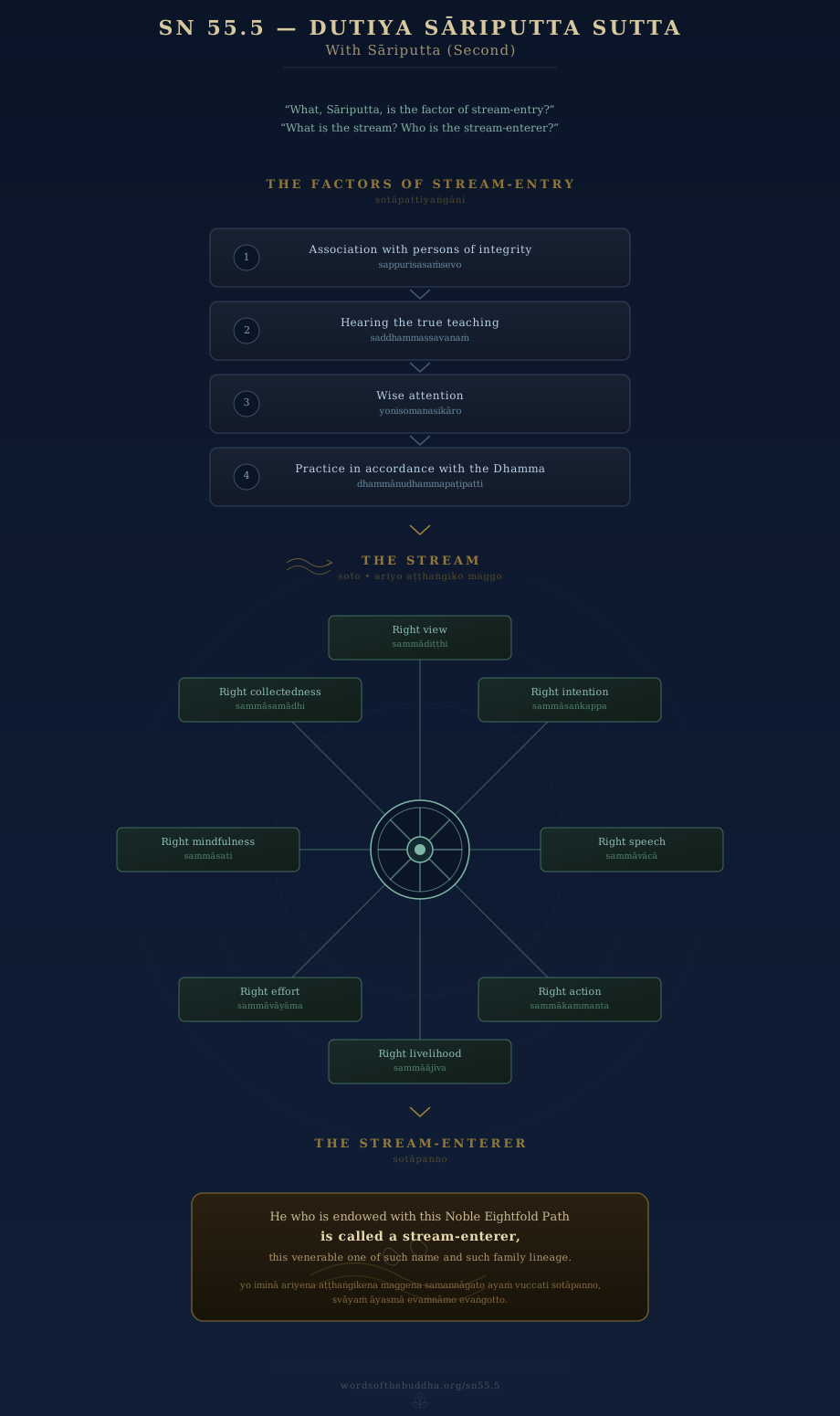
“Sappurisasaṁsevo hi, bhante, sotāpattiyaṅgaṁ, saddhammassavanaṁ sotāpattiyaṅgaṁ, yonisomanasikāro sotāpattiyaṅgaṁ, dhammānudhammappaṭipatti sotāpattiyaṅgan”ti.
“|Association with persons of integrity::association with true persons [sappurisasaṁseva]|, venerable sir, is a factor of stream-entry. Hearing the true teaching is a factor of stream-entry. |Wise attention::proper attention, prudent use of the mind, wise reflection, attention to the source [yoniso + manasikāra]| is a factor of stream-entry. Practice in accordance with the Dhamma is a factor of stream-entry.”
“Sādhu sādhu, sāriputta. Sappurisasaṁsevo hi, sāriputta, sotāpattiyaṅgaṁ, saddhammassavanaṁ sotāpattiyaṅgaṁ, yonisomanasikāro sotāpattiyaṅgaṁ, dhammānudhammappaṭipatti sotāpattiyaṅgaṁ.
“Good, good, Sāriputta. Associating with persons of integrity, listening to the true teaching, wise attention, and practice in accordance with the |Dhamma::teachings of the Buddha that point to the nature of reality, the ultimate truth [dhamma]| are factors of stream-entry.”
‘Soto, soto’ti hidaṁ, sāriputta, vuccati. Katamo nu kho, sāriputta, soto”ti?
“‘Stream, stream,’ thus it is said, Sāriputta. What, Sāriputta, is the stream?”
“Ayameva hi, bhante, ariyo aṭṭhaṅgiko maggo soto, seyyathidaṁ— sammādiṭṭhi, sammāsaṅkappo, sammāvācā, sammākammanto, sammāājīvo, sammāvāyāmo, sammāsati, sammāsamādhī”ti.
“Just this, venerable sir, is the stream, namely the Noble Eightfold Path — |right view::view that is in line with the Dhamma - teachings of the Buddha that point to the nature of reality, the ultimate truth [sammādiṭṭhi]|, |right intention::intention of renunciation, goodwill, and harmlessness; the resolve to let go of craving, ill will, and cruelty, cultivating thoughts that lead to peace and liberation [sammāsaṅkappa]|, |right speech::speech that is purified by abstaining from falsehood, divisive talk, harsh words, and idle chatter [sammāvācā]|, |right action::action that upholds ethical integrity by abstaining from killing, stealing, and sexual misconduct; bodily conduct aligned with harmlessness and honesty [sammākammanta]|, |right livelihood::means of living that does not cause harm to others or oneself; earning a living ethically without deceit, exploitation, or violence [sammāājīva]|, |right effort::energy and effort directed toward abandoning unwholesome mental states and qualities, and cultivating wholesome ones [sammāvāyāma]|, |right mindfulness::mindfulness that discerns the body, feelings, mind, and mental qualities clearly, grounded in diligent, non-forgetful attention to the present moment [sammāsati]|, and |right collectedness::perfect stability of mind, correct mental composure [sammāsamādhi]|.”
“Sādhu sādhu, sāriputta. Ayameva hi, sāriputta, ariyo aṭṭhaṅgiko maggo soto, seyyathidaṁ— sammādiṭṭhi …pe… sammāsamādhi.
“Good, good, Sāriputta. Just this is the stream, namely the Noble Eightfold Path — right view, right intention, right speech, right action, right livelihood, right effort, right mindfulness, and right collectedness.”
‘Sotāpanno, sotāpanno’ti hidaṁ, sāriputta, vuccati. Katamo nu kho, sāriputta, sotāpanno”ti?
“‘Stream-enterer, stream-enterer,’ thus it is said, Sāriputta. Who, Sāriputta, is the stream-enterer?”
“Yo hi, bhante, iminā ariyena aṭṭhaṅgikena maggena samannāgato ayaṁ vuccati sotāpanno, svāyaṁ āyasmā evaṁnāmo evaṅgotto”ti.
“He who, venerable sir, is endowed with this Noble Eightfold Path is called a stream-enterer, this venerable one of such name and such family lineage.”
“Sādhu sādhu, sāriputta. Yo hi, sāriputta, iminā ariyena aṭṭhaṅgikena maggena samannāgato ayaṁ vuccati sotāpanno, svāyaṁ āyasmā evaṁnāmo evaṅgotto”ti.
“Good, good, Sāriputta. He who, Sāriputta, is endowed with this Noble Eightfold Path is called a stream-enterer, this venerable one of such name and such family lineage.”