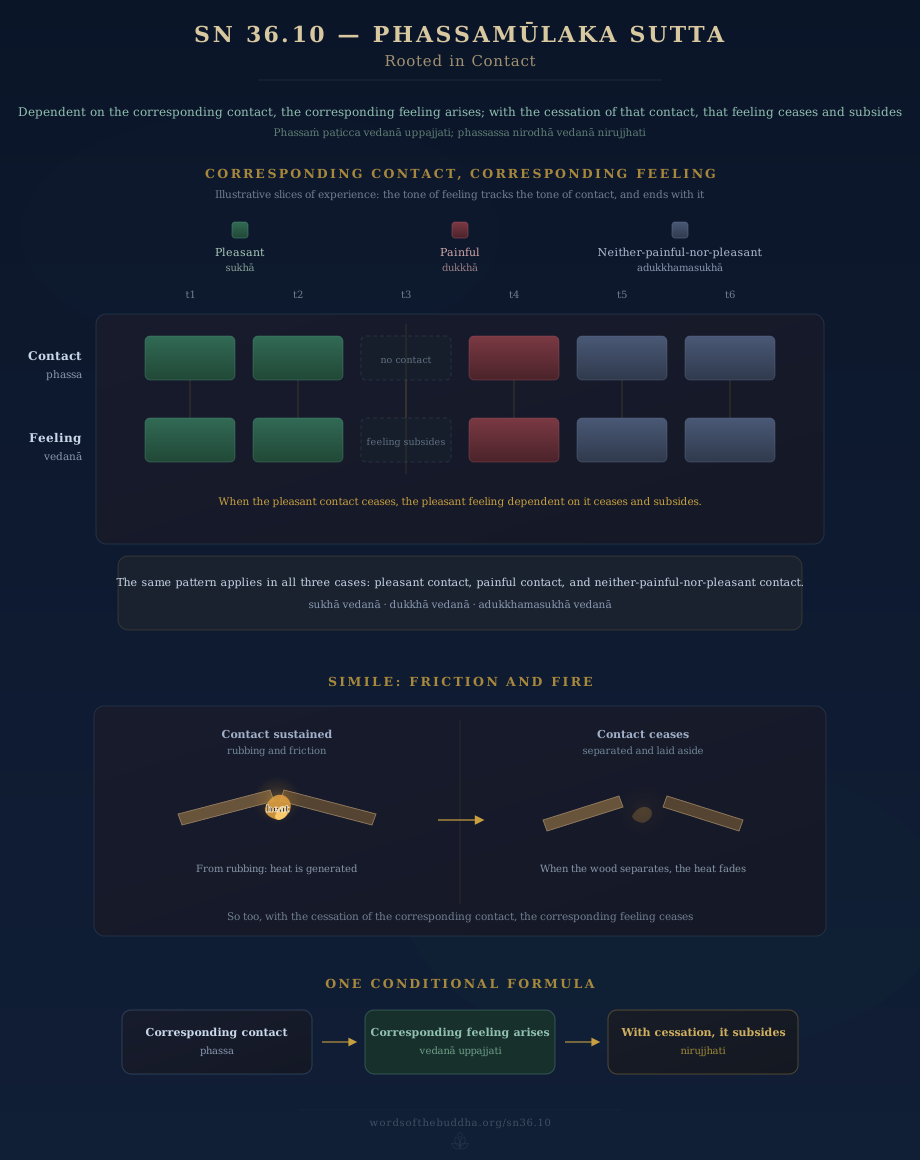
The Buddha teaches the bhikkhus that all feelings arise entirely dependent on contact. Just as pieces of wood create heat through friction, specific contact creates specific feeling. When the underlying contact ceases, the corresponding feeling ceases and subsides.
“Tisso imā, bhikkhave, vedanā phassajā phassamūlakā phassanidānā phassapaccayā. Katamā tisso?
“These three feelings, bhikkhus, are produced by |contact::sense impingement, raw experience, touch [phassa]|, rooted in contact, originating from contact, and dependent on contact. What three?
Sukhā vedanā, dukkhā vedanā, adukkhamasukhā vedanā.
Pleasant feeling, painful feeling, and neither-painful-nor-pleasant feeling.
Sukhavedaniyaṁ, bhikkhave, phassaṁ paṭicca uppajjati sukhā vedanā. Tasseva sukhavedaniyassa phassassa nirodhā, yaṁ tajjaṁ vedayitaṁ sukhavedaniyaṁ phassaṁ paṭicca uppannā sukhā vedanā, sā nirujjhati, sā vūpasammati. Dukkhavedaniyaṁ, bhikkhave, phassaṁ paṭicca uppajjati dukkhā vedanā. Tasseva dukkhavedaniyassa phassassa nirodhā, yaṁ tajjaṁ vedayitaṁ dukkhavedaniyaṁ phassaṁ paṭicca uppannā dukkhā vedanā, sā nirujjhati, sā vūpasammati. Adukkhamasukhavedaniyaṁ, bhikkhave, phassaṁ paṭicca uppajjati adukkhamasukhā vedanā. Tasseva adukkhamasukhavedaniyassa phassassa nirodhā, yaṁ tajjaṁ vedayitaṁ adukkhamasukhavedaniyaṁ phassaṁ paṭicca uppannā adukkhamasukhā vedanā, sā nirujjhati, sā vūpasammati.
Dependent on a contact to be felt as pleasant, bhikkhus, a pleasant feeling arises. With the cessation of that very contact to be felt as pleasant, the corresponding feeling experienced, the pleasant feeling that arose dependent on that contact to be felt as pleasant, ceases and subsides. Dependent on a contact to be felt as painful, bhikkhus, a painful feeling arises. With the cessation of that very contact to be felt as painful, the corresponding feeling experienced, the painful feeling that arose dependent on that contact to be felt as painful, ceases and subsides. Dependent on a contact to be felt as neither-painful-nor-pleasant, bhikkhus, a neither-painful-nor-pleasant feeling arises. With the cessation of that very contact to be felt as neither-painful-nor-pleasant, the corresponding feeling experienced, the neither-painful-nor-pleasant feeling that arose dependent on that contact to be felt as neither-painful-nor-pleasant, ceases and subsides.
Seyyathāpi, bhikkhave, dvinnaṁ kaṭṭhānaṁ saṅghaṭṭanasamodhānā usmā jāyati, tejo abhinibbattati. Tesaṁyeva kaṭṭhānaṁ nānābhāvā vinikkhepā, yā tajjā usmā, sā nirujjhati, sā vūpasammati.
Just as, bhikkhus, from the rubbing and friction of two pieces of wood, heat is generated and fire is produced. From the separation and laying aside of those very pieces of wood, the corresponding heat ceases and subsides.
Evameva kho, bhikkhave, imā tisso vedanā phassajā phassamūlakā phassanidānā phassapaccayā. Tajjaṁ phassaṁ paṭicca tajjā vedanā uppajjanti. Tajjassa phassassa nirodhā tajjā vedanā nirujjhantī”ti.
So too, bhikkhus, these three feelings are produced by contact, rooted in contact, originating from contact, and dependent on contact. Dependent on the corresponding contact, the corresponding feelings arise. With the cessation of the corresponding contact, the corresponding feelings |cease::vanish, reach an end [nirujjhati]|.”
“These three feelings, bhikkhus, are produced by |contact::sense impingement, raw experience, touch [phassa]|, rooted in contact, originating from contact, and dependent on contact. What three?
Pleasant feeling, painful feeling, and neither-painful-nor-pleasant feeling.
Dependent on a contact to be felt as pleasant, bhikkhus, a pleasant feeling arises. With the cessation of that very contact to be felt as pleasant, the corresponding feeling experienced, the pleasant feeling that arose dependent on that contact to be felt as pleasant, ceases and subsides. Dependent on a contact to be felt as painful, bhikkhus, a painful feeling arises. With the cessation of that very contact to be felt as painful, the corresponding feeling experienced, the painful feeling that arose dependent on that contact to be felt as painful, ceases and subsides. Dependent on a contact to be felt as neither-painful-nor-pleasant, bhikkhus, a neither-painful-nor-pleasant feeling arises. With the cessation of that very contact to be felt as neither-painful-nor-pleasant, the corresponding feeling experienced, the neither-painful-nor-pleasant feeling that arose dependent on that contact to be felt as neither-painful-nor-pleasant, ceases and subsides.
Just as, bhikkhus, from the rubbing and friction of two pieces of wood, heat is generated and fire is produced. From the separation and laying aside of those very pieces of wood, the corresponding heat ceases and subsides.
So too, bhikkhus, these three feelings are produced by contact, rooted in contact, originating from contact, and dependent on contact. Dependent on the corresponding contact, the corresponding feelings arise. With the cessation of the corresponding contact, the corresponding feelings |cease::vanish, reach an end [nirujjhati]|.”
“Tisso imā, bhikkhave, vedanā phassajā phassamūlakā phassanidānā phassapaccayā. Katamā tisso?
Sukhā vedanā, dukkhā vedanā, adukkhamasukhā vedanā.
Sukhavedaniyaṁ, bhikkhave, phassaṁ paṭicca uppajjati sukhā vedanā. Tasseva sukhavedaniyassa phassassa nirodhā, yaṁ tajjaṁ vedayitaṁ sukhavedaniyaṁ phassaṁ paṭicca uppannā sukhā vedanā, sā nirujjhati, sā vūpasammati. Dukkhavedaniyaṁ, bhikkhave, phassaṁ paṭicca uppajjati dukkhā vedanā. Tasseva dukkhavedaniyassa phassassa nirodhā, yaṁ tajjaṁ vedayitaṁ dukkhavedaniyaṁ phassaṁ paṭicca uppannā dukkhā vedanā, sā nirujjhati, sā vūpasammati. Adukkhamasukhavedaniyaṁ, bhikkhave, phassaṁ paṭicca uppajjati adukkhamasukhā vedanā. Tasseva adukkhamasukhavedaniyassa phassassa nirodhā, yaṁ tajjaṁ vedayitaṁ adukkhamasukhavedaniyaṁ phassaṁ paṭicca uppannā adukkhamasukhā vedanā, sā nirujjhati, sā vūpasammati.
Seyyathāpi, bhikkhave, dvinnaṁ kaṭṭhānaṁ saṅghaṭṭanasamodhānā usmā jāyati, tejo abhinibbattati. Tesaṁyeva kaṭṭhānaṁ nānābhāvā vinikkhepā, yā tajjā usmā, sā nirujjhati, sā vūpasammati.
Evameva kho, bhikkhave, imā tisso vedanā phassajā phassamūlakā phassanidānā phassapaccayā. Tajjaṁ phassaṁ paṭicca tajjā vedanā uppajjanti. Tajjassa phassassa nirodhā tajjā vedanā nirujjhantī”ti.