Evaṁ me sutaṁ— ekaṁ samayaṁ bhagavā sāvatthiyaṁ viharati jetavane anāthapiṇḍikassa ārāme. Tatra kho bhagavā bhikkhū āmantesi: “bhikkhavo”ti.
Thus have I heard—At one time, the Blessed One was dwelling at Sāvatthi, in Jeta’s Grove, Anāthapiṇḍika’s Park. There, the Blessed One addressed the bhikkhus: “Bhikkhus.”
“Bhadante”ti te bhikkhū bhagavato paccassosuṁ. Bhagavā etadavoca:
“Venerable sir,” those bhikkhus replied to the Blessed One. The Blessed One said this:
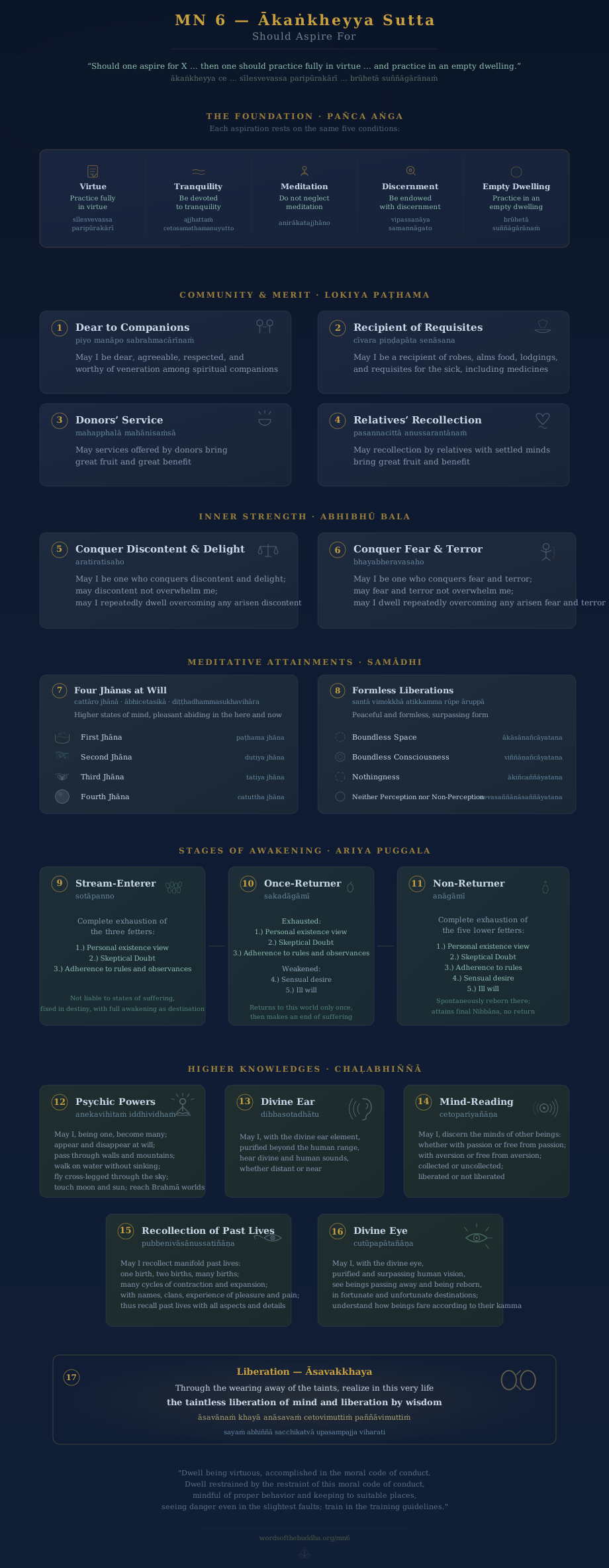
The Foundation
“Sampannasīlā, bhikkhave, viharatha sampannapātimokkhā; pātimokkhasaṁvarasaṁvutā viharatha ācāragocarasampannā aṇumattesu vajjesu bhayadassāvino; samādāya sikkhatha sikkhāpadesu.
“Bhikkhus, dwell being virtuous, accomplished in the moral code of conduct. Dwell restrained by the restraint of this moral code of conduct, mindful of proper behavior and keeping to suitable places, seeing danger even in the slightest faults. Having undertaken this, train in the training guidelines.
Community & Merit
Ākaṅkheyya ce, bhikkhave, bhikkhu: ‘sabrahmacārīnaṁ piyo ca assaṁ manāpo ca garu ca bhāvanīyo cā’ti, sīlesvevassa paripūrakārī ajjhattaṁ cetosamathamanuyutto anirākatajjhāno vipassanāya samannāgato brūhetā suññāgārānaṁ.
If a bhikkhu should aspire: ‘May I be dear, agreeable, respected, and worthy of veneration among my spiritual companions,’ then he should be one who practices fully in virtue, be devoted to tranquility of mind, not neglect meditation, be endowed with penetrative vision, and practice in an empty dwelling.
Ākaṅkheyya ce, bhikkhave, bhikkhu: ‘lābhī assaṁ cīvarapiṇḍapātasenāsanagilānappaccayabhesajjaparikkhārānan’ti, sīlesvevassa paripūrakārī ajjhattaṁ cetosamathamanuyutto anirākatajjhāno vipassanāya samannāgato brūhetā suññāgārānaṁ.
If a bhikkhu should aspire: ‘May I be a recipient of robes, alms food, lodgings, and requisites for the sick, including medicines,’ then he should be one who practices fully in virtue, be devoted to tranquility of mind, not neglect meditation, be endowed with penetrative vision, and practice in an empty dwelling.
Ākaṅkheyya ce, bhikkhave, bhikkhu: ‘yesāhaṁ cīvarapiṇḍapātasenāsanagilānappaccayabhesajjaparikkhāraṁ paribhuñjāmi tesaṁ te kārā mahapphalā assu mahānisaṁsā’ti, sīlesvevassa paripūrakārī ajjhattaṁ cetosamathamanuyutto anirākatajjhāno vipassanāya samannāgato brūhetā suññāgārānaṁ.
If a bhikkhu should aspire: ‘May the service of those from whom I receive robes, alms food, lodgings, and requisites for the sick, including medicines be fruitful and beneficial,’ then he should be one who practices fully in virtue, be devoted to tranquility of mind, not neglect meditation, be endowed with penetrative vision, and practice in an empty dwelling.
Ākaṅkheyya ce, bhikkhave, bhikkhu: ‘ye maṁ ñātī sālohitā petā kālaṅkatā pasannacittā anussaranti tesaṁ taṁ mahapphalaṁ assa mahānisaṁsan’ti, sīlesvevassa paripūrakārī ajjhattaṁ cetosamathamanuyutto anirākatajjhāno vipassanāya samannāgato brūhetā suññāgārānaṁ.
If a bhikkhu should aspire: ‘May the recollection of me by my family, blood relatives, and deceased relatives, who remember me with a settled mind, be fruitful and beneficial,’ then he should be one who practices fully in virtue, be devoted to tranquility of mind, not neglect meditation, be endowed with penetrative vision, and practice in an empty dwelling.
Inner Strength
Ākaṅkheyya ce, bhikkhave, bhikkhu: ‘aratiratisaho assaṁ, na ca maṁ arati saheyya, uppannaṁ aratiṁ abhibhuyya abhibhuyya vihareyyan’ti, sīlesvevassa paripūrakārī ajjhattaṁ cetosamathamanuyutto anirākatajjhāno vipassanāya samannāgato brūhetā suññāgārānaṁ.
If a bhikkhu should aspire: ‘May I be one who conquers discontent and delight, and may discontent not overwhelm me; may I dwell repeatedly overcoming any arisen discontent,’ then he should be one who practices fully in virtue, be devoted to tranquility of mind, not neglect meditation, be endowed with penetrative vision, and practice in an empty dwelling.
Ākaṅkheyya ce, bhikkhave, bhikkhu: ‘bhayabheravasaho assaṁ, na ca maṁ bhayabheravaṁ saheyya, uppannaṁ bhayabheravaṁ abhibhuyya abhibhuyya vihareyyan’ti, sīlesvevassa paripūrakārī ajjhattaṁ cetosamathamanuyutto anirākatajjhāno vipassanāya samannāgato brūhetā suññāgārānaṁ.
If a bhikkhu should aspire: ‘May I be one who conquers fear and terror, and may fear and terror not overwhelm me; may I dwell repeatedly overcoming any arisen fear and terror,’ then he should be one who practices fully in virtue, be devoted to tranquility of mind, not neglect meditation, be endowed with penetrative vision, and practice in an empty dwelling.
Meditative Attainments
Ākaṅkheyya ce, bhikkhave, bhikkhu: ‘catunnaṁ jhānānaṁ ābhicetasikānaṁ diṭṭhadhammasukhavihārānaṁ nikāmalābhī assaṁ akicchalābhī akasiralābhī’ti, sīlesvevassa paripūrakārī ajjhattaṁ cetosamathamanuyutto anirākatajjhāno vipassanāya samannāgato brūhetā suññāgārānaṁ.
If a bhikkhu should aspire: ‘May I be one who gains at will, without difficulty or hardship, the four jhānas — higher states of mind, a pleasant abiding in the here and now,’ then he should be one who practices fully in virtue, be devoted to tranquility of mind, not neglect meditation, be endowed with penetrative vision, and practice in an empty dwelling.
Ākaṅkheyya ce, bhikkhave, bhikkhu: ‘ye te santā vimokkhā atikkamma rūpe āruppā, te kāyena phusitvā vihareyyan’ti, sīlesvevassa paripūrakārī ajjhattaṁ cetosamathamanuyutto anirākatajjhāno vipassanāya samannāgato brūhetā suññāgārānaṁ.
If a bhikkhu should aspire: ‘May I dwell having directly experienced with the body in those liberations that are peaceful and formless, surpassing form,’ then he should be one who practices fully in virtue, be devoted to tranquility of mind, not neglect meditation, be endowed with penetrative vision, and practice in an empty dwelling.
Stages of Awakening
Ākaṅkheyya ce, bhikkhave, bhikkhu: ‘tiṇṇaṁ saṁyojanānaṁ parikkhayā sotāpanno assaṁ avinipātadhammo niyato sambodhiparāyaṇo’ti, sīlesvevassa paripūrakārī ajjhattaṁ cetosamathamanuyutto anirākatajjhāno vipassanāya samannāgato brūhetā suññāgārānaṁ.
If a bhikkhu should aspire: ‘May I, through the complete exhaustion of the three fetters, become a stream-enterer, not liable to states of suffering, fixed in destiny, with full awakening as his destination,’ then he should be one who practices fully in virtue, be devoted to tranquility of mind, not neglect meditation, be endowed with penetrative vision, and practice in an empty dwelling.
Ākaṅkheyya ce, bhikkhave, bhikkhu: ‘tiṇṇaṁ saṁyojanānaṁ parikkhayā rāgadosamohānaṁ tanuttā sakadāgāmī assaṁ sakideva imaṁ lokaṁ āgantvā dukkhassantaṁ kareyyan’ti, sīlesvevassa paripūrakārī ajjhattaṁ cetosamathamanuyutto anirākatajjhāno vipassanāya samannāgato brūhetā suññāgārānaṁ.
If a bhikkhu should aspire: ‘Through the complete exhaustion of the three fetters and the weakening of passion, aversion, and delusion, may I become a once-returner, returning to this world only once more to make an end of suffering,’ then he should be one who practices fully in virtue, be devoted to tranquility of mind, not neglect meditation, be endowed with penetrative vision, and practice in an empty dwelling.
Ākaṅkheyya ce, bhikkhave, bhikkhu: ‘pañcannaṁ orambhāgiyānaṁ saṁyojanānaṁ parikkhayā opapātiko assaṁ tattha parinibbāyī anāvattidhammo tasmā lokā’ti, sīlesvevassa paripūrakārī ajjhattaṁ cetosamathamanuyutto anirākatajjhāno vipassanāya samannāgato brūhetā suññāgārānaṁ.
If a bhikkhu should aspire: ‘Through the complete exhaustion of the five lower fetters, may I be one spontaneously reborn and there attain final Nibbāna, with no further return to this world,’ then he should be one who practices fully in virtue, be devoted to tranquility of mind, not neglect meditation, be endowed with penetrative vision, and practice in an empty dwelling.
Higher Knowledges
Ākaṅkheyya ce, bhikkhave, bhikkhu: ‘anekavihitaṁ iddhividhaṁ paccanubhaveyyaṁ—ekopi hutvā bahudhā assaṁ, bahudhāpi hutvā eko assaṁ; āvibhāvaṁ tirobhāvaṁ; tirokuṭṭaṁ tiropākāraṁ tiropabbataṁ asajjamāno gaccheyyaṁ, seyyathāpi ākāse; pathaviyāpi ummujjanimujjaṁ kareyyaṁ, seyyathāpi udake; udakepi abhijjamāne gaccheyyaṁ, seyyathāpi pathaviyaṁ; ākāsepi pallaṅkena kameyyaṁ, seyyathāpi pakkhī sakuṇo; imepi candimasūriye evaṁmahiddhike evaṁmahānubhāve pāṇinā parāmaseyyaṁ parimajjeyyaṁ; yāva brahmalokāpi kāyena vasaṁ vatteyyan’ti, sīlesvevassa paripūrakārī ajjhattaṁ cetosamathamanuyutto anirākatajjhāno vipassanāya samannāgato brūhetā suññāgārānaṁ.
If a bhikkhu should aspire: ‘May I realize the various kinds of psychic powers such as—being one, become many; having been many, become one; appear and disappear; pass through walls, enclosures, and mountains unhindered as if through space; dive into and emerge from the earth as if it were water; walk on water without sinking as though on solid ground; fly cross-legged through the sky like a bird; with hand, touch and stroke the moon and the sun, so mighty and powerful; with the body, exercise control even as far as the Brahmā world,’ then he should be one who practices fully in virtue, be devoted to tranquility of mind, not neglect meditation, be endowed with penetrative vision, and practice in an empty dwelling.
Ākaṅkheyya ce, bhikkhave, bhikkhu: ‘dibbāya sotadhātuyā visuddhāya atikkantamānusikāya ubho sadde suṇeyyaṁ—dibbe ca mānuse ca ye dūre santike cā’ti, sīlesvevassa paripūrakārī ajjhattaṁ cetosamathamanuyutto anirākatajjhāno vipassanāya samannāgato brūhetā suññāgārānaṁ.
If a bhikkhu should aspire: ‘May I, with the divine ear element, which is purified and surpasses the human range, hear both kinds of sounds, divine and human, whether distant or near,’ then he should be one who practices fully in virtue, be devoted to tranquility of mind, not neglect meditation, be endowed with penetrative vision, and practice in an empty dwelling.
Ākaṅkheyya ce, bhikkhave, bhikkhu: ‘parasattānaṁ parapuggalānaṁ cetasā ceto paricca pajāneyyaṁ— sarāgaṁ vā cittaṁ sarāgaṁ cittanti pajāneyyaṁ, vītarāgaṁ vā cittaṁ vītarāgaṁ cittanti pajāneyyaṁ; sadosaṁ vā cittaṁ sadosaṁ cittanti pajāneyyaṁ, vītadosaṁ vā cittaṁ vītadosaṁ cittanti pajāneyyaṁ; samohaṁ vā cittaṁ samohaṁ cittanti pajāneyyaṁ, vītamohaṁ vā cittaṁ vītamohaṁ cittanti pajāneyyaṁ; saṅkhittaṁ vā cittaṁ saṅkhittaṁ cittanti pajāneyyaṁ, vikkhittaṁ vā cittaṁ vikkhittaṁ cittanti pajāneyyaṁ; mahaggataṁ vā cittaṁ mahaggataṁ cittanti pajāneyyaṁ, amahaggataṁ vā cittaṁ amahaggataṁ cittanti pajāneyyaṁ; sauttaraṁ vā cittaṁ sauttaraṁ cittanti pajāneyyaṁ, anuttaraṁ vā cittaṁ anuttaraṁ cittanti pajāneyyaṁ; samāhitaṁ vā cittaṁ samāhitaṁ cittanti pajāneyyaṁ, asamāhitaṁ vā cittaṁ asamāhitaṁ cittanti pajāneyyaṁ; vimuttaṁ vā cittaṁ vimuttaṁ cittanti pajāneyyaṁ, avimuttaṁ vā cittaṁ avimuttaṁ cittanti pajāneyyan’ti, sīlesvevassa paripūrakārī ajjhattaṁ cetosamathamanuyutto anirākatajjhāno vipassanāya samannāgato brūhetā suññāgārānaṁ.
If a bhikkhu should aspire: ‘May I discern the minds of other beings, of other persons, having encompassed them with my own mind. May I discern a mind with passion as ‘a mind with passion’, may I discern a mind free from passion as ‘a mind free from passion’; may I discern a mind with aversion as ‘a mind with aversion’, may I discern a mind free from aversion as ‘a mind free from aversion’; may I discern a confused mind as ‘a confused mind’, may I discern a mind free from confusion as ‘a mind free from confusion’; may I discern a dull mind as ‘a dull mind’; may I discern a scattered mind as ‘a scattered mind’; may I discern an exalted mind as ‘an exalted mind’, may I discern a mind that is not exalted as ‘a mind that is not exalted’; may I discern a surpassable mind as ‘a surpassable mind’, may I discern an unsurpassed mind as ‘an unsurpassed mind’; may I discern a collected mind as ‘a collected mind’, may I discern an uncollected mind as ‘an uncollected mind’; may I discern a liberated mind as ‘a liberated mind’, may I discern a mind that is not liberated as ‘a mind that is not liberated,’ then he should be one who practices fully in virtue, be devoted to tranquility of mind, not neglect meditation, be endowed with penetrative vision, and practice in an empty dwelling.
Ākaṅkheyya ce, bhikkhave, bhikkhu: ‘anekavihitaṁ pubbenivāsaṁ anussareyyaṁ, seyyathidaṁ—ekampi jātiṁ dvepi jātiyo tissopi jātiyo catassopi jātiyo pañcapi jātiyo dasapi jātiyo vīsampi jātiyo tiṁsampi jātiyo cattālīsampi jātiyo paññāsampi jātiyo jātisatampi jātisahassampi jāti satasahassampi anekepi saṁvaṭṭakappe anekepi vivaṭṭakappe anekepi saṁvaṭṭavivaṭṭakappe—amutrāsiṁ evaṁnāmo evaṅgotto evaṁvaṇṇo evamāhāro evaṁsukhadukkhappaṭisaṁvedī evamāyupariyanto, so tato cuto amutra udapādiṁ; tatrāpāsiṁ evaṁnāmo evaṅgotto evaṁvaṇṇo evamāhāro evaṁsukhadukkhappaṭisaṁvedī evamāyupariyanto, so tato cuto idhūpapannoti. Iti sākāraṁ sauddesaṁ anekavihitaṁ pubbenivāsaṁ anussareyyan’ti, sīlesvevassa paripūrakārī ajjhattaṁ cetosamathamanuyutto anirākatajjhāno vipassanāya samannāgato brūhetā suññāgārānaṁ.
If a bhikkhu should aspire: ‘May I recollect my manifold past lives, such as: one birth, two births, three births, four, five, ten, twenty, thirty, forty, fifty, a hundred, a thousand, a hundred thousand births; many cycles of [universal] contraction, many cycles of [universal] expansion, and many cycles of [universal] contraction and expansion; in such a place I was named so-and-so, of such a clan, with such an appearance, such was my food, such was my experience of pleasure and pain, such was my lifespan; and passing away from there, I was reborn elsewhere; and there too I had such a name, such a clan, such an appearance, such food, experiencing such pleasure and pain, with such a lifespan; and passing away from there, I was reborn here. Thus, with all aspects and in detail, may I recollect my manifold past lives,’ then he should be one who practices fully in virtue, be devoted to tranquility of mind, not neglect meditation, be endowed with penetrative vision, and practice in an empty dwelling.
Ākaṅkheyya ce, bhikkhave, bhikkhu: ‘dibbena cakkhunā visuddhena atikkantamānusakena satte passeyyaṁ cavamāne upapajjamāne hīne paṇīte suvaṇṇe dubbaṇṇe sugate duggate yathākammūpage satte pajāneyyaṁ—ime vata bhonto sattā kāyaduccaritena samannāgatā vacīduccaritena samannāgatā manoduccaritena samannāgatā ariyānaṁ upavādakā micchādiṭṭhikā micchādiṭṭhikammasamādānā, te kāyassa bhedā paraṁ maraṇā apāyaṁ duggatiṁ vinipātaṁ nirayaṁ upapannā; ime vā pana bhonto sattā kāyasucaritena samannāgatā vacīsucaritena samannāgatā manosucaritena samannāgatā ariyānaṁ anupavādakā sammādiṭṭhikā sammādiṭṭhikammasamādānā, te kāyassa bhedā paraṁ maraṇā sugatiṁ saggaṁ lokaṁ upapannāti, iti dibbena cakkhunā visuddhena atikkantamānusakena satte passeyyaṁ cavamāne upapajjamāne hīne paṇīte suvaṇṇe dubbaṇṇe sugate duggate yathākammūpage satte pajāneyyan’ti, sīlesvevassa paripūrakārī ajjhattaṁ cetosamathamanuyutto anirākatajjhāno vipassanāya samannāgato brūhetā suññāgārānaṁ.
If a bhikkhu should aspire: ‘May I, with the divine eye, purified and surpassing human vision, see beings passing away and being reborn;inferior and superior, beautiful and ugly, in fortunate and unfortunate destinations;and understand how beings fare according to their kamma: These beings, who engaged in bodily, verbal, and mental misconduct, who reviled the Noble Ones, held wrong view, and undertook actions under the influence of wrong view—upon the breaking up of the body, after death, have arisen in a state of loss, a bad destination, a realm of downfall, even in hell. But these beings, who engaged in good bodily, verbal, and mental conduct, who did not revile the Noble Ones, held right view, and undertook actions under the influence of right view;upon the breaking up of the body, after death, have arisen in a good destination, a heavenly world. In this way, may I, with the divine eye, purified and surpassing human vision, see beings as they pass away and are reborn;inferior and superior, beautiful and unattractive, in fortunate and unfortunate destinations—and understand how beings fare according to their kamma,’ then he should be one who practices fully in virtue, be devoted to tranquility of mind, not neglect meditation, be endowed with penetrative vision, and practice in an empty dwelling.
Liberation
Ākaṅkheyya ce, bhikkhave, bhikkhu: ‘āsavānaṁ khayā anāsavaṁ cetovimuttiṁ paññāvimuttiṁ diṭṭheva dhamme sayaṁ abhiññā sacchikatvā upasampajja vihareyyan’ti, sīlesvevassa paripūrakārī ajjhattaṁ cetosamathamanuyutto anirākatajjhāno vipassanāya samannāgato brūhetā suññāgārānaṁ.
If a bhikkhu should aspire: ‘May I, through the wearing away of the taints, dwell having directly realized and attained in this very life the taintless liberation of mind and liberation by wisdom, achieved by one’s own direct knowledge,’ then he should be one who practices fully in virtue, be devoted to tranquility of mind, not neglect meditation, be endowed with penetrative vision, and practice in an empty dwelling.
‘Sampannasīlā, bhikkhave, viharatha sampannapātimokkhā; pātimokkhasaṁvarasaṁvutā viharatha ācāragocarasampannā aṇumattesu vajjesu bhayadassāvino; samādāya sikkhatha sikkhāpadesū’ti— iti yaṁ taṁ vuttaṁ idametaṁ paṭicca vuttan”ti.
‘Bhikkhus, dwell being virtuous, accomplished in the moral code of conduct. Dwell restrained by the restraint of this moral code of conduct, mindful of proper behavior and keeping to suitable places, seeing danger even in the slightest faults. Having undertaken this, train in the training guidelines,’ it was in reference to this that it was said.
Idamavoca bhagavā. Attamanā te bhikkhū bhagavato bhāsitaṁ abhinandunti.
The Blessed One said this. The bhikkhus were delighted and pleased with the Blessed One’s words.