Evaṁ me sutaṁ— ekaṁ samayaṁ bhagavā sakkesu viharati kapilavatthusmiṁ nigrodhārāme.
Thus have I heard—At one time, the Blessed One was residing among the Sakyans in |Kapilavatthu::name of the capital city of the Sakyans, the birthplace of the Buddha [kapilavatthu]|, in the Banyan park.
Tena kho pana samayena kāpilavatthavānaṁ sakyānaṁ navaṁ santhāgāraṁ acirakāritaṁ hoti anajjhāvuṭṭhaṁ samaṇena vā brāhmaṇena vā kenaci vā manussabhūtena. Atha kho kāpilavatthavā sakyā yena bhagavā tenupasaṅkamiṁsu; upasaṅkamitvā bhagavantaṁ abhivādetvā ekamantaṁ nisīdiṁsu. Ekamantaṁ nisinnā kho kāpilavatthavā sakyā bhagavantaṁ etadavocuṁ:
Now at that time a new assembly hall had recently been built by the Sakyans of Kapilavatthu, which had not yet been occupied by any ascetic, brahmin, or human being. Then the Sakyans of Kapilavatthu approached the Blessed One. Having approached and paid homage to the Blessed One, they sat to one side. Sitting to one side, the Sakyans of Kapilavatthu said this to the Blessed One:
“idha, bhante, kāpilavatthavānaṁ sakyānaṁ navaṁ santhāgāraṁ acirakāritaṁ anajjhāvuṭṭhaṁ samaṇena vā brāhmaṇena vā kenaci vā manussabhūtena. Taṁ, bhante, bhagavā paṭhamaṁ paribhuñjatu. Bhagavatā paṭhamaṁ paribhuttaṁ pacchā kāpilavatthavā sakyā paribhuñjissanti. Tadassa kāpilavatthavānaṁ sakyānaṁ dīgharattaṁ hitāya sukhāyā”ti. Adhivāsesi bhagavā tuṇhībhāvena.
“Here, venerable sir, a new assembly hall has recently been built by the Sakyans of Kapilavatthu, which has not yet been occupied by any ascetic, brahmin, or human being. Venerable sir, may the Blessed One use it first. After the Blessed One has used it first, the Sakyans of Kapilavatthu will use it. That will be for the welfare and happiness of the Sakyans of Kapilavatthu for a long time.” The Blessed One consented in silence.
Atha kho kāpilavatthavā sakyā bhagavato adhivāsanaṁ viditvā uṭṭhāyāsanā bhagavantaṁ abhivādetvā padakkhiṇaṁ katvā yena navaṁ santhāgāraṁ tenupasaṅkamiṁsu; upasaṅkamitvā sabbasanthariṁ santhāgāraṁ santharitvā āsanāni paññapetvā udakamaṇikaṁ upaṭṭhapetvā telappadīpaṁ āropetvā yena bhagavā tenupasaṅkamiṁsu; upasaṅkamitvā bhagavantaṁ abhivādetvā ekamantaṁ aṭṭhaṁsu. Ekamantaṁ ṭhitā kho kāpilavatthavā sakyā bhagavantaṁ etadavocuṁ: “sabbasanthariṁ santhataṁ, bhante, santhāgāraṁ, āsanāni paññattāni, udakamaṇiko upaṭṭhāpito, telappadīpo āropito. Yassadāni, bhante, bhagavā kālaṁ maññatī”ti.
Then the Sakyans of Kapilavatthu, having received the Blessed One’s consent, rose from their seats, and after paying homage to the Blessed One, keeping him on their right, approached the new assembly hall. Having approached, they covered the entire assembly hall with mats, prepared seats, set out a water jar, and hung up an oil lamp. Then they approached the Blessed One. Having approached and paid homage to the Blessed One, they stood to one side. Standing to one side, the Sakyans of Kapilavatthu said this to the Blessed One: “Venerable sir, the assembly hall is completely covered with mats, seats are prepared, a water jar is set out, and an oil lamp is hung up. Venerable sir, may the Blessed One come at his own convenience.”
Atha kho bhagavā nivāsetvā pattacīvaramādāya saddhiṁ bhikkhusaṅghena yena santhāgāraṁ tenupasaṅkami; upasaṅkamitvā pāde pakkhāletvā santhāgāraṁ pavisitvā majjhimaṁ thambhaṁ nissāya puratthābhimukho nisīdi. Bhikkhusaṅghopi kho pāde pakkhāletvā santhāgāraṁ pavisitvā pacchimaṁ bhittiṁ nissāya puratthābhimukho nisīdi, bhagavantaṁyeva purakkhatvā. Kāpilavatthavāpi kho sakyā pāde pakkhāletvā santhāgāraṁ pavisitvā puratthimaṁ bhittiṁ nissāya pacchimābhimukhā nisīdiṁsu, bhagavantaṁyeva purakkhatvā.
Then the Blessed One, after putting on his robe and taking his alms bowl and outer robe, approached the assembly hall together with the |Saṅgha::The community of monks and nuns practicing in line with the Buddha’s teachings. In the broader sense, this is the community of disciples who have realized the noble path and fruition through the Buddha’s teachings [saṅgha]| of bhikkhus. Having approached, washed his feet, and entered the assembly hall, he sat down against the middle pillar, facing east. The Saṅgha of bhikkhus also, having washed their feet and entered the assembly hall, sat down against the western wall, facing east, keeping the Blessed One in front of them. The Sakyans of Kapilavatthu also, having washed their feet and entered the assembly hall, sat down against the eastern wall, facing west, keeping the Blessed One in front of them.
Atha kho bhagavā kāpilavatthave sakye bahudeva rattiṁ dhammiyā kathāya sandassetvā samādapetvā samuttejetvā sampahaṁsetvā āyasmantaṁ ānandaṁ āmantesi: “paṭibhātu taṁ, ānanda, kāpilavatthavānaṁ sakyānaṁ sekho pāṭipado. Piṭṭhi me āgilāyati; tamahaṁ āyamissāmī”ti.
Then the Blessed One, having instructed, encouraged, inspired, and gladdened the Sakyans of Kapilavatthu for much of the night with a talk on the Dhamma, addressed the venerable Ānanda: “Ānanda, speak to the Sakyans of Kapilavatthu about the path of a disciple in training. My back |aches::is sore, is tired [āgilāyati]|; I will stretch it.”
“Evaṁ, bhante”ti kho āyasmā ānando bhagavato paccassosi. Atha kho bhagavā catugguṇaṁ saṅghāṭiṁ paññāpetvā dakkhiṇena passena sīhaseyyaṁ kappesi, pāde pādaṁ accādhāya, sato sampajāno, uṭṭhānasaññaṁ manasi karitvā.
“Yes, venerable sir,” the venerable Ānanda replied to the Blessed One. Then the Blessed One, having folded his outer robe in four, lay down on his right side in the lion’s posture, placing one leg overlapping the other, |mindful::remembering to be present with continuous effort, observing the body in and of itself, feelings in and of itself, mind in and of itself, mental qualities in and of themselves [sata]| and |clearly aware::with attentiveness, with clear and full comprehension, intentional, deliberate, purposeful [sampajāna]|, having attended to the idea of rising up.
Atha kho āyasmā ānando mahānāmaṁ sakkaṁ āmantesi:
Then the venerable Ānanda addressed Mahānāma the Sakyan:
“idha, mahānāma, ariyasāvako sīlasampanno hoti, indriyesu guttadvāro hoti, bhojane mattaññū hoti, jāgariyaṁ anuyutto hoti, sattahi saddhammehi samannāgato hoti, catunnaṁ jhānānaṁ ābhicetasikānaṁ diṭṭhadhammasukhavihārānaṁ nikāmalābhī hoti akicchalābhī akasiralābhī.
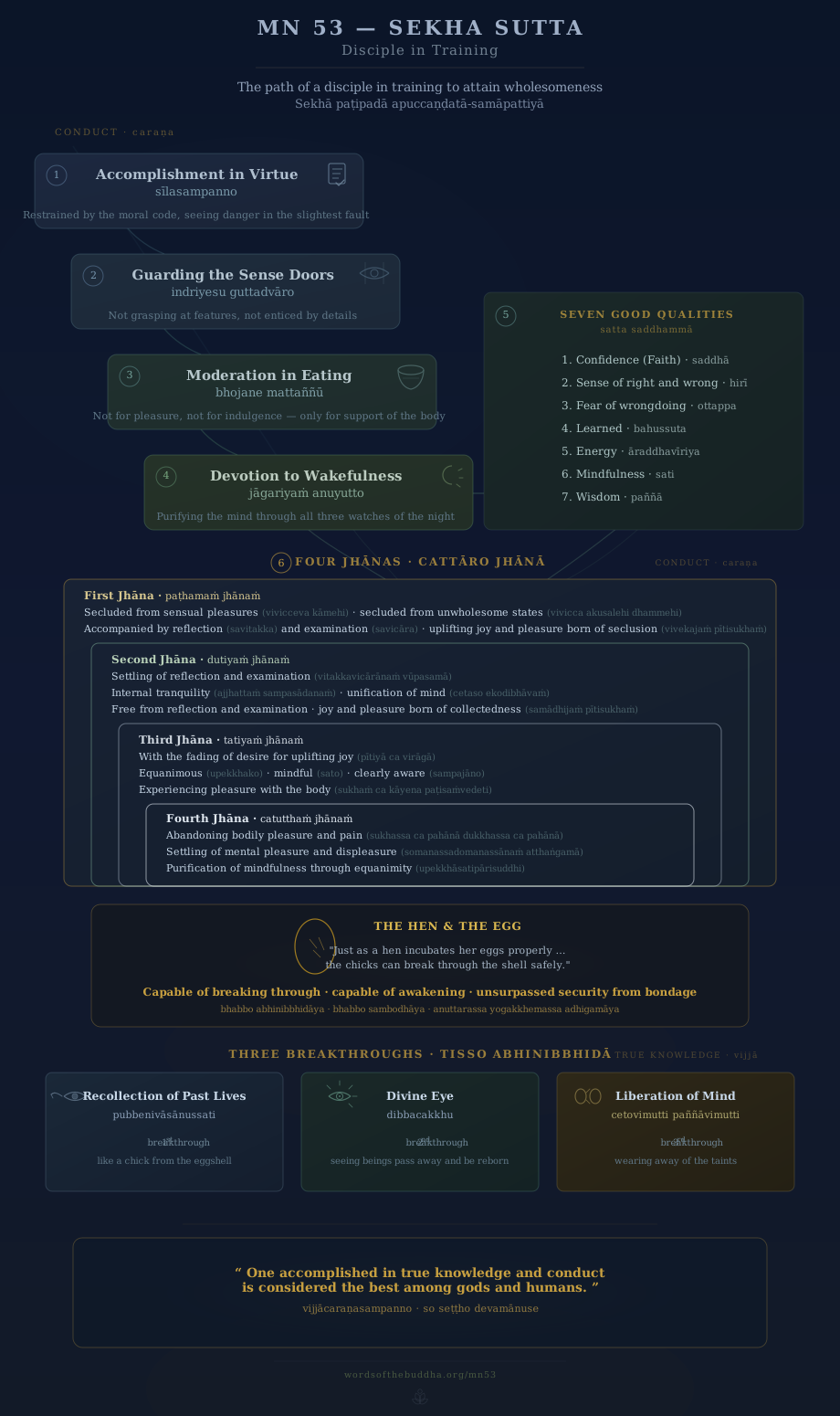
“Here, Mahānāma, a disciple of the Noble Ones is |accomplished in virtue::of excellent morality; accomplished in ethical conduct [sīlasampanna]|, |guards the doors of::protecting the mind wrt; lit. guarded doors [guttadvāra]| the sense faculties, observes moderation in eating, and is devoted to |wakefulness::lucidity, being awake, being alert [jāgariya]|. He is endowed with the seven good qualities, and obtains at will, without difficulty or trouble, the four jhānas—higher states of mind that provide a |pleasant abiding in the here and now::comfortable existence in this very life [diṭṭhadhammasukhavihāra]|.
Accomplishment in Virtue
Kathañca, mahānāma, ariyasāvako sīlasampanno hoti? Idha, mahānāma, ariyasāvako sīlavā hoti, pātimokkhasaṁvarasaṁvuto viharati ācāragocarasampanno aṇumattesu vajjesu bhayadassāvī, samādāya sikkhati sikkhāpadesu. Evaṁ kho, mahānāma, ariyasāvako sīlasampanno hoti.
And how, Mahānāma, is a disciple of the Noble Ones accomplished in virtue? Here, Mahānāma, a disciple of the Noble Ones is |virtuous::ethical, moral [sīlavant]|, dwells restrained with the restraint of the |moral code of conduct::monastic code of discipline which promotes harmonious and pure conduct with others [pātimokkha]|, who knows how to behave and keep to suitable places, who sees danger even in the slightest fault, and undertakes the training by practicing the training rules. It is in this way, Mahānāma, that a disciple of the Noble Ones is accomplished in virtue.
Guarding the Doors of the Sense Faculties
Kathañca, mahānāma, ariyasāvako indriyesu guttadvāro hoti? Idha, mahānāma, ariyasāvako cakkhunā rūpaṁ disvā na nimittaggāhī hoti nānubyañjanaggāhī. Yatvādhikaraṇamenaṁ cakkhundriyaṁ asaṁvutaṁ viharantaṁ abhijjhādomanassā pāpakā akusalā dhammā anvāssaveyyuṁ tassa saṁvarāya paṭipajjati, rakkhati cakkhundriyaṁ, cakkhundriye saṁvaraṁ āpajjati. Sotena saddaṁ sutvā …pe… ghānena gandhaṁ ghāyitvā …pe… jivhāya rasaṁ sāyitvā …pe… kāyena phoṭṭhabbaṁ phusitvā …pe… manasā dhammaṁ viññāya na nimittaggāhī hoti nānubyañjanaggāhī. Yatvādhikaraṇamenaṁ manindriyaṁ asaṁvutaṁ viharantaṁ abhijjhādomanassā pāpakā akusalā dhammā anvāssaveyyuṁ tassa saṁvarāya paṭipajjati, rakkhati manindriyaṁ, manindriye saṁvaraṁ āpajjati. Evaṁ kho, mahānāma, ariyasāvako indriyesu guttadvāro hoti.
And how, Mahānāma, does a disciple of the Noble Ones guard the doors of the sense faculties? Here, Mahānāma, a disciple of the Noble Ones, having seen a |form::a visible object such as a beautiful sight, a face, an expression, art, ornament, possession, status symbol, admired appearance, or enticing scenery—anything seen that can produce desire, attachment, or self-view [rūpa]| with the eye, does not |grasp at its prominent features::focusing on its external characteristics [nimittaggāhī]| nor is |enticed by its details::focused on its secondary characteristics [anubyañjanaggāhī]|. For if he were to dwell with the eye faculty unguarded, |unwholesome::unhealthy, unskillful, unbeneficial, or karmically unprofitable [akusala]| states of |craving and distress::greediness and dissatisfaction, wanting and unhappiness, craving and aversion [abhijjhā + domanassa]| might |stream in::flood in, overwhelm him [anvāssavati]|. Therefore, he practices restraint in this regard, guards the eye faculty, and attains the restraint of the eye faculty. Having heard a |sound::an auditory object such as a sound, noise, melody, or verbal expression—whether it be praise, blame, honor, affection, or disrespect—that can stir emotion, memory, or craving [sadda]| with the ear, having smelled an |odor::a smell or scent such as a fragrance, aroma, stench, perfume, or natural odor from a flower, food, or the earth—an olfactory experience that may trigger memory, comfort, craving, or aversion [gandha]| with the nose, having tasted a |flavor::a taste or flavor such as sweetness, bitterness, sourness, saltiness, spiciness, richness, or subtle notes like umami or astringency—an object of gustatory experience that can become desirable, comforting, or indulgent [rasa]| with the tongue, having touched a |tangible object::a tangible contact such as the feel of skin, warmth, softness, intimacy, physical affection, or sensations like massage, breath, water, air, or pressure—anything felt through the body that can become an object of desire, arousal, comfort, or emotional attachment [phoṭṭhabba]| with the body, or having cognized a |mental object::a mind object such as a thought, idea, memory, intention, emotion, image, or concept arising within the mind that becomes the object of awareness, reflection, craving, or aversion [dhamma]| with the mind, he does not grasp at its prominent features nor is enticed by its details. For if he were to dwell with the mind faculty unguarded, unwholesome states of craving and distress might stream in. It is in this way, Mahānāma, that a disciple of the Noble Ones guards the doors of the sense faculties.
Moderation in Eating
Kathañca, mahānāma, ariyasāvako bhojane mattaññū hoti? Idha, mahānāma, ariyasāvako paṭisaṅkhā yoniso āhāraṁ āhāreti: ‘neva davāya na madāya na maṇḍanāya na vibhūsanāya; yāvadeva imassa kāyassa ṭhitiyā yāpanāya vihiṁsūparatiyā brahmacariyānuggahāya. Iti purāṇañca vedanaṁ paṭihaṅkhāmi, navañca vedanaṁ na uppādessāmi, yātrā ca me bhavissati anavajjatā ca phāsuvihāro cā’ti. Evaṁ kho, mahānāma, ariyasāvako bhojane mattaññū hoti.
And how, Mahānāma, does a disciple of the Noble Ones observe moderation in eating? Here, Mahānāma, a disciple of the Noble Ones consumes food after careful reflection: ‘[This food is] not for pleasure, not for indulgence, not for beautifying oneself, and not for the sake of physical appearance; but only for the support and maintenance of this body, to prevent harm, and as a support for the spiritual life. Thus I shall put an end to the old feeling [of hunger] and not give rise to a new feeling [from an excess of eating], and I shall sustain life blamelessly and dwell at ease.’ It is in this way, Mahānāma, that a disciple of the Noble Ones observes moderation in eating.
Wakefulness
Kathañca, mahānāma, ariyasāvako jāgariyaṁ anuyutto hoti? Idha, mahānāma, ariyasāvako divasaṁ caṅkamena nisajjāya āvaraṇīyehi dhammehi cittaṁ parisodheti, rattiyā paṭhamaṁ yāmaṁ caṅkamena nisajjāya āvaraṇīyehi dhammehi cittaṁ parisodheti, rattiyā majjhimaṁ yāmaṁ dakkhiṇena passena sīhaseyyaṁ kappeti, pāde pādaṁ accādhāya, sato sampajāno, uṭṭhānasaññaṁ manasi karitvā, rattiyā pacchimaṁ yāmaṁ paccuṭṭhāya caṅkamena nisajjāya āvaraṇīyehi dhammehi cittaṁ parisodheti. Evaṁ kho, mahānāma, ariyasāvako jāgariyaṁ anuyutto hoti.
And how, Mahānāma, is a disciple of the Noble Ones devoted to wakefulness? Here, Mahānāma, during the day, a disciple of the Noble Ones practices |walking meditation::walking back and forth [caṅkama]| and sitting [meditation], purifying the mind of |obstructive::hindering, impeding [āvaraṇīya]| states. During the first watch of the night, he practices walking meditation and sitting meditation, purifying the mind of obstructive states. During the middle watch of the night, he lies down on his right side in the lion’s posture, placing one foot on top of the other, mindful and clearly aware, having attended to the idea of rising up. During the last watch of the night, having risen up, he practices walking meditation and sitting meditation, purifying the mind of obstructive states. It is in this way, Mahānāma, that a disciple of the Noble Ones is devoted to wakefulness.
Seven Good Qualities
Kathañca, mahānāma, ariyasāvako sattahi saddhammehi samannāgato hoti? Idha, mahānāma, ariyasāvako saddho hoti, saddahati tathāgatassa bodhiṁ: ‘itipi so bhagavā arahaṁ sammāsambuddho vijjācaraṇasampanno sugato lokavidū anuttaro purisadammasārathi satthā devamanussānaṁ buddho bhagavā’ti.
And how, Mahānāma, is a disciple of the Noble Ones endowed with the seven good qualities? 1.) Here, Mahānāma, a disciple of the Noble Ones has confidence, is convinced in the awakening of the |Tathāgata::one who has arrived at the truth, an epithet of a perfectly Awakened One [tathāgata]|, acknowledging: ‘Indeed, the Blessed One is an Arahant, a perfectly Awakened One, accomplished in true knowledge and conduct, who has reached the destination, knower of the world, an unsurpassed guide of trainable persons, a teacher of gods and humans, Buddha, Fortunate One.’
Hirimā hoti, hirīyati kāyaduccaritena vacīduccaritena manoduccaritena, hirīyati pāpakānaṁ akusalānaṁ dhammānaṁ samāpattiyā.
2.) He |possesses a sense of right and wrong::having conscience [hirīmant]|; he is ashamed of bodily misconduct, verbal misconduct, and mental misconduct, and is ashamed of acquiring |harmful::injurious, bad, or evil. Encompasses the deceptively alluring that is ultimately detrimental or ruinous [pāpaka]|, unwholesome states.
Ottappī hoti, ottappati kāyaduccaritena vacīduccaritena manoduccaritena, ottappati pāpakānaṁ akusalānaṁ dhammānaṁ samāpattiyā.
3.) He is afraid of wrongdoing; he dreads misconduct by body, speech, and mind; he dreads acquiring evil, unwholesome states.
Bahussuto hoti sutadharo sutasannicayo. Ye te dhammā ādikalyāṇā majjhekalyāṇā pariyosānakalyāṇā sātthā sabyañjanā kevalaparipuṇṇaṁ parisuddhaṁ brahmacariyaṁ abhivadanti tathārūpāssa dhammā bahussutā honti dhātā vacasā paricitā manasānupekkhitā diṭṭhiyā suppaṭividdhā.
4.) He has learned much, remembers what he has learned, and consolidates what he has learned. Those teachings that are beneficial in the beginning, beneficial in the middle, and beneficial in the end, that are meaningful and well-expressed, that proclaim the perfectly complete and purified spiritual life—such teachings as these he has learned extensively, remembered, recited verbally, mentally examined, and thoroughly penetrated by view.
Āraddhavīriyo viharati akusalānaṁ dhammānaṁ pahānāya, kusalānaṁ dhammānaṁ upasampadāya, thāmavā daḷhaparakkamo anikkhittadhuro kusalesu dhammesu.
5.) He dwells with energy aroused for abandoning |unwholesome qualities::unskillful actions, bad habits [akusaladhammā]| and acquiring |wholesome qualities::skillful actions, good habits [kusaladhammā]|; he is steadfast, firm in his effort, and does not shirk responsibility with regard to wholesome qualities.
Satimā hoti, paramena satinepakkena samannāgato, cirakatampi cirabhāsitampi saritā anussaritā.
6.) He is mindful, possessing supreme mindfulness and |skillfulness::astuteness, carefulness, prudence [nepakkena]|, remembering and recollecting what was done and said long ago.
Paññavā hoti, udayatthagāminiyā paññāya samannāgato, ariyāya nibbedhikāya sammā dukkhakkhayagāminiyā. Evaṁ kho, mahānāma, ariyasāvako sattahi saddhammehi samannāgato hoti.
7.) He is wise, endowed with |wisdom::distinctive knowledge, discernment [paññā]| that discerns the |arising and passing away::appearance and disappearance, formation and dissolution [udayatthagāmī]|, which is noble and penetrative, |leading to the complete end of suffering::leading to extinction of stress, leading to gradual and complete wearing away of discontentment [dukkhakkhayagāmī]|. It is in this way, Mahānāma, that a disciple of the Noble Ones is endowed with the seven good qualities.
Four Jhānas
Kathañca, mahānāma, ariyasāvako catunnaṁ jhānānaṁ ābhicetasikānaṁ diṭṭhadhammasukhavihārānaṁ nikāmalābhī hoti akicchalābhī akasiralābhī? Idha, mahānāma, ariyasāvako vivicceva kāmehi …pe… paṭhamaṁ jhānaṁ upasampajja viharati; vitakkavicārānaṁ vūpasamā ajjhattaṁ sampasādanaṁ …pe… dutiyaṁ jhānaṁ upasampajja viharati; pītiyā ca virāgā …pe… tatiyaṁ jhānaṁ upasampajja viharati; sukhassa ca pahānā dukkhassa ca pahānā pubbeva somanassadomanassānaṁ atthaṅgamā …pe… catutthaṁ jhānaṁ upasampajja viharati. Evaṁ kho, mahānāma, ariyasāvako catunnaṁ jhānānaṁ ābhicetasikānaṁ diṭṭhadhammasukhavihārānaṁ nikāmalābhī hoti akicchalābhī akasiralābhī.
And how, Mahānāma, does a disciple of the Noble Ones obtain at will, without difficulty or trouble, the four jhānas—higher states of mind that provide a pleasant abiding in the here and now? Here, Mahānāma, a disciple of the Noble Ones, quite secluded from sensual pleasures and |unwholesome::unhealthy, unskillful, unbeneficial, or karmically unprofitable [akusala]| mental states, enters and dwells in the first jhāna. With the |settling::calming, conciliation, subsiding [vūpasama]| of reflection and examination, he enters and dwells in the second jhāna. With the |fading of desire for::dispassion toward, detachment from [virāga]| uplifting joy, he dwells |equanimous::mental poised, mentally balanced, non-reactive, disregarding [upekkhaka]|, |mindful and clearly aware::attentive and completely comprehending [sata + sampajāna]|, experiencing |pleasure::comfort, contentedness, happiness, ease [sukha]| with the body. He enters and dwells in the third jhāna. With the abandoning of [bodily] pleasure and |pain::discomfort, unpleasantness. In this context, this is referring to bodily pain or sharp sensations. [dukkha]|, and with the prior settling down of |mental pleasure and displeasure::the duality of positive and negative states of mind; mental happiness and mental pain [somanassadomanassa]|, he enters and dwells in the fourth jhāna. It is in this way, Mahānāma, that a disciple of the Noble Ones obtains at will, without difficulty or trouble, the four jhānas—higher states of mind that provide a pleasant abiding in the here and now.
Breakthroughs
Yato kho, mahānāma, ariyasāvako evaṁ sīlasampanno hoti, evaṁ indriyesu guttadvāro hoti, evaṁ bhojane mattaññū hoti, evaṁ jāgariyaṁ anuyutto hoti, evaṁ sattahi saddhammehi samannāgato hoti, evaṁ catunnaṁ jhānānaṁ ābhicetasikānaṁ diṭṭhadhammasukhavihārānaṁ nikāmalābhī hoti akicchalābhī akasiralābhī, ayaṁ vuccati, mahānāma, ariyasāvako sekho pāṭipado apuccaṇḍatāya samāpanno, bhabbo abhinibbhidāya, bhabbo sambodhāya, bhabbo anuttarassa yogakkhemassa adhigamāya. Seyyathāpi, mahānāma, kukkuṭiyā aṇḍāni aṭṭha vā dasa vā dvādasa vā tānāssu kukkuṭiyā sammā adhisayitāni sammā pariseditāni sammā paribhāvitāni, kiñcāpi tassā kukkuṭiyā na evaṁ icchā uppajjeyya: ‘aho vatime kukkuṭapotakā pādanakhasikhāya vā mukhatuṇḍakena vā aṇḍakosaṁ padāletvā sotthinā abhinibbhijjeyyun’ti, atha kho bhabbāva te kukkuṭapotakā pādanakhasikhāya vā mukhatuṇḍakena vā aṇḍakosaṁ padāletvā sotthinā abhinibbhijjituṁ.
When, Mahānāma, a disciple of the Noble Ones is accomplished in virtue in this way, guards the doors of the sense faculties in this way, observes moderation in eating in this way, is devoted to wakefulness in this way, is endowed with the seven good qualities in this way, and obtains at will, without difficulty or trouble, the four jhānas—higher states of mind that provide a pleasant abiding in the here and now—in this way; this is called, Mahānāma, a disciple of the Noble Ones who is in training, who has attained the state of |wholesomeness::goodness, soundness; lit. not rotten egg state [apuccaṇḍatā]|. He is capable of breaking through, capable of awakening, and capable of attaining the unsurpassed security from |bondage::Nibbāna|. Just as a hen has eight, ten, or twelve eggs, and she incubates them properly, and nurtures them properly. Even though she did not wish: ‘Oh, if only my chicks would break through the eggshell safely with their claws or beaks,’ yet those chicks are capable of breaking through the eggshell safely with their claws or beaks.
Evameva kho, mahānāma, yato ariyasāvako evaṁ sīlasampanno hoti, evaṁ indriyesu guttadvāro hoti, evaṁ bhojane mattaññū hoti, evaṁ jāgariyaṁ anuyutto hoti, evaṁ sattahi saddhammehi samannāgato hoti, evaṁ catunnaṁ jhānānaṁ ābhicetasikānaṁ diṭṭhadhammasukhavihārānaṁ nikāmalābhī hoti akicchalābhī akasiralābhī, ayaṁ vuccati, mahānāma, ariyasāvako sekho pāṭipado apuccaṇḍatāya samāpanno, bhabbo abhinibbhidāya, bhabbo sambodhāya, bhabbo anuttarassa yogakkhemassa adhigamāya.
In the same way, Mahānāma, when a disciple of the Noble Ones is accomplished in virtue in this way, guards the doors of the sense faculties in this way, observes moderation in eating in this way, is devoted to wakefulness in this way, is endowed with the seven good qualities in this way, and obtains at will, without difficulty or trouble, the four jhānas—higher states of mind that provide a pleasant abiding in the here and now—in this way; this is called, Mahānāma, a disciple of the Noble Ones who is in training, who has attained the state of wholesomeness. He is capable of breaking through, capable of awakening, and capable of attaining the unsurpassed security from bondage.
Sa kho so, mahānāma, ariyasāvako imaṁyeva anuttaraṁ upekkhāsatipārisuddhiṁ āgamma anekavihitaṁ pubbenivāsaṁ anussarati, seyyathidaṁ—ekampi jātiṁ dvepi jātiyo …pe… iti sākāraṁ sauddesaṁ anekavihitaṁ pubbenivāsaṁ anussarati, ayamassa paṭhamābhinibbhidā hoti kukkuṭacchāpakasseva aṇḍakosamhā.
That disciple of the Noble Ones, Mahānāma, relying on this very unsurpassed purification of mindfulness through equanimity, recollects his manifold past lives: one birth, two births, three births, four births, five births, ten births, twenty births, thirty births, forty births, fifty births, a hundred births, a thousand births, a hundred thousand births; many cycles of [universal] contraction, many cycles of [universal] expansion, many cycles of [universal] contraction and expansion: ‘There I was so named, of such a clan, with such an appearance, such was my food, such was my experience of pleasure and pain, such was my life span; and passing away from there, I was reborn elsewhere; and there too I was so named, of such a clan, with such an appearance, such was my food, such was my experience of pleasure and pain, such was my life span; and passing away from there, I was reborn here.’ Thus, he recollects his manifold past lives, in detail and with distinguishing features. This is his first breakthrough, like that of a chick from the eggshell.
Sa kho so, mahānāma, ariyasāvako imaṁyeva anuttaraṁ upekkhāsatipārisuddhiṁ āgamma dibbena cakkhunā visuddhena atikkantamānusakena satte passati cavamāne upapajjamāne hīne paṇīte suvaṇṇe dubbaṇṇe sugate duggate …pe… yathākammūpage satte pajānāti, ayamassa dutiyābhinibbhidā hoti kukkuṭacchāpakasseva aṇḍakosamhā.
That disciple of the Noble Ones, Mahānāma, relying on this very unsurpassed purification of mindfulness through equanimity, with the |divine eye::the faculty of clairvoyance, the ability to see beyond the ordinary human range [dibbacakkhu]|, purified and surpassing human vision, sees beings passing away and being reborn—inferior and superior, beautiful and ugly, in fortunate and unfortunate destinations—and understands beings according to their actions: These beings, engaged in bodily, verbal, and mental misconduct, revilers of the Noble Ones, holding wrong views, undertaking actions based on wrong views—upon the breaking up of the body, after death, have arisen in a state of loss, a bad destination, a place of ruin, even in hell. But these beings, engaged in good bodily, verbal, and mental conduct, not revilers of the Noble Ones, holding right views and undertaking actions based on right views—upon the breaking up of the body, after death, have arisen in a good destination, the heavenly world. Thus, with the divine eye, purified and surpassing human vision, he sees beings as they pass away and are reborn: inferior and superior, beautiful and ugly, in fortunate and unfortunate destinations— he understands beings according to their actions. This is his second breakthrough, like that of a chick from the eggshell.
Sa kho so, mahānāma, ariyasāvako imaṁyeva anuttaraṁ upekkhāsatipārisuddhiṁ āgamma āsavānaṁ khayā anāsavaṁ cetovimuttiṁ paññāvimuttiṁ diṭṭheva dhamme sayaṁ abhiññā sacchikatvā upasampajja viharati, ayamassa tatiyābhinibbhidā hoti kukkuṭacchāpakasseva aṇḍakosamhā.
That disciple of the Noble Ones, Mahānāma, relying on this very unsurpassed purification of mindfulness through equanimity, through the wearing away of the |taints::defilements, pollutants [āsava]|, realizes with direct knowledge and attains in this very life, the taintless |liberation of mind::emancipated by mind/heart, samādhi obtained from fruition [cetovimutti]| and |liberation by wisdom::emancipation by insight [paññāvimutti]|, and dwells in it. This is his third breakthrough, like that of a chick from the eggshell.
True Knowledge and Conduct
Yampi, mahānāma, ariyasāvako sīlasampanno hoti, idampissa hoti caraṇasmiṁ; yampi, mahānāma, ariyasāvako indriyesu guttadvāro hoti, idampissa hoti caraṇasmiṁ; yampi, mahānāma, ariyasāvako bhojane mattaññū hoti, idampissa hoti caraṇasmiṁ; yampi, mahānāma, ariyasāvako jāgariyaṁ anuyutto hoti, idampissa hoti caraṇasmiṁ; yampi, mahānāma, ariyasāvako sattahi saddhammehi samannāgato hoti, idampissa hoti caraṇasmiṁ; yampi, mahānāma, ariyasāvako catunnaṁ jhānānaṁ ābhicetasikānaṁ diṭṭhadhammasukhavihārānaṁ nikāmalābhī hoti akicchalābhī akasiralābhī, idampissa hoti caraṇasmiṁ.
That a disciple of the Noble Ones, Mahānāma, is accomplished in virtue, this pertains to his conduct. That he guards the doors of the sense faculties, Mahānāma, this pertains to his conduct. That he observes moderation in eating, Mahānāma, this pertains to his conduct. That he is devoted to wakefulness, Mahānāma, this pertains to his conduct. That he is endowed with the seven good qualities, Mahānāma, this pertains to his conduct. That he obtains at will, without difficulty or trouble, the four jhānas—higher states of mind that provide a pleasant abiding in the here and now—Mahānāma, this pertains to his conduct.
Yañca kho, mahānāma, ariyasāvako anekavihitaṁ pubbenivāsaṁ anussarati, seyyathidaṁ—ekampi jātiṁ dvepi jātiyo …pe… iti sākāraṁ sauddesaṁ anekavihitaṁ pubbenivāsaṁ anussarati, idampissa hoti vijjāya; yampi, mahānāma, ariyasāvako dibbena cakkhunā visuddhena atikkantamānusakena satte passati cavamāne upapajjamāne hīne paṇīte suvaṇṇe dubbaṇṇe sugate duggate …pe… yathākammūpage satte pajānāti, idampissa hoti vijjāya. Yampi, mahānāma, ariyasāvako āsavānaṁ khayā anāsavaṁ cetovimuttiṁ paññāvimuttiṁ diṭṭheva dhamme sayaṁ abhiññā sacchikatvā upasampajja viharati, idampissa hoti vijjāya.
And that a disciple of the Noble Ones, Mahānāma, recollects their manifold past lives: one birth, two births three births, four births, five births, ten births, twenty births, thirty births, forty births, fifty births, a hundred births, a thousand births, a hundred thousand births; many cycles of [universal] contraction, many cycles of [universal] expansion, many cycles of [universal] contraction and expansion: ‘There I was so named, of such a clan, with such an appearance, such was my food, such was my experience of pleasure and pain, such was my life span; and passing away from there, I was reborn elsewhere; and there too I was so named, of such a clan, with such an appearance, such was my food, such was my experience of pleasure and pain, such was my life span; and passing away from there, I was reborn here.’ Thus, he recollects his manifold past lives, in detail and with distinguishing features—this pertains to his |true knowledge::wisdom, the direct realization of truth [vijjā]|. That a disciple of the Noble Ones, Mahānāma, with the divine eye, purified and surpassing human vision, sees beings passing away and being reborn—inferior and superior, beautiful and ugly, in fortunate and unfortunate destinations—and understands beings according to their actions: These beings, engaged in bodily, verbal, and mental misconduct, revilers of the Noble Ones, holding wrong views, undertaking actions based on wrong views—upon the breaking up of the body, after death, have arisen in a state of loss, a bad destination, a place of ruin, even in hell. But these beings, engaged in good bodily, verbal, and mental conduct, not revilers of the Noble Ones, holding right views and undertaking actions based on right views—upon the breaking up of the body, after death, have arisen in a good destination, the heavenly world. Thus, with the divine eye, purified and surpassing human vision, he sees beings as they pass away and are reborn: inferior and superior, beautiful and ugly, in fortunate and unfortunate destinations— he understands beings according to their actions—this pertains to his true knowledge. That a disciple of the Noble Ones, Mahānāma, through the wearing away of the taints, realizes with direct knowledge and attains in this very life the taintless liberation of mind and liberation by wisdom, and dwells in it—this pertains to his true knowledge.
Ayaṁ vuccati, mahānāma, ariyasāvako vijjāsampanno itipi caraṇasampanno itipi vijjācaraṇasampanno itipi.
This is called, Mahānāma, a disciple of the Noble Ones who is accomplished in true knowledge, accomplished in conduct, accomplished in true knowledge and conduct.
Brahmunāpesā, mahānāma, sanaṅkumārena gāthā bhāsitā:
And this verse, Mahānāma, was spoken by Brahmā Sanaṅkumāra:
‘Khattiyo seṭṭho janetasmiṁ,
ye gottapaṭisārino;
Vijjācaraṇasampanno,
so seṭṭho devamānuse’ti.
‘A |prince::a king’s son, of ruling caste [khattiya]| is best among people
who place value on family lineage;
but one accomplished in true knowledge and conduct
is best among gods and humans.’
Sā kho panesā, mahānāma, brahmunā sanaṅkumārena gāthā sugītā no duggītā, subhāsitā no dubbhāsitā, atthasaṁhitā no anatthasaṁhitā, anumatā bhagavatā”ti.
And this verse, Mahānāma, spoken by Brahmā Sanaṅkumāra is well recited, not poorly recited; is |well spoken::articulate, eloquent [subhāsita]|, not badly spoken; is beneficial, not unbeneficial; and it is approved by the Blessed One.”
Atha kho bhagavā uṭṭhahitvā āyasmantaṁ ānandaṁ āmantesi: “sādhu sādhu, ānanda, sādhu kho tvaṁ, ānanda, kāpilavatthavānaṁ sakyānaṁ sekhaṁ pāṭipadaṁ abhāsī”ti.
Then the Blessed One got up and addressed the venerable Ānanda: “Good, good, Ānanda! You have spoken well to the Sakyans of Kapilavatthu about the path of a disciple in training.”
Idamavocāyasmā ānando. Samanuñño satthā ahosi. Attamanā kāpilavatthavā sakyā āyasmato ānandassa bhāsitaṁ abhinandunti.
The venerable Ānanda said this. The Teacher approved. The Sakyans of Kapilavatthu were delighted and pleased with the venerable Ānanda’s words.
Thus have I heard—At one time, the Blessed One was residing among the Sakyans in |Kapilavatthu::name of the capital city of the Sakyans, the birthplace of the Buddha [kapilavatthu]|, in the Banyan park.
Now at that time a new assembly hall had recently been built by the Sakyans of Kapilavatthu, which had not yet been occupied by any ascetic, brahmin, or human being. Then the Sakyans of Kapilavatthu approached the Blessed One. Having approached and paid homage to the Blessed One, they sat to one side. Sitting to one side, the Sakyans of Kapilavatthu said this to the Blessed One:
“Here, venerable sir, a new assembly hall has recently been built by the Sakyans of Kapilavatthu, which has not yet been occupied by any ascetic, brahmin, or human being. Venerable sir, may the Blessed One use it first. After the Blessed One has used it first, the Sakyans of Kapilavatthu will use it. That will be for the welfare and happiness of the Sakyans of Kapilavatthu for a long time.” The Blessed One consented in silence.
Then the Sakyans of Kapilavatthu, having received the Blessed One’s consent, rose from their seats, and after paying homage to the Blessed One, keeping him on their right, approached the new assembly hall. Having approached, they covered the entire assembly hall with mats, prepared seats, set out a water jar, and hung up an oil lamp. Then they approached the Blessed One. Having approached and paid homage to the Blessed One, they stood to one side. Standing to one side, the Sakyans of Kapilavatthu said this to the Blessed One: “Venerable sir, the assembly hall is completely covered with mats, seats are prepared, a water jar is set out, and an oil lamp is hung up. Venerable sir, may the Blessed One come at his own convenience.”
Then the Blessed One, after putting on his robe and taking his alms bowl and outer robe, approached the assembly hall together with the |Saṅgha::The community of monks and nuns practicing in line with the Buddha’s teachings. In the broader sense, this is the community of disciples who have realized the noble path and fruition through the Buddha’s teachings [saṅgha]| of bhikkhus. Having approached, washed his feet, and entered the assembly hall, he sat down against the middle pillar, facing east. The Saṅgha of bhikkhus also, having washed their feet and entered the assembly hall, sat down against the western wall, facing east, keeping the Blessed One in front of them. The Sakyans of Kapilavatthu also, having washed their feet and entered the assembly hall, sat down against the eastern wall, facing west, keeping the Blessed One in front of them.
Then the Blessed One, having instructed, encouraged, inspired, and gladdened the Sakyans of Kapilavatthu for much of the night with a talk on the Dhamma, addressed the venerable Ānanda: “Ānanda, speak to the Sakyans of Kapilavatthu about the path of a disciple in training. My back |aches::is sore, is tired [āgilāyati]|; I will stretch it.”
“Yes, venerable sir,” the venerable Ānanda replied to the Blessed One. Then the Blessed One, having folded his outer robe in four, lay down on his right side in the lion’s posture, placing one leg overlapping the other, |mindful::remembering to be present with continuous effort, observing the body in and of itself, feelings in and of itself, mind in and of itself, mental qualities in and of themselves [sata]| and |clearly aware::with attentiveness, with clear and full comprehension, intentional, deliberate, purposeful [sampajāna]|, having attended to the idea of rising up.
Then the venerable Ānanda addressed Mahānāma the Sakyan:
“Here, Mahānāma, a disciple of the Noble Ones is |accomplished in virtue::of excellent morality; accomplished in ethical conduct [sīlasampanna]|, |guards the doors of::protecting the mind wrt; lit. guarded doors [guttadvāra]| the sense faculties, observes moderation in eating, and is devoted to |wakefulness::lucidity, being awake, being alert [jāgariya]|. He is endowed with the seven good qualities, and obtains at will, without difficulty or trouble, the four jhānas—higher states of mind that provide a |pleasant abiding in the here and now::comfortable existence in this very life [diṭṭhadhammasukhavihāra]|.
Accomplishment in Virtue
And how, Mahānāma, is a disciple of the Noble Ones accomplished in virtue? Here, Mahānāma, a disciple of the Noble Ones is |virtuous::ethical, moral [sīlavant]|, dwells restrained with the restraint of the |moral code of conduct::monastic code of discipline which promotes harmonious and pure conduct with others [pātimokkha]|, who knows how to behave and keep to suitable places, who sees danger even in the slightest fault, and undertakes the training by practicing the training rules. It is in this way, Mahānāma, that a disciple of the Noble Ones is accomplished in virtue.
Guarding the Doors of the Sense Faculties
And how, Mahānāma, does a disciple of the Noble Ones guard the doors of the sense faculties? Here, Mahānāma, a disciple of the Noble Ones, having seen a |form::a visible object such as a beautiful sight, a face, an expression, art, ornament, possession, status symbol, admired appearance, or enticing scenery—anything seen that can produce desire, attachment, or self-view [rūpa]| with the eye, does not |grasp at its prominent features::focusing on its external characteristics [nimittaggāhī]| nor is |enticed by its details::focused on its secondary characteristics [anubyañjanaggāhī]|. For if he were to dwell with the eye faculty unguarded, |unwholesome::unhealthy, unskillful, unbeneficial, or karmically unprofitable [akusala]| states of |craving and distress::greediness and dissatisfaction, wanting and unhappiness, craving and aversion [abhijjhā + domanassa]| might |stream in::flood in, overwhelm him [anvāssavati]|. Therefore, he practices restraint in this regard, guards the eye faculty, and attains the restraint of the eye faculty. Having heard a |sound::an auditory object such as a sound, noise, melody, or verbal expression—whether it be praise, blame, honor, affection, or disrespect—that can stir emotion, memory, or craving [sadda]| with the ear, having smelled an |odor::a smell or scent such as a fragrance, aroma, stench, perfume, or natural odor from a flower, food, or the earth—an olfactory experience that may trigger memory, comfort, craving, or aversion [gandha]| with the nose, having tasted a |flavor::a taste or flavor such as sweetness, bitterness, sourness, saltiness, spiciness, richness, or subtle notes like umami or astringency—an object of gustatory experience that can become desirable, comforting, or indulgent [rasa]| with the tongue, having touched a |tangible object::a tangible contact such as the feel of skin, warmth, softness, intimacy, physical affection, or sensations like massage, breath, water, air, or pressure—anything felt through the body that can become an object of desire, arousal, comfort, or emotional attachment [phoṭṭhabba]| with the body, or having cognized a |mental object::a mind object such as a thought, idea, memory, intention, emotion, image, or concept arising within the mind that becomes the object of awareness, reflection, craving, or aversion [dhamma]| with the mind, he does not grasp at its prominent features nor is enticed by its details. For if he were to dwell with the mind faculty unguarded, unwholesome states of craving and distress might stream in. It is in this way, Mahānāma, that a disciple of the Noble Ones guards the doors of the sense faculties.
Moderation in Eating
And how, Mahānāma, does a disciple of the Noble Ones observe moderation in eating? Here, Mahānāma, a disciple of the Noble Ones consumes food after careful reflection: ‘[This food is] not for pleasure, not for indulgence, not for beautifying oneself, and not for the sake of physical appearance; but only for the support and maintenance of this body, to prevent harm, and as a support for the spiritual life. Thus I shall put an end to the old feeling [of hunger] and not give rise to a new feeling [from an excess of eating], and I shall sustain life blamelessly and dwell at ease.’ It is in this way, Mahānāma, that a disciple of the Noble Ones observes moderation in eating.
Wakefulness
And how, Mahānāma, is a disciple of the Noble Ones devoted to wakefulness? Here, Mahānāma, during the day, a disciple of the Noble Ones practices |walking meditation::walking back and forth [caṅkama]| and sitting [meditation], purifying the mind of |obstructive::hindering, impeding [āvaraṇīya]| states. During the first watch of the night, he practices walking meditation and sitting meditation, purifying the mind of obstructive states. During the middle watch of the night, he lies down on his right side in the lion’s posture, placing one foot on top of the other, mindful and clearly aware, having attended to the idea of rising up. During the last watch of the night, having risen up, he practices walking meditation and sitting meditation, purifying the mind of obstructive states. It is in this way, Mahānāma, that a disciple of the Noble Ones is devoted to wakefulness.
Seven Good Qualities
And how, Mahānāma, is a disciple of the Noble Ones endowed with the seven good qualities? 1.) Here, Mahānāma, a disciple of the Noble Ones has confidence, is convinced in the awakening of the |Tathāgata::one who has arrived at the truth, an epithet of a perfectly Awakened One [tathāgata]|, acknowledging: ‘Indeed, the Blessed One is an Arahant, a perfectly Awakened One, accomplished in true knowledge and conduct, who has reached the destination, knower of the world, an unsurpassed guide of trainable persons, a teacher of gods and humans, Buddha, Fortunate One.’
2.) He |possesses a sense of right and wrong::having conscience [hirīmant]|; he is ashamed of bodily misconduct, verbal misconduct, and mental misconduct, and is ashamed of acquiring |harmful::injurious, bad, or evil. Encompasses the deceptively alluring that is ultimately detrimental or ruinous [pāpaka]|, unwholesome states.
3.) He is afraid of wrongdoing; he dreads misconduct by body, speech, and mind; he dreads acquiring evil, unwholesome states.
4.) He has learned much, remembers what he has learned, and consolidates what he has learned. Those teachings that are beneficial in the beginning, beneficial in the middle, and beneficial in the end, that are meaningful and well-expressed, that proclaim the perfectly complete and purified spiritual life—such teachings as these he has learned extensively, remembered, recited verbally, mentally examined, and thoroughly penetrated by view.
5.) He dwells with energy aroused for abandoning |unwholesome qualities::unskillful actions, bad habits [akusaladhammā]| and acquiring |wholesome qualities::skillful actions, good habits [kusaladhammā]|; he is steadfast, firm in his effort, and does not shirk responsibility with regard to wholesome qualities.
6.) He is mindful, possessing supreme mindfulness and |skillfulness::astuteness, carefulness, prudence [nepakkena]|, remembering and recollecting what was done and said long ago.
7.) He is wise, endowed with |wisdom::distinctive knowledge, discernment [paññā]| that discerns the |arising and passing away::appearance and disappearance, formation and dissolution [udayatthagāmī]|, which is noble and penetrative, |leading to the complete end of suffering::leading to extinction of stress, leading to gradual and complete wearing away of discontentment [dukkhakkhayagāmī]|. It is in this way, Mahānāma, that a disciple of the Noble Ones is endowed with the seven good qualities.
Four Jhānas
And how, Mahānāma, does a disciple of the Noble Ones obtain at will, without difficulty or trouble, the four jhānas—higher states of mind that provide a pleasant abiding in the here and now? Here, Mahānāma, a disciple of the Noble Ones, quite secluded from sensual pleasures and |unwholesome::unhealthy, unskillful, unbeneficial, or karmically unprofitable [akusala]| mental states, enters and dwells in the first jhāna. With the |settling::calming, conciliation, subsiding [vūpasama]| of reflection and examination, he enters and dwells in the second jhāna. With the |fading of desire for::dispassion toward, detachment from [virāga]| uplifting joy, he dwells |equanimous::mental poised, mentally balanced, non-reactive, disregarding [upekkhaka]|, |mindful and clearly aware::attentive and completely comprehending [sata + sampajāna]|, experiencing |pleasure::comfort, contentedness, happiness, ease [sukha]| with the body. He enters and dwells in the third jhāna. With the abandoning of [bodily] pleasure and |pain::discomfort, unpleasantness. In this context, this is referring to bodily pain or sharp sensations. [dukkha]|, and with the prior settling down of |mental pleasure and displeasure::the duality of positive and negative states of mind; mental happiness and mental pain [somanassadomanassa]|, he enters and dwells in the fourth jhāna. It is in this way, Mahānāma, that a disciple of the Noble Ones obtains at will, without difficulty or trouble, the four jhānas—higher states of mind that provide a pleasant abiding in the here and now.
Breakthroughs
When, Mahānāma, a disciple of the Noble Ones is accomplished in virtue in this way, guards the doors of the sense faculties in this way, observes moderation in eating in this way, is devoted to wakefulness in this way, is endowed with the seven good qualities in this way, and obtains at will, without difficulty or trouble, the four jhānas—higher states of mind that provide a pleasant abiding in the here and now—in this way; this is called, Mahānāma, a disciple of the Noble Ones who is in training, who has attained the state of |wholesomeness::goodness, soundness; lit. not rotten egg state [apuccaṇḍatā]|. He is capable of breaking through, capable of awakening, and capable of attaining the unsurpassed security from |bondage::Nibbāna|. Just as a hen has eight, ten, or twelve eggs, and she incubates them properly, and nurtures them properly. Even though she did not wish: ‘Oh, if only my chicks would break through the eggshell safely with their claws or beaks,’ yet those chicks are capable of breaking through the eggshell safely with their claws or beaks.
In the same way, Mahānāma, when a disciple of the Noble Ones is accomplished in virtue in this way, guards the doors of the sense faculties in this way, observes moderation in eating in this way, is devoted to wakefulness in this way, is endowed with the seven good qualities in this way, and obtains at will, without difficulty or trouble, the four jhānas—higher states of mind that provide a pleasant abiding in the here and now—in this way; this is called, Mahānāma, a disciple of the Noble Ones who is in training, who has attained the state of wholesomeness. He is capable of breaking through, capable of awakening, and capable of attaining the unsurpassed security from bondage.
That disciple of the Noble Ones, Mahānāma, relying on this very unsurpassed purification of mindfulness through equanimity, recollects his manifold past lives: one birth, two births, three births, four births, five births, ten births, twenty births, thirty births, forty births, fifty births, a hundred births, a thousand births, a hundred thousand births; many cycles of [universal] contraction, many cycles of [universal] expansion, many cycles of [universal] contraction and expansion: ‘There I was so named, of such a clan, with such an appearance, such was my food, such was my experience of pleasure and pain, such was my life span; and passing away from there, I was reborn elsewhere; and there too I was so named, of such a clan, with such an appearance, such was my food, such was my experience of pleasure and pain, such was my life span; and passing away from there, I was reborn here.’ Thus, he recollects his manifold past lives, in detail and with distinguishing features. This is his first breakthrough, like that of a chick from the eggshell.
That disciple of the Noble Ones, Mahānāma, relying on this very unsurpassed purification of mindfulness through equanimity, with the |divine eye::the faculty of clairvoyance, the ability to see beyond the ordinary human range [dibbacakkhu]|, purified and surpassing human vision, sees beings passing away and being reborn—inferior and superior, beautiful and ugly, in fortunate and unfortunate destinations—and understands beings according to their actions: These beings, engaged in bodily, verbal, and mental misconduct, revilers of the Noble Ones, holding wrong views, undertaking actions based on wrong views—upon the breaking up of the body, after death, have arisen in a state of loss, a bad destination, a place of ruin, even in hell. But these beings, engaged in good bodily, verbal, and mental conduct, not revilers of the Noble Ones, holding right views and undertaking actions based on right views—upon the breaking up of the body, after death, have arisen in a good destination, the heavenly world. Thus, with the divine eye, purified and surpassing human vision, he sees beings as they pass away and are reborn: inferior and superior, beautiful and ugly, in fortunate and unfortunate destinations— he understands beings according to their actions. This is his second breakthrough, like that of a chick from the eggshell.
That disciple of the Noble Ones, Mahānāma, relying on this very unsurpassed purification of mindfulness through equanimity, through the wearing away of the |taints::defilements, pollutants [āsava]|, realizes with direct knowledge and attains in this very life, the taintless |liberation of mind::emancipated by mind/heart, samādhi obtained from fruition [cetovimutti]| and |liberation by wisdom::emancipation by insight [paññāvimutti]|, and dwells in it. This is his third breakthrough, like that of a chick from the eggshell.
True Knowledge and Conduct
That a disciple of the Noble Ones, Mahānāma, is accomplished in virtue, this pertains to his conduct. That he guards the doors of the sense faculties, Mahānāma, this pertains to his conduct. That he observes moderation in eating, Mahānāma, this pertains to his conduct. That he is devoted to wakefulness, Mahānāma, this pertains to his conduct. That he is endowed with the seven good qualities, Mahānāma, this pertains to his conduct. That he obtains at will, without difficulty or trouble, the four jhānas—higher states of mind that provide a pleasant abiding in the here and now—Mahānāma, this pertains to his conduct.
And that a disciple of the Noble Ones, Mahānāma, recollects their manifold past lives: one birth, two births three births, four births, five births, ten births, twenty births, thirty births, forty births, fifty births, a hundred births, a thousand births, a hundred thousand births; many cycles of [universal] contraction, many cycles of [universal] expansion, many cycles of [universal] contraction and expansion: ‘There I was so named, of such a clan, with such an appearance, such was my food, such was my experience of pleasure and pain, such was my life span; and passing away from there, I was reborn elsewhere; and there too I was so named, of such a clan, with such an appearance, such was my food, such was my experience of pleasure and pain, such was my life span; and passing away from there, I was reborn here.’ Thus, he recollects his manifold past lives, in detail and with distinguishing features—this pertains to his |true knowledge::wisdom, the direct realization of truth [vijjā]|. That a disciple of the Noble Ones, Mahānāma, with the divine eye, purified and surpassing human vision, sees beings passing away and being reborn—inferior and superior, beautiful and ugly, in fortunate and unfortunate destinations—and understands beings according to their actions: These beings, engaged in bodily, verbal, and mental misconduct, revilers of the Noble Ones, holding wrong views, undertaking actions based on wrong views—upon the breaking up of the body, after death, have arisen in a state of loss, a bad destination, a place of ruin, even in hell. But these beings, engaged in good bodily, verbal, and mental conduct, not revilers of the Noble Ones, holding right views and undertaking actions based on right views—upon the breaking up of the body, after death, have arisen in a good destination, the heavenly world. Thus, with the divine eye, purified and surpassing human vision, he sees beings as they pass away and are reborn: inferior and superior, beautiful and ugly, in fortunate and unfortunate destinations— he understands beings according to their actions—this pertains to his true knowledge. That a disciple of the Noble Ones, Mahānāma, through the wearing away of the taints, realizes with direct knowledge and attains in this very life the taintless liberation of mind and liberation by wisdom, and dwells in it—this pertains to his true knowledge.
This is called, Mahānāma, a disciple of the Noble Ones who is accomplished in true knowledge, accomplished in conduct, accomplished in true knowledge and conduct.
And this verse, Mahānāma, was spoken by Brahmā Sanaṅkumāra:
‘A |prince::a king’s son, of ruling caste [khattiya]| is best among people
who place value on family lineage;
but one accomplished in true knowledge and conduct
is best among gods and humans.’
And this verse, Mahānāma, spoken by Brahmā Sanaṅkumāra is well recited, not poorly recited; is |well spoken::articulate, eloquent [subhāsita]|, not badly spoken; is beneficial, not unbeneficial; and it is approved by the Blessed One.”
Then the Blessed One got up and addressed the venerable Ānanda: “Good, good, Ānanda! You have spoken well to the Sakyans of Kapilavatthu about the path of a disciple in training.”
The venerable Ānanda said this. The Teacher approved. The Sakyans of Kapilavatthu were delighted and pleased with the venerable Ānanda’s words.
Evaṁ me sutaṁ— ekaṁ samayaṁ bhagavā sakkesu viharati kapilavatthusmiṁ nigrodhārāme.
Tena kho pana samayena kāpilavatthavānaṁ sakyānaṁ navaṁ santhāgāraṁ acirakāritaṁ hoti anajjhāvuṭṭhaṁ samaṇena vā brāhmaṇena vā kenaci vā manussabhūtena. Atha kho kāpilavatthavā sakyā yena bhagavā tenupasaṅkamiṁsu; upasaṅkamitvā bhagavantaṁ abhivādetvā ekamantaṁ nisīdiṁsu. Ekamantaṁ nisinnā kho kāpilavatthavā sakyā bhagavantaṁ etadavocuṁ:
“idha, bhante, kāpilavatthavānaṁ sakyānaṁ navaṁ santhāgāraṁ acirakāritaṁ anajjhāvuṭṭhaṁ samaṇena vā brāhmaṇena vā kenaci vā manussabhūtena. Taṁ, bhante, bhagavā paṭhamaṁ paribhuñjatu. Bhagavatā paṭhamaṁ paribhuttaṁ pacchā kāpilavatthavā sakyā paribhuñjissanti. Tadassa kāpilavatthavānaṁ sakyānaṁ dīgharattaṁ hitāya sukhāyā”ti. Adhivāsesi bhagavā tuṇhībhāvena.
Atha kho kāpilavatthavā sakyā bhagavato adhivāsanaṁ viditvā uṭṭhāyāsanā bhagavantaṁ abhivādetvā padakkhiṇaṁ katvā yena navaṁ santhāgāraṁ tenupasaṅkamiṁsu; upasaṅkamitvā sabbasanthariṁ santhāgāraṁ santharitvā āsanāni paññapetvā udakamaṇikaṁ upaṭṭhapetvā telappadīpaṁ āropetvā yena bhagavā tenupasaṅkamiṁsu; upasaṅkamitvā bhagavantaṁ abhivādetvā ekamantaṁ aṭṭhaṁsu. Ekamantaṁ ṭhitā kho kāpilavatthavā sakyā bhagavantaṁ etadavocuṁ: “sabbasanthariṁ santhataṁ, bhante, santhāgāraṁ, āsanāni paññattāni, udakamaṇiko upaṭṭhāpito, telappadīpo āropito. Yassadāni, bhante, bhagavā kālaṁ maññatī”ti.
Atha kho bhagavā nivāsetvā pattacīvaramādāya saddhiṁ bhikkhusaṅghena yena santhāgāraṁ tenupasaṅkami; upasaṅkamitvā pāde pakkhāletvā santhāgāraṁ pavisitvā majjhimaṁ thambhaṁ nissāya puratthābhimukho nisīdi. Bhikkhusaṅghopi kho pāde pakkhāletvā santhāgāraṁ pavisitvā pacchimaṁ bhittiṁ nissāya puratthābhimukho nisīdi, bhagavantaṁyeva purakkhatvā. Kāpilavatthavāpi kho sakyā pāde pakkhāletvā santhāgāraṁ pavisitvā puratthimaṁ bhittiṁ nissāya pacchimābhimukhā nisīdiṁsu, bhagavantaṁyeva purakkhatvā.
Atha kho bhagavā kāpilavatthave sakye bahudeva rattiṁ dhammiyā kathāya sandassetvā samādapetvā samuttejetvā sampahaṁsetvā āyasmantaṁ ānandaṁ āmantesi: “paṭibhātu taṁ, ānanda, kāpilavatthavānaṁ sakyānaṁ sekho pāṭipado. Piṭṭhi me āgilāyati; tamahaṁ āyamissāmī”ti.
“Evaṁ, bhante”ti kho āyasmā ānando bhagavato paccassosi. Atha kho bhagavā catugguṇaṁ saṅghāṭiṁ paññāpetvā dakkhiṇena passena sīhaseyyaṁ kappesi, pāde pādaṁ accādhāya, sato sampajāno, uṭṭhānasaññaṁ manasi karitvā.
Atha kho āyasmā ānando mahānāmaṁ sakkaṁ āmantesi:
“idha, mahānāma, ariyasāvako sīlasampanno hoti, indriyesu guttadvāro hoti, bhojane mattaññū hoti, jāgariyaṁ anuyutto hoti, sattahi saddhammehi samannāgato hoti, catunnaṁ jhānānaṁ ābhicetasikānaṁ diṭṭhadhammasukhavihārānaṁ nikāmalābhī hoti akicchalābhī akasiralābhī.
Kathañca, mahānāma, ariyasāvako sīlasampanno hoti? Idha, mahānāma, ariyasāvako sīlavā hoti, pātimokkhasaṁvarasaṁvuto viharati ācāragocarasampanno aṇumattesu vajjesu bhayadassāvī, samādāya sikkhati sikkhāpadesu. Evaṁ kho, mahānāma, ariyasāvako sīlasampanno hoti.
Kathañca, mahānāma, ariyasāvako indriyesu guttadvāro hoti? Idha, mahānāma, ariyasāvako cakkhunā rūpaṁ disvā na nimittaggāhī hoti nānubyañjanaggāhī. Yatvādhikaraṇamenaṁ cakkhundriyaṁ asaṁvutaṁ viharantaṁ abhijjhādomanassā pāpakā akusalā dhammā anvāssaveyyuṁ tassa saṁvarāya paṭipajjati, rakkhati cakkhundriyaṁ, cakkhundriye saṁvaraṁ āpajjati. Sotena saddaṁ sutvā …pe… ghānena gandhaṁ ghāyitvā …pe… jivhāya rasaṁ sāyitvā …pe… kāyena phoṭṭhabbaṁ phusitvā …pe… manasā dhammaṁ viññāya na nimittaggāhī hoti nānubyañjanaggāhī. Yatvādhikaraṇamenaṁ manindriyaṁ asaṁvutaṁ viharantaṁ abhijjhādomanassā pāpakā akusalā dhammā anvāssaveyyuṁ tassa saṁvarāya paṭipajjati, rakkhati manindriyaṁ, manindriye saṁvaraṁ āpajjati. Evaṁ kho, mahānāma, ariyasāvako indriyesu guttadvāro hoti.
Kathañca, mahānāma, ariyasāvako bhojane mattaññū hoti? Idha, mahānāma, ariyasāvako paṭisaṅkhā yoniso āhāraṁ āhāreti: ‘neva davāya na madāya na maṇḍanāya na vibhūsanāya; yāvadeva imassa kāyassa ṭhitiyā yāpanāya vihiṁsūparatiyā brahmacariyānuggahāya. Iti purāṇañca vedanaṁ paṭihaṅkhāmi, navañca vedanaṁ na uppādessāmi, yātrā ca me bhavissati anavajjatā ca phāsuvihāro cā’ti. Evaṁ kho, mahānāma, ariyasāvako bhojane mattaññū hoti.
Kathañca, mahānāma, ariyasāvako jāgariyaṁ anuyutto hoti? Idha, mahānāma, ariyasāvako divasaṁ caṅkamena nisajjāya āvaraṇīyehi dhammehi cittaṁ parisodheti, rattiyā paṭhamaṁ yāmaṁ caṅkamena nisajjāya āvaraṇīyehi dhammehi cittaṁ parisodheti, rattiyā majjhimaṁ yāmaṁ dakkhiṇena passena sīhaseyyaṁ kappeti, pāde pādaṁ accādhāya, sato sampajāno, uṭṭhānasaññaṁ manasi karitvā, rattiyā pacchimaṁ yāmaṁ paccuṭṭhāya caṅkamena nisajjāya āvaraṇīyehi dhammehi cittaṁ parisodheti. Evaṁ kho, mahānāma, ariyasāvako jāgariyaṁ anuyutto hoti.
Kathañca, mahānāma, ariyasāvako sattahi saddhammehi samannāgato hoti? Idha, mahānāma, ariyasāvako saddho hoti, saddahati tathāgatassa bodhiṁ: ‘itipi so bhagavā arahaṁ sammāsambuddho vijjācaraṇasampanno sugato lokavidū anuttaro purisadammasārathi satthā devamanussānaṁ buddho bhagavā’ti.
Hirimā hoti, hirīyati kāyaduccaritena vacīduccaritena manoduccaritena, hirīyati pāpakānaṁ akusalānaṁ dhammānaṁ samāpattiyā.
Ottappī hoti, ottappati kāyaduccaritena vacīduccaritena manoduccaritena, ottappati pāpakānaṁ akusalānaṁ dhammānaṁ samāpattiyā.
Bahussuto hoti sutadharo sutasannicayo. Ye te dhammā ādikalyāṇā majjhekalyāṇā pariyosānakalyāṇā sātthā sabyañjanā kevalaparipuṇṇaṁ parisuddhaṁ brahmacariyaṁ abhivadanti tathārūpāssa dhammā bahussutā honti dhātā vacasā paricitā manasānupekkhitā diṭṭhiyā suppaṭividdhā.
Āraddhavīriyo viharati akusalānaṁ dhammānaṁ pahānāya, kusalānaṁ dhammānaṁ upasampadāya, thāmavā daḷhaparakkamo anikkhittadhuro kusalesu dhammesu.
Satimā hoti, paramena satinepakkena samannāgato, cirakatampi cirabhāsitampi saritā anussaritā.
Paññavā hoti, udayatthagāminiyā paññāya samannāgato, ariyāya nibbedhikāya sammā dukkhakkhayagāminiyā. Evaṁ kho, mahānāma, ariyasāvako sattahi saddhammehi samannāgato hoti.
Kathañca, mahānāma, ariyasāvako catunnaṁ jhānānaṁ ābhicetasikānaṁ diṭṭhadhammasukhavihārānaṁ nikāmalābhī hoti akicchalābhī akasiralābhī? Idha, mahānāma, ariyasāvako vivicceva kāmehi …pe… paṭhamaṁ jhānaṁ upasampajja viharati; vitakkavicārānaṁ vūpasamā ajjhattaṁ sampasādanaṁ …pe… dutiyaṁ jhānaṁ upasampajja viharati; pītiyā ca virāgā …pe… tatiyaṁ jhānaṁ upasampajja viharati; sukhassa ca pahānā dukkhassa ca pahānā pubbeva somanassadomanassānaṁ atthaṅgamā …pe… catutthaṁ jhānaṁ upasampajja viharati. Evaṁ kho, mahānāma, ariyasāvako catunnaṁ jhānānaṁ ābhicetasikānaṁ diṭṭhadhammasukhavihārānaṁ nikāmalābhī hoti akicchalābhī akasiralābhī.
Yato kho, mahānāma, ariyasāvako evaṁ sīlasampanno hoti, evaṁ indriyesu guttadvāro hoti, evaṁ bhojane mattaññū hoti, evaṁ jāgariyaṁ anuyutto hoti, evaṁ sattahi saddhammehi samannāgato hoti, evaṁ catunnaṁ jhānānaṁ ābhicetasikānaṁ diṭṭhadhammasukhavihārānaṁ nikāmalābhī hoti akicchalābhī akasiralābhī, ayaṁ vuccati, mahānāma, ariyasāvako sekho pāṭipado apuccaṇḍatāya samāpanno, bhabbo abhinibbhidāya, bhabbo sambodhāya, bhabbo anuttarassa yogakkhemassa adhigamāya. Seyyathāpi, mahānāma, kukkuṭiyā aṇḍāni aṭṭha vā dasa vā dvādasa vā tānāssu kukkuṭiyā sammā adhisayitāni sammā pariseditāni sammā paribhāvitāni, kiñcāpi tassā kukkuṭiyā na evaṁ icchā uppajjeyya: ‘aho vatime kukkuṭapotakā pādanakhasikhāya vā mukhatuṇḍakena vā aṇḍakosaṁ padāletvā sotthinā abhinibbhijjeyyun’ti, atha kho bhabbāva te kukkuṭapotakā pādanakhasikhāya vā mukhatuṇḍakena vā aṇḍakosaṁ padāletvā sotthinā abhinibbhijjituṁ.
Evameva kho, mahānāma, yato ariyasāvako evaṁ sīlasampanno hoti, evaṁ indriyesu guttadvāro hoti, evaṁ bhojane mattaññū hoti, evaṁ jāgariyaṁ anuyutto hoti, evaṁ sattahi saddhammehi samannāgato hoti, evaṁ catunnaṁ jhānānaṁ ābhicetasikānaṁ diṭṭhadhammasukhavihārānaṁ nikāmalābhī hoti akicchalābhī akasiralābhī, ayaṁ vuccati, mahānāma, ariyasāvako sekho pāṭipado apuccaṇḍatāya samāpanno, bhabbo abhinibbhidāya, bhabbo sambodhāya, bhabbo anuttarassa yogakkhemassa adhigamāya.
Sa kho so, mahānāma, ariyasāvako imaṁyeva anuttaraṁ upekkhāsatipārisuddhiṁ āgamma anekavihitaṁ pubbenivāsaṁ anussarati, seyyathidaṁ—ekampi jātiṁ dvepi jātiyo …pe… iti sākāraṁ sauddesaṁ anekavihitaṁ pubbenivāsaṁ anussarati, ayamassa paṭhamābhinibbhidā hoti kukkuṭacchāpakasseva aṇḍakosamhā.
Sa kho so, mahānāma, ariyasāvako imaṁyeva anuttaraṁ upekkhāsatipārisuddhiṁ āgamma dibbena cakkhunā visuddhena atikkantamānusakena satte passati cavamāne upapajjamāne hīne paṇīte suvaṇṇe dubbaṇṇe sugate duggate …pe… yathākammūpage satte pajānāti, ayamassa dutiyābhinibbhidā hoti kukkuṭacchāpakasseva aṇḍakosamhā.
Sa kho so, mahānāma, ariyasāvako imaṁyeva anuttaraṁ upekkhāsatipārisuddhiṁ āgamma āsavānaṁ khayā anāsavaṁ cetovimuttiṁ paññāvimuttiṁ diṭṭheva dhamme sayaṁ abhiññā sacchikatvā upasampajja viharati, ayamassa tatiyābhinibbhidā hoti kukkuṭacchāpakasseva aṇḍakosamhā.
Yampi, mahānāma, ariyasāvako sīlasampanno hoti, idampissa hoti caraṇasmiṁ; yampi, mahānāma, ariyasāvako indriyesu guttadvāro hoti, idampissa hoti caraṇasmiṁ; yampi, mahānāma, ariyasāvako bhojane mattaññū hoti, idampissa hoti caraṇasmiṁ; yampi, mahānāma, ariyasāvako jāgariyaṁ anuyutto hoti, idampissa hoti caraṇasmiṁ; yampi, mahānāma, ariyasāvako sattahi saddhammehi samannāgato hoti, idampissa hoti caraṇasmiṁ; yampi, mahānāma, ariyasāvako catunnaṁ jhānānaṁ ābhicetasikānaṁ diṭṭhadhammasukhavihārānaṁ nikāmalābhī hoti akicchalābhī akasiralābhī, idampissa hoti caraṇasmiṁ.
Yañca kho, mahānāma, ariyasāvako anekavihitaṁ pubbenivāsaṁ anussarati, seyyathidaṁ—ekampi jātiṁ dvepi jātiyo …pe… iti sākāraṁ sauddesaṁ anekavihitaṁ pubbenivāsaṁ anussarati, idampissa hoti vijjāya; yampi, mahānāma, ariyasāvako dibbena cakkhunā visuddhena atikkantamānusakena satte passati cavamāne upapajjamāne hīne paṇīte suvaṇṇe dubbaṇṇe sugate duggate …pe… yathākammūpage satte pajānāti, idampissa hoti vijjāya. Yampi, mahānāma, ariyasāvako āsavānaṁ khayā anāsavaṁ cetovimuttiṁ paññāvimuttiṁ diṭṭheva dhamme sayaṁ abhiññā sacchikatvā upasampajja viharati, idampissa hoti vijjāya.
Ayaṁ vuccati, mahānāma, ariyasāvako vijjāsampanno itipi caraṇasampanno itipi vijjācaraṇasampanno itipi.
Brahmunāpesā, mahānāma, sanaṅkumārena gāthā bhāsitā:
‘Khattiyo seṭṭho janetasmiṁ,
ye gottapaṭisārino;
Vijjācaraṇasampanno,
so seṭṭho devamānuse’ti.
Sā kho panesā, mahānāma, brahmunā sanaṅkumārena gāthā sugītā no duggītā, subhāsitā no dubbhāsitā, atthasaṁhitā no anatthasaṁhitā, anumatā bhagavatā”ti.
Atha kho bhagavā uṭṭhahitvā āyasmantaṁ ānandaṁ āmantesi: “sādhu sādhu, ānanda, sādhu kho tvaṁ, ānanda, kāpilavatthavānaṁ sakyānaṁ sekhaṁ pāṭipadaṁ abhāsī”ti.
Idamavocāyasmā ānando. Samanuñño satthā ahosi. Attamanā kāpilavatthavā sakyā āyasmato ānandassa bhāsitaṁ abhinandunti.