Evaṁ me sutaṁ— ekaṁ samayaṁ bhagavā sāvatthiyaṁ viharati jetavane anāthapiṇḍikassa ārāme. Tatra kho bhagavā bhikkhū āmantesi: “bhikkhavo”ti.
Thus have I heard—At one time, the Blessed One was dwelling at Sāvatthi, in Jeta’s Grove, Anāthapiṇḍika’s Park. There, the Blessed One addressed the bhikkhus: “Bhikkhus.”
“Bhadante”ti te bhikkhū bhagavato paccassosuṁ. Bhagavā etadavoca:
“Venerable sir,” those bhikkhus replied to the Blessed One. The Blessed One said this:
The Summary Statement
“uddesavibhaṅgaṁ vo, bhikkhave, desessāmi. Taṁ suṇātha, sādhukaṁ manasi karotha, bhāsissāmī”ti.
“|Bhikkhus,::::| I will teach you a summary statement and its detailed exposition. Listen to this and pay close attention; I will speak.”
“Evaṁ, bhante”ti kho te bhikkhū bhagavato paccassosuṁ. Bhagavā etadavoca:
“Yes, venerable sir,” those bhikkhus replied to the Blessed One. The Blessed One then said this:
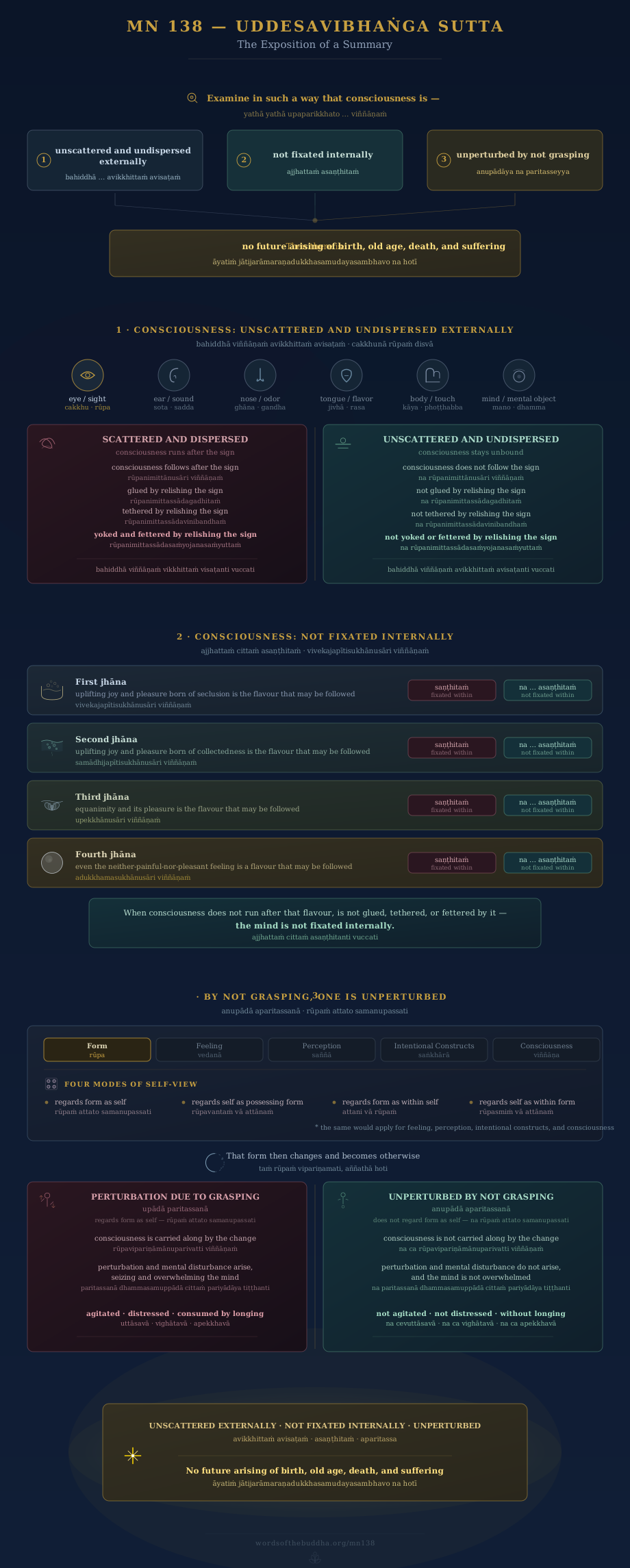
“Tathā tathā, bhikkhave, bhikkhu upaparikkheyya yathā yathā upaparikkhato bahiddhā cassa viññāṇaṁ avikkhittaṁ avisaṭaṁ, ajjhattaṁ asaṇṭhitaṁ anupādāya na paritasseyya. Bahiddhā, bhikkhave, viññāṇe avikkhitte avisaṭe sati ajjhattaṁ asaṇṭhite anupādāya aparitassato āyatiṁ jātijarāmaraṇadukkhasamudayasambhavo na hotī”ti.
“|Bhikkhus,::::| a bhikkhu should |examine::investigate, inquire into [upaparikkhati]| in such a way that, as he examines, his |consciousness::quality of awareness — distinctive knowing that arises in dependence on eye and form, ear and sound, nose and odor, tongue and taste, body and tangible object, mind and mind object [viññāṇa]| is |unscattered::not confused, not distracted, lit. not thrown apart [avikkhitta]| and |undispersed::lit. not flowed apart [avisaṭa]| externally, |not fixated::not stuck [asaṇṭhita]| internally, and by |not grasping::not holding onto [anupādāya]|, he is |unperturbed::without agitation, without worry, untroubled, undisturbed, unshaken [aparitassa]|. |Bhikkhus,::::| when consciousness is unscattered and undispersed externally, not fixated internally, and one is unperturbed by not grasping, there is no future arising of birth, old age, death, and |suffering::discomfort, unpleasantness, discontentment, dissatisfaction, stress, pain, disease, i.e. mild or intense suffering [dukkha]|.”
Idamavoca bhagavā. Idaṁ vatvāna sugato uṭṭhāyāsanā vihāraṁ pāvisi.
That is what the Blessed One said. Having said this, the Accomplished One rose from his seat and entered his dwelling. [1]
The Bhikkhus Ask Mahākaccāna
Atha kho tesaṁ bhikkhūnaṁ, acirapakkantassa bhagavato, etadahosi: “idaṁ kho no, āvuso, bhagavā saṅkhittena uddesaṁ uddisitvā vitthārena atthaṁ avibhajitvā uṭṭhāyāsanā vihāraṁ paviṭṭho: ‘tathā tathā, bhikkhave, bhikkhu upaparikkheyya yathā yathā upaparikkhato bahiddhā cassa viññāṇaṁ avikkhittaṁ avisaṭaṁ, ajjhattaṁ asaṇṭhitaṁ anupādāya na paritasseyya. Bahiddhā, bhikkhave, viññāṇe avikkhitte avisaṭe sati ajjhattaṁ asaṇṭhite anupādāya aparitassato āyatiṁ jātijarāmaraṇadukkhasamudayasambhavo na hotī’ti. Ko nu kho imassa bhagavatā saṅkhittena uddesassa uddiṭṭhassa vitthārena atthaṁ avibhattassa vitthārena atthaṁ vibhajeyyā”ti?
Then, not long after the Blessed One had departed, this thought occurred to the bhikkhus: “Now, friends, the Blessed One has arisen from his seat and entered his dwelling after giving a summary in brief without explaining the meaning in detail, that is: ‘|Bhikkhus,::::| a bhikkhu should examine in such a way that, as he examines, his consciousness is unscattered and undispersed externally, not fixated internally, and by not grasping, he is unperturbed. |Bhikkhus,::::| when consciousness is unscattered and undispersed externally, not fixated internally, and one is unperturbed by not grasping, there is no future arising of birth, old age, death, and suffering.’ Now, who might explain in detail the meaning of this brief summary given by the Blessed One, which was not explained in full?”
Atha kho tesaṁ bhikkhūnaṁ etadahosi: “ayaṁ kho āyasmā mahākaccāno satthu ceva saṁvaṇṇito sambhāvito ca viññūnaṁ sabrahmacārīnaṁ; pahoti cāyasmā mahākaccāno imassa bhagavatā saṅkhittena uddesassa uddiṭṭhassa vitthārena atthaṁ avibhattassa vitthārena atthaṁ vibhajituṁ. Yannūna mayaṁ yenāyasmā mahākaccāno tenupasaṅkameyyāma; upasaṅkamitvā āyasmantaṁ mahākaccānaṁ etamatthaṁ paṭipuccheyyāmā”ti.
Then it occurred to those bhikkhus: “The venerable |Mahākaccāna::foremost disciple of the Buddha in explaining a brief instruction in detail; lit. great descendant of Kati [mahākaccāna]::Mahaa-kacchaana| is praised by the Blessed One and esteemed by his wise companions in the spiritual life. Venerable |Mahākaccāna::::Mahaa-kacchaana| is capable of explaining in detail the meaning of this brief summary declared by the Blessed One, which was not explained in full. What if we were to go to the venerable |Mahākaccāna::::Mahaa-kacchaana|, and having approached, question him about this matter?”
Atha kho te bhikkhū yenāyasmā mahākaccāno tenupasaṅkamiṁsu; upasaṅkamitvā āyasmatā mahākaccānena saddhiṁ sammodiṁsu. Sammodanīyaṁ kathaṁ sāraṇīyaṁ vītisāretvā ekamantaṁ nisīdiṁsu. Ekamantaṁ nisinnā kho te bhikkhū āyasmantaṁ mahākaccānaṁ etadavocuṁ: “Idaṁ kho no, āvuso kaccāna, bhagavā saṅkhittena uddesaṁ uddisitvā vitthārena atthaṁ avibhajitvā uṭṭhāyāsanā vihāraṁ paviṭṭho: ‘tathā tathā, bhikkhave, bhikkhu upaparikkheyya yathā yathā upaparikkhato bahiddhā cassa viññāṇaṁ avikkhittaṁ avisaṭaṁ, ajjhattaṁ asaṇṭhitaṁ anupādāya na paritasseyya. Bahiddhā, bhikkhave, viññāṇe avikkhitte avisaṭe sati ajjhattaṁ asaṇṭhite anupādāya aparitassato āyatiṁ jātijarāmaraṇadukkhasamudayasambhavo na hotī’ti. Tesaṁ no, āvuso kaccāna, amhākaṁ, acirapakkantassa bhagavato, etadahosi: ‘idaṁ kho no, āvuso, bhagavā saṅkhittena uddesaṁ uddisitvā vitthārena atthaṁ avibhajitvā uṭṭhāyāsanā vihāraṁ paviṭṭho: “tathā tathā, bhikkhave, bhikkhu upaparikkheyya, yathā yathā upaparikkhato bahiddhā cassa viññāṇaṁ avikkhittaṁ avisaṭaṁ ajjhattaṁ asaṇṭhitaṁ anupādāya na paritasseyya. Bahiddhā, bhikkhave, viññāṇe avikkhitte avisaṭe sati ajjhattaṁ asaṇṭhite anupādāya aparitassato āyatiṁ jātijarāmaraṇadukkhasamudayasambhavo na hotī”ti. Ko nu kho imassa bhagavatā saṅkhittena uddesassa uddiṭṭhassa vitthārena atthaṁ avibhattassa vitthārena atthaṁ vibhajeyyā’ti. Tesaṁ no, āvuso kaccāna, amhākaṁ etadahosi: ‘ayaṁ kho āyasmā mahākaccāno satthu ceva saṁvaṇṇito, sambhāvito ca viññūnaṁ sabrahmacārīnaṁ. Pahoti cāyasmā mahākaccāno imassa bhagavatā saṅkhittena uddesassa uddiṭṭhassa vitthārena atthaṁ avibhattassa vitthārena atthaṁ vibhajituṁ. Yannūna mayaṁ yenāyasmā mahākaccāno tenupasaṅkameyyāma; upasaṅkamitvā āyasmantaṁ mahākaccānaṁ etamatthaṁ paṭipuccheyyāmā’ti— vibhajatāyasmā mahākaccāno”ti.
Then those bhikkhus went to the venerable |Mahākaccāna::::Mahaa-kacchaana|. Having approached, they exchanged friendly greetings with the venerable |Mahākaccāna::::Mahaa-kacchaana|. After the exchange of a courteous and politeconversation, they sat down to one side. Seated to one side, those bhikkhus said to the venerable |Mahākaccāna::::Mahaa-kacchaana|: “Friend Kaccāna, the Blessed One just presented a summary in brief, and without explaining the meaning in detail, he rose from his seat and entered his dwelling: ‘|Bhikkhus,::::| a bhikkhu should examine in such a way that, as he examines, his consciousness is unscattered and undispersed externally, not fixated internally, and by not grasping, he is unperturbed. |Bhikkhus,::::| when consciousness is unscattered and undispersed externally, not fixated internally, and one is unperturbed by not grasping, there is no future arising of birth, old age, death, and suffering.’ Friend Kaccāna, not long after the Blessed One had departed, it occurred to us: ‘Now, friends, the Blessed One has arisen from his seat and entered his dwelling after giving a summary in brief without explaining the meaning in detail, that is: “|Bhikkhus,::::| a bhikkhu should examine in such a way that, as he examines, his consciousness is unscattered and undispersed externally, not fixated internally, and by not grasping, he is unperturbed. |Bhikkhus,::::| when consciousness is unscattered and undispersed externally, not fixated internally, and one is unperturbed by not grasping, there is no future arising of birth, old age, death, and suffering.” Who then, might explain in detail the meaning of this summary declared by the Blessed One, which was not explained in full?’ Then it occurred to us, friend Kaccāna: ‘The venerable |Mahākaccāna::::Mahaa-kacchaana| is praised by the Blessed One and esteemed by his wise companions in the spiritual life. Venerable |Mahākaccāna::::Mahaa-kacchaana| is capable of explaining in detail the meaning of this brief summary declared by the Blessed One, which was not explained in full. What if we were to go to the venerable |Mahākaccāna::::Mahaa-kacchaana|, and having approached, question him about this matter?’ So, may the venerable |Mahākaccāna::::Mahaa-kacchaana| explain it.”
“Seyyathāpi, āvuso, puriso sāratthiko sāragavesī sārapariyesanaṁ caramāno mahato rukkhassa tiṭṭhato sāravato atikkammeva mūlaṁ atikkamma khandhaṁ sākhāpalāse sāraṁ pariyesitabbaṁ maññeyya, evaṁ sampadamidaṁ āyasmantānaṁ satthari sammukhībhūte taṁ bhagavantaṁ atisitvā amhe etamatthaṁ paṭipucchitabbaṁ maññatha. So hāvuso, bhagavā jānaṁ jānāti, passaṁ passati, cakkhubhūto ñāṇabhūto dhammabhūto brahmabhūto vattā pavattā atthassa ninnetā amatassa dātā dhammassāmī tathāgato. So ceva panetassa kālo ahosi yaṁ bhagavantaṁyeva etamatthaṁ paṭipuccheyyātha; yathā vo bhagavā byākareyya tathā naṁ dhāreyyāthā”ti.
“Friends, it is as though a man desiring heartwood, seeking heartwood, wandering in search of heartwood, were to come upon a great tree, standing possessed of heartwood. Yet having passed over the root, passed over the trunk, he would think to seek heartwood among the branches and leaves. And so it is with you, sirs, when the teacher is present before you, face to face, you think to ask us about this matter, having bypassed the Blessed One. For knowing, the Blessed One knows, seeing, the Blessed One sees—he is vision personified, wisdom personified, |Dhamma::the ultimate truth that the Buddha’s teachings point to [dhamma]| personified, |divine::God [brahma]| personified. He is the speaker, the proclaimer, the revealer of the meaning, the giver of the |deathless::deathless state, epithet of Nibbāna [amata]|, the master of reality, the |Tathāgata::one who has arrived at the truth, an epithet of a perfectly Awakened One [tathāgata]|. That was the time when you should have asked the Blessed One the meaning. As he told you, so you should have remembered it.”
“Addhāvuso kaccāna, bhagavā jānaṁ jānāti, passaṁ passati, cakkhubhūto ñāṇabhūto dhammabhūto brahmabhūto vattā pavattā atthassa ninnetā amatassa dātā dhammassāmī tathāgato. So ceva panetassa kālo ahosi yaṁ bhagavantaṁyeva etamatthaṁ paṭipuccheyyāma; yathā no bhagavā byākareyya tathā naṁ dhāreyyāma. Api cāyasmā mahākaccāno satthu ceva saṁvaṇṇito sambhāvito ca viññūnaṁ sabrahmacārīnaṁ. Pahoti cāyasmā mahākaccāno imassa bhagavatā saṅkhittena uddesassa uddiṭṭhassa vitthārena atthaṁ avibhattassa vitthārena atthaṁ vibhajituṁ. Vibhajatāyasmā mahākaccāno agaruṁ karitvā”ti.
“Surely, friend Kaccāna, knowing, the Blessed One knows, seeing, the Blessed One sees—he is vision personified, wisdom personified, Dhamma personified, divine personified. He is the speaker, the proclaimer, the revealer of the meaning, the giver of the deathless, the master of reality, the Tathāgata. And that was the time when we should have asked the Blessed One the meaning. As he told us, so we should have remembered it. Yet, the venerable |Mahākaccāna::::Mahaa-kacchaana| is praised by the teacher and esteemed by his wise companions in the spiritual life. Venerable |Mahākaccāna::::Mahaa-kacchaana| is capable of explaining in detail the meaning of this brief summary declared by the Blessed One, which was not explained in full. May the venerable |Mahākaccāna::::Mahaa-kacchaana| explain it in detail without finding it troublesome.”
“Tena hāvuso, suṇātha, sādhukaṁ manasi karotha, bhāsissāmī”ti.
“Then, friends, listen and pay close attention; I will speak.”
“Evamāvuso”ti kho te bhikkhū āyasmato mahākaccānassa paccassosuṁ. Āyasmā mahākaccāno etadavoca:
“Yes, friend,” those bhikkhus replied to the venerable |Mahākaccāna::::Mahaa-kacchaana|. The venerable |Mahākaccāna::::Mahaa-kacchaana| said this:
Mahākaccāna’s Detailed Exposition
“Yaṁ kho no, āvuso, bhagavā saṅkhittena uddesaṁ uddisitvā vitthārena atthaṁ avibhajitvā uṭṭhāyāsanā vihāraṁ paviṭṭho: ‘tathā tathā, bhikkhave, bhikkhu upaparikkheyya, yathā yathā upaparikkhato bahiddhā cassa viññāṇaṁ avikkhittaṁ avisaṭaṁ ajjhattaṁ asaṇṭhitaṁ anupādāya na paritasseyya, bahiddhā, bhikkhave, viññāṇe avikkhitte avisaṭe sati ajjhattaṁ asaṇṭhite anupādāya aparitassato āyatiṁ jātijarāmaraṇadukkhasamudayasambhavo na hotī’ti. Imassa kho ahaṁ, āvuso, bhagavatā saṅkhittena uddesassa uddiṭṭhassa vitthārena atthaṁ avibhattassa evaṁ vitthārena atthaṁ ājānāmi.
“Friends, when the Blessed One rose from his seat and entered his dwelling after giving a summary in brief without explaining the meaning in detail, that is: ‘|Bhikkhus,::::| a bhikkhu should examine in such a way that, as he examines, his consciousness is unscattered and undispersed externally, not fixated internally, and by not grasping, he is unperturbed. |Bhikkhus,::::| when consciousness is unscattered and undispersed externally, not fixated internally, and one is unperturbed by not grasping, there is no future arising of birth, old age, death, and suffering,’ this, friends, is how I understand in detail the meaning of that brief summary declared by the Blessed One, which was not explained in full.
Consciousness Scattered Externally
Kathañcāvuso, bahiddhā viññāṇaṁ vikkhittaṁ visaṭanti vuccati? Idhāvuso, bhikkhuno cakkhunā rūpaṁ disvā rūpanimittānusāri viññāṇaṁ hoti rūpanimittassādagadhitaṁ rūpanimittassādavinibandhaṁ rūpanimittassādasaṁyojanasaṁyuttaṁ bahiddhā viññāṇaṁ vikkhittaṁ visaṭanti vuccati. Sotena saddaṁ sutvā …pe… ghānena gandhaṁ ghāyitvā … jivhāya rasaṁ sāyitvā … kāyena phoṭṭhabbaṁ phusitvā … manasā dhammaṁ viññāya dhammanimittānusāri viññāṇaṁ hoti; dhammanimittassādagadhitaṁ dhammanimittassādavinibandhaṁ dhammanimittassādasaṁyojanasaṁyuttaṁ bahiddhā viññāṇaṁ vikkhittaṁ visaṭanti vuccati. Evaṁ kho, āvuso, bahiddhā viññāṇaṁ vikkhittaṁ visaṭanti vuccati.
And how, friends, is consciousness called scattered and dispersed externally? Here, friends, when a bhikkhu sees a sight with the eye, his consciousness follows after the features of the sight, becoming attached to relishing the features of the sight, bound by relishing the features of the sight, and fettered by relishing the features of the sight; this is called consciousness that is scattered and dispersed externally. When he hears a sound with the ear ... smells an odor with the nose ... tastes a flavor with the tongue ... touches a tangible object with the body ... cognizes a mental object with the mind, his consciousness follows after the features of the mental object, becoming attached to relishing the features of the mental object, bound by relishing the features of the mental object, and fettered by relishing the features of the mental object; this is called consciousness that is scattered and dispersed externally. In this way, friends, consciousness is called scattered and dispersed externally.
Consciousness Unscattered Externally
Kathañcāvuso, bahiddhā viññāṇaṁ avikkhittaṁ avisaṭanti vuccati? Idhāvuso, bhikkhuno cakkhunā rūpaṁ disvā na rūpanimittānusāri viññāṇaṁ hoti, na rūpanimittassādagadhitaṁ na rūpanimittassādavinibandhaṁ na rūpanimittassādasaṁyojanasaṁyuttaṁ bahiddhā viññāṇaṁ avikkhittaṁ avisaṭanti vuccati. Sotena saddaṁ sutvā …pe… ghānena gandhaṁ ghāyitvā … jivhāya rasaṁ sāyitvā … kāyena phoṭṭhabbaṁ phusitvā … manasā dhammaṁ viññāya na dhammanimittānusāri viññāṇaṁ hoti na dhammanimittassādagadhitaṁ na dhammanimittassādavinibandhaṁ na dhammanimittassādasaṁyojanasaṁyuttaṁ bahiddhā viññāṇaṁ avikkhittaṁ avisaṭanti vuccati. Evaṁ kho, āvuso, bahiddhā viññāṇaṁ avikkhittaṁ avisaṭanti vuccati.
And how, friends, is consciousness called unscattered and undispersed externally? Here, friends, when a bhikkhu sees a sight with the eye, his consciousness does not follow after the features of the sight, not becoming attached to relishing the features of the sight, not bound by relishing the features of the sight, and not fettered by relishing the features of the sight; this is called consciousness that is unscattered and undispersed externally. When he hears a sound with the ear ... smells an odor with the nose ... tastes a flavor with the tongue ... touches a tangible object with the body ... cognizes a mental object with the mind, his consciousness does not follow after the features of the mental object, not becoming attached to relishing the features of the mental object, not bound by relishing the features of the mental object, and not fettered by relishing the features of the mental object; this is called consciousness that is unscattered and undispersed externally. In this way, friends, consciousness is called unscattered and undispersed externally.
Mind Fixated Internally
Kathañcāvuso, ajjhattaṁ saṇṭhitanti vuccati? Idhāvuso, bhikkhu vivicceva kāmehi vivicca akusalehi dhammehi savitakkaṁ savicāraṁ vivekajaṁ pītisukhaṁ paṭhamaṁ jhānaṁ upasampajja viharati. Tassa vivekajapītisukhānusāri viññāṇaṁ hoti vivekajapītisukhassādagadhitaṁ vivekajapītisukhassādavinibandhaṁ vivekajapītisukhassādasaṁyojanasaṁyuttaṁ ajjhattaṁ cittaṁ saṇṭhitanti vuccati.
And how, friends, is the mind called fixated internally? Here, friends, entirely secluded from sensual pleasures and unwholesome mental states, a bhikkhu enters and dwells in the first jhāna, which is |accompanied by thought::with thinking, with reflection [savitakka]| and |examination::with investigation, evaluation [savicāra]|, |born of seclusion::secluded from the defilements [vivekaja]|, and imbued with |uplifting joy and pleasure::delight and ease; sometimes experienced as ecstasy, intense exhilaration or rapture [pītisukha]|. His consciousness follows after the uplifting joy and pleasure born of seclusion, becoming attached to relishing the uplifting joy and pleasure born of seclusion, bound by relishing the uplifting joy and pleasure born of seclusion, and fettered by relishing the uplifting joy and pleasure born of seclusion; this is called a mind that is fixated internally.
Puna caparaṁ, āvuso, bhikkhu vitakkavicārānaṁ vūpasamā ajjhattaṁ sampasādanaṁ cetaso ekodibhāvaṁ avitakkaṁ avicāraṁ samādhijaṁ pītisukhaṁ dutiyaṁ jhānaṁ upasampajja viharati. Tassa samādhijapītisukhānusāri viññāṇaṁ hoti samādhijapītisukhassādagadhitaṁ samādhijapītisukhassādavinibandhaṁ samādhijapītisukhassādasaṁyojanasaṁyuttaṁ ajjhattaṁ cittaṁ saṇṭhitanti vuccati.
Furthermore, friends, with the |settling::calming, conciliation, subsiding [vūpasama]| of thought and examination, a bhikkhu enters and dwells in the second jhāna, which is characterized by internal |tranquility::calming, settling, confidence [sampasādana]| and |unification::singleness, integration [ekodibhāva]| of mind, free from thought and examination, |born of collectedness::born from a stable mind [samādhija]|, and imbued with |uplifting joy and pleasure::delight and ease; sometimes experienced as ecstasy, intense exhilaration or rapture [pītisukha]|. His consciousness follows after the uplifting joy and pleasure born of collectedness, becoming attached to relishing the uplifting joy and pleasure born of collectedness, bound by relishing the uplifting joy and pleasure born of collectedness, and fettered by relishing the uplifting joy and pleasure born of collectedness; this is called a mind that is fixated internally.
Puna caparaṁ, āvuso, bhikkhu pītiyā ca virāgā upekkhako ca viharati sato ca sampajāno sukhañca kāyena paṭisaṁvedeti, yaṁ taṁ ariyā ācikkhanti: ‘upekkhako satimā sukhavihārī’ti tatiyaṁ jhānaṁ upasampajja viharati. Tassa upekkhānusāri viññāṇaṁ hoti upekkhāsukhassādagadhitaṁ upekkhāsukhassādavinibandhaṁ upekkhāsukhassādasaṁyojanasaṁyuttaṁ ajjhattaṁ cittaṁ saṇṭhitanti vuccati.
Furthermore, friends, with the |fading of desire for::dispassion toward, detachment from [virāga]| uplifting joy, he dwells |equanimous::mental poised, mentally balanced, non-reactive, disregarding [upekkhaka]|, |mindful and clearly aware::attentive and completely comprehending [sata + sampajāna]|, experiencing |pleasure::comfort, contentedness, happiness, ease [sukha]| with the body. He enters and dwells in the third jhāna, which the Noble Ones describe as, ‘one who dwells equanimous, mindful, and at ease.’ His consciousness follows after that equanimity, becoming attached to relishing that equanimity and pleasure, bound by relishing that equanimity and pleasure, and fettered by relishing that equanimity and pleasure; this is called a mind that is fixated internally.
Puna caparaṁ, āvuso, bhikkhu sukhassa ca pahānā dukkhassa ca pahānā pubbeva somanassadomanassānaṁ atthaṅgamā adukkhamasukhaṁ upekkhāsatipārisuddhiṁ catutthaṁ jhānaṁ upasampajja viharati. Tassa adukkhamasukhānusāri viññāṇaṁ hoti adukkhamasukhassādagadhitaṁ adukkhamasukhassādavinibandhaṁ adukkhamasukhassādasaṁyojanasaṁyuttaṁ ajjhattaṁ cittaṁ asaṇṭhitanti vuccati. Evaṁ kho, āvuso, ajjhattaṁ saṇṭhitanti vuccati.
Furthermore, friends, with the abandoning of [bodily] pleasure and |pain::discomfort, unpleasantness. In this context, this is referring to bodily pain or sharp sensations. [dukkha]|, and with the prior settling down of |mental pleasure and displeasure::the duality of positive and negative states of mind; mental happiness and mental pain [somanassadomanassa]|, a bhikkhu enters and dwells in the fourth jhāna, which is characterized by purification of |mindfulness::active presence of mind and lucid retention, recollection, keeping in mind [sati]| through |equanimity::mental poise, mental balance, equipoise, non-reactivity, composure [upekkhā]|, experiencing a neither-painful-nor-pleasant feeling. His consciousness follows after that neither-painful-nor-pleasant feeling, becoming attached to relishing that neither-painful-nor-pleasant feeling, bound by relishing that neither-painful-nor-pleasant feeling, and fettered by relishing that neither-painful-nor-pleasant feeling; this is called a mind that is fixated internally. In this way, friends, the mind is called fixated internally.
Mind Not Fixed Internally
Kathañcāvuso, ajjhattaṁ asaṇṭhitanti vuccati? Idhāvuso, bhikkhu vivicceva kāmehi vivicca akusalehi dhammehi …pe… paṭhamaṁ jhānaṁ upasampajja viharati. Tassa na vivekajapītisukhānusāri viññāṇaṁ hoti na vivekajapītisukhassādagadhitaṁ na vivekajapītisukhassādavinibandhaṁ na vivekajapītisukhassādasaṁyojanasaṁyuttaṁ ajjhattaṁ cittaṁ asaṇṭhitanti vuccati.
And how, friends, is the mind called not fixated internally? Here, friends, entirely secluded from sensual pleasures and unwholesome mental states, a bhikkhu enters and dwells in the first jhāna, which is accompanied by thought and examination, born of seclusion, and imbued with uplifting joy and pleasure. His consciousness does not follow after the uplifting joy and pleasure born of seclusion, not becoming attached to relishing the uplifting joy and pleasure born of seclusion, not bound by relishing the uplifting joy and pleasure born of seclusion, and not fettered by relishing the uplifting joy and pleasure born of seclusion; this is called a mind that is not fixated internally.
Puna caparaṁ, āvuso, bhikkhu vitakkavicārānaṁ vūpasamā …pe… dutiyaṁ jhānaṁ upasampajja viharati. Tassa na samādhijapītisukhānusāri viññāṇaṁ hoti na samādhijapītisukhassādagadhitaṁ na samādhijapītisukhassādavinibandhaṁ na samādhijapītisukhassādasaṁyojanasaṁyuttaṁ ajjhattaṁ cittaṁ asaṇṭhitanti vuccati.
Furthermore, friends, with the settling of thought and examination, a bhikkhu enters and dwells in the second jhāna, which is characterized by internal tranquility and unification of mind, free from thought and examination, born of collectedness, and imbued with uplifting joy and pleasure. His consciousness does not follow after the uplifting joy and pleasure born of collectedness, not becoming attached to relishing the uplifting joy and pleasure born of collectedness, not bound by relishing the uplifting joy and pleasure born of collectedness, and not fettered by relishing the uplifting joy and pleasure born of collectedness; this is called a mind that is not fixated internally.
Puna caparaṁ, āvuso, bhikkhu pītiyā ca virāgā …pe… tatiyaṁ jhānaṁ upasampajja viharati. Tassa na upekkhānusāri viññāṇaṁ hoti na upekkhāsukhassādagadhitaṁ na upekkhāsukhassādavinibandhaṁ na upekkhāsukhassādasaṁyojanasaṁyuttaṁ ajjhattaṁ cittaṁ asaṇṭhitanti vuccati.
Furthermore, friends, with the fading of desire for uplifting joy ... he enters and dwells in the third jhāna ... His consciousness does not follow after that equanimity, not becoming attached to relishing that equanimity and pleasure, not bound by relishing that equanimity and pleasure, and not fettered by relishing that equanimity and pleasure; this is called a mind that is not fixated internally.
Puna caparaṁ, āvuso, bhikkhu sukhassa ca pahānā dukkhassa ca pahānā pubbeva somanassadomanassānaṁ atthaṅgamā adukkhamasukhaṁ upekkhāsatipārisuddhiṁ catutthaṁ jhānaṁ upasampajja viharati. Tassa na adukkhamasukhānusāri viññāṇaṁ hoti na adukkhamasukhassādagadhitaṁ na adukkhamasukhassādavinibandhaṁ na adukkhamasukhassādasaṁyojanasaṁyuttaṁ ajjhattaṁ cittaṁ asaṇṭhitanti vuccati. Evaṁ kho, āvuso, ajjhattaṁ asaṇṭhitanti vuccati.
Furthermore, friends, with the abandoning of [bodily] pleasure and pain, and with the prior settling down of mental pleasure and displeasure, a bhikkhu enters and dwells in the fourth jhāna, which is characterized by purification of mindfulness through equanimity, experiencing a neither-painful-nor-pleasant feeling. His consciousness does not follow after that neither-painful-nor-pleasant feeling, not becoming attached to relishing that neither-painful-nor-pleasant feeling, not bound by relishing that neither-painful-nor-pleasant feeling, and not fettered by relishing that neither-painful-nor-pleasant feeling; this is called a mind that is not fixated internally. In this way, friends, the mind is called not fixated internally.
Perturbation Due to Grasping
Kathañcāvuso, anupādā paritassanā hoti? Idhāvuso, assutavā puthujjano ariyānaṁ adassāvī ariyadhammassa akovido ariyadhamme avinīto sappurisānaṁ adassāvī sappurisadhammassa akovido sappurisadhamme avinīto rūpaṁ attato samanupassati rūpavantaṁ vā attānaṁ attani vā rūpaṁ rūpasmiṁ vā attānaṁ. Tassa taṁ rūpaṁ vipariṇamati, aññathā hoti. Tassa rūpavipariṇāmaññathābhāvā rūpavipariṇāmānuparivatti viññāṇaṁ hoti. Tassa rūpavipariṇāmānuparivattajā paritassanā dhammasamuppādā cittaṁ pariyādāya tiṭṭhanti. Cetaso pariyādānā uttāsavā ca hoti vighātavā ca apekkhavā ca anupādāya ca paritassati. Vedanaṁ …pe… saññaṁ … saṅkhāre … viññāṇaṁ attato samanupassati viññāṇavantaṁ vā attānaṁ attani vā viññāṇaṁ viññāṇasmiṁ vā attānaṁ. Tassa taṁ viññāṇaṁ vipariṇamati, aññathā hoti. Tassa viññāṇavipariṇāmaññathābhāvā viññāṇavipariṇāmānuparivatti viññāṇaṁ hoti. Tassa viññāṇavipariṇāmānuparivattajā paritassanā dhammasamuppādā cittaṁ pariyādāya tiṭṭhanti. Cetaso pariyādānā uttāsavā ca hoti vighātavā ca apekkhavā ca anupādāya ca paritassati. Evaṁ kho, āvuso, anupādā paritassanā hoti.
And how, friends, is there perturbation due to grasping? Here, friends, an uninstructed ordinary person who has no regard for the Noble Ones and is unskilled and untrained in the Dhamma of the Noble Ones; who has no regard for persons of integrity, and is unskilled and untrained in the Dhamma of persons of integrity—perceivesform as self, or self as possessing form, or form as existing in the self, or self as existing in form. That form then changes and becomes otherwise. As that form changes and becomes otherwise, their consciousness is carried along by the change of form. As their consciousness becomes entangled with the changing form, perturbation and mental disturbance arise, seizing and overwhelming the mind. When the mind is overwhelmed, they become agitated, distressed, and consumed by longing. Thus, by grasping, this person experiences perturbation. [2] They perceive feeling ... perception ... intentional constructs ... consciousness as self, or self as possessing consciousness, or consciousness as existing in the self, or self as existing in consciousness. That consciousness then changes and becomes otherwise. As that consciousness changes and becomes otherwise, their consciousness is carried along by the change of consciousness. As their consciousness becomes entangled with the changing consciousness, perturbation and mental disturbance arise, seizing and overwhelming the mind. When the mind is overwhelmed, they become agitated, distressed, and consumed by longing. Thus, by grasping, this person experiences perturbation. In this way, friends, there is perturbation due to grasping.
Unperturbed by Not Grasping
Kathañcāvuso, anupādānā aparitassanā hoti? Idhāvuso, sutavā ariyasāvako ariyānaṁ dassāvī ariyadhammassa kovido ariyadhamme suvinīto sappurisānaṁ dassāvī sappurisadhammassa kovido sappurisadhamme suvinīto na rūpaṁ attato samanupassati na rūpavantaṁ vā attānaṁ na attani vā rūpaṁ na rūpasmiṁ vā attānaṁ. Tassa taṁ rūpaṁ vipariṇamati, aññathā hoti. Tassa rūpavipariṇāmaññathābhāvā na ca rūpavipariṇāmānuparivatti viññāṇaṁ hoti. Tassa na rūpavipariṇāmānuparivattajā paritassanā dhammasamuppādā cittaṁ pariyādāya tiṭṭhanti. Cetaso pariyādānā na cevuttāsavā hoti na ca vighātavā na ca apekkhavā anupādāya ca na paritassati. Na vedanaṁ … na saññaṁ … na saṅkhāre … na viññāṇaṁ attato samanupassati na viññāṇavantaṁ vā attānaṁ na attani vā viññāṇaṁ na viññāṇasmiṁ vā attānaṁ. Tassa taṁ viññāṇaṁ vipariṇamati, aññathā hoti. Tassa viññāṇavipariṇāmaññathābhāvā na ca viññāṇavipariṇāmānuparivatti viññāṇaṁ hoti. Tassa na viññāṇavipariṇāmānuparivattajā paritassanā dhammasamuppādā cittaṁ pariyādāya tiṭṭhanti. Cetaso pariyādānā na cevuttāsavā hoti na ca vighātavā na ca apekkhavā, anupādāya ca na paritassati. Evaṁ kho, āvuso, anupādā aparitassanā hoti.
And how, friends, is one unperturbed by not grasping? Here, friends, a learned disciple of the Noble Ones who has regard for the Noble Ones and is skilled and trained in the Dhamma of the Noble Ones; who has regard for persons of integrity, and is unskilled and untrained in the Dhamma of persons of integrity—does not perceive form as self, or self as possessing form, or form as existing in the self, or self as existing in form. That form then changes and becomes otherwise. As that form changes and becomes otherwise, their consciousness is not carried along by the change of form. As their consciousness does not become entangled with the changing form, perturbation and mental disturbance do not arise, seizing and overwhelming the mind. When the mind is not overwhelmed, they do not become agitated, distressed, and consumed by longing. Thus, by not grasping, this person is unperturbed. They do not perceive feeling ... perception ... intentional constructs ... consciousness as self, or self as possessing consciousness, or consciousness as existing in the self, or self as existing in consciousness. That consciousness then changes and becomes otherwise. As that consciousness changes and becomes otherwise, their consciousness is not carried along by the change of consciousness. As their consciousness does not become entangled with the changing consciousness, perturbation and mental disturbance do not arise, seizing and overwhelming the mind. When the mind is not overwhelmed, they do not become agitated, distressed, and consumed by longing. Thus, by not grasping, this person is unperturbed. In this way, friends, one is unperturbed by not grasping.
Yaṁ kho no, āvuso, bhagavā saṅkhittena uddesaṁ uddisitvā vitthārena atthaṁ avibhajitvā uṭṭhāyāsanā vihāraṁ paviṭṭho: ‘tathā tathā, bhikkhave, bhikkhu upaparikkheyya yathā yathā upaparikkhato bahiddhā cassa viññāṇaṁ avikkhittaṁ avisaṭaṁ, ajjhattaṁ asaṇṭhitaṁ anupādāya na paritasseyya. Bahiddhā, bhikkhave, viññāṇe avikkhitte avisaṭe sati ajjhattaṁ asaṇṭhite anupādāya aparitassato āyatiṁ jātijarāmaraṇadukkhasamudayasambhavo na hotī’ti. Imassa kho ahaṁ, āvuso, bhagavatā saṅkhittena uddesassa uddiṭṭhassa vitthārena atthaṁ avibhattassa evaṁ vitthārena atthaṁ ājānāmi. Ākaṅkhamānā ca pana tumhe āyasmanto bhagavantaṁyeva upasaṅkamitvā etamatthaṁ paṭipuccheyyātha; yathā vo bhagavā byākaroti tathā naṁ dhāreyyāthā”ti.
Regarding the summary statement that the Blessed One gave in brief without explaining the meaning in detail, that is: ‘|Bhikkhus,::::| a bhikkhu should examine in such a way that, as he examines, his consciousness is unscattered and undispersed externally, not fixated internally, and by not grasping, he is unperturbed. |Bhikkhus,::::| when consciousness is unscattered and undispersed externally, not fixated internally, and one is unperturbed by not grasping, there is no future arising of birth, old age, death, and suffering,’ this, friends, is how I understand in detail the meaning of that brief summary declared by the Blessed One, which was not explained in full. If you wish, sirs, approach the Blessed One himself and ask him about this matter. As the Blessed One explains it to you, so you should remember it.”
The Buddha’s Approval
Atha kho te bhikkhū āyasmato mahākaccānassa bhāsitaṁ abhinanditvā anumoditvā uṭṭhāyāsanā yena bhagavā tenupasaṅkamiṁsu; upasaṅkamitvā bhagavantaṁ abhivādetvā ekamantaṁ nisīdiṁsu. Ekamantaṁ nisinnā kho te bhikkhū bhagavantaṁ etadavocuṁ:
Then those bhikkhus, having delighted in and being pleased with the venerable |Mahākaccāna::::Mahaa-kacchaana|’s words, rose from their seats and went to the Blessed One. Having drawn near, they paid homage to the Blessed One and sat down to one side. Seated to one side, the bhikkhus said to the Blessed One:
“Yaṁ kho no, bhante, bhagavā saṅkhittena uddesaṁ uddisitvā vitthārena atthaṁ avibhajitvā uṭṭhāyāsanā vihāraṁ paviṭṭho: ‘tathā tathā, bhikkhave, bhikkhu upaparikkheyya yathā yathā upaparikkhato bahiddhā cassa viññāṇaṁ avikkhittaṁ avisaṭaṁ, ajjhattaṁ asaṇṭhitaṁ anupādāya na paritasseyya. Bahiddhā, bhikkhave, viññāṇe avikkhitte avisaṭe sati ajjhattaṁ asaṇṭhite anupādāya aparitassato āyatiṁ jātijarāmaraṇadukkhasamudayasambhavo na hotī’ti.
“Venerable sir, when the Blessed One rose from his seat and entered his dwelling after giving a summary in brief without explaining the meaning in detail, that is: ‘|Bhikkhus,::::| a bhikkhu should examine in such a way that, as he examines, his consciousness is unscattered and undispersed externally, not fixated internally, and by not grasping, he is unperturbed. |Bhikkhus,::::| when consciousness is unscattered and undispersed externally, not fixated internally, and one is unperturbed by not grasping, there is no future arising of birth, old age, death, and suffering.’
Tesaṁ no, bhante, amhākaṁ, acirapakkantassa bhagavato, etadahosi: ‘idaṁ kho no, āvuso, bhagavā saṅkhittena uddesaṁ uddisitvā vitthārena atthaṁ avibhajitvā uṭṭhāyāsanā vihāraṁ paviṭṭho— tathā tathā, bhikkhave, bhikkhu upaparikkheyya, yathā yathā upaparikkhato bahiddhā cassa viññāṇaṁ avikkhittaṁ avisaṭaṁ, ajjhattaṁ asaṇṭhitaṁ anupādāya na paritasseyya. Bahiddhā, bhikkhave, viññāṇe avikkhitte avisaṭe sati ajjhattaṁ asaṇṭhite anupādāya aparitassato āyatiṁ jātijarāmaraṇadukkhasamudayasambhavo na hotīti. Ko nu kho imassa bhagavatā saṅkhittena uddesassa uddiṭṭhassa vitthārena atthaṁ avibhattassa vitthārena atthaṁ vibhajeyyā’ti? Tesaṁ no, bhante, amhākaṁ etadahosi: ‘ayaṁ kho āyasmā mahākaccāno satthu ceva saṁvaṇṇito sambhāvito ca viññūnaṁ sabrahmacārīnaṁ. Pahoti cāyasmā mahākaccāno imassa bhagavatā saṅkhittena uddesassa uddiṭṭhassa vitthārena atthaṁ avibhattassa vitthārena atthaṁ vibhajituṁ. Yannūna mayaṁ yenāyasmā mahākaccāno tenupasaṅkameyyāma; upasaṅkamitvā āyasmantaṁ mahākaccānaṁ etamatthaṁ paṭipuccheyyāmā’ti.
Not long after the Blessed One had departed, this thought occurred to us: ‘Now, friends, the Blessed One has arisen from his seat and entered his dwelling after giving a summary in brief without explaining the meaning in detail, that is: “|Bhikkhus,::::| a bhikkhu should examine in such a way that, as he examines, his consciousness is unscattered and undispersed externally, not fixated internally, and by not grasping, he is unperturbed. |Bhikkhus,::::| when consciousness is unscattered and undispersed externally, not fixated internally, and one is unperturbed by not grasping, there is no future arising of birth, old age, death, and suffering.” Who then, might explain in detail the meaning of this summary declared by the Blessed One, which was not explained in full?’ Then it occurred to us, venerable sir: ‘The venerable |Mahākaccāna::::Mahaa-kacchaana| is praised by the Blessed One and esteemed by his wise companions in the spiritual life. Venerable |Mahākaccāna::::Mahaa-kacchaana| is capable of explaining in detail the meaning of this brief summary declared by the Blessed One, which was not explained in full. What if we were to go to the venerable |Mahākaccāna::::Mahaa-kacchaana|, and having approached, question him about this matter?’
Atha kho mayaṁ, bhante, yenāyasmā mahākaccāno tenupasaṅkamimha; upasaṅkamitvā āyasmantaṁ mahākaccānaṁ etamatthaṁ paṭipucchimha. Tesaṁ no, bhante, āyasmatā mahākaccānena imehi ākārehi imehi padehi imehi byañjanehi attho vibhatto”ti.
Then, venerable sir, we went to the venerable |Mahākaccāna::::Mahaa-kacchaana|. Having approached, we asked the venerable |Mahākaccāna::::Mahaa-kacchaana| about this matter. The meaning has been explained to us by the venerable |Mahākaccāna::::Mahaa-kacchaana| with these methods, these phrases, and these syllables.”
“Paṇḍito, bhikkhave, mahākaccāno; mahāpañño, bhikkhave, mahākaccāno. Mañcepi tumhe, bhikkhave, etamatthaṁ paṭipuccheyyātha, ahampi evamevaṁ byākareyyaṁ yathā taṁ mahākaccānena byākataṁ. Eso cevetassa attho. Evañca naṁ dhāreyyāthā”ti.
“|Bhikkhus,::::| |Mahākaccāna::::Mahaa-kacchaana| is wise. |Mahākaccāna::::Mahaa-kacchaana| possesses great wisdom. If you had asked me about this matter, I would have explained it in the exact same way that |Mahākaccāna::::Mahaa-kacchaana| has explained it. Such is the meaning of that, and so you should remember it.”
Idamavoca bhagavā. Attamanā te bhikkhū bhagavato bhāsitaṁ abhinandunti.
The Blessed One said this. The bhikkhus were delighted and pleased with the Blessed One’s words.
The title compound means "the summary statement (uddesa) and its detailed analysis (vibhaṅga)." The narrative shows the Buddha departing abruptly after delivering only the summary statement, where venerable Mahākaccāna provides a subsequent clause-by-clause expansion.
All known editions of the Pali text for MN 138 read anupādā paritassanā ("perturbation without grasping"). However, this directly contradicts the strict structural pattern of this discourse, which systematically contrasts a negative state before presenting its positive counterpart as stated in the summary. For this section to function as the required negative contrast to the next section ("unperturbed without grasping"), it logically requires the reading upādā paritassanā ("perturbation due to grasping"). This correction aligns the paragraph with the identical parallel formula found in SN 22.7 - Upādāparitassanā sutta - Anxiety Through Clinging.