1. With the Wanderer Poṭṭhapāda
Evaṁ me sutaṁ— ekaṁ samayaṁ bhagavā sāvatthiyaṁ viharati jetavane anāthapiṇḍikassa ārāme.
Thus have I heard—At one time, the Blessed One was dwelling at Sāvatthi, in Jeta’s Grove, Anāthapiṇḍika’s Park.
Tena kho pana samayena poṭṭhapādo paribbājako samayappavādake tindukācīre ekasālake mallikāya ārāme paṭivasati mahatiyā paribbājakaparisāya saddhiṁ tiṁsamattehi paribbājakasatehi. Atha kho bhagavā pubbaṇhasamayaṁ nivāsetvā pattacīvaramādāya sāvatthiṁ piṇḍāya pāvisi.
Now at that time, the wanderer Poṭṭhapāda was staying in Mallikā’s park, at the single-halled debating hall surrounded by a row of ebony trees, with a large assembly of wanderers, about three hundred wanderers. Then the Blessed One, having dressed early in the morning, took his bowl and robe and entered Sāvatthi for alms.
Atha kho bhagavato etadahosi: “atippago kho tāva sāvatthiyaṁ piṇḍāya carituṁ. Yannūnāhaṁ yena samayappavādako tindukācīro ekasālako mallikāya ārāmo, yena poṭṭhapādo paribbājako tenupasaṅkameyyan”ti. Atha kho bhagavā yena samayappavādako tindukācīro ekasālako mallikāya ārāmo tenupasaṅkami.
Then it occurred to the Blessed One: “It is too early to walk for alms in Sāvatthi. Why don’t I approach the wanderer Poṭṭhapāda in Mallikā’s park, at the single-halled debating hall surrounded by a row of ebony trees?” Then the Blessed One approached Mallikā’s park, at the single-halled debating hall surrounded by a row of ebony trees.
Tena kho pana samayena poṭṭhapādo paribbājako mahatiyā paribbājakaparisāya saddhiṁ nisinno hoti unnādiniyā uccāsaddamahāsaddāya anekavihitaṁ tiracchānakathaṁ kathentiyā. Seyyathidaṁ—rājakathaṁ corakathaṁ mahāmattakathaṁ senākathaṁ bhayakathaṁ yuddhakathaṁ annakathaṁ pānakathaṁ vatthakathaṁ sayanakathaṁ mālākathaṁ gandhakathaṁ ñātikathaṁ yānakathaṁ gāmakathaṁ nigamakathaṁ nagarakathaṁ janapadakathaṁ itthikathaṁ sūrakathaṁ visikhākathaṁ kumbhaṭṭhānakathaṁ pubbapetakathaṁ nānattakathaṁ lokakkhāyikaṁ samuddakkhāyikaṁ itibhavābhavakathaṁ iti vā.
Now at that time, the wanderer Poṭṭhapāda was sitting with a large assembly of wanderers who were making an uproar, a loud and great noise, engaging in various kinds of pointless talk, namely: tales of kings, thieves, and ministers; tales of armies, dangers, and battles; talk of food, drink, clothing, beds, garlands, and perfumes; talk of relatives, vehicles, villages, towns, cities, and countries; tales of women and heroes; street talk and well talk; tales of the departed; various kinds of chatter; speculation about the world and the ocean; and talk of being and non-being.
Addasā kho poṭṭhapādo paribbājako bhagavantaṁ dūratova āgacchantaṁ; disvāna sakaṁ parisaṁ saṇṭhapesi: “appasaddā bhonto hontu, mā bhonto saddamakattha. Ayaṁ samaṇo gotamo āgacchati. Appasaddakāmo kho so āyasmā appasaddassa vaṇṇavādī. Appeva nāma appasaddaṁ parisaṁ viditvā upasaṅkamitabbaṁ maññeyyā”ti. Evaṁ vutte, te paribbājakā tuṇhī ahesuṁ.
The wanderer Poṭṭhapāda saw the Blessed One coming from afar. Seeing him, he hushed his own assembly: “Good sirs, be quiet; good sirs, do not make a sound. The ascetic Gotama is coming. That venerable one loves quiet and praises quiet. Perhaps, if he sees a quiet assembly, he might think to approach.” Then those wanderers fell silent.
Atha kho bhagavā yena poṭṭhapādo paribbājako tenupasaṅkami. Atha kho poṭṭhapādo paribbājako bhagavantaṁ etadavoca: “etu kho, bhante, bhagavā. Svāgataṁ, bhante, bhagavato. Cirassaṁ kho, bhante, bhagavā imaṁ pariyāyamakāsi, yadidaṁ idhāgamanāya. Nisīdatu, bhante, bhagavā, idaṁ āsanaṁ paññattan”ti.
Then the Blessed One approached the wanderer Poṭṭhapāda. Then the wanderer Poṭṭhapāda said to the Blessed One: “Let the Blessed One come, venerable sir. Welcome to the Blessed One, venerable sir. It has been a long time since the Blessed One has made the opportunity to come here. Let the Blessed One sit down; this seat is prepared.”
Nisīdi bhagavā paññatte āsane. Poṭṭhapādopi kho paribbājako aññataraṁ nīcaṁ āsanaṁ gahetvā ekamantaṁ nisīdi. Ekamantaṁ nisinnaṁ kho poṭṭhapādaṁ paribbājakaṁ bhagavā etadavoca: “kāya nuttha, poṭṭhapāda, etarahi kathāya sannisinnā, kā ca pana vo antarākathā vippakatā”ti?
The Blessed One sat down on the prepared seat. The wanderer Poṭṭhapāda, having taken a lower seat, sat down to one side. Seated to one side, the Blessed One said to the wanderer Poṭṭhapāda: “Poṭṭhapāda, what conversation were you just now sitting together engaged in? And what was your discussion that was interrupted?”
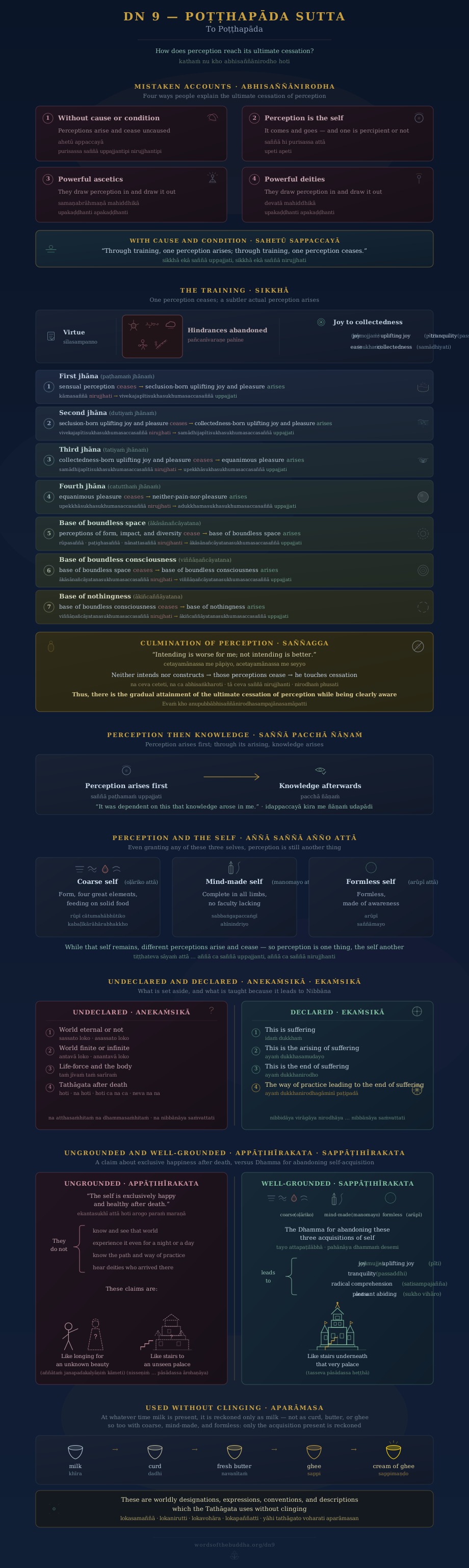
1.1. The Ultimate Cessation of Perception
Evaṁ vutte, poṭṭhapādo paribbājako bhagavantaṁ etadavoca: “tiṭṭhatesā, bhante, kathā, yāya mayaṁ etarahi kathāya sannisinnā. Nesā, bhante, kathā bhagavato dullabhā bhavissati pacchāpi savanāya.
When this was said, the wanderer Poṭṭhapāda said to the Blessed One: “Let that be, venerable sir, the talk that we were sitting discussing just now. It will not be difficult for the Blessed One to hear about this talk later.
Purimāni, bhante, divasāni purimatarāni, nānātitthiyānaṁ samaṇabrāhmaṇānaṁ kotūhalasālāya sannisinnānaṁ sannipatitānaṁ abhisaññānirodhe kathā udapādi: ‘kathaṁ nu kho, bho, abhisaññānirodho hotī’ti?
In recent days, venerable sir, and days prior to that, when ascetics and brahmins of various sects were seated and gathered together in the debating hall, a discussion arose concerning the ultimate cessation of perception: ‘How, sirs, does the total cessation of perception come to be?’
Tatrekacce evamāhaṁsu: ‘ahetū appaccayā purisassa saññā uppajjantipi nirujjhantipi. Yasmiṁ samaye uppajjanti, saññī tasmiṁ samaye hoti. Yasmiṁ samaye nirujjhanti, asaññī tasmiṁ samaye hotī’ti. Ittheke abhisaññānirodhaṁ paññapenti.
Therein, some said: ‘Without cause and without condition, a person’s perceptions arise and cease. At whatever time they arise, at that time one is percipient. At whatever time they cease, at that time one is non-percipient.’ In this way, some describe the ultimate cessation of perception.
Tamañño evamāha: ‘na kho pana metaṁ, bho, evaṁ bhavissati. Saññā hi, bho, purisassa attā. Sā ca kho upetipi apetipi. Yasmiṁ samaye upeti, saññī tasmiṁ samaye hoti. Yasmiṁ samaye apeti, asaññī tasmiṁ samaye hotī’ti. Ittheke abhisaññānirodhaṁ paññapenti.
Another said to him: ‘That cannot be so, sir. For perception is a person’s self. It comes and goes. At whatever time it comes, at that time one is percipient. At whatever time it goes, at that time one is non-percipient.’ In this way, some describe the ultimate cessation of perception.
Tamañño evamāha: ‘na kho pana metaṁ, bho, evaṁ bhavissati. Santi hi, bho, samaṇabrāhmaṇā mahiddhikā mahānubhāvā. Te imassa purisassa saññaṁ upakaḍḍhantipi apakaḍḍhantipi. Yasmiṁ samaye upakaḍḍhanti, saññī tasmiṁ samaye hoti. Yasmiṁ samaye apakaḍḍhanti, asaññī tasmiṁ samaye hotī’ti. Ittheke abhisaññānirodhaṁ paññapenti.
Another said to him: ‘That cannot be so, sir. For there are ascetics and brahmins of great psychic power and great might. They draw perception into this person and draw it out. At whatever time they draw it in, at that time one is percipient. At whatever time they draw it out, at that time one is non-percipient.’ In this way, some describe the ultimate cessation of perception.
Tamañño evamāha: ‘na kho pana metaṁ, bho, evaṁ bhavissati. Santi hi, bho, devatā mahiddhikā mahānubhāvā. Tā imassa purisassa saññaṁ upakaḍḍhantipi apakaḍḍhantipi. Yasmiṁ samaye upakaḍḍhanti, saññī tasmiṁ samaye hoti. Yasmiṁ samaye apakaḍḍhanti, asaññī tasmiṁ samaye hotī’ti. Ittheke abhisaññānirodhaṁ paññapenti.
Another said to him: ‘That cannot be so, sir. For there are deities of great psychic power and great might. They draw perception into this person and draw it out. At whatever time they draw it in, at that time one is percipient. At whatever time they draw it out, at that time one is non-percipient.’ In this way, some describe the ultimate cessation of perception.
Tassa mayhaṁ, bhante, bhagavantaṁyeva ārabbha sati udapādi: ‘aho nūna bhagavā, aho nūna sugato, yo imesaṁ dhammānaṁ sukusalo’ti. Bhagavā, bhante, kusalo, bhagavā pakataññū abhisaññānirodhassa. Kathaṁ nu kho, bhante, abhisaññānirodho hotī”ti?
Then, venerable sir, a recollection of the Blessed One arose in me: ‘Ah, indeed the Blessed One, ah, indeed the Accomplished One, who is so skilled in these mental states!’ The Blessed One, venerable sir, is skilled, the Blessed One is an expert regarding the ultimate cessation of perception. How then, venerable sir, does the ultimate cessation of perception come to be?”
1.2. Causality in the Arising and Cessation of Perception
“Tatra, poṭṭhapāda, ye te samaṇabrāhmaṇā evamāhaṁsu: ‘ahetū appaccayā purisassa saññā uppajjantipi nirujjhantipī’ti, āditova tesaṁ aparaddhaṁ. Taṁ kissa hetu? Sahetū hi, poṭṭhapāda, sappaccayā purisassa saññā uppajjantipi nirujjhantipi. Sikkhā ekā saññā uppajjati, sikkhā ekā saññā nirujjhati.
“Therein, Poṭṭhapāda, those ascetics and brahmins who said: ‘Without cause and without condition, a person’s perceptions arise and cease,’ are mistaken from the very start. For what reason? For with cause and with condition, Poṭṭhapāda, a person’s perceptions arise and cease. Through training, one perception arises; through training, one perception ceases.
Kā ca sikkhā”ti? Bhagavā avoca.
And what is that training?” the Blessed One said.
“Idha, poṭṭhapāda, tathāgato loke uppajjati arahaṁ, sammāsambuddho …pe… Evaṁ kho, poṭṭhapāda, bhikkhu sīlasampanno hoti …pe…
“Here, Poṭṭhapāda, a Tathāgata, an Arahant, a perfectly Awakened One arises in the world ... In this way, Poṭṭhapāda, a bhikkhu is accomplished in virtue.
tassime pañcanīvaraṇe pahīne attani samanupassato pāmojjaṁ jāyati, pamuditassa pīti jāyati, pītimanassa kāyo passambhati, passaddhakāyo sukhaṁ vedeti, sukhino cittaṁ samādhiyati.
When he sees that these five hindrances have been abandoned within himself, joy arises. When one is joyful, uplifting joy arises. In one whose mind is filled with uplifting joy, the body becomes tranquil. One tranquil in body dwells in contentment. The mind of one who dwells in contentment becomes collected.
So vivicceva kāmehi, vivicca akusalehi dhammehi, savitakkaṁ savicāraṁ vivekajaṁ pītisukhaṁ paṭhamaṁ jhānaṁ upasampajja viharati. Tassa yā purimā kāmasaññā, sā nirujjhati. Vivekajapītisukhasukhumasaccasaññā tasmiṁ samaye hoti, vivekajapītisukhasukhumasaccasaññīyeva tasmiṁ samaye hoti. Evampi sikkhā ekā saññā uppajjati, sikkhā ekā saññā nirujjhati. Ayaṁ sikkhā”ti bhagavā avoca.
Entirely secluded from sensual pleasures and unwholesome mental states, he enters and dwells in the first jhāna, which is accompanied by thought and examination, born of seclusion, and imbued with uplifting joy and pleasure. Whatever perception of sensuality he had previously ceases. At that time, there is a subtle but actual perception of uplifting joy and pleasure born of seclusion, and at that time, he is one who perceives the subtle but actual uplifting joy and pleasure born of seclusion. In this way too, through training, one perception arises and through training, one perception ceases. This is the training,” the Blessed One said.
“Puna caparaṁ, poṭṭhapāda, bhikkhu vitakkavicārānaṁ vūpasamā ajjhattaṁ sampasādanaṁ cetaso ekodibhāvaṁ avitakkaṁ avicāraṁ samādhijaṁ pītisukhaṁ dutiyaṁ jhānaṁ upasampajja viharati. Tassa yā purimā vivekajapītisukhasukhumasaccasaññā, sā nirujjhati. Samādhijapītisukhasukhumasaccasaññā tasmiṁ samaye hoti, samādhijapītisukhasukhumasaccasaññīyeva tasmiṁ samaye hoti. Evampi sikkhā ekā saññā uppajjati, sikkhā ekā saññā nirujjhati. Ayampi sikkhā”ti bhagavā avoca.
“Furthermore, Poṭṭhapāda, with the settling of thought and examination, a bhikkhu enters and dwells in the second jhāna, which is characterized by internal tranquility and unification of mind, free from thought and examination, born of collectedness, and imbued with uplifting joy and pleasure. Whatever subtle but actual perception of uplifting joy and pleasure born of seclusion he had previously ceases. At that time, there is a subtle but actual perception of uplifting joy and pleasure born of collectedness, and at that time, he is one who perceives the subtle but actual uplifting joy and pleasure born of collectedness. In this way too, through training, one perception arises and through training, one perception ceases. This too is the training,” the Blessed One said.
“Puna caparaṁ, poṭṭhapāda, bhikkhu pītiyā ca virāgā upekkhako ca viharati sato ca sampajāno, sukhañca kāyena paṭisaṁvedeti, yaṁ taṁ ariyā ācikkhanti: ‘upekkhako satimā sukhavihārī’ti, tatiyaṁ jhānaṁ upasampajja viharati. Tassa yā purimā samādhijapītisukhasukhumasaccasaññā, sā nirujjhati. Upekkhāsukhasukhumasaccasaññā tasmiṁ samaye hoti, upekkhāsukhasukhumasaccasaññīyeva tasmiṁ samaye hoti. Evampi sikkhā ekā saññā uppajjati, sikkhā ekā saññā nirujjhati. Ayampi sikkhā”ti bhagavā avoca.
“Furthermore, Poṭṭhapāda, with the fading of desire for uplifting joy, the bhikkhu dwells equanimous, mindful and clearly aware, experiencing pleasure with the body. He enters and dwells in the third jhāna, of which the Noble Ones describe as, ‘one who dwells equanimous, mindful, and at ease.’ Whatever subtle but actual perception of uplifting joy and pleasure born of collectedness he had previously ceases. At that time, there is a subtle but actual perception of equanimous pleasure, and at that time, he is one who perceives the subtle but actual equanimous pleasure. In this way too, through training, one perception arises and through training, one perception ceases. This too is the training,” the Blessed One said.
“Puna caparaṁ, poṭṭhapāda, bhikkhu sukhassa ca pahānā dukkhassa ca pahānā pubbeva somanassadomanassānaṁ atthaṅgamā adukkhamasukhaṁ upekkhāsatipārisuddhiṁ catutthaṁ jhānaṁ upasampajja viharati. Tassa yā purimā upekkhāsukhasukhumasaccasaññā, sā nirujjhati. Adukkhamasukhasukhumasaccasaññā tasmiṁ samaye hoti, adukkhamasukhasukhumasaccasaññīyeva tasmiṁ samaye hoti. Evampi sikkhā ekā saññā uppajjati, sikkhā ekā saññā nirujjhati. Ayampi sikkhā”ti bhagavā avoca.
“Furthermore, Poṭṭhapāda, with the abandoning of [bodily] pleasure and pain, and with the prior settling down of mental pleasure and displeasure, a bhikkhu enters and dwells in the fourth jhāna, which is characterized by purification of mindfulness through equanimity, experiencing a neither-painful-nor-pleasant feeling. Whatever subtle but actual perception of equanimous pleasure he had previously ceases. At that time, there is a subtle but actual perception of neither-pain-nor-pleasure, and at that time, he is one who perceives the subtle but actual neither-pain-nor-pleasure. In this way too, through training, one perception arises and through training, one perception ceases. This too is the training,” the Blessed One said.
“Puna caparaṁ, poṭṭhapāda, bhikkhu sabbaso rūpasaññānaṁ samatikkamā paṭighasaññānaṁ atthaṅgamā nānattasaññānaṁ amanasikārā ‘ananto ākāso’ti ākāsānañcāyatanaṁ upasampajja viharati. Tassa yā purimā rūpasaññā, sā nirujjhati. Ākāsānañcāyatanasukhumasaccasaññā tasmiṁ samaye hoti, ākāsānañcāyatanasukhumasaccasaññīyeva tasmiṁ samaye hoti. Evampi sikkhā ekā saññā uppajjati, sikkhā ekā saññā nirujjhati. Ayampi sikkhā”ti bhagavā avoca.
“Furthermore, Poṭṭhapāda, with the complete surpassing of perceptions of form, with the disappearance of perception of sensory impact, and non-attention to perception of diversity, aware that ‘space is boundless,’ one enters and dwells in the base of boundless space. Whatever perception of form he had previously ceases. At that time, there is a subtle but actual perception of the base of boundless space, and at that time, he is one who perceives the subtle but actual base of boundless space. In this way too, through training, one perception arises and through training, one perception ceases. This too is the training,” the Blessed One said.
“Puna caparaṁ, poṭṭhapāda, bhikkhu sabbaso ākāsānañcāyatanaṁ samatikkamma ‘anantaṁ viññāṇan’ti viññāṇañcāyatanaṁ upasampajja viharati. Tassa yā purimā ākāsānañcāyatanasukhumasaccasaññā, sā nirujjhati. Viññāṇañcāyatanasukhumasaccasaññā tasmiṁ samaye hoti, viññāṇañcāyatanasukhumasaccasaññīyeva tasmiṁ samaye hoti. Evampi sikkhā ekā saññā uppajjati, sikkhā ekā saññā nirujjhati. Ayampi sikkhā”ti bhagavā avoca.
“Furthermore, Poṭṭhapāda, with the complete surpassing of the base of boundless space, aware that ‘consciousness is boundless,’ one enters and dwells in the base of boundless consciousness. Whatever subtle but actual perception of the base of boundless space he had previously ceases. At that time, there is a subtle but actual perception of the base of boundless consciousness, and at that time, he is one who perceives the subtle but actual base of boundless consciousness. In this way too, through training, one perception arises and through training, one perception ceases. This too is the training,” the Blessed One said.
“Puna caparaṁ, poṭṭhapāda, bhikkhu sabbaso viññāṇañcāyatanaṁ samatikkamma ‘natthi kiñcī’ti ākiñcaññāyatanaṁ upasampajja viharati. Tassa yā purimā viññāṇañcāyatanasukhumasaccasaññā, sā nirujjhati. Ākiñcaññāyatanasukhumasaccasaññā tasmiṁ samaye hoti, ākiñcaññāyatanasukhumasaccasaññīyeva tasmiṁ samaye hoti. Evampi sikkhā ekā saññā uppajjati, sikkhā ekā saññā nirujjhati. Ayampi sikkhā”ti bhagavā avoca.
“Furthermore, Poṭṭhapāda, with the complete surpassing of the base of boundless consciousness, aware that ‘there is nothing,’ one enters and dwells in the base of nothingness. Whatever subtle but actual perception of the base of boundless consciousness he had previously ceases. At that time, there is a subtle but actual perception of the base of nothingness, and at that time, he is one who perceives the subtle but actual base of nothingness. In this way too, through training, one perception arises and through training, one perception ceases. This too is the training,” the Blessed One said.
“Yato kho, poṭṭhapāda, bhikkhu idha sakasaññī hoti, so tato amutra tato amutra anupubbena saññaggaṁ phusati. Tassa saññagge ṭhitassa evaṁ hoti: ‘cetayamānassa me pāpiyo, acetayamānassa me seyyo. Ahañceva kho pana ceteyyaṁ, abhisaṅkhareyyaṁ, imā ca me saññā nirujjheyyuṁ, aññā ca oḷārikā saññā uppajjeyyuṁ; yannūnāhaṁ na ceva ceteyyaṁ na ca abhisaṅkhareyyan’ti. So na ceva ceteti, na ca abhisaṅkharoti. Tassa acetayato anabhisaṅkharoto tā ceva saññā nirujjhanti, aññā ca oḷārikā saññā na uppajjanti. So nirodhaṁ phusati. Evaṁ kho, poṭṭhapāda, anupubbābhisaññānirodhasampajānasamāpatti hoti.
“When, Poṭṭhapāda, a bhikkhu is here self-aware, from there to the next and from there to the next, he gradually touches the culmination of perception. As he stands at the culmination of perception, it occurs to him: ‘Intending is worse for me; not intending is better for me. If I were to intend and construct, these perceptions would cease in me and other coarser perceptions would arise. Why don’t I neither intend nor construct?’ He neither intends nor constructs. When he neither intends nor constructs, those very perceptions cease in him and other coarser perceptions do not arise. He touches cessation. In this way, Poṭṭhapāda, there is the gradual attainment of the ultimate cessation of perception while clearly aware.
Taṁ kiṁ maññasi, poṭṭhapāda, api nu te ito pubbe evarūpā anupubbābhisaññānirodhasampajānasamāpatti sutapubbā”ti?
What do you think, Poṭṭhapāda, have you ever before heard of such a gradual attainment of the ultimate cessation of perception while clearly aware?”
“No hetaṁ, bhante. Evaṁ kho ahaṁ, bhante, bhagavato bhāsitaṁ ājānāmi: ‘yato kho, poṭṭhapāda, bhikkhu idha sakasaññī hoti, so tato amutra tato amutra anupubbena saññaggaṁ phusati, tassa saññagge ṭhitassa evaṁ hoti: “cetayamānassa me pāpiyo, acetayamānassa me seyyo. Ahañceva kho pana ceteyyaṁ abhisaṅkhareyyaṁ, imā ca me saññā nirujjheyyuṁ, aññā ca oḷārikā saññā uppajjeyyuṁ; yannūnāhaṁ na ceva ceteyyaṁ, na ca abhisaṅkhareyyan”ti. So na ceva ceteti, na cābhisaṅkharoti, tassa acetayato anabhisaṅkharoto tā ceva saññā nirujjhanti, aññā ca oḷārikā saññā na uppajjanti. So nirodhaṁ phusati. Evaṁ kho, poṭṭhapāda, anupubbābhisaññānirodhasampajānasamāpatti hotī’”ti.
“No, venerable sir. Venerable sir, I thus understand the statement of the Blessed One: ‘When, Poṭṭhapāda, a bhikkhu is here self-aware, from there to the next and from there to the next, he gradually touches the culmination of perception. As he stands at the culmination of perception, it occurs to him: “Intending is worse for me; not intending is better for me. If I were to intend and construct, these perceptions would cease in me and other coarser perceptions would arise. Why don’t I neither intend nor construct?” He neither intends nor constructs. When he neither intends nor constructs, those very perceptions cease in him and other coarser perceptions do not arise. He touches cessation. In this way, Poṭṭhapāda, there is the gradual attainment of the ultimate cessation of perception while clearly aware.’”
“Evaṁ, poṭṭhapādā”ti.
“Just so, Poṭṭhapāda.”
“Ekaññeva nu kho, bhante, bhagavā saññaggaṁ paññapeti, udāhu puthūpi saññagge paññapetī”ti?
“Does the Blessed One, venerable sir, describe only a single culmination of perception, or does he describe many culminations of perception?”
“Ekampi kho ahaṁ, poṭṭhapāda, saññaggaṁ paññapemi, puthūpi saññagge paññapemī”ti.
“Poṭṭhapāda, I describe a single culmination of perception, and I also describe many culminations of perception.”
“Yathā kathaṁ pana, bhante, bhagavā ekampi saññaggaṁ paññapeti, puthūpi saññagge paññapetī”ti?
“In what way, venerable sir, does the Blessed One describe a single culmination of perception and also describe many culminations of perception?”
“Yathā yathā kho, poṭṭhapāda, nirodhaṁ phusati tathā tathāhaṁ saññaggaṁ paññapemi. Evaṁ kho ahaṁ, poṭṭhapāda, ekampi saññaggaṁ paññapemi, puthūpi saññagge paññapemī”ti.
“According to how one touches cessation, Poṭṭhapāda, in that way do I describe the culmination of perception. In this way, Poṭṭhapāda, I describe a single culmination of perception, and I also describe many culminations of perception.”
“Saññā nu kho, bhante, paṭhamaṁ uppajjati, pacchā ñāṇaṁ, udāhu ñāṇaṁ paṭhamaṁ uppajjati, pacchā saññā, udāhu saññā ca ñāṇañca apubbaṁ acarimaṁ uppajjantī”ti?
“Does perception, venerable sir, arise first and knowledge afterwards, or does knowledge arise first and perception afterwards, or do perception and knowledge arise simultaneously, neither before nor after?”
“Saññā kho, poṭṭhapāda, paṭhamaṁ uppajjati, pacchā ñāṇaṁ, saññuppādā ca pana ñāṇuppādo hoti. So evaṁ pajānāti: ‘idappaccayā kira me ñāṇaṁ udapādī’ti. Iminā kho etaṁ, poṭṭhapāda, pariyāyena veditabbaṁ— yathā saññā paṭhamaṁ uppajjati, pacchā ñāṇaṁ, saññuppādā ca pana ñāṇuppādo hotī”ti.
“Perception, Poṭṭhapāda, arises first and knowledge afterwards; through the arising of perception, there is the arising of knowledge. One discerns: ‘It was dependent on this condition that knowledge arose in me.’ In this way, Poṭṭhapāda, it should be understood how perception arises first and knowledge afterwards, and how through the arising of perception there is the arising of knowledge.”
1.3. Perception and the Self
“Saññā nu kho, bhante, purisassa attā, udāhu aññā saññā añño attā”ti?
“Is perception, venerable sir, a person’s self, or is perception one thing and the self another?”
“Kaṁ pana tvaṁ, poṭṭhapāda, attānaṁ paccesī”ti?
“Poṭṭhapāda, what kind of self do you postulate?”
“Oḷārikaṁ kho ahaṁ, bhante, attānaṁ paccemi rūpiṁ cātumahābhūtikaṁ kabaḷīkārāhārabhakkhan”ti.
“Venerable sir, I postulate a coarse self, possessed of form, composed of the four great elements, and feeding on solid food.”
“Oḷāriko ca hi te, poṭṭhapāda, attā abhavissa rūpī cātumahābhūtiko kabaḷīkārāhārabhakkho. Evaṁ santaṁ kho te, poṭṭhapāda, aññāva saññā bhavissati añño attā. Tadamināpetaṁ, poṭṭhapāda, pariyāyena veditabbaṁ yathā aññāva saññā bhavissati añño attā. Tiṭṭhateva sāyaṁ, poṭṭhapāda, oḷāriko attā rūpī cātumahābhūtiko kabaḷīkārāhārabhakkho, atha imassa purisassa aññā ca saññā uppajjanti, aññā ca saññā nirujjhanti. Iminā kho etaṁ, poṭṭhapāda, pariyāyena veditabbaṁ yathā aññāva saññā bhavissati añño attā”ti.
“Even if there were for you, Poṭṭhapāda, a coarse self, possessed of form, composed of the four great elements, and feeding on solid food—even so, Poṭṭhapāda, perception would still be one thing and the self another. In this way too, Poṭṭhapāda, it should be understood how perception would be one thing and the self another: while this coarse self, possessed of form, composed of the four great elements, and feeding on solid food remains, different perceptions arise in this person and different perceptions cease. In this way, Poṭṭhapāda, it should be understood how perception would be one thing and the self another.”
“Manomayaṁ kho ahaṁ, bhante, attānaṁ paccemi sabbaṅgapaccaṅgiṁ ahīnindriyan”ti.
“Venerable sir, I postulate a mind-made self, complete with all limbs and parts, lacking in no faculty.”
“Manomayo ca hi te, poṭṭhapāda, attā abhavissa sabbaṅgapaccaṅgī ahīnindriyo, evaṁ santampi kho te, poṭṭhapāda, aññāva saññā bhavissati añño attā. Tadamināpetaṁ, poṭṭhapāda, pariyāyena veditabbaṁ yathā aññāva saññā bhavissati añño attā. Tiṭṭhateva sāyaṁ, poṭṭhapāda, manomayo attā sabbaṅgapaccaṅgī ahīnindriyo, atha imassa purisassa aññā ca saññā uppajjanti, aññā ca saññā nirujjhanti. Imināpi kho etaṁ, poṭṭhapāda, pariyāyena veditabbaṁ yathā aññāva saññā bhavissati añño attā”ti.
“Even if there were for you, Poṭṭhapāda, a mind-made self, complete with all limbs and parts, lacking in no faculty—even so, Poṭṭhapāda, perception would still be one thing and the self another. In this way too, Poṭṭhapāda, it should be understood how perception would be one thing and the self another: while this mind-made self, complete with all limbs and parts, lacking in no faculty remains, different perceptions arise in this person and different perceptions cease. In this way too, Poṭṭhapāda, it should be understood how perception would be one thing and the self another.”
“Arūpiṁ kho ahaṁ, bhante, attānaṁ paccemi saññāmayan”ti.
“Venerable sir, I postulate a formless self, made of awareness.”
“Arūpī ca hi te, poṭṭhapāda, attā abhavissa saññāmayo, evaṁ santampi kho te, poṭṭhapāda, aññāva saññā bhavissati añño attā. Tadamināpetaṁ, poṭṭhapāda, pariyāyena veditabbaṁ yathā aññāva saññā bhavissati añño attā. Tiṭṭhateva sāyaṁ, poṭṭhapāda, arūpī attā saññāmayo, atha imassa purisassa aññā ca saññā uppajjanti, aññā ca saññā nirujjhanti. Imināpi kho etaṁ, poṭṭhapāda, pariyāyena veditabbaṁ yathā aññāva saññā bhavissati añño attā”ti.
“Even if there were for you, Poṭṭhapāda, a formless self made of awareness—even so, Poṭṭhapāda, perception would still be one thing and the self another. In this way too, Poṭṭhapāda, it should be understood how perception would be one thing and the self another: while this formless self made of awareness remains, different perceptions arise in this person and different perceptions cease. In this way too, Poṭṭhapāda, it should be understood how perception would be one thing and the self another.”
“Sakkā panetaṁ, bhante, mayā ñātuṁ: ‘saññā purisassa attā’ti vā ‘aññāva saññā añño attā’ti vā”ti?
“Is it possible for me, venerable sir, to know whether: ‘Perception is a person’s self,’ or ‘Perception is one thing and the self another’?”
“Dujjānaṁ kho etaṁ, poṭṭhapāda, tayā aññadiṭṭhikena aññakhantikena aññarucikena aññatrāyogena aññatrācariyakena: ‘saññā purisassa attā’ti vā, ‘aññāva saññā añño attāti’ vā”ti.
“It is hard for you to know this, Poṭṭhapāda—holding other views, having other inclinations, having other preferences, following another pursuit, under another teacher—whether ‘Perception is a person’s self,’ or ‘Perception is one thing and the self another.’”
“Sacetaṁ, bhante, mayā dujjānaṁ aññadiṭṭhikena aññakhantikena aññarucikena aññatrāyogena aññatrācariyakena: ‘saññā purisassa attā’ti vā, ‘aññāva saññā añño attā’ti vā; kiṁ pana, bhante, ‘sassato loko, idameva saccaṁ moghamaññan’”ti?
“If, venerable sir, it is hard for me to know—holding other views, having other inclinations, having other preferences, following another pursuit, under another teacher—whether ‘Perception is a person’s self,’ or ‘Perception is one thing and the self another;’ how then, venerable sir: ‘Is the world eternal; only this is true, anything else is wrong’?”
“Abyākataṁ kho etaṁ, poṭṭhapāda, mayā: ‘sassato loko, idameva saccaṁ moghamaññan’”ti.
“Poṭṭhapāda, I have left this unexplained: ‘The world is eternal; only this is true, anything else is wrong.’”
“Kiṁ pana, bhante, ‘asassato loko, idameva saccaṁ moghamaññan’”ti?
“How then, venerable sir: ‘Is the world not eternal; only this is true, anything else is wrong’?”
“Etampi kho, poṭṭhapāda, mayā abyākataṁ: ‘asassato loko, idameva saccaṁ moghamaññan’”ti.
“This too, Poṭṭhapāda, I have left unexplained: ‘The world is not eternal; only this is true, anything else is wrong.’”
“Kiṁ pana, bhante, ‘antavā loko …pe… ‘anantavā loko … ‘taṁ jīvaṁ taṁ sarīraṁ … ‘aññaṁ jīvaṁ aññaṁ sarīraṁ … ‘hoti tathāgato paraṁ maraṇā … ‘na hoti tathāgato paraṁ maraṇā … ‘hoti ca na ca hoti tathāgato paraṁ maraṇā … ‘neva hoti na na hoti tathāgato paraṁ maraṇā, idameva saccaṁ moghamaññan’”ti?
“How then, venerable sir: ‘Is the world finite ... Is the world infinite ... Are the life force and the body the same ... Is the life force one thing and the body another ... After death, does a Tathāgata exist ... After death, does a Tathāgata not exist ... After death, does a Tathāgata both exist and not exist ... After death, does a Tathāgata neither exist nor not exist; only this is true, anything else is wrong’?”
“Etampi kho, poṭṭhapāda, mayā abyākataṁ: ‘neva hoti na na hoti tathāgato paraṁ maraṇā, idameva saccaṁ moghamaññan’”ti.
“This too, Poṭṭhapāda, I have left unexplained: ‘After death, a Tathāgata neither exists nor does not exist; only this is true, anything else is wrong.’”
“Kasmā panetaṁ, bhante, bhagavatā abyākatan”ti?
“Why, venerable sir, has this been left unexplained by the Blessed One?”
“Na hetaṁ, poṭṭhapāda, atthasaṁhitaṁ na dhammasaṁhitaṁ nādibrahmacariyakaṁ, na nibbidāya na virāgāya na nirodhāya na upasamāya na abhiññāya na sambodhāya na nibbānāya saṁvattati, tasmā etaṁ mayā abyākatan”ti.
“Because, Poṭṭhapāda, this is not beneficial, not connected with the Dhamma, not fundamental to the spiritual life; it does not lead to disenchantment, to the fading of desire, to cessation, to tranquility, to direct knowledge, to full awakening, to Nibbāna. That is why I have left it unexplained.”
“Kiṁ pana, bhante, bhagavatā byākatan”ti?
“And what, venerable sir, has been explained by the Blessed One?”
“Idaṁ dukkhanti kho, poṭṭhapāda, mayā byākataṁ. Ayaṁ dukkhasamudayoti kho, poṭṭhapāda, mayā byākataṁ. Ayaṁ dukkhanirodhoti kho, poṭṭhapāda, mayā byākataṁ. Ayaṁ dukkhanirodhagāminī paṭipadāti kho, poṭṭhapāda, mayā byākatan”ti.
“‘This is suffering’—this, Poṭṭhapāda, I have explained. ‘This is the arising of suffering’—this, Poṭṭhapāda, I have explained. ‘This is the cessation of suffering’—this, Poṭṭhapāda, I have explained. ‘This is the way of practice leading to the cessation of suffering’—this, Poṭṭhapāda, I have explained.”
“Kasmā panetaṁ, bhante, bhagavatā byākatan”ti?
“And why, venerable sir, has this been explained by the Blessed One?”
“Etañhi, poṭṭhapāda, atthasaṁhitaṁ, etaṁ dhammasaṁhitaṁ, etaṁ ādibrahmacariyakaṁ, etaṁ nibbidāya virāgāya nirodhāya upasamāya abhiññāya sambodhāya nibbānāya saṁvattati; tasmā etaṁ mayā byākatan”ti.
“Because, Poṭṭhapāda, this is beneficial, this is connected with the Dhamma, this is fundamental to the spiritual life; this leads to disenchantment, to the fading of desire, to cessation, to tranquility, to direct knowledge, to full awakening, to Nibbāna. That is why I have explained it.”
“Evametaṁ, bhagavā, evametaṁ, sugata. Yassadāni, bhante, bhagavā kālaṁ maññatī”ti. Atha kho bhagavā uṭṭhāyāsanā pakkāmi.
“So it is, Blessed One! So it is, Accomplished One! Now, venerable sir, may the Blessed One go at his convenience.” Then the Blessed One rose from his seat and departed.
Atha kho te paribbājakā acirapakkantassa bhagavato poṭṭhapādaṁ paribbājakaṁ samantato vācā sannitodakena sañjhabbharimakaṁsu: “evameva panāyaṁ bhavaṁ poṭṭhapādo yaññadeva samaṇo gotamo bhāsati, taṁ tadevassa abbhanumodati: ‘evametaṁ, bhagavā, evametaṁ, sugatā’ti. Na kho pana mayaṁ kiñci samaṇassa gotamassa ekaṁsikaṁ dhammaṁ desitaṁ ājānāma: ‘sassato loko’ti vā, ‘asassato loko’ti vā, ‘antavā loko’ti vā, ‘anantavā loko’ti vā, ‘taṁ jīvaṁ taṁ sarīran’ti vā, ‘aññaṁ jīvaṁ aññaṁ sarīran’ti vā, ‘hoti tathāgato paraṁ maraṇā’ti vā, ‘na hoti tathāgato paraṁ maraṇā’ti vā, ‘hoti ca na ca hoti tathāgato paraṁ maraṇā’ti vā, ‘neva hoti na na hoti tathāgato paraṁ maraṇā’ti vā”ti.
Then, shortly after the Blessed One had departed, those wanderers overwhelmed the wanderer Poṭṭhapāda from all sides with barbed words, like striking him with goads: “Just so does sir Poṭṭhapāda applaud whatever the ascetic Gotama says: ‘So it is, Blessed One! So it is, Accomplished One!’ Yet we do not understand the ascetic Gotama as having taught any definitive teaching: whether ‘The world is eternal,’ or ‘The world is not eternal,’ or ‘The world is finite,’ or ‘The world is infinite,’ or ‘The life force and the body are the same,’ or ‘The life force is one thing and the body another,’ or ‘After death, a Tathāgata exists,’ or ‘After death, a Tathāgata does not exist,’ or ‘After death, a Tathāgata both exists and does not exist,’ or ‘After death, a Tathāgata neither exists nor does not exist.’”
Evaṁ vutte, poṭṭhapādo paribbājako te paribbājake etadavoca: “ahampi kho, bho, na kiñci samaṇassa gotamassa ekaṁsikaṁ dhammaṁ desitaṁ ājānāmi: ‘sassato loko’ti vā, ‘asassato loko’ti vā …pe… ‘neva hoti na na hoti tathāgato paraṁ maraṇā’ti vā; api ca samaṇo gotamo bhūtaṁ tacchaṁ tathaṁ paṭipadaṁ paññapeti dhammaṭṭhitataṁ dhammaniyāmataṁ. Bhūtaṁ kho pana tacchaṁ tathaṁ paṭipadaṁ paññapentassa dhammaṭṭhitataṁ dhammaniyāmataṁ, kathañhi nāma mādiso viññū samaṇassa gotamassa subhāsitaṁ subhāsitato nābbhanumodeyyā”ti?
When this was said, the wanderer Poṭṭhapāda said to those wanderers: “Sirs, I too do not understand the ascetic Gotama as having taught any definitive teaching: whether ‘The world is eternal,’ or ‘The world is not eternal’ ... or ‘After death, a Tathāgata neither exists nor does not exist.’ But the ascetic Gotama describes a practice that is actual, real, and true, grounded in the regularity of natural principles, the invariance of natural principles. When he describes a practice that is actual, real, and true, grounded in the regularity of natural principles and the invariance of natural principles, how could a discerning person like me not applaud what was well spoken by the ascetic Gotama as well spoken?”
2. Citta Hatthisāriputta and Poṭṭhapāda
Atha kho dvīhatīhassa accayena citto ca hatthisāriputto poṭṭhapādo ca paribbājako yena bhagavā tenupasaṅkamiṁsu; upasaṅkamitvā citto hatthisāriputto bhagavantaṁ abhivādetvā ekamantaṁ nisīdi. Poṭṭhapādo pana paribbājako bhagavatā saddhiṁ sammodi. Sammodanīyaṁ kathaṁ sāraṇīyaṁ vītisāretvā ekamantaṁ nisīdi. Ekamantaṁ nisinno kho poṭṭhapādo paribbājako bhagavantaṁ etadavoca: “tadā maṁ, bhante, te paribbājakā acirapakkantassa bhagavato samantato vācāsannitodakena sañjhabbharimakaṁsu: ‘evameva panāyaṁ bhavaṁ poṭṭhapādo yaññadeva samaṇo gotamo bhāsati, taṁ tadevassa abbhanumodati: “evametaṁ, bhagavā, evametaṁ, sugatā”ti. Na kho pana mayaṁ kiñci samaṇassa gotamassa ekaṁsikaṁ dhammaṁ desitaṁ ājānāma: “sassato loko”ti vā, “asassato loko”ti vā, “antavā loko”ti vā, “anantavā loko”ti vā, “taṁ jīvaṁ taṁ sarīran”ti vā, “aññaṁ jīvaṁ aññaṁ sarīran”ti vā, “hoti tathāgato paraṁ maraṇā”ti vā, “na hoti tathāgato paraṁ maraṇā”ti vā, “hoti ca na ca hoti tathāgato paraṁ maraṇā”ti vā, “neva hoti na na hoti tathāgato paraṁ maraṇā”ti vā’ti. Evaṁ vuttāhaṁ, bhante, te paribbājake etadavocaṁ: ‘ahampi kho, bho, na kiñci samaṇassa gotamassa ekaṁsikaṁ dhammaṁ desitaṁ ājānāmi: “sassato loko”ti vā, “asassato loko”ti vā …pe… “neva hoti na na hoti tathāgato paraṁ maraṇā”ti vā; api ca samaṇo gotamo bhūtaṁ tacchaṁ tathaṁ paṭipadaṁ paññapeti dhammaṭṭhitataṁ dhammaniyāmataṁ. Bhūtaṁ kho pana tacchaṁ tathaṁ paṭipadaṁ paññapentassa dhammaṭṭhitataṁ dhammaniyāmataṁ, kathañhi nāma mādiso viññū samaṇassa gotamassa subhāsitaṁ subhāsitato nābbhanumodeyyā’”ti?
Then, after the passage of two or three days, Citta Hatthisāriputta and the wanderer Poṭṭhapāda approached the Blessed One. Having approached, Citta Hatthisāriputta paid homage to the Blessed One and sat down to one side. The wanderer Poṭṭhapāda, however, exchanged friendly greetings with the Blessed One. After exchanging courteous and polite conversation, he sat down to one side. Seated to one side, the wanderer Poṭṭhapāda said to the Blessed One: “At that time, venerable sir, shortly after the Blessed One had departed, those wanderers overwhelmed me from all sides with barbed words, like striking me with goads: ‘Just so does sir Poṭṭhapāda applaud whatever the ascetic Gotama says: “So it is, Blessed One! So it is, Accomplished One!” Yet we do not understand the ascetic Gotama as having taught any definitive teaching: whether “The world is eternal,” or “The world is not eternal,” or “The world is finite,” or “The world is infinite,” or “The life force and the body are the same,” or “The life force is one thing and the body another,” or “After death, a Tathāgata exists,” or “After death, a Tathāgata does not exist,” or “After death, a Tathāgata both exists and does not exist,” or “After death, a Tathāgata neither exists nor does not exist.”’ When this was said, venerable sir, I said to those wanderers: ‘Sirs, I too do not understand the ascetic Gotama as having taught any definitive teaching: whether “The world is eternal,” or “The world is not eternal” ... or “After death, a Tathāgata neither exists nor does not exist.” But the ascetic Gotama describes a practice that is actual, real, and true, grounded in the regularity of natural principles, the invariance of natural principles. When he describes a practice that is actual, real, and true, grounded in the regularity of natural principles and the invariance of natural principles, how could a discerning person like me not applaud what was well spoken by the ascetic Gotama as well spoken?’”
“Sabbeva kho ete, poṭṭhapāda, paribbājakā andhā acakkhukā; tvaṁyeva nesaṁ eko cakkhumā. Ekaṁsikāpi hi kho, poṭṭhapāda, mayā dhammā desitā paññattā; anekaṁsikāpi hi kho, poṭṭhapāda, mayā dhammā desitā paññattā.
“All those wanderers, Poṭṭhapāda, are blind and without vision; you alone among them have vision. For I have taught and declared definitive teachings, Poṭṭhapāda, and I have also declared matters that are non-definitive.
Katame ca te, poṭṭhapāda, mayā anekaṁsikā dhammā desitā paññattā? ‘Sassato loko’ti kho, poṭṭhapāda, mayā anekaṁsiko dhammo desito paññatto; ‘asassato loko’ti kho, poṭṭhapāda, mayā anekaṁsiko dhammo desito paññatto; ‘antavā loko’ti kho, poṭṭhapāda …pe… ‘anantavā loko’ti kho, poṭṭhapāda … ‘taṁ jīvaṁ taṁ sarīran’ti kho, poṭṭhapāda … ‘aññaṁ jīvaṁ aññaṁ sarīran’ti kho, poṭṭhapāda … ‘hoti tathāgato paraṁ maraṇā’ti kho, poṭṭhapāda … na hoti tathāgato paraṁ maraṇā’ti kho, poṭṭhapāda … ‘hoti ca na ca hoti tathāgato paraṁ maraṇā’ti kho, poṭṭhapāda … ‘neva hoti na na hoti tathāgato paraṁ maraṇā’ti kho, poṭṭhapāda, mayā anekaṁsiko dhammo desito paññatto.
And what, Poṭṭhapāda, are the matters I have declared to be non-definitive? ‘The world is eternal’ is a matter I have declared to be non-definitive. ‘The world is not eternal’ is a matter I have declared to be non-definitive. ‘The world is finite’ ... ‘The world is infinite’ ... ‘The life force and the body are the same’ ... ‘The life force is one thing and the body another’ ... ‘After death, a Tathāgata exists’ ... ‘After death, a Tathāgata does not exist’ ... ‘After death, a Tathāgata both exists and does not exist’ ... ‘After death, a Tathāgata neither exists nor does not exist’ is a matter I have declared to be non-definitive.
Kasmā ca te, poṭṭhapāda, mayā anekaṁsikā dhammā desitā paññattā? Na hete, poṭṭhapāda, atthasaṁhitā na dhammasaṁhitā na ādibrahmacariyakā na nibbidāya na virāgāya na nirodhāya na upasamāya na abhiññāya na sambodhāya na nibbānāya saṁvattanti. Tasmā te mayā anekaṁsikā dhammā desitā paññattā.
And why, Poṭṭhapāda, have I declared these to be non-definitive? Because they are not beneficial, not connected with the Dhamma, not fundamental to the spiritual life; they do not lead to disenchantment, to the fading of desire, to cessation, to tranquility, to direct knowledge, to full awakening, to Nibbāna. That is why I have declared them to be non-definitive.
2.1. Definitive Teachings
Katame ca te, poṭṭhapāda, mayā ekaṁsikā dhammā desitā paññattā? Idaṁ dukkhanti kho, poṭṭhapāda, mayā ekaṁsiko dhammo desito paññatto. Ayaṁ dukkhasamudayoti kho, poṭṭhapāda, mayā ekaṁsiko dhammo desito paññatto. Ayaṁ dukkhanirodhoti kho, poṭṭhapāda, mayā ekaṁsiko dhammo desito paññatto. Ayaṁ dukkhanirodhagāminī paṭipadāti kho, poṭṭhapāda, mayā ekaṁsiko dhammo desito paññatto.
And what, Poṭṭhapāda, are the teachings I have declared to be definitive? ‘This is suffering’ is a teaching I have declared to be definitive. ‘This is the arising of suffering’ is a teaching I have declared to be definitive. ‘This is the cessation of suffering’ is a teaching I have declared to be definitive. ‘This is the way of practice leading to the cessation of suffering’ is a teaching I have declared to be definitive.
Kasmā ca te, poṭṭhapāda, mayā ekaṁsikā dhammā desitā paññattā? Ete hi, poṭṭhapāda, atthasaṁhitā, ete dhammasaṁhitā, ete ādibrahmacariyakā ete nibbidāya virāgāya nirodhāya upasamāya abhiññāya sambodhāya nibbānāya saṁvattanti. Tasmā te mayā ekaṁsikā dhammā desitā paññattā.
And why, Poṭṭhapāda, have I declared these to be definitive? Because they are beneficial, they are connected with the Dhamma, they are fundamental to the spiritual life; they lead to disenchantment, to the fading of desire, to cessation, to tranquility, to direct knowledge, to full awakening, to Nibbāna. That is why I have declared them to be definitive.
2.2. The View of Exclusive Happiness and Health After Death
Santi, poṭṭhapāda, eke samaṇabrāhmaṇā evaṁvādino evaṁdiṭṭhino: ‘ekantasukhī attā hoti arogo paraṁ maraṇā’ti. Tyāhaṁ upasaṅkamitvā evaṁ vadāmi: ‘saccaṁ kira tumhe āyasmanto evaṁvādino evaṁdiṭṭhino: “ekantasukhī attā hoti arogo paraṁ maraṇā”’ti? Te ce me evaṁ puṭṭhā ‘āmā’ti paṭijānanti. Tyāhaṁ evaṁ vadāmi: ‘api pana tumhe āyasmanto ekantasukhaṁ lokaṁ jānaṁ passaṁ viharathā’ti? Iti puṭṭhā ‘no’ti vadanti.
There are, Poṭṭhapāda, some ascetics and brahmins who hold this doctrine and this view: ‘The self is exclusively happy and healthy after death.’ Having approached them, I say: ‘Is it true, venerable sirs, that you hold this doctrine and this view: “The self is exclusively happy and healthy after death”?’ When asked by me in this way, they confirm: ‘Yes.’ Then I say to them: ‘Do you venerable sirs dwell knowing and seeing a world of exclusive happiness?’ When asked this, they say: ‘No.’
Tyāhaṁ evaṁ vadāmi: ‘api pana tumhe āyasmanto ekaṁ vā rattiṁ ekaṁ vā divasaṁ upaḍḍhaṁ vā rattiṁ upaḍḍhaṁ vā divasaṁ ekantasukhiṁ attānaṁ sañjānāthā’ti? Iti puṭṭhā ‘no’ti vadanti.
Then I say to them: ‘Do you venerable sirs experience the self as exclusively happy for a single night, or for a single day, or for half a night, or for half a day?’ When asked this, they say: ‘No.’
Tyāhaṁ evaṁ vadāmi: ‘api pana tumhe āyasmanto jānātha: “ayaṁ maggo ayaṁ paṭipadā ekantasukhassa lokassa sacchikiriyāyā”’ti? Iti puṭṭhā ‘no’ti vadanti.
Then I say to them: ‘Do you venerable sirs know: “This is the path, this is the way of practice for realizing a world of exclusive happiness”?’ When asked this, they say: ‘No.’
Tyāhaṁ evaṁ vadāmi: ‘api pana tumhe āyasmanto yā tā devatā ekantasukhaṁ lokaṁ upapannā, tāsaṁ bhāsamānānaṁ saddaṁ suṇātha: “suppaṭipannāttha, mārisā, ujuppaṭipannāttha, mārisā, ekantasukhassa lokassa sacchikiriyāya; mayampi hi, mārisā, evaṁpaṭipannā ekantasukhaṁ lokaṁ upapannā”’ti? Iti puṭṭhā ‘no’ti vadanti.
Then I say to them: ‘Do you venerable sirs hear the voices of those deities who have been reborn in a world of exclusive happiness saying: “Practice well, good sirs! Practice straightforwardly, good sirs, for realizing a world of exclusive happiness! For we too, practicing thus, have been reborn in a world of exclusive happiness”?’ When asked this, they say: ‘No.’
Taṁ kiṁ maññasi, poṭṭhapāda, nanu evaṁ sante tesaṁ samaṇabrāhmaṇānaṁ appāṭihīrakataṁ bhāsitaṁ sampajjatī”ti?
What do you think, Poṭṭhapāda, this being the case, does not the statement of those ascetics and brahmins turn out to be ungrounded?”
“Addhā kho, bhante, evaṁ sante tesaṁ samaṇabrāhmaṇānaṁ appāṭihīrakataṁ bhāsitaṁ sampajjatī”ti.
“Certainly, venerable sir, this being the case, the statement of those ascetics and brahmins turns out to be ungrounded.”
“Seyyathāpi, poṭṭhapāda, puriso evaṁ vadeyya: ‘ahaṁ yā imasmiṁ janapade janapadakalyāṇī, taṁ icchāmi taṁ kāmemī’ti. Tamenaṁ evaṁ vadeyyuṁ: ‘ambho purisa, yaṁ tvaṁ janapadakalyāṇiṁ icchasi kāmesi, jānāsi taṁ janapadakalyāṇiṁ khattiyī vā brāhmaṇī vā vessī vā suddī vā’ti? Iti puṭṭho ‘no’ti vadeyya. Tamenaṁ evaṁ vadeyyuṁ: ‘ambho purisa, yaṁ tvaṁ janapadakalyāṇiṁ icchasi kāmesi, jānāsi taṁ janapadakalyāṇiṁ evaṁnāmā evaṅgottāti vā, dīghā vā rassā vā majjhimā vā kāḷī vā sāmā vā maṅguracchavī vāti, amukasmiṁ gāme vā nigame vā nagare vā’ti? Iti puṭṭho ‘no’ti vadeyya. Tamenaṁ evaṁ vadeyyuṁ: ‘ambho purisa, yaṁ tvaṁ na jānāsi na passasi, taṁ tvaṁ icchasi kāmesī’ti? Iti puṭṭho ‘āmā’ti vadeyya.
“Just as if, Poṭṭhapāda, a man were to say: ‘I desire and long for the most beautiful woman of the country.’ They might say to him: ‘Good man, that most beautiful woman of the country whom you desire and long for—do you know whether she is a noble, a brahmin, a merchant, or a worker?’ When asked, he would say: ‘No.’ They might say to him: ‘Good man, that most beautiful woman of the country whom you desire and long for—do you know her name, or her clan, or whether she is tall, short, or of medium height, or whether she is dark, brown, or golden-skinned, or which village, town, or city she lives in?’ When asked, he would say: ‘No.’ They might say to him: ‘Good man, do you desire and long for someone whom you do not know and do not see?’ When asked, he would say: ‘Yes.’
Taṁ kiṁ maññasi, poṭṭhapāda, nanu evaṁ sante tassa purisassa appāṭihīrakataṁ bhāsitaṁ sampajjatī”ti?
What do you think, Poṭṭhapāda, this being the case, does not that man’s statement turn out to be ungrounded?”
“Addhā kho, bhante, evaṁ sante tassa purisassa appāṭihīrakataṁ bhāsitaṁ sampajjatī”ti.
“Certainly, venerable sir, this being the case, that man’s statement turns out to be ungrounded.”
“Evameva kho, poṭṭhapāda, ye te samaṇabrāhmaṇā evaṁvādino evaṁdiṭṭhino: ‘ekantasukhī attā hoti arogo paraṁ maraṇā’ti. Tyāhaṁ upasaṅkamitvā evaṁ vadāmi: ‘saccaṁ kira tumhe āyasmanto evaṁvādino evaṁdiṭṭhino: “ekantasukhī attā hoti arogo paraṁ maraṇā”’ti? Te ce me evaṁ puṭṭhā ‘āmā’ti paṭijānanti. Tyāhaṁ evaṁ vadāmi: ‘api pana tumhe āyasmanto ekantasukhaṁ lokaṁ jānaṁ passaṁ viharathā’ti? Iti puṭṭhā ‘no’ti vadanti.
“In the same way, Poṭṭhapāda, those ascetics and brahmins who hold this doctrine and this view: ‘The self is exclusively happy and healthy after death’—having approached them, I say: ‘Is it true, venerable sirs, that you hold this doctrine and this view: “The self is exclusively happy and healthy after death”?’ When asked by me in this way, they confirm: ‘Yes.’ Then I say to them: ‘Do you venerable sirs dwell knowing and seeing a world of exclusive happiness?’ When asked this, they say: ‘No.’
Tyāhaṁ evaṁ vadāmi: ‘api pana tumhe āyasmanto ekaṁ vā rattiṁ ekaṁ vā divasaṁ upaḍḍhaṁ vā rattiṁ upaḍḍhaṁ vā divasaṁ ekantasukhiṁ attānaṁ sañjānāthā’ti? Iti puṭṭhā ‘no’ti vadanti.
Then I say to them: ‘Do you venerable sirs experience the self as exclusively happy for a single night, or for a single day, or for half a night, or for half a day?’ When asked this, they say: ‘No.’
Tyāhaṁ evaṁ vadāmi: ‘api pana tumhe āyasmanto jānātha: “ayaṁ maggo ayaṁ paṭipadā ekantasukhassa lokassa sacchikiriyāyā”’ti? Iti puṭṭhā ‘no’ti vadanti.
Then I say to them: ‘Do you venerable sirs know: “This is the path, this is the way of practice for realizing a world of exclusive happiness”?’ When asked this, they say: ‘No.’
Tyāhaṁ evaṁ vadāmi: ‘api pana tumhe āyasmanto yā tā devatā ekantasukhaṁ lokaṁ upapannā, tāsaṁ bhāsamānānaṁ saddaṁ suṇātha: “suppaṭipannāttha, mārisā, ujuppaṭipannāttha, mārisā, ekantasukhassa lokassa sacchikiriyāya; mayampi hi, mārisā, evaṁpaṭipannā ekantasukhaṁ lokaṁ upapannā”’ti? Iti puṭṭhā ‘no’ti vadanti.
Then I say to them: ‘Do you venerable sirs hear the voices of those deities who have been reborn in a world of exclusive happiness saying: “Practice well, good sirs! Practice straightforwardly, good sirs, for realizing a world of exclusive happiness! For we too, practicing thus, have been reborn in a world of exclusive happiness”?’ When asked this, they say: ‘No.’
Taṁ kiṁ maññasi, poṭṭhapāda, nanu evaṁ sante tesaṁ samaṇabrāhmaṇānaṁ appāṭihīrakataṁ bhāsitaṁ sampajjatī”ti?
What do you think, Poṭṭhapāda, this being the case, does not the statement of those ascetics and brahmins turn out to be ungrounded?”
“Addhā kho, bhante, evaṁ sante tesaṁ samaṇabrāhmaṇānaṁ appāṭihīrakataṁ bhāsitaṁ sampajjatī”ti.
“Certainly, venerable sir, this being the case, the statement of those ascetics and brahmins turns out to be ungrounded.”
“Seyyathāpi, poṭṭhapāda, puriso cātumahāpathe nisseṇiṁ kareyya pāsādassa ārohaṇāya. Tamenaṁ evaṁ vadeyyuṁ: ‘ambho purisa, yassa tvaṁ pāsādassa ārohaṇāya nisseṇiṁ karosi, jānāsi taṁ pāsādaṁ puratthimāya vā disāya dakkhiṇāya vā disāya pacchimāya vā disāya uttarāya vā disāya ucco vā nīco vā majjhimo vā’ti? Iti puṭṭho ‘no’ti vadeyya. Tamenaṁ evaṁ vadeyyuṁ: ‘ambho purisa, yaṁ tvaṁ na jānāsi na passasi, tassa tvaṁ pāsādassa ārohaṇāya nisseṇiṁ karosī’ti? Iti puṭṭho ‘āmā’ti vadeyya.
“Just as if, Poṭṭhapāda, a man were to build a staircase at a crossroads for climbing up to a palace. They might say to him: ‘Good man, as for that palace for climbing up to which you are building a staircase—do you know whether that palace is in the east, the south, the west, or the north, and whether it is tall, low, or of medium height?’ When asked, he would say: ‘No.’ They might say to him: ‘Good man, are you building a staircase for climbing up to a palace that you do not know and do not see?’ When asked, he would say: ‘Yes.’
Taṁ kiṁ maññasi, poṭṭhapāda, nanu evaṁ sante tassa purisassa appāṭihīrakataṁ bhāsitaṁ sampajjatī”ti?
What do you think, Poṭṭhapāda, this being the case, does not that man’s statement turn out to be ungrounded?”
“Addhā kho, bhante, evaṁ sante tassa purisassa appāṭihīrakataṁ bhāsitaṁ sampajjatī”ti.
“Certainly, venerable sir, this being the case, that man’s statement turns out to be ungrounded.”
“Evameva kho, poṭṭhapāda, ye te samaṇabrāhmaṇā evaṁvādino evaṁdiṭṭhino: ‘ekantasukhī attā hoti arogo paraṁ maraṇā’ti. Tyāhaṁ upasaṅkamitvā evaṁ vadāmi: ‘saccaṁ kira tumhe āyasmanto evaṁvādino evaṁdiṭṭhino: “ekantasukhī attā hoti arogo paraṁ maraṇā”’ti? Te ce me evaṁ puṭṭhā ‘āmā’ti paṭijānanti. Tyāhaṁ evaṁ vadāmi: ‘api pana tumhe āyasmanto ekantasukhaṁ lokaṁ jānaṁ passaṁ viharathā’ti? Iti puṭṭhā ‘no’ti vadanti.
“In the same way, Poṭṭhapāda, those ascetics and brahmins who hold this doctrine and this view: ‘The self is exclusively happy and healthy after death’—having approached them, I say: ‘Is it true, venerable sirs, that you hold this doctrine and this view: “The self is exclusively happy and healthy after death”?’ When asked by me in this way, they confirm: ‘Yes.’ Then I say to them: ‘Do you venerable sirs dwell knowing and seeing a world of exclusive happiness?’ When asked this, they say: ‘No.’
Tyāhaṁ evaṁ vadāmi: ‘api pana tumhe āyasmanto ekaṁ vā rattiṁ ekaṁ vā divasaṁ upaḍḍhaṁ vā rattiṁ upaḍḍhaṁ vā divasaṁ ekantasukhiṁ attānaṁ sañjānāthā’ti? Iti puṭṭhā ‘no’ti vadanti.
Then I say to them: ‘Do you venerable sirs experience the self as exclusively happy for a single night, or for a single day, or for half a night, or for half a day?’ When asked this, they say: ‘No.’
Tyāhaṁ evaṁ vadāmi: ‘api pana tumhe āyasmanto jānātha ayaṁ maggo ayaṁ paṭipadā ekantasukhassa lokassa sacchikiriyāyā’ti? Iti puṭṭhā ‘no’ti vadanti.
Then I say to them: ‘Do you venerable sirs know: “This is the path, this is the way of practice for realizing a world of exclusive happiness”?’ When asked this, they say: ‘No.’
Tyāhaṁ evaṁ vadāmi: ‘api pana tumhe āyasmanto yā tā devatā ekantasukhaṁ lokaṁ upapannā tāsaṁ devatānaṁ bhāsamānānaṁ saddaṁ suṇātha: “suppaṭipannāttha, mārisā, ujuppaṭipannāttha, mārisā, ekantasukhassa lokassa sacchikiriyāya; mayampi hi, mārisā, evaṁ paṭipannā ekantasukhaṁ lokaṁ upapannā”’ti? Iti puṭṭhā ‘no’ti vadanti.
Then I say to them: ‘Do you venerable sirs hear the voices of those deities who have been reborn in a world of exclusive happiness saying: “Practice well, good sirs! Practice straightforwardly, good sirs, for realizing a world of exclusive happiness! For we too, practicing thus, have been reborn in a world of exclusive happiness”?’ When asked this, they say: ‘No.’
Taṁ kiṁ maññasi, poṭṭhapāda, nanu evaṁ sante tesaṁ samaṇabrāhmaṇānaṁ appāṭihīrakataṁ bhāsitaṁ sampajjatī”ti?
What do you think, Poṭṭhapāda, this being the case, does not the statement of those ascetics and brahmins turn out to be ungrounded?”
“Addhā kho, bhante, evaṁ sante tesaṁ samaṇabrāhmaṇānaṁ appāṭihīrakataṁ bhāsitaṁ sampajjatī”ti.
“Certainly, venerable sir, this being the case, the statement of those ascetics and brahmins turns out to be ungrounded.”
2.3. The Three Acquisitions of Self
“Tayo kho me, poṭṭhapāda, attapaṭilābhā— oḷāriko attapaṭilābho, manomayo attapaṭilābho, arūpo attapaṭilābho. Katamo ca, poṭṭhapāda, oḷāriko attapaṭilābho? Rūpī cātumahābhūtiko kabaḷīkārāhārabhakkho, ayaṁ oḷāriko attapaṭilābho. Katamo manomayo attapaṭilābho? Rūpī manomayo sabbaṅgapaccaṅgī ahīnindriyo, ayaṁ manomayo attapaṭilābho. Katamo arūpo attapaṭilābho? Arūpī saññāmayo, ayaṁ arūpo attapaṭilābho.
“There are, Poṭṭhapāda, these three acquisitions of self: the coarse acquisition of self, the mind-made acquisition of self, and the formless acquisition of self. And what, Poṭṭhapāda, is the coarse acquisition of self? Possessed of form, composed of the four great elements, and feeding on solid food—this is the coarse acquisition of self. And what is the mind-made acquisition of self? Possessed of form, mind-made, complete with all limbs and parts, lacking in no faculty—this is the mind-made acquisition of self. And what is the formless acquisition of self? Formless, made of awareness—this is the formless acquisition of self.
Oḷārikassapi kho ahaṁ, poṭṭhapāda, attapaṭilābhassa pahānāya dhammaṁ desemi: ‘yathāpaṭipannānaṁ vo saṅkilesikā dhammā pahīyissanti, vodāniyā dhammā abhivaḍḍhissanti, paññāpāripūriṁ vepullattañca diṭṭheva dhamme sayaṁ abhiññā sacchikatvā upasampajja viharissathā’ti. Siyā kho pana te, poṭṭhapāda, evamassa: ‘saṅkilesikā dhammā pahīyissanti, vodāniyā dhammā abhivaḍḍhissanti, paññāpāripūriṁ vepullattañca diṭṭheva dhamme sayaṁ abhiññā sacchikatvā upasampajja viharissati, dukkho ca kho vihāro’ti. Na kho panetaṁ, poṭṭhapāda, evaṁ daṭṭhabbaṁ. Saṅkilesikā ceva dhammā pahīyissanti, vodāniyā ca dhammā abhivaḍḍhissanti, paññāpāripūriṁ vepullattañca diṭṭheva dhamme sayaṁ abhiññā sacchikatvā upasampajja viharissati, pāmujjañceva bhavissati pīti ca passaddhi ca sati ca sampajaññañca sukho ca vihāro.
And I teach the Dhamma, Poṭṭhapāda, for the abandoning of the coarse acquisition of self: ‘Practicing in this way, defiling qualities will be abandoned in you, purifying qualities will increase, and having realized the fulfillment and expansion of wisdom for yourselves through direct knowledge, you will enter and dwell in it here and now.’ Now it might occur to you, Poṭṭhapāda: ‘Defiling qualities will be abandoned, purifying qualities will increase, and having realized the fulfillment and expansion of wisdom for oneself through direct knowledge, one will enter and dwell in it here and now, but the dwelling will be miserable.’ But it should not be seen like that, Poṭṭhapāda. Not only will defiling qualities be abandoned and purifying qualities increase, and having realized the fulfillment and expansion of wisdom for oneself through direct knowledge one will enter and dwell in it here and now, but there will also be joy, uplifting joy, tranquility, radical comprehension, and a pleasant abiding.
Manomayassapi kho ahaṁ, poṭṭhapāda, attapaṭilābhassa pahānāya dhammaṁ desemi: ‘yathāpaṭipannānaṁ vo saṅkilesikā dhammā pahīyissanti, vodāniyā dhammā abhivaḍḍhissanti, paññāpāripūriṁ vepullattañca diṭṭheva dhamme sayaṁ abhiññā sacchikatvā upasampajja viharissathā’ti. Siyā kho pana te, poṭṭhapāda, evamassa: ‘saṅkilesikā dhammā pahīyissanti, vodāniyā dhammā abhivaḍḍhissanti, paññāpāripūriṁ vepullattañca diṭṭheva dhamme sayaṁ abhiññā sacchikatvā upasampajja viharissati, dukkho ca kho vihāro’ti. Na kho panetaṁ, poṭṭhapāda, evaṁ daṭṭhabbaṁ. Saṅkilesikā ceva dhammā pahīyissanti, vodāniyā ca dhammā abhivaḍḍhissanti, paññāpāripūriṁ vepullattañca diṭṭheva dhamme sayaṁ abhiññā sacchikatvā upasampajja viharissati, pāmujjañceva bhavissati pīti ca passaddhi ca sati ca sampajaññañca sukho ca vihāro.
And I teach the Dhamma, Poṭṭhapāda, for the abandoning of the mind-made acquisition of self: ‘Practicing in this way, defiling qualities will be abandoned in you, purifying qualities will increase, and having realized the fulfillment and expansion of wisdom for yourselves through direct knowledge, you will enter and dwell in it here and now.’ Now it might occur to you, Poṭṭhapāda: ‘Defiling qualities will be abandoned, purifying qualities will increase, and having realized the fulfillment and expansion of wisdom for oneself through direct knowledge, one will enter and dwell in it here and now, but the dwelling will be miserable.’ But it should not be seen like that, Poṭṭhapāda. Not only will defiling qualities be abandoned and purifying qualities increase, and having realized the fulfillment and expansion of wisdom for oneself through direct knowledge one will enter and dwell in it here and now, but there will also be joy, uplifting joy, tranquility, radical comprehension, and a pleasant abiding.
Arūpassapi kho ahaṁ, poṭṭhapāda, attapaṭilābhassa pahānāya dhammaṁ desemi: ‘yathāpaṭipannānaṁ vo saṅkilesikā dhammā pahīyissanti, vodāniyā dhammā abhivaḍḍhissanti, paññāpāripūriṁ vepullattañca diṭṭheva dhamme sayaṁ abhiññā sacchikatvā upasampajja viharissathā’ti. Siyā kho pana te, poṭṭhapāda, evamassa: ‘saṅkilesikā dhammā pahīyissanti, vodāniyā dhammā abhivaḍḍhissanti, paññāpāripūriṁ vepullattañca diṭṭheva dhamme sayaṁ abhiññā sacchikatvā upasampajja viharissati, dukkho ca kho vihāro’ti. Na kho panetaṁ, poṭṭhapāda, evaṁ daṭṭhabbaṁ. Saṅkilesikā ceva dhammā pahīyissanti, vodāniyā ca dhammā abhivaḍḍhissanti, paññāpāripūriṁ vepullattañca diṭṭheva dhamme sayaṁ abhiññā sacchikatvā upasampajja viharissati, pāmujjañceva bhavissati pīti ca passaddhi ca sati ca sampajaññañca sukho ca vihāro.
And I teach the Dhamma, Poṭṭhapāda, for the abandoning of the formless acquisition of self: ‘Practicing in this way, defiling qualities will be abandoned in you, purifying qualities will increase, and having realized the fulfillment and expansion of wisdom for yourselves through direct knowledge, you will enter and dwell in it here and now.’ Now it might occur to you, Poṭṭhapāda: ‘Defiling qualities will be abandoned, purifying qualities will increase, and having realized the fulfillment and expansion of wisdom for oneself through direct knowledge, one will enter and dwell in it here and now, but the dwelling will be miserable.’ But it should not be seen like that, Poṭṭhapāda. Not only will defiling qualities be abandoned and purifying qualities increase, and having realized the fulfillment and expansion of wisdom for oneself through direct knowledge one will enter and dwell in it here and now, but there will also be joy, uplifting joy, tranquility, radical comprehension, and a pleasant abiding.
Pare ce, poṭṭhapāda, amhe evaṁ puccheyyuṁ: ‘katamo pana so, āvuso, oḷāriko attapaṭilābho, yassa tumhe pahānāya dhammaṁ desetha, yathāpaṭipannānaṁ vo saṅkilesikā dhammā pahīyissanti, vodāniyā dhammā abhivaḍḍhissanti, paññāpāripūriṁ vepullattañca diṭṭheva dhamme sayaṁ abhiññā sacchikatvā upasampajja viharissathā’ti, tesaṁ mayaṁ evaṁ puṭṭhā evaṁ byākareyyāma: ‘ayaṁ vā so, āvuso, oḷāriko attapaṭilābho, yassa mayaṁ pahānāya dhammaṁ desema, yathāpaṭipannānaṁ vo saṅkilesikā dhammā pahīyissanti, vodāniyā dhammā abhivaḍḍhissanti, paññāpāripūriṁ vepullattañca diṭṭheva dhamme sayaṁ abhiññā sacchikatvā upasampajja viharissathā’ti.
If others were to ask us, Poṭṭhapāda: ‘Friend, what is that coarse acquisition of self for the abandoning of which you teach the Dhamma, such that practicing in this way, defiling qualities will be abandoned in you, purifying qualities will increase, and having realized the fulfillment and expansion of wisdom for yourselves through direct knowledge, you will enter and dwell in it here and now?’—when asked in this way, we would explain to them: ‘It is this very coarse acquisition of self for the abandoning of which we teach the Dhamma, such that practicing in this way, defiling qualities will be abandoned in you, purifying qualities will increase, and having realized the fulfillment and expansion of wisdom for yourselves through direct knowledge, you will enter and dwell in it here and now.’
Pare ce, poṭṭhapāda, amhe evaṁ puccheyyuṁ: ‘katamo pana so, āvuso, manomayo attapaṭilābho, yassa tumhe pahānāya dhammaṁ desetha, yathāpaṭipannānaṁ vo saṅkilesikā dhammā pahīyissanti, vodāniyā dhammā abhivaḍḍhissanti, paññāpāripūriṁ vepullattañca diṭṭheva dhamme sayaṁ abhiññā sacchikatvā upasampajja viharissathā’ti? Tesaṁ mayaṁ evaṁ puṭṭhā evaṁ byākareyyāma: ‘ayaṁ vā so, āvuso, manomayo attapaṭilābho yassa mayaṁ pahānāya dhammaṁ desema, yathāpaṭipannānaṁ vo saṅkilesikā dhammā pahīyissanti, vodāniyā dhammā abhivaḍḍhissanti, paññāpāripūriṁ vepullattañca diṭṭheva dhamme sayaṁ abhiññā sacchikatvā upasampajja viharissathā’ti.
If others were to ask us, Poṭṭhapāda: ‘Friend, what is that mind-made acquisition of self for the abandoning of which you teach the Dhamma, such that practicing in this way, defiling qualities will be abandoned in you, purifying qualities will increase, and having realized the fulfillment and expansion of wisdom for yourselves through direct knowledge, you will enter and dwell in it here and now?’—when asked in this way, we would explain to them: ‘It is this very mind-made acquisition of self for the abandoning of which we teach the Dhamma, such that practicing in this way, defiling qualities will be abandoned in you, purifying qualities will increase, and having realized the fulfillment and expansion of wisdom for yourselves through direct knowledge, you will enter and dwell in it here and now.’
Pare ce, poṭṭhapāda, amhe evaṁ puccheyyuṁ: ‘katamo pana so, āvuso, arūpo attapaṭilābho, yassa tumhe pahānāya dhammaṁ desetha, yathāpaṭipannānaṁ vo saṅkilesikā dhammā pahīyissanti, vodāniyā dhammā abhivaḍḍhissanti, paññāpāripūriṁ vepullattañca diṭṭheva dhamme sayaṁ abhiññā sacchikatvā upasampajja viharissathā’ti? Tesaṁ mayaṁ evaṁ puṭṭhā evaṁ byākareyyāma: ‘ayaṁ vā so, āvuso, arūpo attapaṭilābho yassa mayaṁ pahānāya dhammaṁ desema, yathāpaṭipannānaṁ vo saṅkilesikā dhammā pahīyissanti, vodāniyā dhammā abhivaḍḍhissanti, paññāpāripūriṁ vepullattañca diṭṭheva dhamme sayaṁ abhiññā sacchikatvā upasampajja viharissathā’ti.
If others were to ask us, Poṭṭhapāda: ‘Friend, what is that formless acquisition of self for the abandoning of which you teach the Dhamma, such that practicing in this way, defiling qualities will be abandoned in you, purifying qualities will increase, and having realized the fulfillment and expansion of wisdom for yourselves through direct knowledge, you will enter and dwell in it here and now?’—when asked in this way, we would explain to them: ‘It is this very formless acquisition of self for the abandoning of which we teach the Dhamma, such that practicing in this way, defiling qualities will be abandoned in you, purifying qualities will increase, and having realized the fulfillment and expansion of wisdom for yourselves through direct knowledge, you will enter and dwell in it here and now.’
Taṁ kiṁ maññasi, poṭṭhapāda, nanu evaṁ sante sappāṭihīrakataṁ bhāsitaṁ sampajjatī”ti?
What do you think, Poṭṭhapāda, this being the case, does not our statement turn out to be well-grounded?”
“Addhā kho, bhante, evaṁ sante sappāṭihīrakataṁ bhāsitaṁ sampajjatī”ti.
“Certainly, venerable sir, this being the case, your statement turns out to be well-grounded.”
“Seyyathāpi, poṭṭhapāda, puriso nisseṇiṁ kareyya pāsādassa ārohaṇāya tasseva pāsādassa heṭṭhā. Tamenaṁ evaṁ vadeyyuṁ: ‘ambho purisa, yassa tvaṁ pāsādassa ārohaṇāya nisseṇiṁ karosi, jānāsi taṁ pāsādaṁ, puratthimāya vā disāya dakkhiṇāya vā disāya pacchimāya vā disāya uttarāya vā disāya ucco vā nīco vā majjhimo vā’ti? So evaṁ vadeyya: ‘ayaṁ vā so, āvuso, pāsādo, yassāhaṁ ārohaṇāya nisseṇiṁ karomi, tasseva pāsādassa heṭṭhā’ti.
“Just as if, Poṭṭhapāda, a man were to build a staircase for climbing up to a palace right underneath that very palace. They might say to him: ‘Good man, as for that palace for climbing up to which you are building a staircase—do you know that palace, whether it is in the east, the south, the west, or the north, and whether it is tall, low, or of medium height?’ He would say: ‘Friend, it is this very palace for climbing up to which I am making a staircase, right underneath that very palace.’
Taṁ kiṁ maññasi, poṭṭhapāda, nanu evaṁ sante tassa purisassa sappāṭihīrakataṁ bhāsitaṁ sampajjatī”ti?
What do you think, Poṭṭhapāda, this being the case, does not that man’s statement turn out to be well-grounded?”
“Addhā kho, bhante, evaṁ sante tassa purisassa sappāṭihīrakataṁ bhāsitaṁ sampajjatī”ti.
“Certainly, venerable sir, this being the case, that man’s statement turns out to be well-grounded.”
“Evameva kho, poṭṭhapāda, pare ce amhe evaṁ puccheyyuṁ: ‘katamo pana so, āvuso, oḷāriko attapaṭilābho …pe… katamo pana so, āvuso, manomayo attapaṭilābho …pe… katamo pana so, āvuso, arūpo attapaṭilābho, yassa tumhe pahānāya dhammaṁ desetha, yathāpaṭipannānaṁ vo saṅkilesikā dhammā pahīyissanti, vodāniyā dhammā abhivaḍḍhissanti, paññāpāripūriṁ vepullattañca diṭṭheva dhamme sayaṁ abhiññā sacchikatvā upasampajja viharissathā’ti? Tesaṁ mayaṁ evaṁ puṭṭhā evaṁ byākareyyāma: ‘ayaṁ vā so, āvuso, arūpo attapaṭilābho, yassa mayaṁ pahānāya dhammaṁ desema, yathāpaṭipannānaṁ vo saṅkilesikā dhammā pahīyissanti, vodāniyā dhammā abhivaḍḍhissanti, paññāpāripūriṁ vepullattañca diṭṭheva dhamme sayaṁ abhiññā sacchikatvā upasampajja viharissathā’ti.
“In the same way, Poṭṭhapāda, if others were to ask us: ‘Friend, what is that coarse acquisition of self ... What is that mind-made acquisition of self ... What is that formless acquisition of self for the abandoning of which you teach the Dhamma, such that practicing in this way, defiling qualities will be abandoned in you, purifying qualities will increase, and having realized the fulfillment and expansion of wisdom for yourselves through direct knowledge, you will enter and dwell in it here and now?’—when asked in this way, we would explain to them: ‘It is this very formless acquisition of self for the abandoning of which we teach the Dhamma, such that practicing in this way, defiling qualities will be abandoned in you, purifying qualities will increase, and having realized the fulfillment and expansion of wisdom for yourselves through direct knowledge, you will enter and dwell in it here and now.’
Taṁ kiṁ maññasi, poṭṭhapāda, nanu evaṁ sante sappāṭihīrakataṁ bhāsitaṁ sampajjatī”ti? “Addhā kho, bhante, evaṁ sante sappāṭihīrakataṁ bhāsitaṁ sampajjatī”ti.
What do you think, Poṭṭhapāda, this being the case, does not our statement turn out to be well-grounded?” “Certainly, venerable sir, this being the case, your statement turns out to be well-grounded.”
Evaṁ vutte, citto hatthisāriputto bhagavantaṁ etadavoca: “yasmiṁ, bhante, samaye oḷāriko attapaṭilābho hoti, moghassa tasmiṁ samaye manomayo attapaṭilābho hoti, mogho arūpo attapaṭilābho hoti; oḷāriko vāssa attapaṭilābho tasmiṁ samaye sacco hoti. Yasmiṁ, bhante, samaye manomayo attapaṭilābho hoti, moghassa tasmiṁ samaye oḷāriko attapaṭilābho hoti, mogho arūpo attapaṭilābho hoti; manomayo vāssa attapaṭilābho tasmiṁ samaye sacco hoti. Yasmiṁ, bhante, samaye arūpo attapaṭilābho hoti, moghassa tasmiṁ samaye oḷāriko attapaṭilābho hoti, mogho manomayo attapaṭilābho hoti; arūpo vāssa attapaṭilābho tasmiṁ samaye sacco hotī”ti.
When this was said, Citta Hatthisāriputta said to the Blessed One: “At whatever time, venerable sir, there is a coarse acquisition of self, at that time the mind-made acquisition of self is ineffective, the formless acquisition of self is ineffective; only the coarse acquisition of self is true for him at that time. At whatever time, venerable sir, there is a mind-made acquisition of self, at that time the coarse acquisition of self is ineffective, the formless acquisition of self is ineffective; only the mind-made acquisition of self is true for him at that time. At whatever time, venerable sir, there is a formless acquisition of self, at that time the coarse acquisition of self is ineffective, the mind-made acquisition of self is ineffective; only the formless acquisition of self is true for him at that time.”
“Yasmiṁ, citta, samaye oḷāriko attapaṭilābho hoti, neva tasmiṁ samaye manomayo attapaṭilābhoti saṅkhaṁ gacchati, na arūpo attapaṭilābhoti saṅkhaṁ gacchati; oḷāriko attapaṭilābhotveva tasmiṁ samaye saṅkhaṁ gacchati. Yasmiṁ, citta, samaye manomayo attapaṭilābho hoti, neva tasmiṁ samaye oḷāriko attapaṭilābhoti saṅkhaṁ gacchati, na arūpo attapaṭilābhoti saṅkhaṁ gacchati; manomayo attapaṭilābhotveva tasmiṁ samaye saṅkhaṁ gacchati. Yasmiṁ, citta, samaye arūpo attapaṭilābho hoti, neva tasmiṁ samaye oḷāriko attapaṭilābhoti saṅkhaṁ gacchati, na manomayo attapaṭilābhoti saṅkhaṁ gacchati; arūpo attapaṭilābhotveva tasmiṁ samaye saṅkhaṁ gacchati.
“At whatever time, Citta, there is a coarse acquisition of self, at that time it is not reckoned as a ‘mind-made acquisition of self,’ nor is it reckoned as a ‘formless acquisition of self’; it is reckoned only as a ‘coarse acquisition of self’ at that time. At whatever time, Citta, there is a mind-made acquisition of self, at that time it is not reckoned as a ‘coarse acquisition of self,’ nor is it reckoned as a ‘formless acquisition of self’; it is reckoned only as a ‘mind-made acquisition of self’ at that time. At whatever time, Citta, there is a formless acquisition of self, at that time it is not reckoned as a ‘coarse acquisition of self,’ nor is it reckoned as a ‘mind-made acquisition of self’; it is reckoned only as a ‘formless acquisition of self’ at that time.
Sace taṁ, citta, evaṁ puccheyyuṁ: ‘ahosi tvaṁ atītamaddhānaṁ, na tvaṁ nāhosi; bhavissasi tvaṁ anāgatamaddhānaṁ, na tvaṁ na bhavissasi; atthi tvaṁ etarahi, na tvaṁ natthī’ti. Evaṁ puṭṭho tvaṁ, citta, kinti byākareyyāsī”ti?
If they were to ask you, Citta: ‘Did you exist in the past, and not not exist? Will you exist in the future, and not not exist? Do you exist now, and not not exist?’—when asked in this way, Citta, how would you explain?”
“Sace maṁ, bhante, evaṁ puccheyyuṁ: ‘ahosi tvaṁ atītamaddhānaṁ, na tvaṁ na ahosi; bhavissasi tvaṁ anāgatamaddhānaṁ, na tvaṁ na bhavissasi; atthi tvaṁ etarahi, na tvaṁ natthī’ti. Evaṁ puṭṭho ahaṁ, bhante, evaṁ byākareyyaṁ: ‘ahosāhaṁ atītamaddhānaṁ, nāhaṁ na ahosiṁ; bhavissāmahaṁ anāgatamaddhānaṁ, nāhaṁ na bhavissāmi; atthāhaṁ etarahi, nāhaṁ natthī’ti. Evaṁ puṭṭho ahaṁ, bhante, evaṁ byākareyyan”ti.
“If they were to ask me, venerable sir: ‘Did you exist in the past, and not not exist? Will you exist in the future, and not not exist? Do you exist now, and not not exist?’—when asked in this way, venerable sir, I would explain: ‘I existed in the past, I did not not exist; I will exist in the future, I will not not exist; I exist now, I do not not exist.’ When asked in this way, venerable sir, I would explain thus.”
“Sace pana taṁ, citta, evaṁ puccheyyuṁ: ‘yo te ahosi atīto attapaṭilābho, sova te attapaṭilābho sacco, mogho anāgato, mogho paccuppanno? Yo te bhavissati anāgato attapaṭilābho, sova te attapaṭilābho sacco, mogho atīto, mogho paccuppanno? Yo te etarahi paccuppanno attapaṭilābho, sova te attapaṭilābho sacco, mogho atīto, mogho anāgato’ti. Evaṁ puṭṭho tvaṁ, citta, kinti byākareyyāsī”ti?
“If they were to ask you further, Citta: ‘That past acquisition of self which you had—was only that acquisition of self true for you, while the future and present ones are ineffective? That future acquisition of self which you will have—will only that acquisition of self be true for you, while the past and present ones are ineffective? That present acquisition of self which you now have—is only this acquisition of self true for you, while the past and future ones are ineffective?’—when asked in this way, Citta, how would you explain?”
“Sace pana maṁ, bhante, evaṁ puccheyyuṁ: ‘yo te ahosi atīto attapaṭilābho, sova te attapaṭilābho sacco, mogho anāgato, mogho paccuppanno. Yo te bhavissati anāgato attapaṭilābho, sova te attapaṭilābho sacco, mogho atīto, mogho paccuppanno. Yo te etarahi paccuppanno attapaṭilābho, sova te attapaṭilābho sacco, mogho atīto, mogho anāgato’ti. Evaṁ puṭṭho ahaṁ, bhante, evaṁ byākareyyaṁ: ‘yo me ahosi atīto attapaṭilābho, sova me attapaṭilābho tasmiṁ samaye sacco ahosi, mogho anāgato, mogho paccuppanno. Yo me bhavissati anāgato attapaṭilābho, sova me attapaṭilābho tasmiṁ samaye sacco bhavissati, mogho atīto, mogho paccuppanno. Yo me etarahi paccuppanno attapaṭilābho, sova me attapaṭilābho sacco, mogho atīto, mogho anāgato’ti. Evaṁ puṭṭho ahaṁ, bhante, evaṁ byākareyyan”ti.
“If they were to ask me further, venerable sir: ‘That past acquisition of self which you had—was only that acquisition of self true for you, while the future and present ones are ineffective? That future acquisition of self which you will have—only that acquisition of self will be true for me at that time, while the past and present ones will be ineffective. That present acquisition of self which I now have—only this acquisition of self is true for me now, while the past and future ones are ineffective.’ When asked in this way, venerable sir, I would explain thus.”
“Evameva kho, citta, yasmiṁ samaye oḷāriko attapaṭilābho hoti, neva tasmiṁ samaye manomayo attapaṭilābhoti saṅkhaṁ gacchati, na arūpo attapaṭilābhoti saṅkhaṁ gacchati. Oḷāriko attapaṭilābhotveva tasmiṁ samaye saṅkhaṁ gacchati. Yasmiṁ, citta, samaye manomayo attapaṭilābho hoti …pe… yasmiṁ, citta, samaye arūpo attapaṭilābho hoti, neva tasmiṁ samaye oḷāriko attapaṭilābhoti saṅkhaṁ gacchati, na manomayo attapaṭilābhoti saṅkhaṁ gacchati; arūpo attapaṭilābhotveva tasmiṁ samaye saṅkhaṁ gacchati.
“In the same way, Citta, at whatever time there is a coarse acquisition of self, at that time it is not reckoned as a ‘mind-made acquisition of self,’ nor is it reckoned as a ‘formless acquisition of self.’ It is reckoned only as a ‘coarse acquisition of self’ at that time. At whatever time, Citta, there is a mind-made acquisition of self ... At whatever time, Citta, there is a formless acquisition of self, at that time it is not reckoned as a ‘coarse acquisition of self,’ nor is it reckoned as a ‘mind-made acquisition of self’; it is reckoned only as a ‘formless acquisition of self’ at that time.
Seyyathāpi, citta, gavā khīraṁ, khīramhā dadhi, dadhimhā navanītaṁ, navanītamhā sappi, sappimhā sappimaṇḍo. Yasmiṁ samaye khīraṁ hoti, neva tasmiṁ samaye dadhīti saṅkhaṁ gacchati, na navanītanti saṅkhaṁ gacchati, na sappīti saṅkhaṁ gacchati, na sappimaṇḍoti saṅkhaṁ gacchati; khīrantveva tasmiṁ samaye saṅkhaṁ gacchati. Yasmiṁ samaye dadhi hoti …pe… navanītaṁ hoti … sappi hoti … sappimaṇḍo hoti, neva tasmiṁ samaye khīranti saṅkhaṁ gacchati, na dadhīti saṅkhaṁ gacchati, na navanītanti saṅkhaṁ gacchati, na sappīti saṅkhaṁ gacchati; sappimaṇḍotveva tasmiṁ samaye saṅkhaṁ gacchati. Evameva kho, citta, yasmiṁ samaye oḷāriko attapaṭilābho hoti …pe… yasmiṁ, citta, samaye manomayo attapaṭilābho hoti …pe… yasmiṁ, citta, samaye arūpo attapaṭilābho hoti, neva tasmiṁ samaye oḷāriko attapaṭilābhoti saṅkhaṁ gacchati, na manomayo attapaṭilābhoti saṅkhaṁ gacchati; arūpo attapaṭilābhotveva tasmiṁ samaye saṅkhaṁ gacchati. Imā kho, citta, lokasamaññā lokaniruttiyo lokavohārā lokapaññattiyo, yāhi tathāgato voharati aparāmasan”ti.
Just as, Citta, from a cow comes milk, from milk comes curd, from curd comes fresh butter, from fresh butter comes ghee, and from ghee comes the cream of ghee. At whatever time there is milk, at that time it is not reckoned as ‘curd,’ nor is it reckoned as ‘fresh butter,’ nor is it reckoned as ‘ghee,’ nor is it reckoned as ‘cream of ghee’; it is reckoned only as ‘milk’ at that time. At whatever time there is curd ... fresh butter ... ghee ... cream of ghee, at that time it is not reckoned as ‘milk,’ nor is it reckoned as ‘curd,’ nor is it reckoned as ‘fresh butter,’ nor is it reckoned as ‘ghee’; it is reckoned only as ‘cream of ghee’ at that time. In the same way, Citta, at whatever time there is a coarse acquisition of self ... at whatever time there is a mind-made acquisition of self ... at whatever time there is a formless acquisition of self, at that time it is not reckoned as a ‘coarse acquisition of self,’ nor is it reckoned as a ‘mind-made acquisition of self’; it is reckoned only as a ‘formless acquisition of self’ at that time. These, Citta, are worldly designations, worldly expressions, worldly conventions, and worldly descriptions, which the Tathāgata uses without clinging.”
Evaṁ vutte, poṭṭhapādo paribbājako bhagavantaṁ etadavoca: “abhikkantaṁ, bhante, abhikkantaṁ, bhante. Seyyathāpi, bhante, nikkujjitaṁ vā ukkujjeyya, paṭicchannaṁ vā vivareyya, mūḷhassa vā maggaṁ ācikkheyya, andhakāre vā telapajjotaṁ dhāreyya: ‘cakkhumanto rūpāni dakkhantī’ti; evamevaṁ bhagavatā anekapariyāyena dhammo pakāsito. Esāhaṁ, bhante, bhagavantaṁ saraṇaṁ gacchāmi dhammañca bhikkhusaṅghañca. Upāsakaṁ maṁ bhagavā dhāretu ajjatagge pāṇupetaṁ saraṇaṁ gatan”ti.
When this was said, the wanderer Poṭṭhapāda said to the Blessed One: “Excellent, venerable sir! Excellent, venerable sir! Just as if one were to set upright what had been overturned, reveal what had been concealed, point out the way to one who was lost, or hold up a lamp in the dark so that those with eyes could see forms—even so, venerable sir, the Dhamma has been explained by the Blessed One in many ways. I go for refuge to the Blessed One, to the Dhamma, and to the Saṅgha of bhikkhus. May the Blessed One remember me as a lay follower who, from this day forward, has gone for refuge for life.”
2.4. The Higher Ordination of Citta Hatthisāriputta
Citto pana hatthisāriputto bhagavantaṁ etadavoca: “abhikkantaṁ, bhante, abhikkantaṁ, bhante. Seyyathāpi, bhante, nikkujjitaṁ vā ukkujjeyya, paṭicchannaṁ vā vivareyya, mūḷhassa vā maggaṁ ācikkheyya, andhakāre vā telapajjotaṁ dhāreyya: ‘cakkhumanto rūpāni dakkhantī’ti; evamevaṁ bhagavatā anekapariyāyena dhammo pakāsito. Esāhaṁ, bhante, bhagavantaṁ saraṇaṁ gacchāmi dhammañca bhikkhusaṅghañca. Labheyyāhaṁ, bhante, bhagavato santike pabbajjaṁ, labheyyaṁ upasampadan”ti.
And Citta Hatthisāriputta said to the Blessed One: “Excellent, venerable sir! Excellent, venerable sir! Just as if one were to set upright what had been overturned, reveal what had been concealed, point out the way to one who was lost, or hold up a lamp in the dark so that those with eyes could see forms—even so, venerable sir, the Dhamma has been explained by the Blessed One in many ways. I go for refuge to the Blessed One, to the Dhamma, and to the Saṅgha of bhikkhus. May I receive the going forth in the Blessed One’s presence, may I receive the higher ordination.”
Alattha kho citto hatthisāriputto bhagavato santike pabbajjaṁ, alattha upasampadaṁ. Acirūpasampanno kho panāyasmā citto hatthisāriputto eko vūpakaṭṭho appamatto ātāpī pahitatto viharanto na cirasseva—yassatthāya kulaputtā sammadeva agārasmā anagāriyaṁ pabbajanti, tadanuttaraṁ—brahmacariyapariyosānaṁ diṭṭheva dhamme sayaṁ abhiññā sacchikatvā upasampajja vihāsi. “khīṇā jāti, vusitaṁ brahmacariyaṁ, kataṁ karaṇīyaṁ, nāparaṁ itthAttāyā”ti abbhaññāsi. Aññataro kho panāyasmā citto hatthisāriputto arahataṁ ahosīti.
Citta Hatthisāriputta received the going forth in the Blessed One’s presence, and he received the higher ordination. And not long after his higher ordination, dwelling alone, withdrawn, diligent, with continuous effort, and resolute, before long the venerable Citta Hatthisāriputta realized for himself with direct knowledge here and now that unsurpassed culmination of the spiritual life for the sake of which sons of good families rightly go forth from the household life into homelessness, and having personally attained it, he dwelt in it. He directly knew: “Birth is exhausted, the spiritual life has been lived, what had to be done has been done, there is no more coming to any state of existence.” And the venerable Citta Hatthisāriputta became one of the arahants.