Evaṁ me sutaṁ— ekaṁ samayaṁ bhagavā kurūsu viharati kammāsadhammaṁ nāma kurūnaṁ nigamo. Tatra kho bhagavā bhikkhū āmantesi: “bhikkhavo”ti.
Thus have I heard—At one time, the Blessed One was dwelling in the land of the Kurus, in a town of the Kurus named Kammāsadhamma. There, the Blessed One addressed the bhikkhus: “Bhikkhus.”
“Bhaddante”ti te bhikkhū bhagavato paccassosuṁ. Bhagavā etadavoca:
“Venerable sir,” those bhikkhus replied to the Blessed One. The Blessed One said:
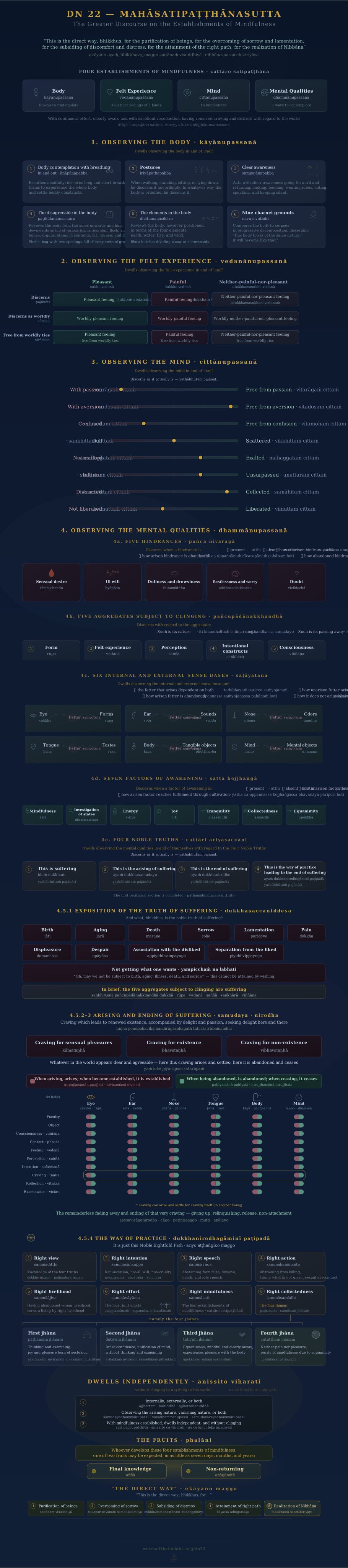
“Ekāyano ayaṁ, bhikkhave, maggo sattānaṁ visuddhiyā, sokaparidevānaṁ samatikkamāya dukkhadomanassānaṁ atthaṅgamāya ñāyassa adhigamāya nibbānassa sacchikiriyāya, yadidaṁ cattāro satipaṭṭhānā.
“This is the one-way for the purification of beings, for the overcoming of sorrow and lamentation, for the subsiding of discomfort and distress, for the attainment of the right path, for the realization of Nibbāna, namely the four establishments of mindfulness.
Katame cattāro? Idha, bhikkhave, bhikkhu kāye kāyānupassī viharati ātāpī sampajāno satimā vineyya loke abhijjhādomanassaṁ, vedanāsu vedanānupassī viharati ātāpī sampajāno satimā vineyya loke abhijjhādomanassaṁ, citte cittānupassī viharati ātāpī sampajāno satimā vineyya loke abhijjhādomanassaṁ, dhammesu dhammānupassī viharati ātāpī sampajāno satimā vineyya loke abhijjhādomanassaṁ.
What are the four? Here, a bhikkhu dwells observing the body in and of itself, with continuous effort, clearly aware and with excellent recollection, having removed craving and distress with regard to the world; he dwells observing the felt experience in and of itself, with continuous effort, clearly aware and with excellent recollection, having removed craving and distress with regard to the world; he dwells observing the mind in and of itself, with continuous effort, clearly aware and with excellent recollection, having removed craving and distress with regard to the world; he dwells observing the mental qualities in and of themselves, with continuous effort, clearly aware and with excellent recollection, having removed craving and distress with regard to the world.
Uddeso niṭṭhito.
Summary completed.
1. Observing the Body
1.1. Body Contemplation with Breathing
Kathañca pana, bhikkhave, bhikkhu kāye kāyānupassī viharati?
How does a bhikkhu dwell observing the body in and of itself?
Idha, bhikkhave, bhikkhu araññagato vā rukkhamūlagato vā suññāgāragato vā nisīdati pallaṅkaṁ ābhujitvā ujuṁ kāyaṁ paṇidhāya parimukhaṁ satiṁ upaṭṭhapetvā. So satova assasati, satova passasati.
Here, a bhikkhu, having gone to the forest or to the foot of a tree or to an empty hut, sits down; having folded his legs crosswise, aligns his body upright, and establishes mindfulness as his primary focal point. Mindfully, he breathes in; mindfully, he breathes out.
Dīghaṁ vā assasanto ‘dīghaṁ assasāmī’ti pajānāti, dīghaṁ vā passasanto ‘dīghaṁ passasāmī’ti pajānāti.
Breathing in long, he discerns the long in-breath; breathing out long, he discerns the long out-breath.
Rassaṁ vā assasanto ‘rassaṁ assasāmī’ti pajānāti, rassaṁ vā passasanto ‘rassaṁ passasāmī’ti pajānāti.
Breathing in short, he discerns the short in-breath; breathing out short, he discerns the short out-breath.
‘Sabbakāyapaṭisaṁvedī assasissāmī’ti sikkhati, ‘sabbakāyapaṭisaṁvedī passasissāmī’ti sikkhati.
He trains to experience the whole body while breathing in; he trains to experience the whole body while breathing out.
‘Passambhayaṁ kāyasaṅkhāraṁ assasissāmī’ti sikkhati, ‘passambhayaṁ kāyasaṅkhāraṁ passasissāmī’ti sikkhati.
He trains to settle the bodily constructs while breathing in; he trains to settle the bodily constructs while breathing out.
Seyyathāpi, bhikkhave, dakkho bhamakāro vā bhamakārantevāsī vā dīghaṁ vā añchanto ‘dīghaṁ añchāmī’ti pajānāti, rassaṁ vā añchanto ‘rassaṁ añchāmī’ti pajānāti; evameva kho, bhikkhave, bhikkhu dīghaṁ vā assasanto ‘dīghaṁ assasāmī’ti pajānāti, dīghaṁ vā passasanto ‘dīghaṁ passasāmī’ti pajānāti, rassaṁ vā assasanto ‘rassaṁ assasāmī’ti pajānāti, rassaṁ vā passasanto ‘rassaṁ passasāmī’ti pajānāti. ‘Sabbakāyapaṭisaṁvedī assasissāmī’ti sikkhati, ‘sabbakāyapaṭisaṁvedī passasissāmī’ti sikkhati, ‘passambhayaṁ kāyasaṅkhāraṁ assasissāmī’ti sikkhati, ‘passambhayaṁ kāyasaṅkhāraṁ passasissāmī’ti sikkhati.
Just as a skilled turner or his apprentice, when making a long turn discerns the long turn, or making a short turn discerns the short turn; so too, breathing in long, a bhikkhu discerns the long in-breath; breathing out long, he discerns the long out-breath; breathing in short, he discerns the short in-breath; breathing out short, he discerns the short out-breath; he trains to experience the whole body while breathing in; he trains to experience the whole body while breathing out; he trains to settle the bodily constructs while breathing in; he trains to settle the bodily constructs while breathing out.
Iti ajjhattaṁ vā kāye kāyānupassī viharati, bahiddhā vā kāye kāyānupassī viharati, ajjhattabahiddhā vā kāye kāyānupassī viharati. Samudayadhammānupassī vā kāyasmiṁ viharati, vayadhammānupassī vā kāyasmiṁ viharati, samudayavayadhammānupassī vā kāyasmiṁ viharati. ‘Atthi kāyo’ti vā panassa sati paccupaṭṭhitā hoti yāvadeva ñāṇamattāya paṭissatimattāya anissito ca viharati, na ca kiñci loke upādiyati.
Thus, he dwells observing the body in and of itself internally, or he dwells observing the body externally, or he dwells observing the body both internally and externally[1]. He dwells observing the arising nature in the body, or he dwells observing the going-away nature in the body, or he dwells observing both the arising and going-away nature in the body. Or else, mindfulness that ‘there is a body’ is simply established in him to the extent necessary for knowledge and remembrance. He dwells independent and does not cling to anything in the world.
Evampi kho, bhikkhave, bhikkhu kāye kāyānupassī viharati.
In this way, a bhikkhu dwells observing the body in and of itself.
Ānāpānapabbaṁ niṭṭhitaṁ.
The section on Mindfulness of Breathing is completed.
1.2. Body Contemplation in Postures
Puna caparaṁ, bhikkhave, bhikkhu gacchanto vā ‘gacchāmī’ti pajānāti, ṭhito vā ‘ṭhitomhī’ti pajānāti, nisinno vā ‘nisinnomhī’ti pajānāti, sayāno vā ‘sayānomhī’ti pajānāti, yathā yathā vā panassa kāyo paṇihito hoti tathā tathā naṁ pajānāti.
Furthermore, when walking, a bhikkhu discerns walking; when standing, he discerns standing; when sitting, he discerns sitting; when lying down, he discerns lying down. In whatever way the body is oriented, he discerns it accordingly.
Iti ajjhattaṁ vā kāye kāyānupassī viharati, bahiddhā vā kāye kāyānupassī viharati, ajjhattabahiddhā vā kāye kāyānupassī viharati. Samudayadhammānupassī vā kāyasmiṁ viharati, vayadhammānupassī vā kāyasmiṁ viharati, samudayavayadhammānupassī vā kāyasmiṁ viharati. ‘Atthi kāyo’ti vā panassa sati paccupaṭṭhitā hoti yāvadeva ñāṇamattāya paṭissatimattāya anissito ca viharati, na ca kiñci loke upādiyati.
Thus, he dwells observing the body in and of itself internally, or he dwells observing the body externally, or he dwells observing the body both internally and externally. He dwells observing the arising nature in the body, or he dwells observing the going-away nature in the body, or he dwells observing both the arising and going-away nature in the body. Or else, mindfulness that ‘there is a body’ is simply established in him to the extent necessary for knowledge and remembrance. He dwells independently and does not cling to anything in the world.
Evampi kho, bhikkhave, bhikkhu kāye kāyānupassī viharati.
In this way too, a bhikkhu dwells observing the body in and of itself.
Iriyāpathapabbaṁ niṭṭhitaṁ.
The section on Postures is completed.
1.3. Body Contemplation with Clear Awareness
Puna caparaṁ, bhikkhave, bhikkhu abhikkante paṭikkante sampajānakārī hoti, ālokite vilokite sampajānakārī hoti, samiñjite pasārite sampajānakārī hoti, saṅghāṭipattacīvaradhāraṇe sampajānakārī hoti, asite pīte khāyite sāyite sampajānakārī hoti, uccārapassāvakamme sampajānakārī hoti, gate ṭhite nisinne sutte jāgarite bhāsite tuṇhībhāve sampajānakārī hoti.
Furthermore, a bhikkhu acts with clear awareness when going forward and returning; he acts with clear awareness when looking ahead and looking around; he acts with clear awareness when bending back and stretching out; he acts with clear awareness when wearing robes and carrying outer robe and bowl; he acts with clear awareness when eating, drinking, chewing, and tasting; he acts with clear awareness when defecating and urinating; he acts with clear awareness when walking, standing, sitting, falling asleep, waking up, speaking, and keeping silent.
Iti ajjhattaṁ vā …pe…
Thus, he dwells observing the body in and of itself internally, or he dwells observing the body externally, or he dwells observing the body both internally and externally. He dwells observing the arising nature in the body, or he dwells observing the going-away nature in the body, or he dwells observing both the arising and going-away nature in the body. Or else, mindfulness that ‘there is a body’ is simply established in him to the extent necessary for knowledge and remembrance. He dwells independently and does not cling to anything in the world.
Evampi kho, bhikkhave, bhikkhu kāye kāyānupassī viharati.
In this way too, a bhikkhu dwells observing the body in and of itself.
Sampajānapabbaṁ niṭṭhitaṁ.
The section on clear awareness is completed.
1.4. Contemplating the Disagreeable in the Body
Puna caparaṁ, bhikkhave, bhikkhu imameva kāyaṁ uddhaṁ pādatalā adho kesamatthakā tacapariyantaṁ pūraṁ nānappakārassa asucino paccavekkhati: ‘atthi imasmiṁ kāye kesā lomā nakhā dantā taco, maṁsaṁ nhāru aṭṭhi aṭṭhimiñjaṁ vakkaṁ, hadayaṁ yakanaṁ kilomakaṁ pihakaṁ papphāsaṁ, antaṁ antaguṇaṁ udariyaṁ karīsaṁ, pittaṁ semhaṁ pubbo lohitaṁ sedo medo, assu vasā kheḷo siṅghāṇikā lasikā muttan’ti.
Furthermore, a bhikkhu reviews this very body from the soles of the feet upwards and from the top of the hair downwards, bounded by skin and full of various impurities thus: ‘In this body, there are hairs of the head, hairs of the body, nails, teeth, skin; flesh, sinews, bones, bone marrow, kidneys; heart, liver, inner membrane, spleen, lungs; intestines, mesentery, stomach contents, feces; bile, phlegm, pus, blood, sweat, fat, tears, grease, saliva, nasal mucus, synovial fluid, and urine.’
Seyyathāpi, bhikkhave, ubhatomukhā putoḷi pūrā nānāvihitassa dhaññassa, seyyathidaṁ—sālīnaṁ vīhīnaṁ muggānaṁ māsānaṁ tilānaṁ taṇḍulānaṁ. Tamenaṁ cakkhumā puriso muñcitvā paccavekkheyya: ‘ime sālī, ime vīhī ime muggā ime māsā ime tilā ime taṇḍulā’ti.
Just as if there were a bag with an opening at both ends full of many sorts of grains, such as rice, barley, beans, peas, millet, and white rice, and a man with good eyesight having opened it were to reflect, ‘These are rice, these are barley, these are beans, these are peas, these are millet, these are white rice.’
Evameva kho, bhikkhave, bhikkhu imameva kāyaṁ uddhaṁ pādatalā adho kesamatthakā tacapariyantaṁ pūraṁ nānappakārassa asucino paccavekkhati: ‘atthi imasmiṁ kāye kesā lomā …pe… muttan’ti.
In just the same way, a bhikkhu reviews this very body from the soles of the feet upwards and from the top of the hair downwards, bounded by skin and full of various impurities thus: ‘In this body, there are hairs of the head, hairs of the body, nails, teeth, skin; flesh, sinews, bones, bone marrow, kidneys; heart, liver, inner membrane, spleen, lungs; intestines, mesentery, stomach contents, feces; bile, phlegm, pus, blood, sweat, fat, tears, grease, saliva, nasal mucus, synovial fluid, and urine.’
Iti ajjhattaṁ vā …pe…
Thus, he dwells observing the body in and of itself internally, or he dwells observing the body externally, or he dwells observing the body both internally and externally. He dwells observing the arising nature in the body, or he dwells observing the going-away nature in the body, or he dwells observing both the arising and going-away nature in the body. Or else, mindfulness that ‘there is a body’ is simply established in him to the extent necessary for knowledge and remembrance. He dwells independently and does not cling to anything in the world.
Evampi kho, bhikkhave, bhikkhu kāye kāyānupassī viharati.
In this way too, a bhikkhu dwells observing the body in and of itself.
Paṭikūlamanasikārapabbaṁ niṭṭhitaṁ.
The section on attention to the disagreeable is completed.
1.5. Contemplating the Elements in the Body
Puna caparaṁ, bhikkhave, bhikkhu imameva kāyaṁ yathāṭhitaṁ yathāpaṇihitaṁ dhātuso paccavekkhati: ‘atthi imasmiṁ kāye pathavīdhātu āpodhātu tejodhātu vāyodhātū’ti.
Furthermore, a bhikkhu reviews this very body, in whatever way it is positioned, in whatever way it is oriented, considering it in terms of the elements thus: ‘In this body, there is the earth element, the water element, the fire element, and the wind element.’
Seyyathāpi, bhikkhave, dakkho goghātako vā goghātakantevāsī vā gāviṁ vadhitvā catumahāpathe bilaso vibhajitvā nisinno assa;
Just as if a skilled butcher or their apprentice, having slaughtered a cow, were sitting at a crossroads, having divided it up piece by piece.
evameva kho, bhikkhave, bhikkhu imameva kāyaṁ yathāṭhitaṁ yathāpaṇihitaṁ dhātuso paccavekkhati: ‘atthi imasmiṁ kāye pathavīdhātu āpodhātu tejodhātu vāyodhātū’ti.
In the same way, a bhikkhu reviews this very body, however it is oriented, however it is placed, considering it in terms of the elements: ‘In this body, there is the earth element, the water element, the fire element, and the wind element.’
Iti ajjhattaṁ vā kāye kāyānupassī viharati …pe…
Thus, he dwells observing the body in and of itself internally, or he dwells observing the body externally, or he dwells observing the body both internally and externally. He dwells observing the arising nature in the body, or he dwells observing the going-away nature in the body, or he dwells observing both the arising and going-away nature in the body. Or else, mindfulness that ‘there is a body’ is simply established in him to the extent necessary for knowledge and remembrance. He dwells independently and does not cling to anything in the world.
Evampi kho, bhikkhave, bhikkhu kāye kāyānupassī viharati.
In this way too, a bhikkhu dwells observing the body in and of itself.
Dhātumanasikārapabbaṁ niṭṭhitaṁ.
The section on observing the elements in the body is completed.
1.6. The Nine Charnel Ground Contemplations
Puna caparaṁ, bhikkhave, bhikkhu seyyathāpi passeyya sarīraṁ sivathikāya chaḍḍitaṁ ekāhamataṁ vā dvīhamataṁ vā tīhamataṁ vā uddhumātakaṁ vinīlakaṁ vipubbakajātaṁ. So imameva kāyaṁ upasaṁharati: ‘ayampi kho kāyo evaṁdhammo evaṁbhāvī evaṁanatīto’ti. Iti ajjhattaṁ vā …pe…
Furthermore, a bhikkhu, just as if he saw a corpse thrown in a charnel ground one day dead, two days dead, or three days dead, bloated, discolored, and decomposing, a bhikkhu compares this very body to it thus: ‘This body too is of the same nature; it will become like that; it is not exempt from that fate.’ Thus, he dwells observing the body in and of itself internally, or he dwells observing the body externally, or he dwells observing the body both internally and externally. He dwells observing the arising nature in the body, or he dwells observing the going-away nature in the body, or he dwells observing both the arising and going-away nature in the body. Or else, mindfulness that ‘there is a body’ is simply established in him to the extent necessary for knowledge and remembrance. He dwells independently and does not cling to anything in the world.
Evampi kho, bhikkhave, bhikkhu kāye kāyānupassī viharati.
In this way too, a bhikkhu dwells observing the body in and of itself.
Puna caparaṁ, bhikkhave, bhikkhu seyyathāpi passeyya sarīraṁ sivathikāya chaḍḍitaṁ kākehi vā khajjamānaṁ kulalehi vā khajjamānaṁ gijjhehi vā khajjamānaṁ kaṅkehi vā khajjamānaṁ sunakhehi vā khajjamānaṁ byagghehi vā khajjamānaṁ dīpīhi vā khajjamānaṁ siṅgālehi vā khajjamānaṁ vividhehi vā pāṇakajātehi khajjamānaṁ. So imameva kāyaṁ upasaṁharati: ‘ayampi kho kāyo evaṁdhammo evaṁbhāvī evaṁanatīto’ti. Iti ajjhattaṁ vā …pe…
Furthermore, just as if he saw a corpse thrown in a charnel ground, being eaten by crows, or hawks, or vultures, or herons, or dogs, or tigers, or leopards, or jackals, or by various kinds of creatures, a bhikkhu compares this very body to it thus: ‘This body too is of the same nature; it will become like that; it is not exempt from that fate.’ Thus, he dwells observing the body in and of itself internally, or he dwells observing the body externally, or he dwells observing the body both internally and externally. He dwells observing the arising nature in the body, or he dwells observing the going-away nature in the body, or he dwells observing both the arising and going-away nature in the body. Or else, mindfulness that ‘there is a body’ is simply established in him to the extent necessary for knowledge and remembrance. He dwells independently and does not cling to anything in the world.
Evampi kho, bhikkhave, bhikkhu kāye kāyānupassī viharati.
In this way too, a bhikkhu dwells observing the body in and of itself.
Puna caparaṁ, bhikkhave, bhikkhu seyyathāpi passeyya sarīraṁ sivathikāya chaḍḍitaṁ aṭṭhikasaṅkhalikaṁ samaṁsalohitaṁ nhārusambandhaṁ …pe…
Furthermore, just as if he saw a corpse thrown in a charnel ground, a skeleton with flesh and blood and held together by sinews, ․․․
Aṭṭhikasaṅkhalikaṁ nimaṁsalohitamakkhitaṁ nhārusambandhaṁ …pe…
or a skeleton without flesh but smeared with blood and held together by sinews, ․․․
Aṭṭhikasaṅkhalikaṁ apagatamaṁsalohitaṁ nhārusambandhaṁ …pe…
or a skeleton devoid of flesh and blood and held together by sinews, ․․․
Aṭṭhikāni apagatasambandhāni disā vidisā vikkhittāni, aññena hatthaṭṭhikaṁ aññena pādaṭṭhikaṁ aññena gopphakaṭṭhikaṁ aññena jaṅghaṭṭhikaṁ aññena ūruṭṭhikaṁ aññena kaṭiṭṭhikaṁ aññena phāsukaṭṭhikaṁ aññena piṭṭhiṭṭhikaṁ aññena khandhaṭṭhikaṁ aññena gīvaṭṭhikaṁ aññena hanukaṭṭhikaṁ aññena dantaṭṭhikaṁ aññena sīsakaṭāhaṁ. So imameva kāyaṁ upasaṁharati: ‘ayampi kho kāyo evaṁdhammo evaṁbhāvī evaṁanatīto’ti. Iti ajjhattaṁ vā …pe… viharati.
or bones disconnected and scattered in all directions—here a hand bone, there a foot bone, there an ankle bone, here a shin bone, there a thigh bone, here a pelvis bone, there a rib, here a spine, there a shoulder blade, here a neck bone, there a jawbone, here a tooth, and there a skull, a bhikkhu compares this very body to it thus: ‘This body too is of the same nature; it will become like that; it is not exempt from that fate.’ Thus, he dwells observing the body in and of itself internally, or he dwells observing the body externally, or he dwells observing the body both internally and externally. He dwells observing the arising nature in the body, or he dwells observing the going-away nature in the body, or he dwells observing both the arising and going-away nature in the body. Or else, mindfulness that ‘there is a body’ is simply established in him to the extent necessary for knowledge and remembrance. He dwells independently and does not cling to anything in the world. In this way, a bhikkhu dwells observing the body in and of itself.
Puna caparaṁ, bhikkhave, bhikkhu seyyathāpi passeyya sarīraṁ sivathikāya chaḍḍitaṁ aṭṭhikāni setāni saṅkhavaṇṇapaṭibhāgāni …pe…
Furthermore, just as if he saw a corpse thrown in a charnel ground, bones bleached white, the color of conch shells, ․․․
Aṭṭhikāni puñjakitāni terovassikāni …pe…
or bones heaped up, having lain for more than a year, ․․․
Aṭṭhikāni pūtīni cuṇṇakajātāni. So imameva kāyaṁ upasaṁharati: ‘ayampi kho kāyo evaṁdhammo evaṁbhāvī evaṁanatīto’ti.
or bones that are rotten and reduced to dust, a bhikkhu compares this very body to it thus: ‘This body too is of the same nature; it will become like that; it is not exempt from that fate.’
Iti ajjhattaṁ vā kāye kāyānupassī viharati, bahiddhā vā kāye kāyānupassī viharati, ajjhattabahiddhā vā kāye kāyānupassī viharati. Samudayadhammānupassī vā kāyasmiṁ viharati, vayadhammānupassī vā kāyasmiṁ viharati, samudayavayadhammānupassī vā kāyasmiṁ viharati. ‘Atthi kāyo’ti vā panassa sati paccupaṭṭhitā hoti yāvadeva ñāṇamattāya paṭissatimattāya anissito ca viharati, na ca kiñci loke upādiyati.
Thus, he dwells observing the body in and of itself internally, or he dwells observing the body externally, or he dwells observing the body both internally and externally. He dwells observing the arising nature in the body, or he dwells observing the going-away nature in the body, or he dwells observing both the arising and going-away nature in the body. Or else, mindfulness that ‘there is a body’ is simply established in him to the extent necessary for knowledge and remembrance. He dwells independently and does not cling to anything in the world.
Evampi kho, bhikkhave, bhikkhu kāye kāyānupassī viharati.
In this way too, a bhikkhu dwells observing the body in and of itself.
Navasivathikapabbaṁ niṭṭhitaṁ.
The section on The Nine Charnel Ground Observations is completed.
Cuddasa kāyānupassanā niṭṭhitā.
The Fourteen Observations of the Body are completed.
2. Observing the Felt Experience
Kathañca pana, bhikkhave, bhikkhu vedanāsu vedanānupassī viharati?
And how does a bhikkhu dwell observing the felt experience in and of itself?
Idha, bhikkhave, bhikkhu sukhaṁ vā vedanaṁ vedayamāno ‘sukhaṁ vedanaṁ vedayāmī’ti pajānāti.
Here, when experiencing a pleasant feeling, a bhikkhu discerns, ‘I am experiencing a pleasant feeling.’
Dukkhaṁ vā vedanaṁ vedayamāno ‘dukkhaṁ vedanaṁ vedayāmī’ti pajānāti.
When experiencing a painful feeling, he discerns, ‘I am experiencing a painful feeling.’
Adukkhamasukhaṁ vā vedanaṁ vedayamāno ‘adukkhamasukhaṁ vedanaṁ vedayāmī’ti pajānāti.
When experiencing a neither-painful-nor-pleasant feeling, he discerns, ‘I am experiencing a neither-painful-nor-pleasant feeling.’
Sāmisaṁ vā sukhaṁ vedanaṁ vedayamāno ‘sāmisaṁ sukhaṁ vedanaṁ vedayāmī’ti pajānāti.
When experiencing a worldly pleasant feeling, he discerns, ‘I am experiencing a worldly pleasant feeling.’
Nirāmisaṁ vā sukhaṁ vedanaṁ vedayamāno ‘nirāmisaṁ sukhaṁ vedanaṁ vedayāmī’ti pajānāti.
When experiencing a pleasant feeling that is free from worldly ties, he discerns, ‘I am experiencing a pleasant feeling that is free from worldly ties.’
Sāmisaṁ vā dukkhaṁ vedanaṁ vedayamāno ‘sāmisaṁ dukkhaṁ vedanaṁ vedayāmī’ti pajānāti.
When experiencing a worldly painful feeling, he discerns, ‘I am experiencing a worldly painful feeling.’
Nirāmisaṁ vā dukkhaṁ vedanaṁ vedayamāno ‘nirāmisaṁ dukkhaṁ vedanaṁ vedayāmī’ti pajānāti.
When experiencing a painful feeling that is free from worldly ties, he discerns, ‘I am experiencing a painful feeling that is free from worldly ties.’
Sāmisaṁ vā adukkhamasukhaṁ vedanaṁ vedayamāno ‘sāmisaṁ adukkhamasukhaṁ vedanaṁ vedayāmī’ti pajānāti.
When experiencing a worldly neither-painful-nor-pleasant feeling, he discerns, ‘I am experiencing a worldly neither-painful-nor-pleasant feeling.’
Nirāmisaṁ vā adukkhamasukhaṁ vedanaṁ vedayamāno ‘nirāmisaṁ adukkhamasukhaṁ vedanaṁ vedayāmī’ti pajānāti.
When experiencing a neither-painful-nor-pleasant feeling that is free from worldly ties, he discerns, ‘I am experiencing a neither-painful-nor-pleasant feeling that is free from worldly ties.’
Iti ajjhattaṁ vā vedanāsu vedanānupassī viharati, bahiddhā vā vedanāsu vedanānupassī viharati, ajjhattabahiddhā vā vedanāsu vedanānupassī viharati. Samudayadhammānupassī vā vedanāsu viharati, vayadhammānupassī vā vedanāsu viharati, samudayavayadhammānupassī vā vedanāsu viharati. ‘Atthi vedanā’ti vā panassa sati paccupaṭṭhitā hoti yāvadeva ñāṇamattāya paṭissatimattāya anissito ca viharati, na ca kiñci loke upādiyati.
Thus, he dwells observing the felt experience in and of itself internally, or he dwells observing the felt experience externally, or he dwells observing the felt experience both internally and externally. He dwells observing the arising nature in the felt experience, or he dwells observing the going-away nature in the felt experience, or he dwells observing both the arising and going-away nature in the felt experience. Or else, mindfulness that ‘there is a felt experience’ is simply established in him to the extent necessary for knowledge and remembrance. He dwells independent and does not cling to anything in the world.
Evampi kho, bhikkhave, bhikkhu vedanāsu vedanānupassī viharati.
In this way, a bhikkhu dwells observing the felt experience in and of itself.
Vedanānupassanā niṭṭhitā.
The section on observing the felt experience is completed.
3. Observing the Mind
Kathañca pana, bhikkhave, bhikkhu citte cittānupassī viharati?
And how does a bhikkhu dwell observing the mind in and of itself?
Idha, bhikkhave, bhikkhu sarāgaṁ vā cittaṁ ‘sarāgaṁ cittan’ti pajānāti. Vītarāgaṁ vā cittaṁ ‘vītarāgaṁ cittan’ti pajānāti. Sadosaṁ vā cittaṁ ‘sadosaṁ cittan’ti pajānāti. Vītadosaṁ vā cittaṁ ‘vītadosaṁ cittan’ti pajānāti. Samohaṁ vā cittaṁ ‘samohaṁ cittan’ti pajānāti. Vītamohaṁ vā cittaṁ ‘vītamohaṁ cittan’ti pajānāti. Saṅkhittaṁ vā cittaṁ ‘saṅkhittaṁ cittan’ti pajānāti. Vikkhittaṁ vā cittaṁ ‘vikkhittaṁ cittan’ti pajānāti. Mahaggataṁ vā cittaṁ ‘mahaggataṁ cittan’ti pajānāti. Amahaggataṁ vā cittaṁ ‘amahaggataṁ cittan’ti pajānāti. Sauttaraṁ vā cittaṁ ‘sauttaraṁ cittan’ti pajānāti. Anuttaraṁ vā cittaṁ ‘anuttaraṁ cittan’ti pajānāti. Samāhitaṁ vā cittaṁ ‘samāhitaṁ cittan’ti pajānāti. Asamāhitaṁ vā cittaṁ ‘asamāhitaṁ cittan’ti pajānāti. Vimuttaṁ vā cittaṁ ‘vimuttaṁ cittan’ti pajānāti. Avimuttaṁ vā cittaṁ ‘avimuttaṁ cittan’ti pajānāti.
Here, a bhikkhu discerns a mind with passion as ‘a mind with passion;‘ discerns a mind free from passion as ‘a mind free from passion;‘ discerns a mind with aversion as ‘a mind with aversion;‘ discerns a mind free from aversion as ‘a mind free from aversion;‘ discerns a confused mind as ‘a confused mind;‘ discerns a mind free from confusion as ‘a mind free from confusion;‘ discerns a dull mind as ‘a dull mind;‘ discerns a scattered mind as ‘a scattered mind;‘ discerns an exalted mind as ‘an exalted mind;‘ discerns a mind that is not exalted as ‘a mind that is not exalted;‘ discerns an inferior mind as ‘an inferior mind;‘ discerns an unsurpassed mind as ‘an unsurpassed mind;‘ discerns a collected mind as ‘a collected mind;‘ discerns a distracted mind as ‘a distracted mind;‘ discerns a liberated mind as ‘a liberated mind;‘ discerns a mind that is not liberated as ‘a mind that is not liberated.’
Iti ajjhattaṁ vā citte cittānupassī viharati, bahiddhā vā citte cittānupassī viharati, ajjhattabahiddhā vā citte cittānupassī viharati. Samudayadhammānupassī vā cittasmiṁ viharati, vayadhammānupassī vā cittasmiṁ viharati, samudayavayadhammānupassī vā cittasmiṁ viharati. ‘Atthi cittan’ti vā panassa sati paccupaṭṭhitā hoti yāvadeva ñāṇamattāya paṭissatimattāya anissito ca viharati, na ca kiñci loke upādiyati.
Thus, he dwells observing the mind in and of itself internally, or he dwells observing the mind in and of itself externally, or he dwells observing the mind in and of itself both internally and externally. He dwells observing the arising nature in the mind, or he dwells observing the going-away nature in the mind, or he dwells observing both the arising and going-away nature in the mind. Or else, mindfulness that ‘there is a mind’ is simply established in him to the extent necessary for knowledge and remembrance. He dwells independent and does not cling to anything in the world.
Evampi kho, bhikkhave, bhikkhu citte cittānupassī viharati.
In this way, a bhikkhu dwells observing the mind in and of itself.
Cittānupassanā niṭṭhitā.
The section on Observing the Mind is completed.
4. Observing the Mental Qualities
4.1. Observing the Mental Qualities with regard to the Hindrances
Kathañca pana, bhikkhave, bhikkhu dhammesu dhammānupassī viharati?
And how does a bhikkhu dwell observing the mental qualities in and of themselves?
Idha, bhikkhave, bhikkhu dhammesu dhammānupassī viharati pañcasu nīvaraṇesu. Kathañca pana, bhikkhave, bhikkhu dhammesu dhammānupassī viharati pañcasu nīvaraṇesu?
Here, a bhikkhu dwells observing the mental qualities in and of themselves with regard to the five hindrances. And how does a bhikkhu dwell observing the mental qualities in and of themselves with regard to the five hindrances?
Idha, bhikkhave, bhikkhu santaṁ vā ajjhattaṁ kāmacchandaṁ ‘atthi me ajjhattaṁ kāmacchando’ti pajānāti, asantaṁ vā ajjhattaṁ kāmacchandaṁ ‘natthi me ajjhattaṁ kāmacchando’ti pajānāti, yathā ca anuppannassa kāmacchandassa uppādo hoti tañca pajānāti, yathā ca uppannassa kāmacchandassa pahānaṁ hoti tañca pajānāti, yathā ca pahīnassa kāmacchandassa āyatiṁ anuppādo hoti tañca pajānāti.
Here, a bhikkhu discerns when there is sensual desire present in him, ‘There is sensual desire in me,’ or when there is no sensual desire present, ‘There is no sensual desire in me,’ and he discerns how unarisen sensual desire can arise, how arisen sensual desire is abandoned, and how abandoned sensual desire does not arise again in the future.
Santaṁ vā ajjhattaṁ byāpādaṁ ‘atthi me ajjhattaṁ byāpādo’ti pajānāti, asantaṁ vā ajjhattaṁ byāpādaṁ ‘natthi me ajjhattaṁ byāpādo’ti pajānāti, yathā ca anuppannassa byāpādassa uppādo hoti tañca pajānāti, yathā ca uppannassa byāpādassa pahānaṁ hoti tañca pajānāti, yathā ca pahīnassa byāpādassa āyatiṁ anuppādo hoti tañca pajānāti.
He discerns when there is ill will present in him, ‘There is ill will in me,’ or when there is no ill will present, ‘There is no ill will in me,’ and he discerns how unarisen ill will can arise, how arisen ill will is abandoned, and how abandoned ill will does not arise again in the future.
Santaṁ vā ajjhattaṁ thinamiddhaṁ ‘atthi me ajjhattaṁ thinamiddhan’ti pajānāti, asantaṁ vā ajjhattaṁ thinamiddhaṁ ‘natthi me ajjhattaṁ thinamiddhan’ti pajānāti, yathā ca anuppannassa thinamiddhassa uppādo hoti tañca pajānāti, yathā ca uppannassa thinamiddhassa pahānaṁ hoti tañca pajānāti, yathā ca pahīnassa thinamiddhassa āyatiṁ anuppādo hoti tañca pajānāti.
He discerns when there is dullness and drowsiness present in him, ‘There is dullness and drowsiness in me,’ or when there is no dullness and drowsiness present, ‘There is no dullness and drowsiness in me,’ and he discerns how unarisen dullness and drowsiness can arise, how arisen dullness and drowsiness is abandoned, and how abandoned dullness and drowsiness do not arise again in the future.
Santaṁ vā ajjhattaṁ uddhaccakukkuccaṁ ‘atthi me ajjhattaṁ uddhaccakukkuccan’ti pajānāti, asantaṁ vā ajjhattaṁ uddhaccakukkuccaṁ ‘natthi me ajjhattaṁ uddhaccakukkuccan’ti pajānāti, yathā ca anuppannassa uddhaccakukkuccassa uppādo hoti tañca pajānāti, yathā ca uppannassa uddhaccakukkuccassa pahānaṁ hoti tañca pajānāti, yathā ca pahīnassa uddhaccakukkuccassa āyatiṁ anuppādo hoti tañca pajānāti.
He discerns when there is restlessness and worry present in him, ‘There is restlessness and worry in me,’ or when there is no restlessness and worry present, ‘There is no restlessness and worry in me,’ and he discerns how unarisen restlessness and worry can arise, how arisen restlessness and worry is abandoned, and how abandoned restlessness and worry do not arise again in the future.
Santaṁ vā ajjhattaṁ vicikicchaṁ ‘atthi me ajjhattaṁ vicikicchā’ti pajānāti, asantaṁ vā ajjhattaṁ vicikicchaṁ ‘natthi me ajjhattaṁ vicikicchā’ti pajānāti, yathā ca anuppannāya vicikicchāya uppādo hoti tañca pajānāti, yathā ca uppannāya vicikicchāya pahānaṁ hoti tañca pajānāti, yathā ca pahīnāya vicikicchāya āyatiṁ anuppādo hoti tañca pajānāti.
He knows when there is doubt present in him, ‘There is doubt in me,’ or when there is no doubt present, ‘There is no doubt in me,’ and he knows how unarisen doubt can arise, how arisen doubt is abandoned, and how abandoned doubt does not arise again in the future.
Iti ajjhattaṁ vā dhammesu dhammānupassī viharati, bahiddhā vā dhammesu dhammānupassī viharati, ajjhattabahiddhā vā dhammesu dhammānupassī viharati. Samudayadhammānupassī vā dhammesu viharati, vayadhammānupassī vā dhammesu viharati, samudayavayadhammānupassī vā dhammesu viharati. ‘Atthi dhammā’ti vā panassa sati paccupaṭṭhitā hoti yāvadeva ñāṇamattāya paṭissatimattāya, anissito ca viharati, na ca kiñci loke upādiyati.
Thus, he dwells observing the mental qualities in and of themselves internally, or he dwells observing the mental qualities in and of themselves externally, or he dwells observing mental qualities in and of themselves both internally and externally. He dwells observing the arising nature in the mental qualities, or he dwells observing the going-away nature in the mental qualities, or he dwells observing both the arising and going-away nature in the mental qualities. Or else, mindfulness that ‘there are mental qualities’ is simply established in him to the extent necessary for knowledge and remembrance. He dwells independently and does not cling to anything in the world.
Evampi kho, bhikkhave, bhikkhu dhammesu dhammānupassī viharati pañcasu nīvaraṇesu.
In this way, a bhikkhu dwells observing the mental qualities in and of themselves with regard to the five hindrances.
Nīvaraṇapabbaṁ niṭṭhitaṁ.
The section on the Hindrances is completed.
4.2. Observing the Mental Qualities with regard to the Aggregates
Puna caparaṁ, bhikkhave, bhikkhu dhammesu dhammānupassī viharati pañcasu upādānakkhandhesu. Kathañca pana, bhikkhave, bhikkhu dhammesu dhammānupassī viharati pañcasu upādānakkhandhesu?
Again, a bhikkhu dwells observing the mental qualities in and of themselves with regard to the five aggregates subject to clinging. And how does a bhikkhu dwell observing the mental qualities in and of themselves with regard to the five aggregates that are subject to being held onto as a self?
Idha, bhikkhave, bhikkhu: ‘iti rūpaṁ, iti rūpassa samudayo, iti rūpassa atthaṅgamo; iti vedanā, iti vedanāya samudayo, iti vedanāya atthaṅgamo; iti saññā, iti saññāya samudayo, iti saññāya atthaṅgamo; iti saṅkhārā, iti saṅkhārānaṁ samudayo, iti saṅkhārānaṁ atthaṅgamo, iti viññāṇaṁ, iti viññāṇassa samudayo, iti viññāṇassa atthaṅgamo’ti,
Here, a bhikkhu understands: ‘Such is form, such is the arising of form, such is the passing away of form; such is felt experience, such is the arising of felt experience, such is the passing away of felt experience; such is perception, such is the arising of perception, such is the passing away of perception; such are intentional constructs, such is the arising of intentional constructs, such is the passing away of intentional constructs; such is consciousness, such is the arising of consciousness, such is the passing away of consciousness;‘
iti ajjhattaṁ vā dhammesu dhammānupassī viharati, bahiddhā vā dhammesu dhammānupassī viharati, ajjhattabahiddhā vā dhammesu dhammānupassī viharati. Samudayadhammānupassī vā dhammesu viharati, vayadhammānupassī vā dhammesu viharati, samudayavayadhammānupassī vā dhammesu viharati. ‘Atthi dhammā’ti vā panassa sati paccupaṭṭhitā hoti yāvadeva ñāṇamattāya paṭissatimattāya, anissito ca viharati, na ca kiñci loke upādiyati.
Thus, he dwells observing the mental qualities in and of themselves internally, or he dwells observing the mental qualities in and of themselves externally, or he dwells observing mental qualities in and of themselves both internally and externally. He dwells observing the arising nature in the mental qualities, or he dwells observing the going-away nature in the mental qualities, or he dwells observing both the arising and going-away nature in the mental qualities. Or else, mindfulness that ‘there are mental qualities’ is simply established in him to the extent necessary for knowledge and remembrance. He dwells independently and does not cling to anything in the world.
Evampi kho, bhikkhave, bhikkhu dhammesu dhammānupassī viharati pañcasu upādānakkhandhesu.
In this way too, a bhikkhu dwells observing the mental qualities in and of themselves with regard to the five aggregates that are subject to being held onto as a self.
Khandhapabbaṁ niṭṭhitaṁ.
The section on the Aggregates is completed.
4.3. Observing the Mental Qualities with regard to the Sense Bases
Puna caparaṁ, bhikkhave, bhikkhu dhammesu dhammānupassī viharati chasu ajjhattikabāhiresu āyatanesu. Kathañca pana, bhikkhave, bhikkhu dhammesu dhammānupassī viharati chasu ajjhattikabāhiresu āyatanesu?
Again, a bhikkhu dwells observing the mental qualities in and of themselves with regard to the six internal and external sense bases. And how does a bhikkhu dwell observing the mental qualities in and of themselves in the six internal and external sense bases?
Idha, bhikkhave, bhikkhu cakkhuñca pajānāti, rūpe ca pajānāti, yañca tadubhayaṁ paṭicca uppajjati saṁyojanaṁ tañca pajānāti, yathā ca anuppannassa saṁyojanassa uppādo hoti tañca pajānāti, yathā ca uppannassa saṁyojanassa pahānaṁ hoti tañca pajānāti, yathā ca pahīnassa saṁyojanassa āyatiṁ anuppādo hoti tañca pajānāti.
Here, a bhikkhu discerns the eye and forms, and the fetter that arises dependent on both; he also discerns how there comes to be the arising of the unarisen fetter, and how there comes to be the abandoning of the arisen fetter, and how there comes to be the future non-arising of the abandoned fetter.
Sotañca pajānāti, sadde ca pajānāti, yañca tadubhayaṁ paṭicca uppajjati saṁyojanaṁ tañca pajānāti, yathā ca anuppannassa saṁyojanassa uppādo hoti tañca pajānāti, yathā ca uppannassa saṁyojanassa pahānaṁ hoti tañca pajānāti, yathā ca pahīnassa saṁyojanassa āyatiṁ anuppādo hoti tañca pajānāti.
He discerns the ear and sounds, and the fetter that arises dependent on both; he also discerns how there comes to be the arising of the unarisen fetter, and how there comes to be the abandoning of the arisen fetter, and how there comes to be the future non-arising of the abandoned fetter.
Ghānañca pajānāti, gandhe ca pajānāti, yañca tadubhayaṁ paṭicca uppajjati saṁyojanaṁ tañca pajānāti, yathā ca anuppannassa saṁyojanassa uppādo hoti tañca pajānāti, yathā ca uppannassa saṁyojanassa pahānaṁ hoti tañca pajānāti, yathā ca pahīnassa saṁyojanassa āyatiṁ anuppādo hoti tañca pajānāti.
He discerns the nose and odors, and the fetter that arises dependent on both; he also discerns how there comes to be the arising of the unarisen fetter, and how there comes to be the abandoning of the arisen fetter, and how there comes to be the future non-arising of the abandoned fetter.
Jivhañca pajānāti, rase ca pajānāti, yañca tadubhayaṁ paṭicca uppajjati saṁyojanaṁ tañca pajānāti, yathā ca anuppannassa saṁyojanassa uppādo hoti tañca pajānāti, yathā ca uppannassa saṁyojanassa pahānaṁ hoti tañca pajānāti, yathā ca pahīnassa saṁyojanassa āyatiṁ anuppādo hoti tañca pajānāti.
He discerns the tongue and tastes, and the fetter that arises dependent on both; he also discerns how there comes to be the arising of the unarisen fetter, and how there comes to be the abandoning of the arisen fetter, and how there comes to be the future non-arising of the abandoned fetter.
Kāyañca pajānāti, phoṭṭhabbe ca pajānāti, yañca tadubhayaṁ paṭicca uppajjati saṁyojanaṁ tañca pajānāti, yathā ca anuppannassa saṁyojanassa uppādo hoti tañca pajānāti, yathā ca uppannassa saṁyojanassa pahānaṁ hoti tañca pajānāti, yathā ca pahīnassa saṁyojanassa āyatiṁ anuppādo hoti tañca pajānāti.
He discerns the body and tangible objects, and the fetter that arises dependent on both; he also discerns how there comes to be the arising of the unarisen fetter, and how there comes to be the abandoning of the arisen fetter, and how there comes to be the future non-arising of the abandoned fetter.
Manañca pajānāti, dhamme ca pajānāti, yañca tadubhayaṁ paṭicca uppajjati saṁyojanaṁ tañca pajānāti, yathā ca anuppannassa saṁyojanassa uppādo hoti tañca pajānāti, yathā ca uppannassa saṁyojanassa pahānaṁ hoti tañca pajānāti, yathā ca pahīnassa saṁyojanassa āyatiṁ anuppādo hoti tañca pajānāti.
He discerns the mind and mental objects, and the fetter that arises dependent on both; he also discerns how there comes to be the arising of the unarisen fetter, and how there comes to be the abandoning of the arisen fetter, and how there comes to be the future non-arising of the abandoned fetter.
Iti ajjhattaṁ vā dhammesu dhammānupassī viharati, bahiddhā vā dhammesu dhammānupassī viharati, ajjhattabahiddhā vā dhammesu dhammānupassī viharati. Samudayadhammānupassī vā dhammesu viharati, vayadhammānupassī vā dhammesu viharati, samudayavayadhammānupassī vā dhammesu viharati. ‘Atthi dhammā’ti vā panassa sati paccupaṭṭhitā hoti yāvadeva ñāṇamattāya paṭissatimattāya, anissito ca viharati, na ca kiñci loke upādiyati.
Thus, he dwells observing the mental qualities in and of themselves internally, or he dwells observing the mental qualities in and of themselves externally, or he dwells observing mental qualities in and of themselves both internally and externally. He dwells observing the arising nature in the mental qualities, or he dwells observing the going-away nature in the mental qualities, or he dwells observing both the arising and going-away nature in the mental qualities. Or else, mindfulness that ‘there are mental qualities’ is simply established in him to the extent necessary for knowledge and remembrance. He dwells independently and does not cling to anything in the world.
Evampi kho, bhikkhave, bhikkhu dhammesu dhammānupassī viharati chasu ajjhattikabāhiresu āyatanesu.
In this way too, a bhikkhu dwells observing the mental qualities in and of themselves with regard to the six sense bases.
Āyatanapabbaṁ niṭṭhitaṁ.
The section on the Sense Bases is completed.
4.4. Observing the Mental Qualities with regard to the Factors of Awakening
Puna caparaṁ, bhikkhave, bhikkhu dhammesu dhammānupassī viharati sattasu bojjhaṅgesu. Kathañca pana, bhikkhave, bhikkhu dhammesu dhammānupassī viharati sattasu bojjhaṅgesu?
Again, a bhikkhu dwells observing the mental qualities in and of themselves with regard to the seven factors of awakening. And how does a bhikkhu dwell observing the mental qualities in and of themselves in the seven factors of awakening?
Idha, bhikkhave, bhikkhu santaṁ vā ajjhattaṁ satisambojjhaṅgaṁ ‘atthi me ajjhattaṁ satisambojjhaṅgo’ti pajānāti, asantaṁ vā ajjhattaṁ satisambojjhaṅgaṁ ‘natthi me ajjhattaṁ satisambojjhaṅgo’ti pajānāti, yathā ca anuppannassa satisambojjhaṅgassa uppādo hoti tañca pajānāti, yathā ca uppannassa satisambojjhaṅgassa bhāvanāya pāripūrī hoti tañca pajānāti.
Here, when the awakening factor of mindfulness is present within, a bhikkhu discerns, ‘The awakening factor of mindfulness is present in me,’ or when the awakening factor of mindfulness is not present within, he discerns, ‘The awakening factor of mindfulness is not present in me.’ He also discerns how the unarisen awakening factor of mindfulness arises and how the arisen awakening factor of mindfulness reaches fulfillment through cultivation.
Santaṁ vā ajjhattaṁ dhammavicayasambojjhaṅgaṁ ‘atthi me ajjhattaṁ dhammavicayasambojjhaṅgo’ti pajānāti, asantaṁ vā ajjhattaṁ dhammavicayasambojjhaṅgaṁ ‘natthi me ajjhattaṁ dhammavicayasambojjhaṅgo’ti pajānāti, yathā ca anuppannassa dhammavicayasambojjhaṅgassa uppādo hoti tañca pajānāti, yathā ca uppannassa dhammavicayasambojjhaṅgassa bhāvanāya pāripūrī hoti tañca pajānāti.
When the awakening factor of investigation of states is present within, he discerns, ‘The awakening factor of investigation of states is present in me,’ or when the awakening factor of investigation of states is not present within, he discerns, ‘The awakening factor of investigation of states is not present in me.’ He also discerns how the unarisen awakening factor of investigation of states arises and how the arisen awakening factor of investigation of states reaches fulfillment through cultivation.
Santaṁ vā ajjhattaṁ vīriyasambojjhaṅgaṁ ‘atthi me ajjhattaṁ vīriyasambojjhaṅgo’ti pajānāti, asantaṁ vā ajjhattaṁ vīriyasambojjhaṅgaṁ ‘natthi me ajjhattaṁ vīriyasambojjhaṅgo’ti pajānāti, yathā ca anuppannassa vīriyasambojjhaṅgassa uppādo hoti tañca pajānāti, yathā ca uppannassa vīriyasambojjhaṅgassa bhāvanāya pāripūrī hoti tañca pajānāti.
When the awakening factor of energy is present within, he discerns, ‘The awakening factor of energy is present in me,’ or when the awakening factor of energy is not present within, he discerns, ‘The awakening factor of energy is not present in me.’ He also discerns how the unarisen awakening factor of energy arises and how the arisen awakening factor of energy reaches fulfillment through cultivation.
Santaṁ vā ajjhattaṁ pītisambojjhaṅgaṁ ‘atthi me ajjhattaṁ pītisambojjhaṅgo’ti pajānāti, asantaṁ vā ajjhattaṁ pītisambojjhaṅgaṁ ‘natthi me ajjhattaṁ pītisambojjhaṅgo’ti pajānāti, yathā ca anuppannassa pītisambojjhaṅgassa uppādo hoti tañca pajānāti, yathā ca uppannassa pītisambojjhaṅgassa bhāvanāya pāripūrī hoti tañca pajānāti.
When the awakening factor of joy is present within, he discerns, ‘The awakening factor of joy is present in me,’ or when the awakening factor of joy is not present within, he discerns, ‘The awakening factor of joy is not present in me.’ He also discerns how the unarisen awakening factor of joy arises and how the arisen awakening factor of joy reaches fulfillment through cultivation.
Santaṁ vā ajjhattaṁ passaddhisambojjhaṅgaṁ ‘atthi me ajjhattaṁ passaddhisambojjhaṅgo’ti pajānāti, asantaṁ vā ajjhattaṁ passaddhisambojjhaṅgaṁ ‘natthi me ajjhattaṁ passaddhisambojjhaṅgo’ti pajānāti, yathā ca anuppannassa passaddhisambojjhaṅgassa uppādo hoti tañca pajānāti, yathā ca uppannassa passaddhisambojjhaṅgassa bhāvanāya pāripūrī hoti tañca pajānāti.
When the awakening factor of tranquility is present within, he discerns, ‘The awakening factor of tranquility is present in me,’ or when the awakening factor of tranquility is not present within, he discerns, ‘The awakening factor of tranquility is not present in me.’ He also discerns how the unarisen awakening factor of tranquility arises and how the arisen awakening factor of tranquility reaches fulfillment through cultivation.
Santaṁ vā ajjhattaṁ samādhisambojjhaṅgaṁ ‘atthi me ajjhattaṁ samādhisambojjhaṅgo’ti pajānāti, asantaṁ vā ajjhattaṁ samādhisambojjhaṅgaṁ ‘natthi me ajjhattaṁ samādhisambojjhaṅgo’ti pajānāti, yathā ca anuppannassa samādhisambojjhaṅgassa uppādo hoti tañca pajānāti, yathā ca uppannassa samādhisambojjhaṅgassa bhāvanāya pāripūrī hoti tañca pajānāti.
When the awakening factor of collectedness is present within, he discerns, ‘The awakening factor of collectedness is present in me,’ or when the awakening factor of collectedness is not present within, he discerns, ‘The awakening factor of collectedness is not present in me.’ He also discerns how the unarisen awakening factor of collectedness arises and how the arisen awakening factor of collectedness reaches fulfillment through cultivation.
Santaṁ vā ajjhattaṁ upekkhāsambojjhaṅgaṁ ‘atthi me ajjhattaṁ upekkhāsambojjhaṅgo’ti pajānāti, asantaṁ vā ajjhattaṁ upekkhāsambojjhaṅgaṁ ‘natthi me ajjhattaṁ upekkhāsambojjhaṅgo’ti pajānāti, yathā ca anuppannassa upekkhāsambojjhaṅgassa uppādo hoti tañca pajānāti, yathā ca uppannassa upekkhāsambojjhaṅgassa bhāvanāya pāripūrī hoti tañca pajānāti.
When the awakening factor of equanimity is present within, he discerns, ‘The awakening factor of equanimity is present in me,’ or when the awakening factor of equanimity is not present within, he discerns, ‘The awakening factor of equanimity is not present in me.’ He also discerns how the unarisen awakening factor of equanimity arises and how the arisen awakening factor of equanimity reaches fulfillment through cultivation.
Iti ajjhattaṁ vā dhammesu dhammānupassī viharati, bahiddhā vā dhammesu dhammānupassī viharati, ajjhattabahiddhā vā dhammesu dhammānupassī viharati. Samudayadhammānupassī vā dhammesu viharati, vayadhammānupassī vā dhammesu viharati, samudayavayadhammānupassī vā dhammesu viharati. ‘Atthi dhammā’ti vā panassa sati paccupaṭṭhitā hoti yāvadeva ñāṇamattāya paṭissatimattāya, anissito ca viharati, na ca kiñci loke upādiyati.
Thus, he dwells observing the mental qualities in and of themselves internally, or he dwells observing the mental qualities in and of themselves externally, or he dwells observing mental qualities in and of themselves both internally and externally. He dwells observing the arising nature in the mental qualities, or he dwells observing the going-away nature in the mental qualities, or he dwells observing both the arising and going-away nature in the mental qualities. Or else, mindfulness that ‘there are mental qualities’ is simply established in him to the extent necessary for knowledge and remembrance. He dwells independently and does not cling to anything in the world.
Evampi kho, bhikkhave, bhikkhu dhammesu dhammānupassī viharati sattasu bojjhaṅgesu.
In this way too, a bhikkhu dwells observing the mental qualities in and of themselves with regard to the seven factors of awakening.
Bojjhaṅgapabbaṁ niṭṭhitaṁ.
The section on the Factors of Awakening is completed.
4.5. Observing the Mental Qualities with regard to the Four Noble Truths
Puna caparaṁ, bhikkhave, bhikkhu dhammesu dhammānupassī viharati catūsu ariyasaccesu.
Again, a bhikkhu dwells observing the mental qualities in and of themselves with regard to the Four Noble Truths.
Kathañca pana, bhikkhave, bhikkhu dhammesu dhammānupassī viharati catūsu ariyasaccesu? Idha, bhikkhave, bhikkhu ‘idaṁ dukkhan’ti yathābhūtaṁ pajānāti, ‘ayaṁ dukkhasamudayo’ti yathābhūtaṁ pajānāti, ‘ayaṁ dukkhanirodho’ti yathābhūtaṁ pajānāti, ‘ayaṁ dukkhanirodhagāminī paṭipadā’ti yathābhūtaṁ pajānāti.
And how does a bhikkhu dwell observing the mental qualities in and of themselves with regard to the Four Noble Truths? Here, a bhikkhu discerns as it actually is, ‘This is suffering,’ he discerns as it actually is, ‘This is the arising of suffering,’ he discerns as it actually is, ‘This is the cessation of suffering,’ and he discerns as it actually is, ‘This is the way of practice leading to the cessation of suffering.’
Paṭhamabhāṇavāro niṭṭhito.
The first recitation section is completed.
4.5.1. Exposition of the Truth of Suffering
Katamañca, bhikkhave, dukkhaṁ ariyasaccaṁ?
And what is the noble truth of suffering?
Jātipi dukkhā, jarāpi dukkhā, maraṇampi dukkhaṁ, sokaparidevadukkhadomanassupāyāsāpi dukkhā, appiyehi sampayogopi dukkho, piyehi vippayogopi dukkho, yampicchaṁ na labhati tampi dukkhaṁ, saṅkhittena pañcupādānakkhandhā dukkhā.
Birth is suffering, aging is suffering, death is suffering, sorrow, lamentation, pain, displeasure, and despair are suffering, association with the disliked is suffering, separation from the liked is suffering, not getting what one wishes for is suffering—in brief, the five aggregates subject to clinging are suffering.
Katamā ca, bhikkhave, jāti? Yā tesaṁ tesaṁ sattānaṁ tamhi tamhi sattanikāye jāti sañjāti okkanti abhinibbatti khandhānaṁ pātubhāvo āyatanānaṁ paṭilābho, ayaṁ vuccati, bhikkhave, jāti.
And what is birth? Whatever birth, coming into being, descent, coming-to-be, appearance of the aggregates, obtaining of the sense bases of those various beings in those various orders of beings—this is called birth.
Katamā ca, bhikkhave, jarā? Yā tesaṁ tesaṁ sattānaṁ tamhi tamhi sattanikāye jarā jīraṇatā khaṇḍiccaṁ pāliccaṁ valittacatā āyuno saṁhāni indriyānaṁ paripāko, ayaṁ vuccati, bhikkhave, jarā.
And what is aging? Whatever aging, decrepitude, broken teeth, grey hair, wrinkling of skin, decline of vitality, deterioration of the faculties of those various beings in those various orders of beings—this is called aging.
Katamañca, bhikkhave, maraṇaṁ? Yaṁ tesaṁ tesaṁ sattānaṁ tamhā tamhā sattanikāyā cuti cavanatā bhedo antaradhānaṁ maccu maraṇaṁ kālakiriyā khandhānaṁ bhedo kaḷevarassa nikkhepo jīvitindriyassupacchedo, idaṁ vuccati, bhikkhave, maraṇaṁ.
And what is death? Whatever passing away, falling away, breaking up, disappearance, dying, death, completion of time, breaking up of the aggregates, laying down of the body, ending of the life faculty, of those various beings from those various orders of beings—this is called death.
Katamo ca, bhikkhave, soko? Yo kho, bhikkhave, aññataraññatarena byasanena samannāgatassa aññataraññatarena dukkhadhammena phuṭṭhassa soko socanā socitattaṁ antosoko antoparisoko, ayaṁ vuccati, bhikkhave, soko.
And what is sorrow? Whatever sorrow, sorrowing, the state of being sorrowful, inner sorrow, deep inner sorrow of one affected by some misfortune or other, or stricken by some painful state or other—this is called sorrow.
Katamo ca, bhikkhave, paridevo? Yo kho, bhikkhave, aññataraññatarena byasanena samannāgatassa aññataraññatarena dukkhadhammena phuṭṭhassa ādevo paridevo ādevanā paridevanā ādevitattaṁ paridevitattaṁ, ayaṁ vuccati, bhikkhave, paridevo.
And what is lamentation? Whatever wailing, lamenting, crying out, bemoaning, the state of wailing, the state of lamenting of one affected by some misfortune or other, or stricken by some painful state or other—this is called lamentation.
Katamañca, bhikkhave, dukkhaṁ? Yaṁ kho, bhikkhave, kāyikaṁ dukkhaṁ kāyikaṁ asātaṁ kāyasamphassajaṁ dukkhaṁ asātaṁ vedayitaṁ, idaṁ vuccati, bhikkhave, dukkhaṁ.
And what is pain? Whatever bodily pain, bodily displeasure, pain and displeasure born of bodily contact—this is called pain.
Katamañca, bhikkhave, domanassaṁ? Yaṁ kho, bhikkhave, cetasikaṁ dukkhaṁ cetasikaṁ asātaṁ manosamphassajaṁ dukkhaṁ asātaṁ vedayitaṁ, idaṁ vuccati, bhikkhave, domanassaṁ.
And what is displeasure? Mental pain, unease born of mental contact, a disagreeable feeling born of mental contact—this is called displeasure.
Katamo ca, bhikkhave, upāyāso? Yo kho, bhikkhave, aññataraññatarena byasanena samannāgatassa aññataraññatarena dukkhadhammena phuṭṭhassa āyāso upāyāso āyāsitattaṁ upāyāsitattaṁ, ayaṁ vuccati, bhikkhave, upāyāso.
And what is despair? Whatever anguish, despair, the state of anguish, the state of despair of one affected by some misfortune or other, or stricken by some painful state or other—this is called despair.
Katamo ca, bhikkhave, appiyehi sampayogo dukkho? Idha yassa te honti aniṭṭhā akantā amanāpā rūpā saddā gandhā rasā phoṭṭhabbā dhammā, ye vā panassa te honti anatthakāmā ahitakāmā aphāsukakāmā ayogakkhemakāmā, yā tehi saddhiṁ saṅgati samāgamo samodhānaṁ missībhāvo, ayaṁ vuccati, bhikkhave, appiyehi sampayogo dukkho.
And what is association with the disliked that is suffering? Here, whatever unwanted, unpleasant, unappealing forms, sounds, odors, tastes, tangible objects, and mental objects one has; or whoever wishes one harm, wishes one ill, wishes one discomfort, wishes one no safety from bondage—whatever coming together, meeting, affiliating, and mingling with them: this is called association with the disliked that is suffering.
Katamo ca, bhikkhave, piyehi vippayogo dukkho? Idha yassa te honti iṭṭhā kantā manāpā rūpā saddā gandhā rasā phoṭṭhabbā dhammā, ye vā panassa te honti atthakāmā hitakāmā phāsukakāmā yogakkhemakāmā mātā vā pitā vā bhātā vā bhaginī vā mittā vā amaccā vā ñātisālohitā vā, yā tehi saddhiṁ asaṅgati asamāgamo asamodhānaṁ amissībhāvo, ayaṁ vuccati, bhikkhave, piyehi vippayogo dukkho.
And what is separation from the liked that is suffering? Here, whatever wanted, pleasant, appealing forms, sounds, odors, tastes, tangible objects, and mental objects one has; or whoever wishes one well, wishes one benefit, wishes one comfort, wishes one safety from bondage—mother, father, brother, sister, friends, companions, or relatives and blood relations—whatever separation, not encountering, not affiliating, and non-association with them: this is called separation from the liked that is suffering.
Katamañca, bhikkhave, yampicchaṁ na labhati tampi dukkhaṁ? Jātidhammānaṁ, bhikkhave, sattānaṁ evaṁ icchā uppajjati: ‘aho vata mayaṁ na jātidhammā assāma, na ca vata no jāti āgaccheyyā’ti. Na kho panetaṁ icchāya pattabbaṁ, idampi yampicchaṁ na labhati tampi dukkhaṁ. Jarādhammānaṁ, bhikkhave, sattānaṁ evaṁ icchā uppajjati: ‘aho vata mayaṁ na jarādhammā assāma, na ca vata no jarā āgaccheyyā’ti. Na kho panetaṁ icchāya pattabbaṁ, idampi yampicchaṁ na labhati tampi dukkhaṁ. Byādhidhammānaṁ, bhikkhave, sattānaṁ evaṁ icchā uppajjati ‘aho vata mayaṁ na byādhidhammā assāma, na ca vata no byādhi āgaccheyyā’ti. Na kho panetaṁ icchāya pattabbaṁ, idampi yampicchaṁ na labhati tampi dukkhaṁ. Maraṇadhammānaṁ, bhikkhave, sattānaṁ evaṁ icchā uppajjati ‘aho vata mayaṁ na maraṇadhammā assāma, na ca vata no maraṇaṁ āgaccheyyā’ti. Na kho panetaṁ icchāya pattabbaṁ, idampi yampicchaṁ na labhati tampi dukkhaṁ. Sokaparidevadukkhadomanassupāyāsadhammānaṁ, bhikkhave, sattānaṁ evaṁ icchā uppajjati ‘aho vata mayaṁ na sokaparidevadukkhadomanassupāyāsadhammā assāma, na ca vata no sokaparidevadukkhadomanassupāyāsaā āgaccheyyun’ti. Na kho panetaṁ icchāya pattabbaṁ, idampi yampicchaṁ na labhati tampi dukkhaṁ.
And what is not getting what one wishes for that is suffering? To beings subject to birth, there comes the wish: ‘Oh, if only we were not subject to birth! That birth would not come to us!’ But such is not achievable by wish alone. This too is not getting what one wishes for that is suffering. To beings subject to aging, there comes the wish: ‘Oh, if only we were not subject to aging! That aging would not come to us!’ But such is not achievable by wish alone. This too is not getting what one wishes for that is suffering. To beings subject to illness, there comes the wish: ‘Oh, if only we were not subject to illness! That illness would not come to us!’ But such is not achievable by wish alone. This too is not getting what one wishes for that is suffering. To beings subject to death, there comes the wish: ‘Oh, if only we were not subject to death! That death would not come to us!’ But such is not achievable by wish alone. This too is not getting what one wishes for that is suffering. To beings subject to sorrow, lamentation, pain, displeasure, and despair, there comes the wish: ‘Oh, if only we were not subject to sorrow, lamentation, pain, displeasure, and despair! That sorrow, lamentation, pain, displeasure, and despair would not come to us!’ But such is not achievable by wish alone. This too is not getting what one wishes for that is suffering.
Katame ca, bhikkhave, saṅkhittena pañcupādānakkhandhā dukkhā? Seyyathidaṁ—rūpupādānakkhandho, vedanupādānakkhandho, saññupādānakkhandho, saṅkhārupādānakkhandho, viññāṇupādānakkhandho. Ime vuccanti, bhikkhave, saṅkhittena pañcupādānakkhandhā dukkhā.
And what, in brief, are the five aggregates subject to clinging that are suffering? They are as follows: The form aggregate subject to clinging, the feeling aggregate subject to clinging, the perception aggregate subject to clinging, the intentional constructs aggregate subject to clinging, and the consciousness aggregate subject to clinging. These are called, in brief, the five aggregates subject to clinging that are suffering.
Idaṁ vuccati, bhikkhave, dukkhaṁ ariyasaccaṁ.
This is called the noble truth of suffering.
4.5.2. Exposition of the Truth of the Arising of Suffering
Katamañca, bhikkhave, dukkhasamudayaṁ ariyasaccaṁ?
And what is the noble truth of the arising of suffering?
Yāyaṁ taṇhā ponobbhavikā nandīrāgasahagatā tatratatrābhinandinī, seyyathidaṁ— kāmataṇhā bhavataṇhā vibhavataṇhā.
It is this craving that leads to renewed existence, accompanied by delight and passion, i.e. seeking delight here and there—namely, craving for sensual pleasures, craving for existence, and craving for non-existence.
Sā kho panesā, bhikkhave, taṇhā kattha uppajjamānā uppajjati, kattha nivisamānā nivisati? Yaṁ loke piyarūpaṁ sātarūpaṁ, etthesā taṇhā uppajjamānā uppajjati, ettha nivisamānā nivisati.
And where does this craving, when arising, arise? Where, when becoming established, is it established? Whatever in the world has an agreeable and pleasant appearance—here this craving, when arising, arises; here, when becoming established, it is established.
Kiñca loke piyarūpaṁ sātarūpaṁ? Cakkhu loke piyarūpaṁ sātarūpaṁ, etthesā taṇhā uppajjamānā uppajjati, ettha nivisamānā nivisati. Sotaṁ loke …pe… ghānaṁ loke … jivhā loke … kāyo loke … mano loke piyarūpaṁ sātarūpaṁ, etthesā taṇhā uppajjamānā uppajjati, ettha nivisamānā nivisati.
And what in the world has an agreeable and pleasant appearance? The eye has an agreeable and pleasant appearance in the world—here this craving, when arising, arises; here, when becoming established, it is established. The ear in the world... the nose in the world... the tongue in the world... the body in the world... the mind has an agreeable and pleasant appearance in the world—here this craving, when arising, arises; here, when becoming established, it is established.
Rūpā loke … saddā loke … gandhā loke … rasā loke … phoṭṭhabbā loke … dhammā loke piyarūpaṁ sātarūpaṁ, etthesā taṇhā uppajjamānā uppajjati, ettha nivisamānā nivisati.
Forms in the world... sounds in the world... odors in the world... tastes in the world... tangible objects in the world... mental objects have an agreeable and pleasant appearance in the world—here this craving, when arising, arises; here, when becoming established, it is established.
Cakkhuviññāṇaṁ loke … sotaviññāṇaṁ loke … ghānaviññāṇaṁ loke … jivhāviññāṇaṁ loke … kāyaviññāṇaṁ loke … manoviññāṇaṁ loke piyarūpaṁ sātarūpaṁ, etthesā taṇhā uppajjamānā uppajjati, ettha nivisamānā nivisati.
Eye-consciousness in the world... ear-consciousness in the world... nose-consciousness in the world... tongue-consciousness in the world... body-consciousness in the world... mind-consciousness has an agreeable and pleasant appearance in the world—here this craving, when arising, arises; here, when becoming established, it is established.
Cakkhusamphasso loke … sotasamphasso loke … ghānasamphasso loke … jivhāsamphasso loke … kāyasamphasso loke … manosamphasso loke piyarūpaṁ sātarūpaṁ, etthesā taṇhā uppajjamānā uppajjati, ettha nivisamānā nivisati.
Eye-contact in the world... ear-contact in the world... nose-contact in the world... tongue-contact in the world... body-contact in the world... mind-contact has an agreeable and pleasant appearance in the world—here this craving, when arising, arises; here, when becoming established, it is established.
Cakkhusamphassajā vedanā loke … sotasamphassajā vedanā loke … ghānasamphassajā vedanā loke … jivhāsamphassajā vedanā loke … kāyasamphassajā vedanā loke … manosamphassajā vedanā loke piyarūpaṁ sātarūpaṁ, etthesā taṇhā uppajjamānā uppajjati, ettha nivisamānā nivisati.
Felt experience born of eye-contact in the world... felt experience born of ear-contact in the world... felt experience born of nose-contact in the world... felt experience born of tongue-contact in the world... felt experience born of body-contact in the world... felt experience born of mind-contact has an agreeable and pleasant appearance in the world—here this craving, when arising, arises; here, when becoming established, it is established.
Rūpasaññā loke … saddasaññā loke … gandhasaññā loke … rasasaññā loke … phoṭṭhabbasaññā loke … dhammasaññā loke piyarūpaṁ sātarūpaṁ, etthesā taṇhā uppajjamānā uppajjati, ettha nivisamānā nivisati.
Perception of forms in the world... perception of sounds in the world... perception of odors in the world... perception of tastes in the world... perception of tangible objects in the world... perception of mental objects has an agreeable and pleasant appearance in the world—here this craving, when arising, arises; here, when becoming established, it is established.
Rūpasañcetanā loke … saddasañcetanā loke … gandhasañcetanā loke … rasasañcetanā loke … phoṭṭhabbasañcetanā loke … dhammasañcetanā loke piyarūpaṁ sātarūpaṁ, etthesā taṇhā uppajjamānā uppajjati, ettha nivisamānā nivisati.
Intention regarding forms in the world... intention regarding sounds in the world... intention regarding odors in the world... intention regarding tastes in the world... intention regarding tangible objects in the world... intention regarding mental objects has an agreeable and pleasant appearance in the world—here this craving, when arising, arises; here, when becoming established, it is established.
Rūpataṇhā loke … saddataṇhā loke … gandhataṇhā loke … rasataṇhā loke … phoṭṭhabbataṇhā loke … dhammataṇhā loke piyarūpaṁ sātarūpaṁ, etthesā taṇhā uppajjamānā uppajjati, ettha nivisamānā nivisati.
Craving for forms in the world... craving for sounds in the world... craving for odors in the world... craving for tastes in the world... craving for tangible objects in the world... craving for mental objects has an agreeable and pleasant appearance in the world—here this craving, when arising, arises; here, when becoming established, it is established.
Rūpavitakko loke … saddavitakko loke … gandhavitakko loke … rasavitakko loke … phoṭṭhabbavitakko loke … dhammavitakko loke piyarūpaṁ sātarūpaṁ, etthesā taṇhā uppajjamānā uppajjati, ettha nivisamānā nivisati.
Thinking about forms in the world... thinking about sounds in the world... thinking about odors in the world... thinking about tastes in the world... thinking about tangible objects in the world... thinking about mental objects has an agreeable and pleasant appearance in the world—here this craving, when arising, arises; here, when becoming established, it is established.
Rūpavicāro loke … saddavicāro loke … gandhavicāro loke … rasavicāro loke … phoṭṭhabbavicāro loke … dhammavicāro loke piyarūpaṁ sātarūpaṁ, etthesā taṇhā uppajjamānā uppajjati, ettha nivisamānā nivisati.
Examination of forms in the world... examination of sounds in the world... examination of odors in the world... examination of tastes in the world... examination of tangible objects in the world... examination of mental objects has an agreeable and pleasant appearance in the world—here this craving, when arising, arises; here, when becoming established, it is established.
Idaṁ vuccati, bhikkhave, dukkhasamudayaṁ ariyasaccaṁ.
This is called the noble truth of the arising of suffering.
4.5.3. Exposition of the Truth of the End of Suffering
Katamañca, bhikkhave, dukkhanirodhaṁ ariyasaccaṁ?
And what is the noble truth of the cessation of suffering?
Yo tassāyeva taṇhāya asesavirāganirodho cāgo paṭinissaggo mutti anālayo.
It is the remainderless fading away and cessation of that very craving, the giving up of it, the relinquishing of it, freedom from it, and non-reliance on it.
Sā kho panesā, bhikkhave, taṇhā kattha pahīyamānā pahīyati, kattha nirujjhamānā nirujjhati? Yaṁ loke piyarūpaṁ sātarūpaṁ, etthesā taṇhā pahīyamānā pahīyati, ettha nirujjhamānā nirujjhati.
And where is this craving, when being abandoned, abandoned? Where, when ceasing, does it cease? Whatever in the world has an agreeable and pleasant appearance—here this craving, when being abandoned, is abandoned; here, when ceasing, it ceases.
Kiñca loke piyarūpaṁ sātarūpaṁ? Cakkhu loke piyarūpaṁ sātarūpaṁ, etthesā taṇhā pahīyamānā pahīyati, ettha nirujjhamānā nirujjhati. Sotaṁ loke …pe… ghānaṁ loke … jivhā loke … kāyo loke … mano loke piyarūpaṁ sātarūpaṁ, etthesā taṇhā pahīyamānā pahīyati, ettha nirujjhamānā nirujjhati.
And what in the world has an agreeable and pleasant appearance? The eye has an agreeable and pleasant appearance in the world—here this craving, when being abandoned, is abandoned; here, when ceasing, it ceases. The ear in the world... the nose in the world... the tongue in the world... the body in the world... the mind has an agreeable and pleasant appearance in the world—here this craving, when being abandoned, is abandoned; here, when ceasing, it ceases.
Rūpā loke … saddā loke … gandhā loke … rasā loke … phoṭṭhabbā loke … dhammā loke piyarūpaṁ sātarūpaṁ, etthesā taṇhā pahīyamānā pahīyati, ettha nirujjhamānā nirujjhati.
Forms in the world... sounds in the world... odors in the world... tastes in the world... tangible objects in the world... mental objects have an agreeable and pleasant appearance in the world—here this craving, when being abandoned, is abandoned; here, when ceasing, it ceases.
Cakkhuviññāṇaṁ loke … sotaviññāṇaṁ loke … ghānaviññāṇaṁ loke … jivhāviññāṇaṁ loke … kāyaviññāṇaṁ loke … manoviññāṇaṁ loke piyarūpaṁ sātarūpaṁ, etthesā taṇhā pahīyamānā pahīyati, ettha nirujjhamānā nirujjhati.
Eye-consciousness in the world... ear-consciousness in the world... nose-consciousness in the world... tongue-consciousness in the world... body-consciousness in the world... mind-consciousness has an agreeable and pleasant appearance in the world—here this craving, when being abandoned, is abandoned; here, when ceasing, it ceases.
Cakkhusamphasso loke … sotasamphasso loke … ghānasamphasso loke … jivhāsamphasso loke … kāyasamphasso loke … manosamphasso loke piyarūpaṁ sātarūpaṁ, etthesā taṇhā pahīyamānā pahīyati, ettha nirujjhamānā nirujjhati.
Eye-contact in the world... ear-contact in the world... nose-contact in the world... tongue-contact in the world... body-contact in the world... mind-contact has an agreeable and pleasant appearance in the world—here this craving, when being abandoned, is abandoned; here, when ceasing, it ceases.
Cakkhusamphassajā vedanā loke … sotasamphassajā vedanā loke … ghānasamphassajā vedanā loke … jivhāsamphassajā vedanā loke … kāyasamphassajā vedanā loke … manosamphassajā vedanā loke piyarūpaṁ sātarūpaṁ, etthesā taṇhā pahīyamānā pahīyati, ettha nirujjhamānā nirujjhati.
Felt experience born of eye-contact in the world... felt experience born of ear-contact in the world... felt experience born of nose-contact in the world... felt experience born of tongue-contact in the world... felt experience born of body-contact in the world... felt experience born of mind-contact has an agreeable and pleasant appearance in the world—here this craving, when being abandoned, is abandoned; here, when ceasing, it ceases.
Rūpasaññā loke … saddasaññā loke … gandhasaññā loke … rasasaññā loke … phoṭṭhabbasaññā loke … dhammasaññā loke piyarūpaṁ sātarūpaṁ, etthesā taṇhā pahīyamānā pahīyati, ettha nirujjhamānā nirujjhati.
Perception of forms in the world... perception of sounds in the world... perception of odors in the world... perception of tastes in the world... perception of tangible objects in the world... perception of mental objects has an agreeable and pleasant appearance in the world—here this craving, when being abandoned, is abandoned; here, when ceasing, it ceases.
Rūpasañcetanā loke … saddasañcetanā loke … gandhasañcetanā loke … rasasañcetanā loke … phoṭṭhabbasañcetanā loke … dhammasañcetanā loke piyarūpaṁ sātarūpaṁ, etthesā taṇhā pahīyamānā pahīyati, ettha nirujjhamānā nirujjhati.
Intention regarding forms in the world... intention regarding sounds in the world... intention regarding odors in the world... intention regarding tastes in the world... intention regarding tangible objects in the world... intention regarding mental objects has an agreeable and pleasant appearance in the world—here this craving, when being abandoned, is abandoned; here, when ceasing, it ceases.
Rūpataṇhā loke … saddataṇhā loke … gandhataṇhā loke … rasataṇhā loke … phoṭṭhabbataṇhā loke … dhammataṇhā loke piyarūpaṁ sātarūpaṁ, etthesā taṇhā pahīyamānā pahīyati, ettha nirujjhamānā nirujjhati.
Craving for forms in the world... craving for sounds in the world... craving for odors in the world... craving for tastes in the world... craving for tangible objects in the world... craving for mental objects has an agreeable and pleasant appearance in the world—here this craving, when being abandoned, is abandoned; here, when ceasing, it ceases.
Rūpavitakko loke … saddavitakko loke … gandhavitakko loke … rasavitakko loke … phoṭṭhabbavitakko loke … dhammavitakko loke piyarūpaṁ sātarūpaṁ, etthesā taṇhā pahīyamānā pahīyati, ettha nirujjhamānā nirujjhati.
Thinking about forms in the world... thinking about sounds in the world... thinking about odors in the world... thinking about tastes in the world... thinking about tangible objects in the world... thinking about mental objects has an agreeable and pleasant appearance in the world—here this craving, when being abandoned, is abandoned; here, when ceasing, it ceases.
Rūpavicāro loke … saddavicāro loke … gandhavicāro loke … rasavicāro loke … phoṭṭhabbavicāro loke … dhammavicāro loke piyarūpaṁ sātarūpaṁ, etthesā taṇhā pahīyamānā pahīyati, ettha nirujjhamānā nirujjhati.
Examination of forms in the world... examination of sounds in the world... examination of odors in the world... examination of tastes in the world... examination of tangible objects in the world... examination of mental objects has an agreeable and pleasant appearance in the world—here this craving, when being abandoned, is abandoned; here, when ceasing, it ceases.
Idaṁ vuccati, bhikkhave, dukkhanirodhaṁ ariyasaccaṁ.
This is called the noble truth of the cessation of suffering.
4.5.4. Exposition of the Truth of the Way of Practice
Katamañca, bhikkhave, dukkhanirodhagāminī paṭipadā ariyasaccaṁ?
And what is the noble truth of the way of practice leading to the cessation of suffering?
Ayameva ariyo aṭṭhaṅgiko maggo seyyathidaṁ— sammādiṭṭhi sammāsaṅkappo sammāvācā sammākammanto sammāājīvo sammāvāyāmo sammāsati sammāsamādhi.
It is this very Noble Eightfold Path, namely: right view, right intention, right speech, right action, right livelihood, right effort, right mindfulness, and right collectedness.
Katamā ca, bhikkhave, sammādiṭṭhi? Yaṁ kho, bhikkhave, dukkhe ñāṇaṁ, dukkhasamudaye ñāṇaṁ, dukkhanirodhe ñāṇaṁ, dukkhanirodhagāminiyā paṭipadāya ñāṇaṁ. Ayaṁ vuccati, bhikkhave, sammādiṭṭhi.
And what is right view? That which is knowledge of suffering, knowledge of the arising of suffering, knowledge of the cessation of suffering, knowledge of the way of practice leading to the end of suffering—this is called right view.
Katamo ca, bhikkhave, sammāsaṅkappo? Nekkhammasaṅkappo abyāpādasaṅkappo avihiṁsāsaṅkappo. Ayaṁ vuccati, bhikkhave, sammāsaṅkappo.
And what is right intention? That which is an intention of renunciation, an intention of non-ill-will, and an intention of non-harming—this is called right intention.
Katamā ca, bhikkhave, sammāvācā? Musāvādā veramaṇī pisuṇāya vācāya veramaṇī pharusāya vācāya veramaṇī samphappalāpā veramaṇī. Ayaṁ vuccati, bhikkhave, sammāvācā.
And what is right speech? That which is abstinence from false speech, abstinence from divisive speech, abstinence from harsh speech, abstinence from frivolous chatter—this is called right speech.
Katamo ca, bhikkhave, sammākammanto? Pāṇātipātā veramaṇī adinnādānā veramaṇī kāmesumicchācārā veramaṇī. Ayaṁ vuccati, bhikkhave, sammākammanto.
And what is right action? That which is abstinence from killing living beings, abstinence from taking what is not given, abstinence from sexual misconduct—this is called right action.
Katamo ca, bhikkhave, sammāājīvo? Idha, bhikkhave, ariyasāvako micchāājīvaṁ pahāya sammāājīvena jīvitaṁ kappeti. Ayaṁ vuccati, bhikkhave, sammāājīvo.
And what is right livelihood? Here, a disciple of the Noble Ones, having abandoned wrong livelihood, makes his living by right livelihood—this is called right livelihood.
Katamo ca, bhikkhave, sammāvāyāmo? Idha, bhikkhave, bhikkhu anuppannānaṁ pāpakānaṁ akusalānaṁ dhammānaṁ anuppādāya chandaṁ janeti vāyamati vīriyaṁ ārabhati cittaṁ paggaṇhāti padahati; uppannānaṁ pāpakānaṁ akusalānaṁ dhammānaṁ pahānāya chandaṁ janeti vāyamati vīriyaṁ ārabhati cittaṁ paggaṇhāti padahati; anuppannānaṁ kusalānaṁ dhammānaṁ uppādāya chandaṁ janeti vāyamati vīriyaṁ ārabhati cittaṁ paggaṇhāti padahati; uppannānaṁ kusalānaṁ dhammānaṁ ṭhitiyā asammosāya bhiyyobhāvāya vepullāya bhāvanāya pāripūriyā chandaṁ janeti vāyamati vīriyaṁ ārabhati cittaṁ paggaṇhāti padahati. Ayaṁ vuccati, bhikkhave, sammāvāyāmo.
And what is right effort? Here, 1.) a bhikkhu produces a wholesome motivation, exerts effort, initiates and sustains energy, uplifts the mind, and strives to prevent the arising of unarisen harmful and unwholesome qualities; 2.) he produces a wholesome motivation, exerts effort, initiates and sustains energy, uplifts the mind, and strives for the giving up of arisen harmful and unwholesome qualities; 3.) he produces a wholesome motivation, exerts effort, initiates and sustains energy, uplifts the mind, and strives for the arising of unarisen wholesome qualities; 4.) he produces a wholesome motivation, exerts effort, initiates and sustains energy, uplifts the mind, and strives for the stability and retention, growth, full development, cultivation, and fulfillment of arisen wholesome qualities—this is called right effort.
Katamā ca, bhikkhave, sammāsati? Idha, bhikkhave, bhikkhu kāye kāyānupassī viharati ātāpī sampajāno satimā vineyya loke abhijjhādomanassaṁ; vedanāsu vedanānupassī viharati ātāpī sampajāno satimā vineyya loke abhijjhādomanassaṁ; citte cittānupassī viharati ātāpī sampajāno satimā vineyya loke abhijjhādomanassaṁ; dhammesu dhammānupassī viharati ātāpī sampajāno satimā vineyya loke abhijjhādomanassaṁ. Ayaṁ vuccati, bhikkhave, sammāsati.
And what is right mindfulness? Here, 1.) a bhikkhu dwells observing the body in and of itself, with continuous effort, clearly aware and with excellent recollection, having removed craving and distress with regard to the world; 2.) he dwells observing the felt experience in and of itself, with continuous effort, clearly aware and with excellent recollection, having removed craving and distress with regard to the world; 3.) he dwells observing the mind in and of itself, with continuous effort, clearly aware and with excellent recollection, having removed craving and distress with regard to the world; 4.) he dwells observing the mental qualities in and of themselves, with continuous effort, clearly aware and with excellent recollection, having removed craving and distress with regard to the world—this is called right mindfulness.
Katamo ca, bhikkhave, sammāsamādhi? Idha, bhikkhave, bhikkhu vivicceva kāmehi vivicca akusalehi dhammehi savitakkaṁ savicāraṁ vivekajaṁ pītisukhaṁ paṭhamaṁ jhānaṁ upasampajja viharati. Vitakkavicārānaṁ vūpasamā ajjhattaṁ sampasādanaṁ cetaso ekodibhāvaṁ avitakkaṁ avicāraṁ samādhijaṁ pītisukhaṁ dutiyaṁ jhānaṁ upasampajja viharati. Pītiyā ca virāgā upekkhako ca viharati, sato ca sampajāno, sukhañca kāyena paṭisaṁvedeti, yaṁ taṁ ariyā ācikkhanti ‘upekkhako satimā sukhavihārī’ti tatiyaṁ jhānaṁ upasampajja viharati. Sukhassa ca pahānā dukkhassa ca pahānā pubbeva somanassadomanassānaṁ atthaṅgamā adukkhamasukhaṁ upekkhāsatipārisuddhiṁ catutthaṁ jhānaṁ upasampajja viharati. Ayaṁ vuccati, bhikkhave, sammāsamādhi.
And what is right collectedness? Here, 1.) a bhikkhu, entirely secluded from sensual pleasures, secluded from unwholesome mental states, enters and dwells in the first jhāna, which is accompanied by thought and examination, born of seclusion, and imbued with uplifting joy and pleasure; 2.) with the settling of thought and examination, he enters and dwells in the second jhāna, which is characterized by internal tranquility and unification of mind, is free from thought and examination, born of collectedness, and imbued with uplifting joy and pleasure; 3.) with the fading of desire for uplifting joy, he dwells equanimous, mindful and clearly aware, experiencing pleasure with the body; he enters and dwells in the third jhāna, which the noble ones describe as, ‘one who dwells equanimous, mindful, and at ease’; 4.) with the abandoning of [bodily] pleasure and pain, and with the prior settling down of mental pleasure and displeasure, he enters and dwells in the fourth jhāna, which is characterized by purification of mindfulness through equanimity, experiencing a neither-painful-nor-pleasant feeling—this is called right collectedness.
Idaṁ vuccati, bhikkhave, dukkhanirodhagāminī paṭipadā ariyasaccaṁ.
This is called the noble truth of the way of practice leading to the cessation of suffering.
Iti ajjhattaṁ vā dhammesu dhammānupassī viharati, bahiddhā vā dhammesu dhammānupassī viharati, ajjhattabahiddhā vā dhammesu dhammānupassī viharati. Samudayadhammānupassī vā dhammesu viharati, vayadhammānupassī vā dhammesu viharati, samudayavayadhammānupassī vā dhammesu viharati. ‘Atthi dhammā’ti vā panassa sati paccupaṭṭhitā hoti yāvadeva ñāṇamattāya paṭissatimattāya anissito ca viharati, na ca kiñci loke upādiyati.
Thus, he dwells observing the mental qualities in and of themselves internally, or he dwells observing the mental qualities in and of themselves externally, or he dwells observing the mental qualities in and of themselves both internally and externally. He dwells observing the arising nature in the mental qualities, or he dwells observing the going-away nature in the mental qualities, or he dwells observing both the arising and going-away nature in the mental qualities. Or else, mindfulness that ‘there are mental qualities’ is simply established in him to the extent necessary for knowledge and remembrance. He dwells independently and does not cling to anything in the world.
Evampi kho, bhikkhave, bhikkhu dhammesu dhammānupassī viharati catūsu ariyasaccesu.
In this way too, a bhikkhu dwells observing the mental qualities in and of themselves with regard to the Four Noble Truths.
Saccapabbaṁ niṭṭhitaṁ.
The section on the Four Noble Truths is completed.
Dhammānupassanā niṭṭhitā.
The Observations of the Mental Qualities are completed.
Conclusion
Yo hi koci, bhikkhave, ime cattāro satipaṭṭhāne evaṁ bhāveyya sattavassāni, tassa dvinnaṁ phalānaṁ aññataraṁ phalaṁ pāṭikaṅkhaṁ diṭṭheva dhamme aññā; sati vā upādisese anāgāmitā.
Indeed, if anyone should develop these four establishments of mindfulness in such a way for seven years, one of two fruits can be expected: either final knowledge [of the complete wearing away of the taints] here and now, or, if there is any residual clinging for existence, the state of non-returning.
Tiṭṭhantu, bhikkhave, sattavassāni. Yo hi koci, bhikkhave, ime cattāro satipaṭṭhāne evaṁ bhāveyya cha vassāni …pe… pañca vassāni … cattāri vassāni … tīṇi vassāni … dve vassāni … ekaṁ vassaṁ … tiṭṭhatu, bhikkhave, ekaṁ vassaṁ. Yo hi koci, bhikkhave, ime cattāro satipaṭṭhāne evaṁ bhāveyya sattamāsāni, tassa dvinnaṁ phalānaṁ aññataraṁ phalaṁ pāṭikaṅkhaṁ diṭṭheva dhamme aññā; sati vā upādisese anāgāmitā. Tiṭṭhantu, bhikkhave, satta māsāni. Yo hi koci, bhikkhave, ime cattāro satipaṭṭhāne evaṁ bhāveyya cha māsāni …pe… pañca māsāni … cattāri māsāni … tīṇi māsāni … dve māsāni … ekaṁ māsaṁ … aḍḍhamāsaṁ … tiṭṭhatu, bhikkhave, aḍḍhamāso. Yo hi koci, bhikkhave, ime cattāro satipaṭṭhāne evaṁ bhāveyya sattāhaṁ, tassa dvinnaṁ phalānaṁ aññataraṁ phalaṁ pāṭikaṅkhaṁ diṭṭheva dhamme aññā; sati vā upādisese anāgāmitāti.
Let alone seven years. If anyone should develop these four establishments of mindfulness in such a way for six years... five years... four years... three years... two years... one year... Let alone one year. If anyone should develop these four establishments of mindfulness in such a way for seven months, one of two fruits can be expected: either final knowledge of full awakening here and now or, if there is any residual clinging for existence, the state of non-returning. Let alone seven months. If anyone should develop these four establishments of mindfulness in such a way for six months... five months... four months... three months... two months... one month... half a month... Let alone half a month. If anyone should develop these four establishments of mindfulness in such a way for one week, one of two fruits can be expected: either final knowledge of full awakening here and now or, if there is any residual clinging for existence, the state of non-returning.”
Ekāyano ayaṁ, bhikkhave, maggo sattānaṁ visuddhiyā sokaparidevānaṁ samatikkamāya dukkhadomanassānaṁ atthaṅgamāya ñāyassa adhigamāya nibbānassa sacchikiriyāya yadidaṁ cattāro satipaṭṭhānāti. Iti yaṁ taṁ vuttaṁ, idametaṁ paṭicca vuttan”ti.
‘This is the one-way for the purification of beings, for the overcoming of sorrow and lamentation, for the subsiding of discomfort and distress, for the attainment of the right path, for the realization of Nibbāna, namely the four establishments of mindfulness.’ Thus it was said, and in relation to this it was said.”
Idamavoca bhagavā. Attamanā te bhikkhū bhagavato bhāsitaṁ abhinandunti.
The Blessed One said this. The bhikkhus were delighted and pleased with the Blessed One’s words.
Observing the body in and of itself internally refers to direct awareness of one’s own body—its postures, movements, physical processes, anatomical parts, and elements. Observing the body in and of itself externally refers to observing the bodily reality and physical phenomena in others (such as their movements, bodily nature, or the decomposition of bodies in a charnel ground). Observing both internally and externally enables the direct understanding that ‘there is simply a body’—not a self or belonging to a self. The same principle applies across felt experiences, the mind, and mental qualities.