Ekaṁ samayaṁ āyasmā sāriputto sāvatthiyaṁ viharati jetavane anāthapiṇḍikassa ārāme.
At one time, the venerable Sāriputta was dwelling at Sāvatthi, in Jeta’s Grove, Anāthapiṇḍika’s Park.
Yamaka’s Harmful View
Tena kho pana samayena yamakassa nāma bhikkhuno evarūpaṁ pāpakaṁ diṭṭhigataṁ uppannaṁ hoti: “tathāhaṁ bhagavatā dhammaṁ desitaṁ ājānāmi, yathā khīṇāsavo bhikkhu kāyassa bhedā ucchijjati vinassati, na hoti paraṁ maraṇā”ti.
Now at that time, a pernicious view had arisen in a bhikkhu named Yamaka to this effect: “As I understand the Dhamma taught by the Blessed One, a bhikkhu whose taints are exhausted, with the breaking up of the body, is annihilated and perishes, and does not exist after death.”
Assosuṁ kho sambahulā bhikkhū yamakassa kira nāma bhikkhuno evarūpaṁ pāpakaṁ diṭṭhigataṁ uppannaṁ hoti: “tathāhaṁ bhagavatā dhammaṁ desitaṁ ājānāmi, yathā khīṇāsavo bhikkhu kāyassa bhedā ucchijjati vinassati, na hoti paraṁ maraṇā”ti. Atha kho te bhikkhū yenāyasmā yamako tenupasaṅkamiṁsu; upasaṅkamitvā āyasmatā yamakena saddhiṁ sammodiṁsu.
Several bhikkhus heard that such a pernicious view had arisen in the bhikkhu named Yamaka: “As I understand the Dhamma taught by the Blessed One, a bhikkhu whose taints are exhausted, with the breaking up of the body, is annihilated and perishes, and does not exist after death.” Then those bhikkhus approached the venerable Yamaka; having approached, they exchanged friendly greetings with the venerable Yamaka.
Sammodanīyaṁ kathaṁ sāraṇīyaṁ vītisāretvā ekamantaṁ nisīdiṁsu. Ekamantaṁ nisinnā kho te bhikkhū āyasmantaṁ yamakaṁ etadavocuṁ: “Saccaṁ kira te, āvuso yamaka, evarūpaṁ pāpakaṁ diṭṭhigataṁ uppannaṁ: ‘tathāhaṁ bhagavatā dhammaṁ desitaṁ ājānāmi, yathā khīṇāsavo bhikkhu kāyassa bhedā ucchijjati vinassati, na hoti paraṁ maraṇā’”ti?
After the exchange of a courteous and polite conversation, they sat down to one side. Seated to one side, those bhikkhus said this to the venerable Yamaka: “Is it true, friend Yamaka, that such a pernicious view has arisen in you: ‘As I understand the Dhamma taught by the Blessed One, a bhikkhu whose taints are exhausted, with the breaking up of the body, is annihilated and perishes, and does not exist after death’?”
“Evaṁ khvāhaṁ, āvuso, bhagavatā dhammaṁ desitaṁ ājānāmi: ‘khīṇāsavo bhikkhu kāyassa bhedā ucchijjati vinassati, na hoti paraṁ maraṇā’”ti.
“Exactly so, friends, I understand the Dhamma taught by the Blessed One: ‘A bhikkhu whose taints are exhausted, with the breaking up of the body, is annihilated and perishes, and does not exist after death.’”
“Mā, āvuso yamaka, evaṁ avaca, mā bhagavantaṁ abbhācikkhi. Na hi sādhu bhagavato abbhācikkhanaṁ. Na hi bhagavā evaṁ vadeyya: ‘khīṇāsavo bhikkhu kāyassa bhedā ucchijjati vinassati, na hoti paraṁ maraṇā’”ti. Evampi kho āyasmā yamako tehi bhikkhūhi vuccamāno tatheva taṁ pāpakaṁ diṭṭhigataṁ thāmasā parāmāsā abhinivissa voharati: “tathāhaṁ bhagavatā dhammaṁ desitaṁ ājānāmi, yathā khīṇāsavo bhikkhu kāyassa bhedā ucchijjati vinassati, na hoti paraṁ maraṇā”ti.
“Do not say so, friend Yamaka, do not misrepresent the Blessed One. For it is not good to misrepresent the Blessed One. The Blessed One would not speak thus: ‘A bhikkhu whose taints are exhausted, with the breaking up of the body, is annihilated and perishes, and does not exist after death.’” Yet even when spoken to in this way by those bhikkhus, the venerable Yamaka still stubbornly held on to and adhered to that same pernicious view and declared: “As I understand the Dhamma taught by the Blessed One, a bhikkhu whose taints are exhausted, with the breaking up of the body, is annihilated and perishes, and does not exist after death.”
Yato kho te bhikkhū nāsakkhiṁsu āyasmantaṁ yamakaṁ etasmā pāpakā diṭṭhigatā vivecetuṁ, atha kho te bhikkhū uṭṭhāyāsanā yenāyasmā sāriputto tenupasaṅkamiṁsu; upasaṅkamitvā āyasmantaṁ sāriputtaṁ etadavocuṁ: “yamakassa nāma, āvuso sāriputta, bhikkhuno evarūpaṁ pāpakaṁ diṭṭhigataṁ uppannaṁ: ‘tathāhaṁ bhagavatā dhammaṁ desitaṁ ājānāmi yathā khīṇāsavo bhikkhu kāyassa bhedā ucchijjati vinassati, na hoti paraṁ maraṇā’ti. Sādhāyasmā sāriputto yena yamako bhikkhu tenupasaṅkamatu anukampaṁ upādāyā”ti. Adhivāsesi kho āyasmā sāriputto tuṇhībhāvena.
Since those bhikkhus were unable to dissuade the venerable Yamaka from this pernicious view, they rose from their seats and approached the venerable Sāriputta. Having approached, they said this to the venerable Sāriputta: “Friend Sāriputta, such a pernicious view has arisen in the bhikkhu named Yamaka: ‘As I understand the Dhamma taught by the Blessed One, a bhikkhu whose taints are exhausted, with the breaking up of the body, is annihilated and perishes, and does not exist after death.’ It would be good if the venerable Sāriputta would approach the bhikkhu Yamaka out of compassion.” The venerable Sāriputta consented in silence.
Atha kho āyasmā sāriputto sāyanhasamayaṁ paṭisallānā vuṭṭhito yenāyasmā yamako tenupasaṅkami; upasaṅkamitvā āyasmatā yamakena saddhiṁ sammodi …pe… ekamantaṁ nisinno kho āyasmā sāriputto āyasmantaṁ yamakaṁ etadavoca:
Then, in the late afternoon, having emerged from seclusion, the venerable Sāriputta approached the venerable Yamaka. Having approached, he exchanged friendly greetings with the venerable Yamaka. ․․․ Seated to one side, the venerable Sāriputta said this to the venerable Yamaka:
“Saccaṁ kira te, āvuso yamaka, evarūpaṁ pāpakaṁ diṭṭhigataṁ uppannaṁ: ‘tathāhaṁ bhagavatā dhammaṁ desitaṁ ājānāmi, yathā khīṇāsavo bhikkhu kāyassa bhedā ucchijjati vinassati, na hoti paraṁ maraṇā’”ti?
“Is it true, friend Yamaka, that such a pernicious view has arisen in you: ‘As I understand the Dhamma taught by the Blessed One, a bhikkhu whose taints are exhausted, with the breaking up of the body, is annihilated and perishes, and does not exist after death’?”
“Evaṁ khvāhaṁ, āvuso, bhagavatā dhammaṁ desitaṁ ājānāmi, yathā khīṇāsavo bhikkhu kāyassa bhedā ucchijjati vinassati, na hoti paraṁ maraṇā”ti.
“Exactly so, friend, I understand the Dhamma taught by the Blessed One, that a bhikkhu whose taints are exhausted, with the breaking up of the body, is annihilated and perishes, and does not exist after death.”
Impermanence of the Aggregates
“Taṁ kiṁ maññasi, āvuso yamaka, rūpaṁ niccaṁ vā aniccaṁ vā”ti?
“What do you think, friend Yamaka, is form permanent or impermanent?”
“Aniccaṁ, āvuso”.
“Impermanent, friend.”
“Vedanā niccā … saññā … saṅkhārā … viññāṇaṁ niccaṁ vā aniccaṁ vā”ti?
“Is feeling permanent ․․․ ... Is perception ... Are intentional constructs ... Is consciousness permanent or impermanent?”
“Aniccaṁ, āvuso”.
“Impermanent, friend.”
“Tasmātiha …pe… evaṁ passaṁ …pe… nāparaṁ itthattāyāti pajānāti.
“Therefore, ․․․ Seeing thus, ․․․ He knows clearly: ‘․․․ there is no more coming to any state of existence.’
Non-Apprehension of Tathāgata
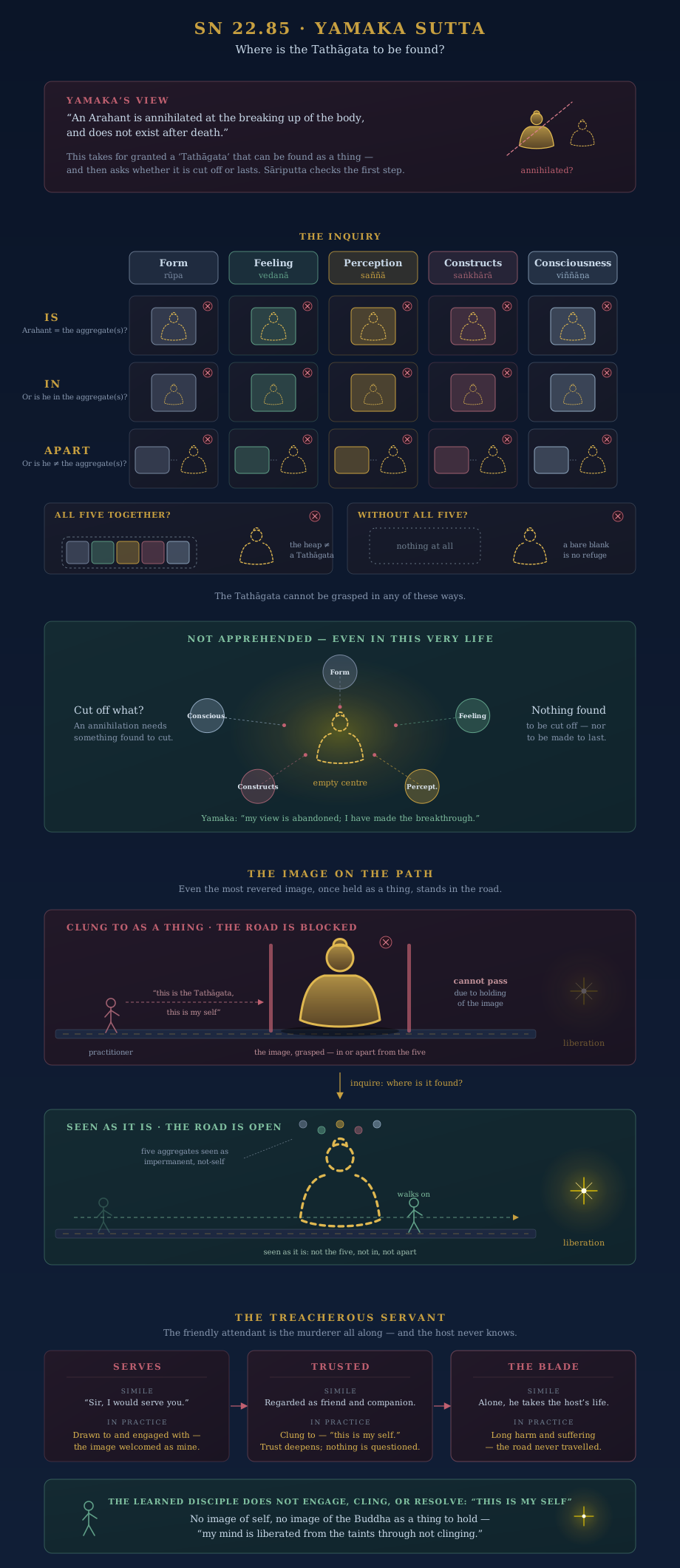
Taṁ kiṁ maññasi, āvuso yamaka, rūpaṁ tathāgatoti samanupassasī”ti?
What do you think, friend Yamaka, do you regard form as the Tathāgata?”
“No hetaṁ, āvuso” …
“No, friend.”
“vedanaṁ tathāgatoti samanupassasī”ti? “No hetaṁ, āvuso” … “saññaṁ … saṅkhāre … viññāṇaṁ tathāgatoti samanupassasī”ti?
“Do you regard feeling as the Tathāgata?” “No, friend.” “Do you regard perception ... intentional constructs ... consciousness as the Tathāgata?”
“No hetaṁ, āvuso”.
“No, friend.”
“Taṁ kiṁ maññasi, āvuso yamaka, rūpasmiṁ tathāgatoti samanupassasī”ti?
“What do you think, friend Yamaka, do you regard the Tathāgata as in form?”
“No hetaṁ, āvuso”.
“No, friend.”
“Aññatra rūpā tathāgatoti samanupassasī”ti?
“Do you regard the Tathāgata as apart from form?”
“No hetaṁ, āvuso”.
“No, friend.”
“Vedanāya … aññatra vedanāya …pe… saññāya … aññatra saññāya … saṅkhāresu … aññatra saṅkhārehi … viññāṇasmiṁ tathāgatoti samanupassasī”ti?
“Do you regard the Tathāgata as in feeling? As apart from feeling? ... As in perception? As apart from perception? As in intentional constructs? As apart from intentional constructs? Do you regard the Tathāgata as in consciousness?”
“No hetaṁ, āvuso”.
“No, friend.”
“Aññatra viññāṇā tathāgatoti samanupassasī”ti?
“Do you regard the Tathāgata as apart from consciousness?”
“No hetaṁ, āvuso”.
“No, friend.”
“Taṁ kiṁ maññasi, āvuso yamaka, rūpaṁ … vedanaṁ … saññaṁ … saṅkhāre … viññāṇaṁ tathāgatoti samanupassasī”ti?
“What do you think, friend Yamaka, do you regard form, feeling, perception, intentional constructs, and consciousness [taken together] as the Tathāgata?”
“No hetaṁ, āvuso”.
“No, friend.”
“Taṁ kiṁ maññasi, āvuso yamaka, ayaṁ so arūpī … avedano … asaññī … asaṅkhāro … aviññāṇo tathāgatoti samanupassasī”ti?
“What do you think, friend Yamaka, do you regard the Tathāgata as one who is without form, without feeling, without perception, without intentional constructs, without consciousness?”
“No hetaṁ, āvuso”.
“No, friend.”
“Ettha ca te, āvuso yamaka, diṭṭheva dhamme saccato thetato tathāgate anupalabbhiyamāne, kallaṁ nu te taṁ veyyākaraṇaṁ: ‘tathāhaṁ bhagavatā dhammaṁ desitaṁ ājānāmi, yathā khīṇāsavo bhikkhu kāyassa bhedā ucchijjati vinassati, na hoti paraṁ maraṇā’”ti?
“But here, friend Yamaka, when a Tathāgata is not to be apprehended by you as real and actual in this very life, is it fitting for you to declare: ‘As I understand the Dhamma taught by the Blessed One, a bhikkhu whose taints are exhausted, with the breaking up of the body, is annihilated and perishes, and does not exist after death’?”
“Ahu kho me taṁ, āvuso sāriputta, pubbe aviddasuno pāpakaṁ diṭṭhigataṁ; idañca panāyasmato sāriputtassa dhammadesanaṁ sutvā tañceva pāpakaṁ diṭṭhigataṁ pahīnaṁ, dhammo ca me abhisamito”ti.
“Friend Sāriputta, formerly, when I was ignorant, I had that pernicious view; but now, having heard this Dhamma teaching of the venerable Sāriputta, that pernicious view has been abandoned by me, and I have made the breakthrough to the Dhamma.”
An Arahant After Death
“Sace taṁ, āvuso yamaka, evaṁ puccheyyuṁ: ‘yo so, āvuso yamaka, bhikkhu arahaṁ khīṇāsavo so kāyassa bhedā paraṁ maraṇā kiṁ hotī’ti? Evaṁ puṭṭho tvaṁ, āvuso yamaka, kinti byākareyyāsī”ti?
“If, friend Yamaka, they were to ask you thus: ‘Friend Yamaka, as to that bhikkhu who is an Arahant, one whose taints are exhausted—with the breaking up of the body, after death, what becomes of him?’ Being asked thus, friend Yamaka, how would you answer?”
“Sace maṁ, āvuso, evaṁ puccheyyuṁ: ‘yo so, āvuso yamaka, bhikkhu arahaṁ khīṇāsavo so kāyassa bhedā paraṁ maraṇā kiṁ hotī’ti? Evaṁ puṭṭhohaṁ, āvuso, evaṁ byākareyyaṁ: ‘rūpaṁ kho, āvuso, aniccaṁ. Yadaniccaṁ taṁ dukkhaṁ; yaṁ dukkhaṁ taṁ niruddhaṁ tadatthaṅgataṁ.
“If, friend, they were to ask me thus: ‘Friend Yamaka, as to that bhikkhu who is an Arahant, one whose taints are exhausted—with the breaking up of the body, after death, what becomes of him?’ Being asked thus, friend, I would answer in this way: ‘Friends, form is impermanent. What is impermanent is unsatisfactory; what is unsatisfactory has ceased and passed away.
Vedanā … saññā … saṅkhārā … viññāṇaṁ aniccaṁ. Yadaniccaṁ taṁ dukkhaṁ; yaṁ dukkhaṁ taṁ niruddhaṁ tadatthaṅgatan’ti. Evaṁ puṭṭhohaṁ, āvuso, evaṁ byākareyyan”ti.
Feeling ... Perception ... Intentional constructs ... Consciousness is impermanent. What is impermanent is unsatisfactory; what is unsatisfactory has ceased and passed away.’ Being asked thus, friend, I would answer in this way.”
Simile of the Treacherous Servant
“Sādhu sādhu, āvuso yamaka. Tena hāvuso yamaka, upamaṁ te karissāmi etasseva atthassa bhiyyoso mattāya ñāṇāya. Seyyathāpi, āvuso yamaka, gahapati vā gahapatiputto vā aḍḍho mahaddhano mahābhogo; so ca ārakkhasampanno. Tassa kocideva puriso uppajjeyya anatthakāmo ahitakāmo ayogakkhemakāmo jīvitā voropetukāmo. Tassa evamassa: ‘ayaṁ kho gahapati vā gahapatiputto vā aḍḍho mahaddhano mahābhogo; so ca ārakkhasampanno; nāyaṁ sukaro pasayha jīvitā voropetuṁ. Yannūnāhaṁ anupakhajja jīvitā voropeyyan’ti. So taṁ gahapatiṁ vā gahapatiputtaṁ vā upasaṅkamitvā evaṁ vadeyya: ‘upaṭṭhaheyyaṁ taṁ, bhante’ti. Tamenaṁ so gahapati vā gahapatiputto vā upaṭṭhāpeyya. So upaṭṭhaheyya pubbuṭṭhāyī pacchānipātī kiṅkārapaṭissāvī manāpacārī piyavādī. Tassa so gahapati vā gahapatiputto vā mittatopi naṁ saddaheyya; suhajjatopi naṁ saddaheyya; tasmiñca vissāsaṁ āpajjeyya. Yadā kho, āvuso, tassa purisassa evamassa: ‘saṁvissattho kho myāyaṁ gahapati vā gahapatiputto vā’ti, atha naṁ rahogataṁ viditvā tiṇhena satthena jīvitā voropeyya.
“Good, good, friend Yamaka! Well then, friend Yamaka, I shall give you a simile for an even greater insight into this very meaning. Suppose, friend Yamaka, there were a householder or a householder’s son—rich, affluent, and wealthy—and he was well-protected. Then a certain man might appear desiring his ruin, desiring his harm, desiring his insecurity, wishing to deprive him of life. It would occur to him: ‘This householder or householder’s son is rich, affluent, and wealthy, and he is well-protected; it is not easy to deprive him of life by force. Suppose I were to ingratiate myself and then deprive him of life.’ So he would approach that householder or householder’s son and say thus: ‘Sir, I would serve you.’ Then that householder or householder’s son would employ him as a servant. He would serve him, rising before him, sleeping after him, willing to do whatever he commands, agreeable in conduct, and speaking pleasantly. That householder or householder’s son would regard him as a friend, would regard him as a companion, and would place trust in him. When, friend, it occurred to that man: ‘This householder or householder’s son has complete trust in me,’ then, knowing him to be alone, he would deprive him of life with a sharp blade.
Taṁ kiṁ maññasi, āvuso yamaka, yadā hi so puriso amuṁ gahapatiṁ vā gahapatiputtaṁ vā upasaṅkamitvā evaṁ āha: ‘upaṭṭhaheyyaṁ taṁ, bhante’ti, tadāpi so vadhakova. Vadhakañca pana santaṁ na aññāsi: ‘vadhako me’ti. Yadāpi so upaṭṭhahati pubbuṭṭhāyī pacchānipātī kiṅkārapaṭissāvī manāpacārī piyavādī, tadāpi so vadhakova. Vadhakañca pana santaṁ na aññāsi: ‘vadhako me’ti. Yadāpi naṁ rahogataṁ viditvā tiṇhena satthena jīvitā voropeti, tadāpi so vadhakova. Vadhakañca pana santaṁ na aññāsi: ‘vadhako me’”ti.
What do you think, friend Yamaka? When that man approached that householder or householder’s son and said thus: ‘Sir, I would serve you,’ even then he was a murderer, yet though he was a murderer, the householder did not know: ‘He is my murderer.’ And when he served him—rising before him, sleeping after him, willing to do whatever he commands, agreeable in conduct, and speaking pleasantly—even then he was a murderer, yet though he was a murderer, the householder did not know: ‘He is my murderer.’ And when, knowing him to be alone, he deprived him of life with a sharp blade, even then he was a murderer, yet though he was a murderer, the householder did not know: ‘He is my murderer’?”
“Evamāvuso”ti.
“Yes, friend.”
The Uninstructed Person
“Evameva kho, āvuso, assutavā puthujjano ariyānaṁ adassāvī ariyadhammassa akovido ariyadhamme avinīto, sappurisānaṁ adassāvī sappurisadhammassa akovido sappurisadhamme avinīto rūpaṁ attato samanupassati, rūpavantaṁ vā attānaṁ; attani vā rūpaṁ, rūpasmiṁ vā attānaṁ. Vedanaṁ … saññaṁ … saṅkhāre … viññāṇaṁ attato samanupassati, viññāṇavantaṁ vā attānaṁ; attani vā viññāṇaṁ, viññāṇasmiṁ vā attānaṁ.
“In the same way, friend, an uninstructed ordinary person, who has no regard for the Noble Ones and is unskilled and untrained in the Dhamma of the Noble Ones, who has no regard for persons of integrity and is unskilled and untrained in the Dhamma of persons of integrity, perceives form as self, or self as possessing form, or form as being in self, or self as being in form. He perceives feeling ․․․ perception ․․․ intentional constructs ․․․ consciousness as self, or self as possessing consciousness, or consciousness as being in self, or self as being in consciousness.
So aniccaṁ rūpaṁ ‘aniccaṁ rūpan’ti yathābhūtaṁ nappajānāti. Aniccaṁ vedanaṁ ‘aniccā vedanā’ti yathābhūtaṁ nappajānāti. Aniccaṁ saññaṁ ‘aniccā saññā’ti yathābhūtaṁ nappajānāti. Anicce saṅkhāre ‘aniccā saṅkhārā’ti yathābhūtaṁ nappajānāti. Aniccaṁ viññāṇaṁ ‘aniccaṁ viññāṇan’ti yathābhūtaṁ nappajānāti.
He does not know clearly impermanent form as it truly is: ‘Form is impermanent.’ He does not know clearly impermanent feeling as it truly is: ‘Feeling is impermanent.’ He does not know clearly impermanent perception as it truly is: ‘Perception is impermanent.’ He does not know clearly impermanent intentional constructs as they truly are: ‘Intentional constructs are impermanent.’ He does not know clearly impermanent consciousness as it truly is: ‘Consciousness is impermanent.’
Dukkhaṁ rūpaṁ ‘dukkhaṁ rūpan’ti yathābhūtaṁ nappajānāti. Dukkhaṁ vedanaṁ … dukkhaṁ saññaṁ … dukkhe saṅkhāre … dukkhaṁ viññāṇaṁ ‘dukkhaṁ viññāṇan’ti yathābhūtaṁ nappajānāti.
He does not know clearly unsatisfactory form as it truly is: ‘Form is unsatisfactory.’ He does not know clearly unsatisfactory feeling ․․․ unsatisfactory perception ․․․ unsatisfactory intentional constructs ․․․ unsatisfactory consciousness as it truly is: ‘Consciousness is unsatisfactory.’
Anattaṁ rūpaṁ ‘anattā rūpan’ti yathābhūtaṁ nappajānāti. Anattaṁ vedanaṁ … anattaṁ saññaṁ … anatte saṅkhāre … anattaṁ viññāṇaṁ ‘anattaṁ viññāṇan’ti yathābhūtaṁ nappajānāti.
He does not know clearly the impersonal [nature of] form as it truly is: ‘Form is not-self.’ He does not know clearly the impersonal [nature of] feeling ․․․ the impersonal [nature of] perception ․․․ the impersonal [nature of] intentional constructs ․․․ the impersonal [nature of] consciousness as it truly is: ‘Consciousness is not-self.’
Saṅkhataṁ rūpaṁ ‘saṅkhataṁ rūpan’ti yathābhūtaṁ nappajānāti. Saṅkhataṁ vedanaṁ … saṅkhataṁ saññaṁ … saṅkhate saṅkhāre … saṅkhataṁ viññāṇaṁ ‘saṅkhataṁ viññāṇan’ti yathābhūtaṁ nappajānāti.
He does not know clearly the constructed [nature of] form as it truly is: ‘Form is constructed.’ He does not know clearly the constructed [nature of] feeling ․․․ the constructed [nature of] perception ․․․ the constructed [nature of] intentional constructs ․․․ the constructed [nature of] consciousness as it truly is: ‘Consciousness is constructed.’
Vadhakaṁ rūpaṁ ‘vadhakaṁ rūpan’ti yathābhūtaṁ nappajānāti. Vadhakaṁ vedanaṁ ‘vadhakā vedanā’ti … vadhakaṁ saññaṁ ‘vadhakā saññā’ti … vadhake saṅkhāre ‘vadhakā saṅkhārā’ti yathābhūtaṁ nappajānāti. Vadhakaṁ viññāṇaṁ ‘vadhakaṁ viññāṇan’ti yathābhūtaṁ nappajānāti.
He does not know clearly murderous form as it truly is: ‘Form is a murderer.’ He does not know clearly murderous feeling: ‘Feeling is a murderer’ ... murderous perception: ‘Perception is a murderer’ ... murderous intentional constructs as they truly are: ‘Intentional constructs are murderers.’ He does not know clearly murderous consciousness as it truly is: ‘Consciousness is a murderer.’
So rūpaṁ upeti upādiyati adhiṭṭhāti ‘attā me’ti. Vedanaṁ … saññaṁ … saṅkhāre … viññāṇaṁ upeti upādiyati adhiṭṭhāti ‘attā me’ti. Tassime pañcupādānakkhandhā upetā upādinnā dīgharattaṁ ahitāya dukkhāya saṁvattanti.
He engages with form, clings to it, and resolves upon it: ‘This is my self.’ He engages with feeling ... perception ... intentional constructs ... consciousness, clings to it, and resolves upon it: ‘This is my self.’ These five aggregates subject to clinging, when engaged with and clung to, lead to his harm and suffering for a long time.
The Learned Disciple of the Noble Ones
Sutavā ca kho, āvuso, ariyasāvako ariyānaṁ dassāvī …pe… sappurisadhamme suvinīto na rūpaṁ attato samanupassati, na rūpavantaṁ attānaṁ; na attani rūpaṁ, na rūpasmiṁ attānaṁ. Na vedanaṁ … na saññaṁ … na saṅkhāre … na viññāṇaṁ attato samanupassati, na viññāṇavantaṁ attānaṁ; na attani viññāṇaṁ, na viññāṇasmiṁ attānaṁ.
But a learned disciple of the Noble Ones, friend, who has regard for the Noble Ones ․․․ and well-trained in the Dhamma of persons of integrity, does not perceive form as self, nor self as possessing form, nor form as being in self, nor self as being in form. He does not perceive feeling ... does not perceive perception ... does not perceive intentional constructs ... does not perceive consciousness as self, nor self as possessing consciousness, nor consciousness as being in self, nor self as being in consciousness.
So aniccaṁ rūpaṁ ‘aniccaṁ rūpan’ti yathābhūtaṁ pajānāti. Aniccaṁ vedanaṁ … aniccaṁ saññaṁ … anicce saṅkhāre … aniccaṁ viññāṇaṁ ‘aniccaṁ viññāṇan’ti yathābhūtaṁ pajānāti.
He knows clearly impermanent form as it truly is: ‘Form is impermanent.’ ․․․ impermanent feeling ․․․ impermanent perception ․․․ impermanent intentional constructs ․․․ impermanent consciousness as it truly is: ‘Consciousness is impermanent.’
Dukkhaṁ rūpaṁ ‘dukkhaṁ rūpan’ti yathābhūtaṁ pajānāti. Dukkhaṁ vedanaṁ … dukkhaṁ saññaṁ … dukkhe saṅkhāre … dukkhaṁ viññāṇaṁ ‘dukkhaṁ viññāṇan’ti yathābhūtaṁ pajānāti.
He knows clearly unsatisfactory form as it truly is: ‘Form is unsatisfactory.’ ․․․ unsatisfactory feeling ․․․ unsatisfactory perception ․․․ unsatisfactory intentional constructs ․․․ unsatisfactory consciousness as it truly is: ‘Consciousness is unsatisfactory.’
Anattaṁ rūpaṁ ‘anattā rūpan’ti yathābhūtaṁ pajānāti. Anattaṁ vedanaṁ … anattaṁ saññaṁ … anatte saṅkhāre … anattaṁ viññāṇaṁ ‘anattā viññāṇan’ti yathābhūtaṁ pajānāti.
He knows clearly the impersonal [nature of] form as it truly is: ‘Form is not-self.’ ․․․ the impersonal [nature of] feeling ․․․ the impersonal [nature of] perception ․․․ the impersonal [nature of] intentional constructs ․․․ the impersonal [nature of] consciousness as it truly is: ‘Consciousness is not-self.’
Saṅkhataṁ rūpaṁ ‘saṅkhataṁ rūpan’ti yathābhūtaṁ pajānāti. Saṅkhataṁ vedanaṁ … saṅkhataṁ saññaṁ … saṅkhate saṅkhāre … saṅkhataṁ viññāṇaṁ ‘saṅkhataṁ viññāṇan’ti yathābhūtaṁ pajānāti.
He knows clearly the constructed [nature of] form as it truly is: ‘Form is constructed.’ ․․․ the constructed [nature of] feeling ․․․ the constructed [nature of] perception ․․․ the constructed [nature of] intentional constructs ․․․ the constructed [nature of] consciousness as it truly is: ‘Consciousness is constructed.’
Vadhakaṁ rūpaṁ ‘vadhakaṁ rūpan’ti yathābhūtaṁ pajānāti. Vadhakaṁ vedanaṁ … vadhakaṁ saññaṁ … vadhake saṅkhāre ‘vadhakā saṅkhārā’ti yathābhūtaṁ pajānāti. Vadhakaṁ viññāṇaṁ ‘vadhakaṁ viññāṇan’ti yathābhūtaṁ pajānāti.
He knows clearly murderous form as it truly is: ‘Form is a murderer.’ ․․․ murderous feeling ․․․ murderous perception ․․․ murderous intentional constructs as they truly are: ‘Intentional constructs are murderers.’ He knows clearly murderous consciousness as it truly is: ‘Consciousness is a murderer.’
So rūpaṁ na upeti, na upādiyati, nādhiṭṭhāti: ‘attā me’ti. Vedanaṁ … saññaṁ … saṅkhāre … viññāṇaṁ na upeti, na upādiyati, nādhiṭṭhāti: ‘attā me’ti. Tassime pañcupādānakkhandhā anupetā anupādinnā dīgharattaṁ hitāya sukhāya saṁvattantī”ti.
He does not engage with form, does not cling to it, and does not resolve upon it: ‘This is my self.’ He does not engage with feeling ... perception ... intentional constructs ... consciousness, does not cling to it, and does not resolve upon it: ‘This is my self.’ These five aggregates subject to clinging, when not engaged with and not clung to, lead to his welfare and happiness for a long time.”
“Evametaṁ, āvuso sāriputta, hoti yesaṁ āyasmantānaṁ tādisā sabrahmacārino anukampakā atthakāmā ovādakā anusāsakā. Idañca pana me āyasmato sāriputtassa dhammadesanaṁ sutvā anupādāya āsavehi cittaṁ vimuttan”ti.
“This is how it is, friend Sāriputta, for those venerable ones who have such compassionate spiritual companions desiring their welfare, who advise and instruct them. And now, having heard this Dhamma teaching of the venerable Sāriputta, my mind is liberated from the taints through not clinging.”