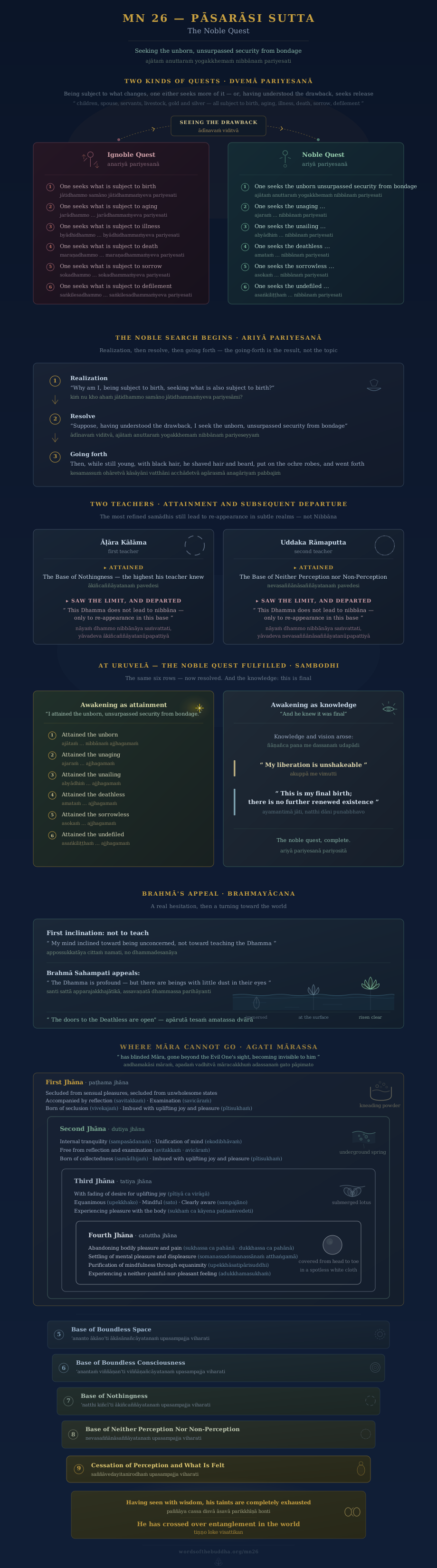
Evaṁ me sutaṁ— ekaṁ samayaṁ bhagavā sāvatthiyaṁ viharati jetavane anāthapiṇḍikassa ārāme.
Thus have I heard—At one time, the Blessed One was dwelling at Sāvatthi, in Jeta’s Grove, Anāthapiṇḍika’s Park.
Atha kho bhagavā pubbaṇhasamayaṁ nivāsetvā pattacīvaramādāya sāvatthiṁ piṇḍāya pāvisi. Atha kho sambahulā bhikkhū yenāyasmā ānando tenupasaṅkamiṁsu; upasaṅkamitvā āyasmantaṁ ānandaṁ etadavocuṁ: “cirassutā no, āvuso ānanda, bhagavato sammukhā dhammī kathā. Sādhu mayaṁ, āvuso ānanda, labheyyāma bhagavato sammukhā dhammiṁ kathaṁ savanāyā”ti.
Then, the Blessed One, having dressed early in the morning, took his alms bowl and outer robe and entered Sāvatthi for alms. At that time, several bhikkhus approached the venerable Ānanda, and having approached, they said to him, “Friend Ānanda, it has been a long time since we have heard a talk on the |Dhamma::teachings of the Buddha that point to the nature of reality, the ultimate truth [dhamma]| in the Blessed One’s presence. It would be good, friend Ānanda, if we might hear a talk on the Dhamma in the presence of the Blessed One.”
“Tena hāyasmanto yena rammakassa brāhmaṇassa assamo tenupasaṅkamatha; appeva nāma labheyyātha bhagavato sammukhā dhammiṁ kathaṁ savanāyā”ti.
“Therefore, venerable Ones, go to the hermitage of the brahmin Rammaka. Perhaps there you may have the chance to hear a talk on the Dhamma in the Blessed One’s presence.”
“Evamāvuso”ti kho te bhikkhū āyasmato ānandassa paccassosuṁ.
“Yes, friend,” the bhikkhus replied to the venerable Ānanda.
Atha kho bhagavā sāvatthiyaṁ piṇḍāya caritvā pacchābhattaṁ piṇḍapātapaṭikkanto āyasmantaṁ ānandaṁ āmantesi: “āyāmānanda, yena pubbārāmo migāramātupāsādo tenupasaṅkamissāma divāvihārāyā”ti.
Then, after walking for alms and having returned from alms round in Sāvatthi, the Blessed One, having had his meal, addressed the venerable Ānanda: “Come, Ānanda, let us go to the Eastern Park, to Migāramātā’s mansion, |for the day’s abiding::meditation place for the day [divāvihāra]|.”
“Evaṁ, bhante”ti kho āyasmā ānando bhagavato paccassosi. Atha kho bhagavā āyasmatā ānandena saddhiṁ yena pubbārāmo migāramātupāsādo tenupasaṅkami divāvihārāya. Atha kho bhagavā sāyanhasamayaṁ paṭisallānā vuṭṭhito āyasmantaṁ ānandaṁ āmantesi: “āyāmānanda, yena pubbakoṭṭhako tenupasaṅkamissāma gattāni parisiñcitun”ti.
“Yes, venerable sir,” the venerable Ānanda replied to the Blessed One. Then, together with the venerable Ānanda, the Blessed One went to the Eastern Park, to the Migāramātā’s mansion, for the day’s abiding. Then, when it was late afternoon, the Blessed One emerged from |seclusion::solitude [paṭisallāna]| and addressed the venerable Ānanda: “Come, Ānanda, let us go to the |Pubbakoṭṭhaka::name of a bathing place outside Sāvatthi, lit. east wall [pubbakoṭṭhaka]| to wash our bodies.”
“Evaṁ, bhante”ti kho āyasmā ānando bhagavato paccassosi.
“Yes, venerable sir,” the venerable Ānanda replied to the Blessed One.
Atha kho bhagavā āyasmatā ānandena saddhiṁ yena pubbakoṭṭhako tenupasaṅkami gattāni parisiñcituṁ. Pubbakoṭṭhake gattāni parisiñcitvā paccuttaritvā ekacīvaro aṭṭhāsi gattāni pubbāpayamāno. Atha kho āyasmā ānando bhagavantaṁ etadavoca: “ayaṁ, bhante, rammakassa brāhmaṇassa assamo avidūre. Ramaṇīyo, bhante, rammakassa brāhmaṇassa assamo; pāsādiko, bhante, rammakassa brāhmaṇassa assamo. Sādhu, bhante, bhagavā yena rammakassa brāhmaṇassa assamo tenupasaṅkamatu anukampaṁ upādāyā”ti. Adhivāsesi bhagavā tuṇhībhāvena.
Then the Blessed One, together with the venerable Ānanda, went to Pubbakoṭṭhaka to wash their bodies. After washing his body at the bathing place, the Blessed One emerged and, wearing only his lower robe, stood drying his body. Then the venerable Ānanda said to the Blessed One, “Venerable sir, the hermitage of the brahmin Rammaka is nearby. Venerable sir, the hermitage of the brahmin Rammaka is pleasing and delightful. It would be good, venerable sir, if the Blessed One went to the hermitage of the brahmin Rammaka out of |compassion::benevolence, concern, gentle regard [anukampa]|.” The Blessed One consented in silence.
Atha kho bhagavā yena rammakassa brāhmaṇassa assamo tenupasaṅkami. Tena kho pana samayena sambahulā bhikkhū rammakassa brāhmaṇassa assame dhammiyā kathāya sannisinnā honti. Atha kho bhagavā bahidvārakoṭṭhake aṭṭhāsi kathāpariyosānaṁ āgamayamāno. Atha kho bhagavā kathāpariyosānaṁ viditvā ukkāsitvā aggaḷaṁ ākoṭesi. Vivariṁsu kho te bhikkhū bhagavato dvāraṁ. Atha kho bhagavā rammakassa brāhmaṇassa assamaṁ pavisitvā paññatte āsane nisīdi. Nisajja kho bhagavā bhikkhū āmantesi: “kāya nuttha, bhikkhave, etarahi kathāya sannisinnā? Kā ca pana vo antarākathā vippakatā”ti?
Then the Blessed One went to the hermitage of the brahmin Rammaka. At that time, several bhikkhus were seated at the hermitage of the brahmin Rammaka, engaged in a Dhamma discussion. The Blessed One stood at the outer entrance, waiting for their conversation to conclude. When he understood that their conversation had ended, he cleared his throat and knocked on the latch. The bhikkhus opened the door for the Blessed One. Then the Blessed One entered the hermitage of the brahmin Rammaka, sat down on the prepared seat, and addressed the bhikkhus: “Bhikkhus, what conversation were you just now sitting together engaged in? And what was the subject of your discussion that was interrupted?”
“Bhagavantameva kho no, bhante, ārabbha dhammī kathā vippakatā, atha bhagavā anuppatto”ti.
“Venerable sir, our discussion on the Dhamma that was interrupted was about the Blessed One himself, and then the Blessed One arrived.”
“Sādhu, bhikkhave. Etaṁ kho, bhikkhave, tumhākaṁ patirūpaṁ kulaputtānaṁ saddhā agārasmā anagāriyaṁ pabbajitānaṁ yaṁ tumhe dhammiyā kathāya sannisīdeyyātha. Sannipatitānaṁ vo, bhikkhave, dvayaṁ karaṇīyaṁ— dhammī vā kathā, ariyo vā tuṇhībhāvo.
“Good, bhikkhus. It is appropriate for you, sons of good families who have gone forth from the household life into homelessness with faith, that you should gather for a Dhamma discussion. When you gather together, bhikkhus, two things are proper: either a Dhamma discussion or noble silence.
Dvemā, bhikkhave, pariyesanā— ariyā ca pariyesanā, anariyā ca pariyesanā.
Bhikkhus, there are two kinds of |quests::searching, seeking, inquiring, pursuit [pariyesanā]| — the noble quest and the ignoble quest.
The Ignoble Quest
Katamā ca, bhikkhave, anariyā pariyesanā? Idha, bhikkhave, ekacco attanā jātidhammo samāno jātidhammaṁyeva pariyesati, attanā jarādhammo samāno jarādhammaṁyeva pariyesati, attanā byādhidhammo samāno byādhidhammaṁyeva pariyesati, attanā maraṇadhammo samāno maraṇadhammaṁyeva pariyesati, attanā sokadhammo samāno sokadhammaṁyeva pariyesati, attanā saṅkilesadhammo samāno saṅkilesadhammaṁyeva pariyesati.
And what, bhikkhus is the ignoble quest? Here, bhikkhus, someone who is themselves subject to birth seeks what is also subject to birth; someone who is themselves subject to aging seeks what is also subject to aging; someone who is themselves subject to |illness::disease, sickness [byādhi]| seeks what is also subject to illness; someone who is themselves subject to death seeks what is also subject to death; someone who is themselves subject to sorrow seeks what is also subject to sorrow; someone who is themselves subject to |defilement::corruption, impurity [saṅkilesa]| seeks what is also subject to defilement.
Kiñca, bhikkhave, jātidhammaṁ vadetha? Puttabhariyaṁ, bhikkhave, jātidhammaṁ, dāsidāsaṁ jātidhammaṁ, ajeḷakaṁ jātidhammaṁ, kukkuṭasūkaraṁ jātidhammaṁ, hatthigavāssavaḷavaṁ jātidhammaṁ, jātarūparajataṁ jātidhammaṁ. Jātidhammā hete, bhikkhave, upadhayo. Etthāyaṁ gathito mucchito ajjhāpanno attanā jātidhammo samāno jātidhammaṁyeva pariyesati.
And what, bhikkhus, do you call subject to birth? Children and spouses, bhikkhus, are subject to birth; male and female servants are subject to birth; goats and sheep are subject to birth; chickens and pigs are subject to birth; elephants, cows, horses, and mares are subject to birth; |gold and silver are subject to birth::Wealth and possessions arise through production and external conditions, making them dependent and inherently impermanent from their origin [jātarūparajata + jātidhamma]|. These |acquisitions::attachment, taking as mine, appropriation, sense of ownership, identification [upadhi]|, bhikkhus, are subject to birth. Caught up, |infatuated with::greedy for, fixated on [mucchita]|, and committed to these, someone who is themselves subject to birth seeks what is also subject to birth.
Kiñca, bhikkhave, jarādhammaṁ vadetha? Puttabhariyaṁ, bhikkhave, jarādhammaṁ, dāsidāsaṁ jarādhammaṁ, ajeḷakaṁ jarādhammaṁ, kukkuṭasūkaraṁ jarādhammaṁ, hatthigavāssavaḷavaṁ jarādhammaṁ, jātarūparajataṁ jarādhammaṁ. Jarādhammā hete, bhikkhave, upadhayo. Etthāyaṁ gathito mucchito ajjhāpanno attanā jarādhammo samāno jarādhammaṁyeva pariyesati.
And what, bhikkhus, do you call subject to aging? Children and spouses, bhikkhus, are subject to aging; male and female servants are subject to aging; goats and sheep are subject to aging; chickens and pigs are subject to aging; elephants, cows, horses, and mares are subject to aging; |gold and silver are subject to aging::Over time, possessions wear out, depreciate, or become obsolete, showing that they require constant upkeep to retain value [jātarūparajata + jarādhamma]|. These acquisitions, bhikkhus, are subject to aging. Caught up, infatuated with, and committed to these, someone who is themselves subject to aging seeks what is also subject to aging.
Kiñca, bhikkhave, byādhidhammaṁ vadetha? Puttabhariyaṁ, bhikkhave, byādhidhammaṁ, dāsidāsaṁ byādhidhammaṁ, ajeḷakaṁ byādhidhammaṁ, kukkuṭasūkaraṁ byādhidhammaṁ, hatthigavāssavaḷavaṁ byādhidhammaṁ. Byādhidhammā hete, bhikkhave, upadhayo. Etthāyaṁ gathito mucchito ajjhāpanno attanā byādhidhammo samāno byādhidhammaṁyeva pariyesati.
And what, bhikkhus, do you call subject to illness? Children and spouses, bhikkhus, are subject to illness; male and female servants are subject to illness; goats and sheep are subject to illness; chickens and pigs are subject to illness; elephants, cows, horses, and mares are subject to illness; |gold and silver are subject to illness::Wealth is vulnerable to damage, devaluation, or decay, reflecting its susceptibility to various forms of deterioration [jātarūparajata + byādhidhamma]|. These acquisitions, bhikkhus, are subject to illness. Caught up, infatuated with, and committed to these, someone who is themselves subject to illness seeks what is also subject to illness.
Kiñca, bhikkhave, maraṇadhammaṁ vadetha? Puttabhariyaṁ, bhikkhave, maraṇadhammaṁ, dāsidāsaṁ maraṇadhammaṁ, ajeḷakaṁ maraṇadhammaṁ, kukkuṭasūkaraṁ maraṇadhammaṁ, hatthigavāssavaḷavaṁ maraṇadhammaṁ. Maraṇadhammā hete, bhikkhave, upadhayo. Etthāyaṁ gathito mucchito ajjhāpanno attanā maraṇadhammo samāno maraṇadhammaṁyeva pariyesati.
And what, bhikkhus, do you call subject to death? Children and spouses, bhikkhus, are subject to death; male and female servants are subject to death; goats and sheep are subject to death; chickens and pigs are subject to death; elephants, cows, horses, and mares are subject to death; |gold and silver are subject to death::Possessions can be lost, destroyed, or rendered worthless, showing that no material item is secure or lasting [jātarūparajata + maraṇadhamma]|. These acquisitions, bhikkhus, are subject to death. Caught up, infatuated with, and committed to these, someone who is themselves subject to death seeks what is also subject to death.
Kiñca, bhikkhave, sokadhammaṁ vadetha? Puttabhariyaṁ, bhikkhave, sokadhammaṁ, dāsidāsaṁ sokadhammaṁ, ajeḷakaṁ sokadhammaṁ, kukkuṭasūkaraṁ sokadhammaṁ, hatthigavāssavaḷavaṁ sokadhammaṁ. Sokadhammā hete, bhikkhave, upadhayo. Etthāyaṁ gathito mucchito ajjhāpanno attanā sokadhammo samāno sokadhammaṁyeva pariyesati.
And what, bhikkhus, do you call subject to sorrow? Children and spouses, bhikkhus, are subject to sorrow; male and female servants are subject to sorrow; goats and sheep are subject to sorrow; chickens and pigs are subject to sorrow; elephants, cows, horses, and mares are subject to sorrow; |gold and silver are subject to sorrow::Attachment to wealth breeds anxiety and grief, as possessions cannot provide lasting satisfaction or security [[jātarūparajata + sokadhamma]|. These acquisitions, bhikkhus, are subject to sorrow. Caught up, infatuated with, and committed to these, someone who is themselves subject to sorrow seeks what is also subject to sorrow.
Kiñca, bhikkhave, saṅkilesadhammaṁ vadetha? Puttabhariyaṁ, bhikkhave, saṅkilesadhammaṁ, dāsidāsaṁ saṅkilesadhammaṁ, ajeḷakaṁ saṅkilesadhammaṁ, kukkuṭasūkaraṁ saṅkilesadhammaṁ, hatthigavāssavaḷavaṁ saṅkilesadhammaṁ, jātarūparajataṁ saṅkilesadhammaṁ. Saṅkilesadhammā hete, bhikkhave, upadhayo. Etthāyaṁ gathito mucchito ajjhāpanno attanā saṅkilesadhammo samāno saṅkilesadhammaṁyeva pariyesati. Ayaṁ, bhikkhave, anariyā pariyesanā.
And what, bhikkhus, do you call subject to defilement? Children and spouses, bhikkhus, are subject to defilement; male and female servants are subject to defilement; goats and sheep are subject to defilement; chickens and pigs are subject to defilement; elephants, cattle, horses, and mares are subject to defilement; |gold and silver are subject to defilement::Pursuit of wealth and possessions can incite greed, attachment, and ego, leading to moral compromise and obstructing mental clarity and contentment [jātarūparajata + saṅkilesadhamma]|. These acquisitions, bhikkhus, are subject to defilement. Caught up, infatuated with, and committed to these, someone who is themselves subject to defilement seeks what is also subject to defilement.
The Noble Quest
Katamā ca, bhikkhave, ariyā pariyesanā? Idha, bhikkhave, ekacco attanā jātidhammo samāno jātidhamme ādīnavaṁ viditvā ajātaṁ anuttaraṁ yogakkhemaṁ nibbānaṁ pariyesati, attanā jarādhammo samāno jarādhamme ādīnavaṁ viditvā ajaraṁ anuttaraṁ yogakkhemaṁ nibbānaṁ pariyesati, attanā byādhidhammo samāno byādhidhamme ādīnavaṁ viditvā abyādhiṁ anuttaraṁ yogakkhemaṁ nibbānaṁ pariyesati, attanā maraṇadhammo samāno maraṇadhamme ādīnavaṁ viditvā amataṁ anuttaraṁ yogakkhemaṁ nibbānaṁ pariyesati, attanā sokadhammo samāno sokadhamme ādīnavaṁ viditvā asokaṁ anuttaraṁ yogakkhemaṁ nibbānaṁ pariyesati, attanā saṅkilesadhammo samāno saṅkilesadhamme ādīnavaṁ viditvā asaṅkiliṭṭhaṁ anuttaraṁ yogakkhemaṁ nibbānaṁ pariyesati. Ayaṁ, bhikkhave, ariyā pariyesanā.
And what, bhikkhus, is the noble quest? Here, bhikkhus, someone who is themselves subject to birth, having understood the drawback in what is subject to birth, seeks the |unborn::uncreated, unproduced [ajātam]| unsurpassed security from bondage, |Nibbāna::complete cooling, letting go of everything, deathless, freedom from calamity, the non-disintegrating; lit. blowing away [nibbāna]|; someone who is themselves subject to aging, having understood the drawback in what is subject to aging, seeks the unaging unsurpassed security from bondage, Nibbāna; someone who is themselves subject to illness, having understood the drawback in what is subject to illness, seeks the unailing unsurpassed security from bondage, Nibbāna; someone who is themselves subject to death, having understood the drawback in what is subject to death, seeks the deathless unsurpassed security from bondage, Nibbāna; someone who is themselves subject to sorrow, having understood the drawback in what is subject to sorrow, seeks the sorrowless unsurpassed security from bondage, Nibbāna; someone who is themselves subject to defilement, having understood the drawback in what is subject to defilement, seeks the undefiled unsurpassed security from bondage, Nibbāna.
Ahampi sudaṁ, bhikkhave, pubbeva sambodhā anabhisambuddho bodhisattova samāno attanā jātidhammo samāno jātidhammaṁyeva pariyesāmi, attanā jarādhammo samāno jarādhammaṁyeva pariyesāmi, attanā byādhidhammo samāno byādhidhammaṁyeva pariyesāmi, attanā maraṇadhammo samāno maraṇadhammaṁyeva pariyesāmi, attanā sokadhammo samāno sokadhammaṁyeva pariyesāmi, attanā saṅkilesadhammo samāno saṅkilesadhammaṁyeva pariyesāmi. Tassa mayhaṁ, bhikkhave, etadahosi: ‘kiṁ nu kho ahaṁ attanā jātidhammo samāno jātidhammaṁyeva pariyesāmi, attanā jarādhammo samāno …pe… byādhidhammo samāno … maraṇadhammo samāno … sokadhammo samāno … attanā saṅkilesadhammo samāno saṅkilesadhammaṁyeva pariyesāmi?
Bhikkhus, I too, before my |full awakening::perfect understanding, enlightenment [sambodha]|, while still a |Bodhisatta::Buddha before his awakening, aspirant Buddha [bodhisatta]|, being myself subject to birth, sought what was also subject to birth; being myself subject to aging, sought what was also subject to aging; being myself subject to illness, sought what was also subject to illness; being myself subject to death, sought what was also subject to death; being myself subject to sorrow, sought what was also subject to sorrow; being myself subject to defilement, sought what was also subject to defilement. Then, bhikkhus, it occurred to me: ‘Why am I, being myself subject to birth, seeking what is also subject to birth? Why am I, being myself subject to aging, seeking what is also subject to aging? Why am I, being myself subject to illness, seeking what is also subject to illness? Why am I, being myself subject to death, seeking what is also subject to death? Why am I, being myself subject to sorrow, seeking what is also subject to sorrow? Why am I, being myself subject to defilement, seeking what is also subject to defilement?
Yannūnāhaṁ attanā jātidhammo samāno jātidhamme ādīnavaṁ viditvā ajātaṁ anuttaraṁ yogakkhemaṁ nibbānaṁ pariyeseyyaṁ, attanā jarādhammo samāno jarādhamme ādīnavaṁ viditvā ajaraṁ anuttaraṁ yogakkhemaṁ nibbānaṁ pariyeseyyaṁ, attanā byādhidhammo samāno byādhidhamme ādīnavaṁ viditvā abyādhiṁ anuttaraṁ yogakkhemaṁ nibbānaṁ pariyeseyyaṁ, attanā maraṇadhammo samāno maraṇadhamme ādīnavaṁ viditvā amataṁ anuttaraṁ yogakkhemaṁ nibbānaṁ pariyeseyyaṁ, attanā sokadhammo samāno sokadhamme ādīnavaṁ viditvā asokaṁ anuttaraṁ yogakkhemaṁ nibbānaṁ pariyeseyyaṁ, attanā saṅkilesadhammo samāno saṅkilesadhamme ādīnavaṁ viditvā asaṅkiliṭṭhaṁ anuttaraṁ yogakkhemaṁ nibbānaṁ pariyeseyyan’ti.
Suppose, being myself subject to birth, having understood the |drawback::disadvantage, unsatisfactoriness, inadequacy, danger [ādīnava]| in what is subject to birth, I seek the unborn unsurpassed security from bondage, Nibbāna; being myself subject to aging, having understood the drawback in what is subject to aging, I seek the unaging unsurpassed security from bondage, Nibbāna; being myself subject to illness, having understood the drawback in what is subject to illness, I seek the unailing unsurpassed security from bondage, Nibbāna; being myself subject to death, having understood the drawback in what is subject to death, I seek the deathless unsurpassed security from bondage, Nibbāna; being myself subject to sorrow, having understood the drawback in what is subject to sorrow, I seek the sorrowless unsurpassed security from bondage, Nibbāna; being myself subject to defilement, having understood the drawback in what is subject to defilement, I seek the undefiled unsurpassed security from bondage, Nibbāna.’
So kho ahaṁ, bhikkhave, aparena samayena daharova samāno susukāḷakeso, bhadrena yobbanena samannāgato paṭhamena vayasā akāmakānaṁ mātāpitūnaṁ assumukhānaṁ rudantānaṁ kesamassuṁ ohāretvā kāsāyāni vatthāni acchādetvā agārasmā anagāriyaṁ pabbajiṁ.
Bhikkhus, then, at a later time, while I was still young, with black hair, endowed with the blessing of youth and in the prime of life, although my mother and father wished otherwise and wept with tearful faces, I shaved off my hair and beard, put on the ochre robes, and went forth from the household life into |homelessness::lit. no home state [anagāriya]|.
Base Of Nothingness
So evaṁ pabbajito samāno kiṅkusalagavesī anuttaraṁ santivarapadaṁ pariyesamāno yena āḷāro kālāmo tenupasaṅkamiṁ. upasaṅkamitvā āḷāraṁ kālāmaṁ etadavocaṁ: ‘icchāmahaṁ, āvuso kālāma, imasmiṁ dhammavinaye brahmacariyaṁ caritun’ti.
Thus, having gone forth, in search of what is |wholesome::healthy, beneficial, useful [kusala]|, seeking the unsurpassed state of sublime peace, I approached |Āḷāra Kālāma::name of the Buddha’s first teacher; Āḷāra Kālāma; lit. curved [āḷāro + kālāmo]|. Having approached him, I said to Āḷāra Kālāma, ‘Friend Kālāma, I wish to lead the |spiritual life::a life of celibacy, contemplation, and ethical discipline lived for the sake of liberation; oriented toward inner development rather than sensual pleasures [brahmacariya]| in this teaching and training.’
Evaṁ vutte, bhikkhave, āḷāro kālāmo maṁ etadavoca: ‘viharatāyasmā; tādiso ayaṁ dhammo yattha viññū puriso nacirasseva sakaṁ ācariyakaṁ sayaṁ abhiññā sacchikatvā upasampajja vihareyyā’ti.
When this was said, bhikkhus, Āḷāra Kālāma said to me, ‘The venerable one may stay here. This teaching is such that a wise person can soon enter upon and abide in it, realizing for themselves through direct knowledge their own teacher’s doctrine.’
So kho ahaṁ, bhikkhave, nacirasseva khippameva taṁ dhammaṁ pariyāpuṇiṁ. So kho ahaṁ, bhikkhave, tāvatakeneva oṭṭhapahatamattena lapitalāpanamattena ñāṇavādañca vadāmi theravādañca, ‘jānāmi passāmī’ti ca paṭijānāmi ahañceva aññe ca.
Bhikkhus, before long, I quickly learned that teaching. And in so doing, merely by repetition, recitation, and verbal expression, I claimed both knowledge and seniority, saying ‘I know, I see,’ along with others who claimed the same.
Tassa mayhaṁ, bhikkhave, etadahosi: ‘na kho āḷāro kālāmo imaṁ dhammaṁ kevalaṁ saddhāmattakena sayaṁ abhiññā sacchikatvā upasampajja viharāmīti pavedeti; addhā āḷāro kālāmo imaṁ dhammaṁ jānaṁ passaṁ viharatī’ti.
Then it occurred to me: ‘Āḷāra Kālāma does not proclaim that he abides in this teaching simply based on faith alone, but he claims to have directly realized it by himself. Surely, Āḷāra Kālāma abides knowing and seeing this teaching.’
Atha khvāhaṁ, bhikkhave, yena āḷāro kālāmo tenupasaṅkamiṁ; upasaṅkamitvā āḷāraṁ kālāmaṁ etadavocaṁ: ‘kittāvatā no, āvuso kālāma, imaṁ dhammaṁ sayaṁ abhiññā sacchikatvā upasampajja viharāmīti pavedesī’ti? Evaṁ vutte, bhikkhave, āḷāro kālāmo ākiñcaññāyatanaṁ pavedesi.
So, bhikkhus, I went to Āḷāra Kālāma, and having approached him, I asked, ‘To what extent, friend Kālāma, do you proclaim that you have directly realized and abide in this teaching?’ When this was said, bhikkhus, Āḷāra Kālāma made known the |attainment of the base of nothingness::experience of the dimension of nothingness, a meditative absorption where one transcends all perception of material form, focusing instead on the experience of ‘nothingness’ [ākiñcaññāyatana]|.
Tassa mayhaṁ, bhikkhave, etadahosi: ‘na kho āḷārasseva kālāmassa atthi saddhā, mayhampatthi saddhā; na kho āḷārasseva kālāmassa atthi vīriyaṁ, mayhampatthi vīriyaṁ; na kho āḷārasseva kālāmassa atthi sati, mayhampatthi sati; na kho āḷārasseva kālāmassa atthi samādhi, mayhampatthi samādhi; na kho āḷārasseva kālāmassa atthi paññā, mayhampatthi paññā. Yannūnāhaṁ yaṁ dhammaṁ āḷāro kālāmo sayaṁ abhiññā sacchikatvā upasampajja viharāmīti pavedeti, tassa dhammassa sacchikiriyāya padaheyyan’ti. So kho ahaṁ, bhikkhave, nacirasseva khippameva taṁ dhammaṁ sayaṁ abhiññā sacchikatvā upasampajja vihāsiṁ.
Then, bhikkhus, it occurred to me: ‘It is not only Āḷāra Kālāma who has |faith::confidence, conviction, trust [saddha]|; I too have faith. It is not only Āḷāra Kālāma who has |energy::willpower, determination [vīriya]|; I too have energy. It is not only Āḷāra Kālāma who has |mindfulness::awareness, presence [sati]|; I too have mindfulness. It is not only Āḷāra Kālāma who has |collectedness::stability of mind, stillness of mind, mental composure [samādhi]|; I too have collectedness. It is not only Āḷāra Kālāma who has |wisdom::distinctive knowledge, discernment [pañña]|; I too have wisdom. Suppose I strive for the realization of the Dhamma that Āḷāra Kālāma declares he enters upon and abides in by realizing for himself with direct knowledge.’ Then, bhikkhus, before long, very swiftly, I entered upon and abided in that Dhamma by realizing it for myself with direct knowledge.
Atha khvāhaṁ, bhikkhave, yena āḷāro kālāmo tenupasaṅkamiṁ; upasaṅkamitvā āḷāraṁ kālāmaṁ etadavocaṁ: ‘Ettāvatā no, āvuso kālāma, imaṁ dhammaṁ sayaṁ abhiññā sacchikatvā upasampajja pavedesī’ti?
Then, bhikkhus, I went to Āḷāra Kālāma, and having approached him, I asked, ‘Friend Kālāma, is it to this extent that you declare that you enter upon and abide in this Dhamma by realizing it for yourself with direct knowledge?’
‘Ettāvatā kho ahaṁ, āvuso, imaṁ dhammaṁ sayaṁ abhiññā sacchikatvā upasampajja pavedemī’ti.
‘Friend, this is indeed the extent to which I declare that I enter upon and abide in this Dhamma by realizing it for myself with direct knowledge.’
‘Ahampi kho, āvuso, ettāvatā imaṁ dhammaṁ sayaṁ abhiññā sacchikatvā upasampajja viharāmī’ti.
‘Friend, I too have entered upon and abided in this Dhamma by realizing it for myself with direct knowledge to this extent.’
‘Lābhā no, āvuso, suladdhaṁ no, āvuso, ye mayaṁ āyasmantaṁ tādisaṁ sabrahmacāriṁ passāma. Iti yāhaṁ dhammaṁ sayaṁ abhiññā sacchikatvā upasampajja pavedemi taṁ tvaṁ dhammaṁ sayaṁ abhiññā sacchikatvā upasampajja viharasi. Yaṁ tvaṁ dhammaṁ sayaṁ abhiññā sacchikatvā upasampajja viharasi tamahaṁ dhammaṁ sayaṁ abhiññā sacchikatvā upasampajja pavedemi. Iti yāhaṁ dhammaṁ jānāmi taṁ tvaṁ dhammaṁ jānāsi, yaṁ tvaṁ dhammaṁ jānāsi tamahaṁ dhammaṁ jānāmi. Iti yādiso ahaṁ tādiso tuvaṁ, yādiso tuvaṁ tādiso ahaṁ. Ehi dāni, āvuso, ubhova santā imaṁ gaṇaṁ pariharāmā’ti.
‘Friend, it is our good fortune, truly our great fortune, that we have such a companion in the spiritual life as the venerable one. The Dhamma that I declare by realizing it for myself with direct knowledge, you abide in by realizing it for yourself with direct knowledge. The Dhamma that you abide in by realizing it for yourself with direct knowledge, I declare by realizing it for myself with direct knowledge. So the Dhamma I know, you also know; the Dhamma you know, I also know. Thus, as I am, so are you; as you are, so am I. Come, friend, let us lead this community together.’
Iti kho, bhikkhave, āḷāro kālāmo ācariyo me samāno attano antevāsiṁ maṁ samānaṁ attanā samasamaṁ ṭhapesi, uḷārāya ca maṁ pūjāya pūjesi.
Thus, bhikkhus, Āḷāra Kālāma, being my teacher, placed me, his student, as an equal to himself and honored me with great reverence.
Tassa mayhaṁ, bhikkhave, etadahosi: ‘nāyaṁ dhammo nibbidāya na virāgāya na nirodhāya na upasamāya na abhiññāya na sambodhāya na nibbānāya saṁvattati, yāvadeva ākiñcaññāyatanūpapattiyā’ti. So kho ahaṁ, bhikkhave, taṁ dhammaṁ analaṅkaritvā tasmā dhammā nibbijja apakkamiṁ.
Then, bhikkhus, it occurred to me: ‘This Dhamma does not lead to |disenchantment::de-illusionment, disinterest, dispassion [nibbidā]|, to the |fading of desire::dispassion, detachment [virāga]|, to |ending::cessation, termination [nirodha]|, to |tranquility::calmness, serenity, stillness, peace [upasama]|, to |direct knowledge::experiential understanding [abhiññāya]|, to full awakening, to |Nibbāna::complete cooling, letting go of everything, deathless, freedom from calamity, the non-disintegrating; lit. blowing away [nibbāna]|, but only to reappearance in the base of nothingness.’ So, bhikkhus, without becoming attached to that Dhamma, I grew disenchanted with it and departed.
Base Of Neither Perception Nor Non-Perception
So kho ahaṁ, bhikkhave, kiṁ kusalagavesī anuttaraṁ santivarapadaṁ pariyesamāno yena udako rāmaputto tenupasaṅkamiṁ; upasaṅkamitvā udakaṁ rāmaputtaṁ etadavocaṁ: ‘icchāmahaṁ, āvuso, imasmiṁ dhammavinaye brahmacariyaṁ caritun’ti.
Then, bhikkhus, still in search of what is wholesome and seeking the unsurpassed state of sublime peace, I approached Uddaka |Rāmaputta::name of the Buddha’s second teacher; lit. Rāma’s son [rāmaputta]|. Having approached him, I said to Uddaka Rāmaputta, ‘Friend, I wish to lead the spiritual life in this teaching and training.’
Evaṁ vutte, bhikkhave, udako rāmaputto maṁ etadavoca: ‘viharatāyasmā; tādiso ayaṁ dhammo yattha viññū puriso nacirasseva sakaṁ ācariyakaṁ sayaṁ abhiññā sacchikatvā upasampajja vihareyyā’ti.
When this was said, bhikkhus, Uddaka Rāmaputta said to me, ‘The venerable one may stay here. This teaching is such that a wise person can soon enter upon and abide in it, realizing for themselves through direct knowledge their own teacher’s doctrine.’
So kho ahaṁ, bhikkhave, nacirasseva khippameva taṁ dhammaṁ pariyāpuṇiṁ. So kho ahaṁ, bhikkhave, tāvatakeneva oṭṭhapahatamattena lapitalāpanamattena ñāṇavādañca vadāmi theravādañca, ‘jānāmi passāmī’ti ca paṭijānāmi ahañceva aññe ca.
Bhikkhus, before long, I quickly learned that teaching. And in so doing, merely by repetition, recitation, and verbal expression, I claimed both knowledge and seniority, saying ‘I know, I see,’ along with others who claimed the same.
Tassa mayhaṁ, bhikkhave, etadahosi: ‘na kho rāmo imaṁ dhammaṁ kevalaṁ saddhāmattakena sayaṁ abhiññā sacchikatvā upasampajja viharāmīti pavedesi; addhā rāmo imaṁ dhammaṁ jānaṁ passaṁ vihāsī’ti.
Then it occurred to me: ‘Rāma did not proclaim that he abided in this teaching simply based on faith alone, but he claimed that he had directly realized it by himself. Surely, Rāma abided knowing and seeing this teaching.’
Atha khvāhaṁ, bhikkhave, yena udako rāmaputto tenupasaṅkamiṁ; upasaṅkamitvā udakaṁ rāmaputtaṁ etadavocaṁ: ‘kittāvatā no, āvuso, rāmo imaṁ dhammaṁ sayaṁ abhiññā sacchikatvā upasampajja viharāmīti pavedesī’ti?
So, bhikkhus, I went to Uddaka Rāmaputta, and having approached him, I asked, ‘Friend, to what extent did Rāma proclaim that he had directly realized and abided in this teaching?’
Evaṁ vutte, bhikkhave, udako rāmaputto nevasaññānāsaññāyatanaṁ pavedesi.
When this was said, bhikkhus, Uddaka Rāmaputta made known the |attainment of the base of neither perception nor non-perception::a meditative absorption where one’s awareness is so subtle that there is only a residue of formations, which is neither a clear perception or an absence of it [nevasaññānāsaññāyatana]|.
Tassa mayhaṁ, bhikkhave, etadahosi: ‘na kho rāmasseva ahosi saddhā, mayhampatthi saddhā; na kho rāmasseva ahosi vīriyaṁ, mayhampatthi vīriyaṁ; na kho rāmasseva ahosi sati, mayhampatthi sati; na kho rāmasseva ahosi samādhi, mayhampatthi samādhi, na kho rāmasseva ahosi paññā, mayhampatthi paññā. Yannūnāhaṁ yaṁ dhammaṁ rāmo sayaṁ abhiññā sacchikatvā upasampajja viharāmīti pavedesi, tassa dhammassa sacchikiriyāya padaheyyan’ti. So kho ahaṁ, bhikkhave, nacirasseva khippameva taṁ dhammaṁ sayaṁ abhiññā sacchikatvā upasampajja vihāsiṁ.
Then, bhikkhus, it occurred to me: ‘It was not only Rāma who had faith; I too have faith. It was not only Rāma who had energy; I too have energy. It was not only Rāma who had mindfulness; I too have mindfulness. It was not only Rāma who had collectedness; I too have collectedness. It was not only Rāma who had wisdom; I too have wisdom. Suppose I strive for the realization of the Dhamma that Rāma declared he entered upon and abided in by realizing for himself with direct knowledge.’ Then, bhikkhus, before long, very swiftly, I entered upon and abided in that Dhamma by realizing it for myself with direct knowledge.
Atha khvāhaṁ, bhikkhave, yena udako rāmaputto tenupasaṅkamiṁ; upasaṅkamitvā udakaṁ rāmaputtaṁ etadavocaṁ: ‘Ettāvatā no, āvuso, rāmo imaṁ dhammaṁ sayaṁ abhiññā sacchikatvā upasampajja pavedesī’ti?
Then, bhikkhus, I went to Uddaka Rāmaputta, and having approached him, I asked, ‘Friend Rāmaputta, is this the extent to which Rāma declared that he entered upon and abided in this Dhamma by realizing for himself with direct knowledge?’
‘Ettāvatā kho, āvuso, rāmo imaṁ dhammaṁ sayaṁ abhiññā sacchikatvā upasampajja pavedesī’ti.
‘Friend, this is indeed the extent to which Rāma declared that he entered upon and abided in this Dhamma by realizing for himself with direct knowledge.’
‘Ahampi kho, āvuso, ettāvatā imaṁ dhammaṁ sayaṁ abhiññā sacchikatvā upasampajja viharāmī’ti.
‘Friend, I too have entered upon and abided in this Dhamma by realizing for myself with direct knowledge to this extent.’
‘Lābhā no, āvuso, suladdhaṁ no, āvuso, ye mayaṁ āyasmantaṁ tādisaṁ sabrahmacāriṁ passāma. Iti yaṁ dhammaṁ rāmo sayaṁ abhiññā sacchikatvā upasampajja pavedesi, taṁ tvaṁ dhammaṁ sayaṁ abhiññā sacchikatvā upasampajja viharasi. Yaṁ tvaṁ dhammaṁ sayaṁ abhiññā sacchikatvā upasampajja viharasi, taṁ dhammaṁ rāmo sayaṁ abhiññā sacchikatvā upasampajja pavedesi. Iti yaṁ dhammaṁ rāmo abhiññāsi taṁ tvaṁ dhammaṁ jānāsi, yaṁ tvaṁ dhammaṁ jānāsi, taṁ dhammaṁ rāmo abhiññāsi. Iti yādiso rāmo ahosi tādiso tuvaṁ, yādiso tuvaṁ tādiso rāmo ahosi. Ehi dāni, āvuso, tuvaṁ imaṁ gaṇaṁ pariharā’ti.
‘Friend, it is our good fortune, truly our great fortune, that we see such a companion in the spiritual life as the venerable one. The Dhamma that Rāma declared by realizing it for himself with direct knowledge, you abide in by realizing it for yourself with direct knowledge. The Dhamma that you abide in by realizing it for yourself with direct knowledge, Rāma declared by realizing it for himself with direct knowledge. So the Dhamma Rāma knew, you know; the Dhamma you know, Rāma knew. Thus, as Rāma was, so are you; as you are, so was Rāma. Come, friend, lead this community.’
Iti kho, bhikkhave, udako rāmaputto sabrahmacārī me samāno ācariyaṭṭhāne maṁ ṭhapesi, uḷārāya ca maṁ pūjāya pūjesi.
Thus, bhikkhus, Uddaka Rāmaputta, though a fellow practitioner in the spiritual life, placed me in the position of teacher and honored me with great reverence.
Tassa mayhaṁ, bhikkhave, etadahosi: ‘nāyaṁ dhammo nibbidāya na virāgāya na nirodhāya na upasamāya na abhiññāya na sambodhāya na nibbānāya saṁvattati, yāvadeva nevasaññānāsaññāyatanūpapattiyā’ti. So kho ahaṁ, bhikkhave, taṁ dhammaṁ analaṅkaritvā tasmā dhammā nibbijja apakkamiṁ.
Then, bhikkhus, it occurred to me: ‘This Dhamma does not lead to disenchantment, to the fading of desire, to gradual ending, to tranquility, to direct knowledge, to full awakening, to Nibbāna, but only to reappearance in the base of neither perception nor non-perception.’ So, bhikkhus, without becoming attached to that Dhamma, I grew disenchanted with it and departed.
Full Awakening
So kho ahaṁ, bhikkhave, kiṁ kusalagavesī anuttaraṁ santivarapadaṁ pariyesamāno magadhesu anupubbena cārikaṁ caramāno yena uruvelā senānigamo tadavasariṁ. Tatthaddasaṁ ramaṇīyaṁ bhūmibhāgaṁ, pāsādikañca vanasaṇḍaṁ, nadiñca sandantiṁ setakaṁ supatitthaṁ ramaṇīyaṁ, samantā ca gocaragāmaṁ.
Then, bhikkhus, still in search of what is wholesome and seeking the unsurpassed security from bondage, Nibbāna, I gradually walked through |Magadha::An ancient kingdom in northeastern India and the setting for much of the Buddha’s teachings after his full awakening [magadha]| until I arrived at |Uruvelā::A region near the Nerañjarā river where the Buddha engaged in intensive meditation before attaining full awakening [uruvelā]|, near |Senānigama::A nearby village at Uruvelā, where the Buddha often went for alms. Its proximity to Uruvelā offered a balance of seclusion for meditation and accessibility for sustenance [senānigama]|. There I saw a delightful stretch of land, a graceful forest grove, with a river flowing nearby, clear and with beautiful, accessible banks, surrounded by a village suitable for alms.
Tassa mayhaṁ, bhikkhave, etadahosi: ‘ramaṇīyo vata bho bhūmibhāgo, pāsādiko ca vanasaṇḍo, nadī ca sandati setakā supatitthā ramaṇīyā, samantā ca gocaragāmo. Alaṁ vatidaṁ kulaputtassa padhānatthikassa padhānāyā’ti. So kho ahaṁ, bhikkhave, tattheva nisīdiṁ— alamidaṁ padhānāyāti.
Then, bhikkhus, it occurred to me: ‘This land is delightful, the forest grove is graceful, and a river flows nearby, clear and with beautiful, accessible banks, surrounded by a village suitable for alms. This is surely suitable for a young man of a good family intent on striving.’ So, bhikkhus, I sat down there, thinking, ‘This is suitable for striving.’
So kho ahaṁ, bhikkhave, attanā jātidhammo samāno jātidhamme ādīnavaṁ viditvā ajātaṁ anuttaraṁ yogakkhemaṁ nibbānaṁ pariyesamāno ajātaṁ anuttaraṁ yogakkhemaṁ nibbānaṁ ajjhagamaṁ, attanā jarādhammo samāno jarādhamme ādīnavaṁ viditvā ajaraṁ anuttaraṁ yogakkhemaṁ nibbānaṁ pariyesamāno ajaraṁ anuttaraṁ yogakkhemaṁ nibbānaṁ ajjhagamaṁ, attanā byādhidhammo samāno byādhidhamme ādīnavaṁ viditvā abyādhiṁ anuttaraṁ yogakkhemaṁ nibbānaṁ pariyesamāno abyādhiṁ anuttaraṁ yogakkhemaṁ nibbānaṁ ajjhagamaṁ, attanā maraṇadhammo samāno maraṇadhamme ādīnavaṁ viditvā amataṁ anuttaraṁ yogakkhemaṁ nibbānaṁ ajjhagamaṁ, attanā sokadhammo samāno sokadhamme ādīnavaṁ viditvā asokaṁ anuttaraṁ yogakkhemaṁ nibbānaṁ ajjhagamaṁ, attanā saṅkilesadhammo samāno saṅkilesadhamme ādīnavaṁ viditvā asaṅkiliṭṭhaṁ anuttaraṁ yogakkhemaṁ nibbānaṁ pariyesamāno asaṅkiliṭṭhaṁ anuttaraṁ yogakkhemaṁ nibbānaṁ ajjhagamaṁ.
Then, bhikkhus, being myself subject to birth, I saw the drawback in what is subject to birth and sought the unborn, the unsurpassed security from bondage, Nibbāna, I attained the unborn, the unsurpassed security from bondage, Nibbāna; being myself subject to aging, I saw the drawback in what is subject to aging and sought the unaging, the unsurpassed security from bondage, Nibbāna, I attained the unaging, the unsurpassed security from bondage, Nibbāna; being myself subject to illness, I saw the drawback in what is subject to illness and sought the unailing, the unsurpassed security from bondage, Nibbāna, I attained the unailing, the unsurpassed security from bondage, Nibbāna; being myself subject to death, I saw the drawback in what is subject to death and sought the deathless, the unsurpassed security from bondage, Nibbāna, I attained the deathless, the unsurpassed security from bondage, Nibbāna; being myself subject to sorrow, I saw the drawback in what is subject to sorrow and sought the sorrowless, the unsurpassed security from bondage, Nibbāna, I attained the sorrowless, the unsurpassed security from bondage, Nibbāna; being myself subject to defilement, I saw the drawback in what is subject to defilement and sought the undefiled, the unsurpassed security from bondage, Nibbāna, I attained the undefiled, the unsurpassed security from bondage, Nibbāna.
Ñāṇañca pana me dassanaṁ udapādi: ‘akuppā me vimutti, ayamantimā jāti, natthi dāni punabbhavo’ti.
|Insight::understanding, knowing [ñāṇa]| and |vision::realization [dassana]| arose in me: ‘My liberation is unshakeable, this is my final birth, now there is no more |renewed existence::renewal of being, reappearance, rebirth, future life [punabbhava]|.’
Tassa mayhaṁ, bhikkhave, etadahosi: ‘adhigato kho myāyaṁ dhammo gambhīro duddaso duranubodho santo paṇīto atakkāvacaro nipuṇo paṇḍitavedanīyo. Ālayarāmā kho panāyaṁ pajā ālayaratā ālayasammuditā. Ālayarāmāya kho pana pajāya ālayaratāya ālayasammuditāya duddasaṁ idaṁ ṭhānaṁ yadidaṁ—idappaccayatā paṭiccasamuppādo. Idampi kho ṭhānaṁ duddasaṁ yadidaṁ—sabbasaṅkhārasamatho sabbūpadhipaṭinissaggo taṇhākkhayo virāgo nirodho nibbānaṁ. Ahañceva kho pana dhammaṁ deseyyaṁ, pare ca me na ājāneyyuṁ, so mamassa kilamatho, sā mamassa vihesā’ti.
Then, bhikkhus, it occurred to me: ‘The |Dhamma::the ultimate truth that the Buddha’s teachings point to [dhamma]| I have attained is |profound::hard to fathom [gambhīra]|, hard to perceive, difficult to comprehend, |tranquil::peaceful, calm [santa]|, sublime, |beyond the realm of conjecture::outside the realm of thought, beyond logic [atakkāvacara]|, subtle, to be experienced by the wise.’ But this generation delights in attachment, is devoted to attachment, and is pleased with attachment. For a generation that delights in attachment, is devoted to attachment and is pleased with attachment, this fact is difficult to see - that is, the |general law of conditionality::actuality of dependence [idappaccayatā]| and |dependent co-arising::the process of arising together from a cause, chain of causation, dependent origination [paṭiccasamuppāda]|. And this fact too is difficult to see - that is, |the stilling of all intentional constructs::calming of all intentions, volitions, mental activities. This is sometimes rendered as stilling of all formations [sabbasaṅkhārasamatha]|, the |relinquishing of all acquisitions::letting go of all attachments, releasing of all ‘I’, ‘me’, ‘mine’ making [sabbūpadhipaṭinissagga]|, |wearing away of craving::depletion of craving, wanting, yearning, passion [taṇhākkhaya]|, fading of desire, ending, Nibbāna. If I were to teach the Dhamma and others did not understand me, it would be wearying and troublesome for me.’
Apissu maṁ, bhikkhave, imā anacchariyā gāthāyo paṭibhaṁsu pubbe assutapubbā:
Then, bhikkhus, these verses, never heard before, spontaneously occurred to me:
‘Kicchena me adhigataṁ,
halaṁ dāni pakāsituṁ;
Rāgadosaparetehi,
nāyaṁ dhammo susambudho.
‘With difficulty I have attained this,
there is no need to now teach;
For those |overwhelmed by craving and aversion::afflicted with lust and hatred, occupied by passion and blame [rāgadosapareta]|,
this Dhamma is not easily understood —
Paṭisotagāmiṁ nipuṇaṁ,
gambhīraṁ duddasaṁ aṇuṁ;
Rāgarattā na dakkhanti,
tamokhandhena āvuṭā’ti.
Against the [worldly] flow, refined,
profound, hard to perceive, and subtle;
Those |delighting in passion::infatuated with lust [rāgaratta]| will not see,
veiled as they are by the |mountain of ignorance::heap of darkness [tamokhandha]|.’
Itiha me, bhikkhave, paṭisañcikkhato appossukkatāya cittaṁ namati, no dhammadesanāya.
Then, bhikkhus, as I reflected thus, my mind inclined toward being unconcerned, not toward teaching the Dhamma.
Atha kho, bhikkhave, brahmuno sahampatissa mama cetasā cetoparivitakkamaññāya etadahosi: ‘nassati vata bho loko, vinassati vata bho loko, yatra hi nāma tathāgatassa arahato sammāsambuddhassa appossukkatāya cittaṁ namati, no dhammadesanāyā’ti.
Then, bhikkhus, the Brahmā Sahampati, perceiving with his own mind the train of thought in the Blessed One’s mind, thought: ‘The world is lost, truly, the world is utterly lost if the mind of the |Tathāgata::one who has arrived at the truth, an epithet of a perfectly Awakened One [tathāgata]|, the Arahant, the perfectly Awakened One, inclines toward being unconcerned and not toward teaching the Dhamma.’
Atha kho, bhikkhave, brahmā sahampati—seyyathāpi nāma balavā puriso samiñjitaṁ vā bāhaṁ pasāreyya, pasāritaṁ vā bāhaṁ samiñjeyya; evameva—brahmaloke antarahito mama purato pāturahosi. Atha kho, bhikkhave, brahmā sahampati ekaṁsaṁ uttarāsaṅgaṁ karitvā yenāhaṁ tenañjaliṁ paṇāmetvā maṁ etadavoca: ‘desetu, bhante, bhagavā dhammaṁ, desetu sugato dhammaṁ. Santi sattā apparajakkhajātikā, assavanatā dhammassa parihāyanti. Bhavissanti dhammassa aññātāro’ti.
Then, bhikkhus, just as easily as a strong man might extend his flexed arm or flex his extended arm, the Brahmā Sahampati disappeared from the Brahmā world and appeared before me. He draped his upper robe over one shoulder and raising his hands in reverence towards me, said: ‘Venerable sir, may the Blessed One teach the Dhamma, may the Accomplished One teach the Dhamma. There are beings with little dust in their eyes who are suffering loss from not hearing the Dhamma. There will be those who understand the Dhamma.’
Idamavoca, bhikkhave, brahmā sahampati. Idaṁ vatvā athāparaṁ etadavoca:
Brahmā Sahampati said this, bhikkhus. Having said this, he added further:
‘Pāturahosi magadhesu pubbe,
Dhammo asuddho samalehi cintito;
Apāpuretaṁ amatassa dvāraṁ,
Suṇantu dhammaṁ vimalenānubuddhaṁ.
‘In Magadha, there has appeared in times past,
an impure teaching, devised by the defiled;
Open the door to the |deathless::deathless state, epithet of Nibbāna [amata]|!
Let them hear the Dhamma that the Unblemished One has discovered.
Sele yathā pabbatamuddhaniṭṭhito,
Yathāpi passe janataṁ samantato;
Tathūpamaṁ dhammamayaṁ sumedha,
Pāsādamāruyha samantacakkhu;
Sokāvatiṇṇaṁ janatamapetasoko,
Avekkhassu jātijarābhibhūtaṁ.
Just as one who stands on a mountain peak,
can see below the people all around;
So, too, O wise one, bearer of the Dhamma,
ascend the palace of wisdom, all-seeing one;
Let the Sorrowless One survey the world,
engulfed in sorrow, overcome by birth and old age.
Uṭṭhehi vīra vijitasaṅgāma,
Satthavāha aṇaṇa vicara loke;
Desassu bhagavā dhammaṁ,
Aññātāro bhavissantī’ti.
Arise, hero! Victor in battle,
leader of the caravan, debtless one;
Wander in the world, Blessed One, teach the Dhamma,
there will be those who will understand.’
Atha kho ahaṁ, bhikkhave, brahmuno ca ajjhesanaṁ viditvā sattesu ca kāruññataṁ paṭicca buddhacakkhunā lokaṁ volokesiṁ. Addasaṁ kho ahaṁ, bhikkhave, buddhacakkhunā lokaṁ volokento satte apparajakkhe mahārajakkhe, tikkhindriye mudindriye, svākāre dvākāre, suviññāpaye duviññāpaye, appekacce paralokavajjabhayadassāvine viharante, appekacce na paralokavajjabhayadassāvine viharante. Seyyathāpi nāma uppaliniyaṁ vā paduminiyaṁ vā puṇḍarīkiniyaṁ vā appekaccāni uppalāni vā padumāni vā puṇḍarīkāni vā udake jātāni udake saṁvaḍḍhāni udakānuggatāni antonimuggaposīni, appekaccāni uppalāni vā padumāni vā puṇḍarīkāni vā udake jātāni udake saṁvaḍḍhāni udakānuggatāni samodakaṁ ṭhitāni, appekaccāni uppalāni vā padumāni vā puṇḍarīkāni vā udake jātāni udake saṁvaḍḍhāni udakaṁ accuggamma ṭhitāni anupalittāni udakena; evameva kho ahaṁ, bhikkhave, buddhacakkhunā lokaṁ volokento addasaṁ satte apparajakkhe mahārajakkhe, tikkhindriye mudindriye, svākāre dvākāre, suviññāpaye duviññāpaye, appekacce paralokavajjabhayadassāvine viharante, appekacce na paralokavajjabhayadassāvine viharante.
Then, bhikkhus, knowing Brahmā's request and out of compassion for beings, I surveyed the world with the |Buddha’s eye::eye of complete understanding [buddhacakkhu]|. Surveying the world with the Buddha’s eye, I saw beings with little dust in their eyes and with much dust in their eyes, with sharp faculties and with dull faculties, with good qualities and with bad qualities, easy to instruct and difficult to instruct, some who dwelt seeing the problems and the dangers of the next world, and others who dwelt without seeing the problems and the dangers of the next world. Just as in a pond of blue or red or white lotuses, some lotuses that are born and grown in the water thrive immersed in the water without rising out of it, and some other lotuses that are born and grow in the water rest on the water’s surface, and some other lotuses that are born and grow in the water rise out the water and stand clear, unsoiled by the water; so too, bhikkhus, surveying the world with the Buddha’s eye, I saw beings with little dust in their eyes and with much dust in their eyes, with sharp faculties and with dull faculties, with good qualities and with bad qualities, easy to instruct and difficult to instruct, some who dwelt seeing the problems and the dangers of the next world, and others who dwelt without seeing the problems and the dangers of the next world.
Atha khvāhaṁ, bhikkhave, brahmānaṁ sahampatiṁ gāthāya paccabhāsiṁ:
Then, bhikkhus, I replied to Brahmā Sahampati in verse:
‘Apārutā tesaṁ amatassa dvārā,
Ye sotavanto pamuñcantu saddhaṁ;
Vihiṁsasaññī paguṇaṁ na bhāsiṁ,
Dhammaṁ paṇītaṁ manujesu brahme’ti.
‘The doors to the deathless are open,
let those with ears now show their faith;
|Perceiving as troublesome::thinking it burdensome [vihiṃsasaññī]|, I did not speak, O Brahma!
the subtle and refined Dhamma to humankind.’
Atha kho, bhikkhave, brahmā sahampati ‘katāvakāso khomhi bhagavatā dhammadesanāyā’ti maṁ abhivādetvā padakkhiṇaṁ katvā tatthevantaradhāyi.
Then the Brahmā Sahampati thinking, ‘The Blessed One consented to my request that he teach the Dhamma,’ paid homage to me, circumambulated keeping me on the right, and then disappeared right there.
Teaching The Dhamma
Tassa mayhaṁ, bhikkhave, etadahosi: ‘kassa nu kho ahaṁ paṭhamaṁ dhammaṁ deseyyaṁ; ko imaṁ dhammaṁ khippameva ājānissatī’ti?
Then, bhikkhus, it occurred to me: ‘To whom should I first teach the Dhamma? Who will quickly understand this Dhamma?’
Tassa mayhaṁ, bhikkhave, etadahosi: ‘ayaṁ kho āḷāro kālāmo paṇḍito viyatto medhāvī dīgharattaṁ apparajakkhajātiko. Yannūnāhaṁ āḷārassa kālāmassa paṭhamaṁ dhammaṁ deseyyaṁ. So imaṁ dhammaṁ khippameva ājānissatī’ti.
Then it occurred to me: ‘Āḷāra Kālāma is wise, learned, intelligent, and has for a long time had little dust in his eyes. Suppose I were to teach the Dhamma first to Āḷāra Kālāma. He would quickly understand this Dhamma.’
Atha kho maṁ, bhikkhave, devatā upasaṅkamitvā etadavoca: ‘sattāhakālaṅkato, bhante, āḷāro kālāmo’ti.
Then, bhikkhus, a deity approached me and said: ‘Venerable Sir, Āḷāra Kālāma passed away seven days ago.’
Ñāṇañca pana me dassanaṁ udapādi: ‘sattāhakālaṅkato āḷāro kālāmo’ti. Tassa mayhaṁ, bhikkhave, etadahosi: ‘mahājāniyo kho āḷāro kālāmo. Sace hi so imaṁ dhammaṁ suṇeyya, khippameva ājāneyyā’ti.
Insight and vision arose in me: ‘Āḷāra Kālāma passed away seven days ago.’ I thought, ‘Āḷāra Kālāma has incurred a great loss. If he had heard this Dhamma, he would have understood it quickly.’
Tassa mayhaṁ, bhikkhave, etadahosi: ‘kassa nu kho ahaṁ paṭhamaṁ dhammaṁ deseyyaṁ; ko imaṁ dhammaṁ khippameva ājānissatī’ti?
Then, bhikkhus, it occurred to me: ‘To whom should I first teach the Dhamma? Who will quickly understand this Dhamma?’
Tassa mayhaṁ, bhikkhave, etadahosi: ‘ayaṁ kho udako rāmaputto paṇḍito viyatto medhāvī dīgharattaṁ apparajakkhajātiko. Yannūnāhaṁ udakassa rāmaputtassa paṭhamaṁ dhammaṁ deseyyaṁ. So imaṁ dhammaṁ khippameva ājānissatī’ti.
Then it occurred to me: ‘Uddaka Rāmaputta is wise, learned, intelligent, and has for a long time had little dust in his eyes. Suppose I were to teach the Dhamma first to Uddaka Rāmaputta. He would quickly understand this Dhamma.’
Atha kho maṁ, bhikkhave, devatā upasaṅkamitvā etadavoca: ‘abhidosakālaṅkato, bhante, udako rāmaputto’ti.
Then, bhikkhus, a deity approached me and said: ‘Venerable sir, Uddaka Rāmaputta passed away last night.’
Ñāṇañca pana me dassanaṁ udapādi: ‘abhidosakālaṅkato udako rāmaputto’ti. Tassa mayhaṁ, bhikkhave, etadahosi: ‘mahājāniyo kho udako rāmaputto. Sace hi so imaṁ dhammaṁ suṇeyya, khippameva ājāneyyā’ti.
Insight and vision arose in me: ‘Uddaka Rāmaputta passed away yesterday.’ I thought, ‘Uddaka Rāmaputta has incurred a great loss. If he had heard this Dhamma, he would have understood it quickly.’
Tassa mayhaṁ, bhikkhave, etadahosi: ‘kassa nu kho ahaṁ paṭhamaṁ dhammaṁ deseyyaṁ; ko imaṁ dhammaṁ khippameva ājānissatī’ti?
Then, bhikkhus, it occurred to me: ‘To whom should I first teach the Dhamma? Who will quickly understand this Dhamma?’
Tassa mayhaṁ, bhikkhave, etadahosi: ‘bahukārā kho me pañcavaggiyā bhikkhū, ye maṁ padhānapahitattaṁ upaṭṭhahiṁsu. Yannūnāhaṁ pañcavaggiyānaṁ bhikkhūnaṁ paṭhamaṁ dhammaṁ deseyyan’ti.
Then it occurred to me: ‘The group of five bhikkhus who attended upon me when I was resolutely striving. Suppose I were to teach the Dhamma first to the group of the five bhikkhus.’
Tassa mayhaṁ, bhikkhave, etadahosi: ‘kahaṁ nu kho etarahi pañcavaggiyā bhikkhū viharantī’ti? Addasaṁ kho ahaṁ, bhikkhave, dibbena cakkhunā visuddhena atikkantamānusakena pañcavaggiye bhikkhū bārāṇasiyaṁ viharante isipatane migadāye. Atha khvāhaṁ, bhikkhave, uruvelāyaṁ yathābhirantaṁ viharitvā yena bārāṇasī tena cārikaṁ pakkamiṁ.
Then it occurred to me: ‘Where are the group of five bhikkhus living now?’ Then, with the |divine eye::the faculty of clairvoyance, the ability to see beyond the ordinary human range [dibbacakkhu]|, purified and surpassing human vision, I saw the group of five bhikkhus living in |Varanasi::name of a city; modern day Varanasi [bārāṇasī]|, in the Deer Park at |Isipatana::name of a forest near Varanasi [isipatana]|. Then, bhikkhus, after dwelling at Uruvelā as long as I wished, I set out on a journey to Varanasi.
Addasā kho maṁ, bhikkhave, upako ājīvako antarā ca gayaṁ antarā ca bodhiṁ addhānamaggappaṭipannaṁ. Disvāna maṁ etadavoca: ‘vippasannāni kho te, āvuso, indriyāni, parisuddho chavivaṇṇo pariyodāto. Kaṁsi tvaṁ, āvuso, uddissa pabbajito, ko vā te satthā, kassa vā tvaṁ dhammaṁ rocesī’ti?
Then, bhikkhus, Upaka the |Ājīvaka::A contemporary movement during the lifetime of the Buddha that professed that all events unfold by fixed cosmic destiny and actions have no consequences. [ājīvaka]| saw me as I was walking along the road between |Gayā::name of a village [gayā]| and the Bodhi Tree. Seeing me, he said: ‘Friend, your faculties are clear, your complexion is pure and bright. Who is your teacher, friend? For whom have you gone forth? Whose Dhamma do you follow?’
Evaṁ vutte, ahaṁ, bhikkhave, upakaṁ ājīvakaṁ gāthāhi ajjhabhāsiṁ:
When this was said, bhikkhus, I addressed Upaka the Ājīvaka in verse:
‘Sabbābhibhū sabbavidūhamasmi,
Sabbesu dhammesu anūpalitto;
Sabbañjaho taṇhākkhaye vimutto,
Sayaṁ abhiññāya kamuddiseyyaṁ.
‘Victorious over everything, all I have known,
yet I remain |untainted::unstained, unsullied [anūpalitta]| by all things conquered and known;
Having abandoned all, liberated through the |complete ending of craving::gradual wearing away of craving, depletion of desire, extinction of longing [taṇhakkhaya]|,
thus directly knowing by myself—whom should I call as my teacher?’
Na me ācariyo atthi,
sadiso me na vijjati;
Sadevakasmiṁ lokasmiṁ,
natthi me paṭipuggalo.
I have no teacher,
and one like me does not exist;
In the world with its |deities::gods [devas]|,
there is none equal to me.
Ahañhi arahā loke,
ahaṁ satthā anuttaro;
Ekomhi sammāsambuddho,
sītibhūtosmi nibbuto.
I am |the Arahant::a worthy one, a fully awakened being, epithet of the Buddha [arahant]| in the world,
I am the unsurpassed teacher;
I alone am the perfectly Awakened One,
I am cooled and quenched.
Dhammacakkaṁ pavattetuṁ,
Gacchāmi kāsinaṁ puraṁ;
Andhībhūtasmiṁ lokasmiṁ,
Āhañchaṁ amatadundubhin’ti.
To set the wheel of Dhamma in motion,
I go to the city of |Kāsī::modern day Varanasi [kāsī]|;
In a world that has become blind,
I will beat the drum of the deathless.’
‘Yathā kho tvaṁ, āvuso, paṭijānāsi, arahasi anantajino’ti.
‘As you claim, friend, you are the worthy |universal conqueror::infinite victor [anantajina]|,’ said Upaka.
‘Mādisā ve jinā honti,
ye pattā āsavakkhayaṁ;
Jitā me pāpakā dhammā,
tasmāhamupaka jino’ti.
‘Conquerors like me,
are those who have reached the end of defilements;
Harmful qualities have been vanquished by me,
and so, Upaka, I am a conqueror.’
Evaṁ vutte, bhikkhave, upako ājīvako ‘hupeyyapāvuso’ti vatvā sīsaṁ okampetvā ummaggaṁ gahetvā pakkāmi.
When this was said, bhikkhus, Upaka the Ājīvaka replied, ‘Perhaps so, friend,’ shook his head, took a side road, and departed.
Atha khvāhaṁ, bhikkhave, anupubbena cārikaṁ caramāno yena bārāṇasī isipatanaṁ migadāyo yena pañcavaggiyā bhikkhū tenupasaṅkamiṁ. Addasaṁsu kho maṁ, bhikkhave, pañcavaggiyā bhikkhū dūrato āgacchantaṁ. Disvāna aññamaññaṁ saṇṭhapesuṁ: ‘ayaṁ kho, āvuso, samaṇo gotamo āgacchati bāhulliko padhānavibbhanto āvatto bāhullāya. So neva abhivādetabbo, na paccuṭṭhātabbo; nāssa pattacīvaraṁ paṭiggahetabbaṁ. Api ca kho āsanaṁ ṭhapetabbaṁ, sace ākaṅkhissati nisīdissatī’ti. Yathā yathā kho ahaṁ, bhikkhave, upasaṅkamiṁ tathā tathā pañcavaggiyā bhikkhū nāsakkhiṁsu sakāya katikāya saṇṭhātuṁ. Appekacce maṁ paccuggantvā pattacīvaraṁ paṭiggahesuṁ, appekacce āsanaṁ paññapesuṁ, appekacce pādodakaṁ upaṭṭhapesuṁ. Api ca kho maṁ nāmena ca āvusovādena ca samudācaranti.
Then, bhikkhus, wandering by stages, I arrived at Varanasi, in the Deer Park at Isipatana, where the group of five bhikkhus were staying. The group of five bhikkhus saw me coming from afar. Seeing me, they agreed among themselves: ‘Friends, here comes the ascetic Gotama, who lives excessively, who has strayed from his striving, and reverted to |excess::self-indulgence, hedonism; lit. abundant state [bāhulla]|. He should not be greeted, nor stood up for, nor should his bowl and robe be taken. However, a seat should be set out. If he wishes, he may sit.’ But as I approached, bhikkhus, the group of five bhikkhus were unable to stand by their agreement. Some came out to meet me and took my bowl and robe, some prepared a seat, and some set out water for the feet. However, they still addressed me by name and as ‘friend.’
Evaṁ vutte, ahaṁ, bhikkhave, pañcavaggiye bhikkhū etadavocaṁ: ‘mā, bhikkhave, tathāgataṁ nāmena ca āvusovādena ca samudācaratha. Arahaṁ, bhikkhave, tathāgato sammāsambuddho. Odahatha, bhikkhave, sotaṁ, amatamadhigataṁ, ahamanusāsāmi, ahaṁ dhammaṁ desemi. Yathānusiṭṭhaṁ tathā paṭipajjamānā nacirasseva—yassatthāya kulaputtā sammadeva agārasmā anagāriyaṁ pabbajanti, tadanuttaraṁ—brahmacariyapariyosānaṁ diṭṭheva dhamme sayaṁ abhiññā sacchikatvā upasampajja viharissathā’ti.
When this was said, bhikkhus, I said this to the group of five bhikkhus: ‘Do not, bhikkhus, address the Tathāgata by name and as ‘friend.’ The Tathāgata, bhikkhus, is an Arahant, a perfectly Awakened One. Listen carefully, bhikkhus, the |deathless::deathless state, epithet of Nibbāna [amata]| has been attained. I shall instruct you. I shall teach you the Dhamma. Practicing as instructed, you will before long enter and abide in that unsurpassed goal of the spiritual life, realizing it for yourselves with direct knowledge here and now, the very goal for the sake of which clansmen rightly go forth from the household life into homelessness.’
Evaṁ vutte, bhikkhave, pañcavaggiyā bhikkhū maṁ etadavocuṁ: ‘tāyapi kho tvaṁ, āvuso gotama, iriyāya tāya paṭipadāya tāya dukkarakārikāya nājjhagamā uttari manussadhammā alamariyañāṇadassanavisesaṁ, kiṁ pana tvaṁ etarahi bāhulliko padhānavibbhanto āvatto bāhullāya adhigamissasi uttari manussadhammā alamariyañāṇadassanavisesan’ti?
When this was said, bhikkhus, the group of five bhikkhus said this to me: ‘By that conduct, friend Gotama, by that practice, by that |performance of difficult tasks::practice of austerities, gruelling discipline [dukkarakārikā]|, you did not achieve any superhuman state, any distinction in knowledge and vision worthy of a noble person. So how will you now, living excessively, having strayed from striving, and having reverted to excess, achieve any superhuman state, any distinction in knowledge and vision worthy of a noble person?’
Evaṁ vutte, ahaṁ, bhikkhave, pañcavaggiye bhikkhū etadavocaṁ: ‘na, bhikkhave, tathāgato bāhulliko, na padhānavibbhanto, na āvatto bāhullāya. Arahaṁ, bhikkhave, tathāgato sammāsambuddho. Odahatha, bhikkhave, sotaṁ, amatamadhigataṁ, ahamanusāsāmi, ahaṁ dhammaṁ desemi. Yathānusiṭṭhaṁ tathā paṭipajjamānā nacirasseva—yassatthāya kulaputtā sammadeva agārasmā anagāriyaṁ pabbajanti, tadanuttaraṁ—brahmacariyapariyosānaṁ diṭṭheva dhamme sayaṁ abhiññā sacchikatvā upasampajja viharissathā’ti.
When this was said, bhikkhus, I said this to the group of five bhikkhus: ‘The Tathāgata, bhikkhus, does not live excessively, has not strayed from striving, and has not reverted to excess. The Tathāgata, bhikkhus, is an Arahant, a perfectly Awakened One. Listen carefully, bhikkhus, the deathless has been attained. I shall instruct you. I shall teach you the Dhamma. Practicing as instructed, you will before long enter and abide in that unsurpassed goal of the spiritual life, realizing it for yourselves with direct knowledge here and now, the very goal for the sake of which clansmen rightly go forth from the household life into homelessness.’
Dutiyampi kho, bhikkhave, pañcavaggiyā bhikkhū maṁ etadavocuṁ: ‘tāyapi kho tvaṁ, āvuso gotama, iriyāya tāya paṭipadāya tāya dukkarakārikāya nājjhagamā uttari manussadhammā alamariyañāṇadassanavisesaṁ, kiṁ pana tvaṁ etarahi bāhulliko padhānavibbhanto āvatto bāhullāya adhigamissasi uttari manussadhammā alamariyañāṇadassanavisesan’ti?
For a second time, bhikkhus, the group of five bhikkhus said this to me: ‘By that conduct, friend Gotama, by that practice, by that performance of difficult tasks, you did not achieve any superhuman state, any distinction in knowledge and vision worthy of a noble person. So how will you now, living excessively, having strayed from striving, and having reverted to excess, achieve any superhuman state, any distinction in knowledge and vision worthy of a noble person?’
Dutiyampi kho ahaṁ, bhikkhave, pañcavaggiye bhikkhū etadavocaṁ: ‘na, bhikkhave, tathāgato bāhulliko …pe… upasampajja viharissathā’ti.
For a second time, bhikkhus, I said this to the group of five bhikkhus: ‘The Tathāgata, bhikkhus, does not live excessively, has not strayed from striving, and has not reverted to excess. The Tathāgata, bhikkhus, is an Arahant, a perfectly Awakened One. Listen carefully, bhikkhus, the deathless has been attained. I shall instruct you. I shall teach you the Dhamma. Practicing as instructed, you will before long enter and abide in that unsurpassed goal of the spiritual life, realizing it for yourselves with direct knowledge here and now, the very goal for the sake of which clansmen rightly go forth from the household life into homelessness.’
Tatiyampi kho, bhikkhave, pañcavaggiyā bhikkhū maṁ etadavocuṁ: ‘tāyapi kho tvaṁ, āvuso gotama, iriyāya tāya paṭipadāya tāya dukkarakārikāya nājjhagamā uttari manussadhammā alamariyañāṇadassanavisesaṁ, kiṁ pana tvaṁ etarahi bāhulliko padhānavibbhanto āvatto bāhullāya adhigamissasi uttari manussadhammā alamariyañāṇadassanavisesan’ti?
For a third time, bhikkhus, the group of five bhikkhus said this to me: ‘By that conduct, friend Gotama, by that practice, by that performance of difficult tasks, you did not achieve any superhuman state, any distinction in knowledge and vision worthy of a noble person. So how will you now, living excessively, having strayed from striving, and having reverted to excess, achieve any superhuman state, any distinction in knowledge and vision worthy of a noble person?’
Evaṁ vutte, ahaṁ, bhikkhave, pañcavaggiye bhikkhū etadavocaṁ: ‘abhijānātha me no tumhe, bhikkhave, ito pubbe evarūpaṁ pabhāvitametan’ti?
When this was said, bhikkhus, I asked the bhikkhus of the group of five: ‘Bhikkhus, have you ever known me to speak like this before?’
‘No hetaṁ, bhante’.
‘No, venerable sir.’
‘Arahaṁ, bhikkhave, tathāgato sammāsambuddho. Odahatha, bhikkhave, sotaṁ, amatamadhigataṁ, ahamanusāsāmi, ahaṁ dhammaṁ desemi. Yathānusiṭṭhaṁ tathā paṭipajjamānā nacirasseva—yassatthāya kulaputtā sammadeva agārasmā anagāriyaṁ pabbajanti, tadanuttaraṁ—brahmacariyapariyosānaṁ diṭṭheva dhamme sayaṁ abhiññā sacchikatvā upasampajja viharissathā’ti.
‘The Tathāgata, bhikkhus, is an Arahant, a perfectly Awakened One. Listen carefully, bhikkhus, the deathless has been attained. I shall instruct you. I shall teach you the Dhamma. Practicing as instructed, you will before long enter and abide in that unsurpassed goal of the spiritual life, realizing it for yourselves with direct knowledge here and now, the very goal for the sake of which clansmen rightly go forth from the household life into homelessness.’
Asakkhiṁ kho ahaṁ, bhikkhave, pañcavaggiye bhikkhū saññāpetuṁ. Dvepi sudaṁ, bhikkhave, bhikkhū ovadāmi, tayo bhikkhū piṇḍāya caranti. Yaṁ tayo bhikkhū piṇḍāya caritvā āharanti tena chabbaggiyā yāpema. Tayopi sudaṁ, bhikkhave, bhikkhū ovadāmi, dve bhikkhū piṇḍāya caranti. Yaṁ dve bhikkhū piṇḍāya caritvā āharanti tena chabbaggiyā yāpema.
Then, bhikkhus, I was able to convince the group of five bhikkhus. At times, I would instruct two bhikkhus while three bhikkhus went for alms. Whatever the three bhikkhus brought back from their alms round, the six of us lived on that. Then at other times, I would instruct three bhikkhus while two bhikkhus went for alms. Whatever the two bhikkhus brought back from their alms round, the six of us lived on that.
Atha kho, bhikkhave, pañcavaggiyā bhikkhū mayā evaṁ ovadiyamānā evaṁ anusāsiyamānā attanā jātidhammā samānā jātidhamme ādīnavaṁ viditvā ajātaṁ anuttaraṁ yogakkhemaṁ nibbānaṁ pariyesamānā ajātaṁ anuttaraṁ yogakkhemaṁ nibbānaṁ ajjhagamaṁsu, attanā jarādhammā samānā jarādhamme ādīnavaṁ viditvā ajaraṁ anuttaraṁ yogakkhemaṁ nibbānaṁ pariyesamānā ajaraṁ anuttaraṁ yogakkhemaṁ nibbānaṁ ajjhagamaṁsu, attanā byādhidhammā samānā …pe… attanā maraṇadhammā samānā … attanā sokadhammā samānā … attanā saṅkilesadhammā samānā saṅkilesadhamme ādīnavaṁ viditvā asaṅkiliṭṭhaṁ anuttaraṁ yogakkhemaṁ nibbānaṁ pariyesamānā asaṅkiliṭṭhaṁ anuttaraṁ yogakkhemaṁ nibbānaṁ ajjhagamaṁsu. Ñāṇañca pana nesaṁ dassanaṁ udapādi: ‘akuppā no vimutti, ayamantimā jāti, natthi dāni punabbhavo’ti.
Then, bhikkhus, as the group of five bhikkhus was being instructed and guided by me in this way, they, being subject to birth, came to see the drawback in what is subject to birth, and sought the unborn, the unsurpassed security from bondage, Nibbāna; and they attained the unborn, the unsurpassed security from bondage, Nibbāna. Being subject to aging, they saw the drawback in what is subject to aging and sought the ageless, the unsurpassed security from bondage, Nibbāna; and they attained the ageless, the unsurpassed security from bondage, Nibbāna. Being subject to illness ... subject to death ... subject to sorrow ... subject to defilement, they saw the drawback in what is subject to defilement and sought the undefiled, the unsurpassed security from bondage, Nibbāna; and they attained the undefiled, the unsurpassed security from bondage, Nibbāna. And then there arose in them the insight and vision: ‘Our liberation is unshakeable, this is our final birth, now there is no more renewed existence.’
Sensual Pleasures
Pañcime, bhikkhave, kāmaguṇā. Katame pañca? Cakkhuviññeyyā rūpā iṭṭhā kantā manāpā piyarūpā kāmūpasaṁhitā rajanīyā, sotaviññeyyā saddā iṭṭhā kantā manāpā piyarūpā kāmūpasaṁhitā rajanīyā, ghānaviññeyyā gandhā iṭṭhā kantā manāpā piyarūpā kāmūpasaṁhitā rajanīyā, jivhāviññeyyā rasā iṭṭhā kantā manāpā piyarūpā kāmūpasaṁhitā rajanīyā, kāyaviññeyyā phoṭṭhabbā iṭṭhā kantā manāpā piyarūpā kāmūpasaṁhitā rajanīyā. Ime kho, bhikkhave, pañca kāmaguṇā.
Bhikkhus, there are these five cords of sensual pleasure. What five? |Forms::visible objects such as beautiful sights, faces, expressions, art, ornaments, possessions, status symbols, admired appearances, enticing scenery, or objects of desire and attachment [rūpe]| cognizable by the eye that are desirable, lovely, agreeable, pleasing, sensual, and |enticing::arousing, tantalizing [rajanīya]|; |sounds::auditory experiences such as speech, music, praise, blame, ambient noise, verbal expression, or melodic tones—any sound that can stir emotion, craving for praise, aesthetic delight, or attachment to communication and identity [saddā]| cognizable by the ear that are desirable, lovely, agreeable, pleasing, sensual, and enticing; |odors::smells and fragrances experienced through the nose, including perfumes, flowers, food aromas, earth after rain, incense, or even stench—any olfactory experience that may evoke craving, aversion, nostalgia, comfort, or sensual pleasure [gandhā]| cognizable by the nose that are desirable, lovely, agreeable, pleasing, sensual, and enticing; |tastes::flavors experienced through the tongue such as sweetness, bitterness, sourness, saltiness, spiciness, richness, or subtle tastes like umami or astringency—any gustatory experience that can become an object of craving, indulgence, comfort, or sensory delight [rasā]| cognizable by the tongue that are desirable, lovely, agreeable, pleasing, sensual, and enticing; |tangible objects::tangible contact such as the feel of skin, warmth, softness, intimacy, physical affection, or sensations like massage, breath, water, air, pressure—anything felt through the body that can become an object of desire, arousal, comfort, or emotional attachment [phoṭṭhabba]| cognizable by the body that are desirable, lovely, agreeable, pleasing, sensual, and enticing. These, bhikkhus, are the five cords of sensual pleasure.
Ye hi keci, bhikkhave, samaṇā vā brāhmaṇā vā ime pañca kāmaguṇe gathitā mucchitā ajjhopannā anādīnavadassāvino anissaraṇapaññā paribhuñjanti, te evamassu veditabbā: ‘anayamāpannā byasanamāpannā yathākāmakaraṇīyā pāpimato’.
Bhikkhus, any ascetics or brahmins who are bound to, infatuated with, and |obsessed::consumed, blindly absorbed [ajjhopanna]| with these five cords of sensual pleasure, who partake of them without seeing the drawback and without knowing the |escape::way out, remedy [nissaraṇa]| [in regard to them], it may be understood of them: ‘They have fallen into misfortune, fallen into calamity, the |Evil One::profoundly immoral and wicked, having evil quality, epithet of Māra [pāpimant]| may do with them as he likes.’
Seyyathāpi, bhikkhave, āraññako mago baddho pāsarāsiṁ adhisayeyya. So evamassa veditabbo: ‘anayamāpanno byasanamāpanno yathākāmakaraṇīyo luddassa. Āgacchante ca pana ludde yena kāmaṁ na pakkamissatī’ti.
Suppose, bhikkhus, a forest deer lay bound on a heap of snares. It may be understood of it: ‘It has fallen into misfortune, fallen into calamity, the hunter may do with it as he likes. And when the hunter approaches, it cannot go wherever it wishes.’
Evameva kho, bhikkhave, ye hi keci samaṇā vā brāhmaṇā vā ime pañca kāmaguṇe gathitā mucchitā ajjhopannā anādīnavadassāvino anissaraṇapaññā paribhuñjanti, te evamassu veditabbā: ‘anayamāpannā byasanamāpannā yathākāmakaraṇīyā pāpimato’.
So too, bhikkhus, any ascetics or brahmins who are bound to, infatuated with, and obsessed with these five cords ofsensual pleasure, who partake of them without seeing the drawback and without knowing the escape [in regard to them], it may be understood of them: ‘They have fallen into misfortune, fallen into calamity, the Evil One may do with them as he likes.’
Ye ca kho keci, bhikkhave, samaṇā vā brāhmaṇā vā ime pañca kāmaguṇe agathitā amucchitā anajjhopannā ādīnavadassāvino nissaraṇapaññā paribhuñjanti, te evamassu veditabbā: ‘na anayamāpannā na byasanamāpannā na yathākāmakaraṇīyā pāpimato’.
But bhikkhus, any ascetics or brahmins who are not bound to, not infatuated with, and not obsessed with these five cords of sensual pleasure, who partake of them seeing the drawback and knowing the escape, it may be understood of them: ‘They have not fallen into misfortune, have not fallen into calamity, the Evil One cannot do with them as he likes.’
Seyyathāpi, bhikkhave, āraññako mago abaddho pāsarāsiṁ adhisayeyya. So evamassa veditabbo: ‘na anayamāpanno na byasanamāpanno na yathākāmakaraṇīyo luddassa. Āgacchante ca pana ludde yena kāmaṁ pakkamissatī’ti.
Suppose, bhikkhus, a forest deer lay unbound on a heap of snares. It may be understood of it: ‘It has not fallen into misfortune, has not fallen into calamity, the hunter cannot do with it as he likes. And when the hunter approaches, it can go wherever it wishes.’
Evameva kho, bhikkhave, ye hi keci samaṇā vā brāhmaṇā vā ime pañca kāmaguṇe agathitā amucchitā anajjhopannā ādīnavadassāvino nissaraṇapaññā paribhuñjanti, te evamassu veditabbā: ‘na anayamāpannā na byasanamāpannā na yathākāmakaraṇīyā pāpimato’.
So too, bhikkhus, any ascetics or brahmins who are not bound to, not infatuated with, and not obsessed with these five cords of sensual pleasure, who partake of them seeing the drawback and knowing the escape, it may be understood of them: ‘They have not fallen into misfortune, have not fallen into calamity, the Evil One cannot do with them as he likes.’
Seyyathāpi, bhikkhave, āraññako mago araññe pavane caramāno vissattho gacchati, vissattho tiṭṭhati, vissattho nisīdati, vissattho seyyaṁ kappeti. Taṁ kissa hetu? Anāpāthagato, bhikkhave, luddassa.
Suppose, bhikkhus, a forest deer wandering in the wilderness moves freely, stands freely, sits freely, and lies down freely. What is the reason for this? It is because he is beyond the hunter’s range, bhikkhus.
Evameva kho, bhikkhave, bhikkhu vivicceva kāmehi vivicca akusalehi dhammehi savitakkaṁ savicāraṁ vivekajaṁ pītisukhaṁ paṭhamaṁ jhānaṁ upasampajja viharati. Ayaṁ vuccati, bhikkhave, bhikkhu andhamakāsi māraṁ apadaṁ, vadhitvā māracakkhuṁ adassanaṁ gato pāpimato.
So too, bhikkhus, a bhikkhu, secluded from sensual pleasures, secluded from |unwholesome::unhealthy, unskillful, unbeneficial, or karmically unprofitable [akusala]| mental states, enters and dwells in the first jhāna, which is |accompanied by reflection::with thinking [savitakka]| and |examination::with investigation, evaluation [savicāra]|, |born of seclusion::secluded from the defilements [vivekaja]|, and imbued with |uplifting joy and pleasure::delight and ease; sometimes experienced as ecstasy, intense exhilaration or rapture [pītisukha]|. This, bhikkhus, is called a bhikkhu who has blinded Māra, who has gone beyond the Evil One’s sight, becoming invisible to him.
Puna caparaṁ, bhikkhave, bhikkhu vitakkavicārānaṁ vūpasamā ajjhattaṁ sampasādanaṁ cetaso ekodibhāvaṁ avitakkaṁ avicāraṁ samādhijaṁ pītisukhaṁ dutiyaṁ jhānaṁ upasampajja viharati. Ayaṁ vuccati, bhikkhave, bhikkhu andhamakāsi māraṁ apadaṁ, vadhitvā māracakkhuṁ adassanaṁ gato pāpimato.
Further, bhikkhus, with the |settling::calming, conciliation, subsiding [vūpasama]| of reflection and examination, a bhikkhu enters and dwells in the second jhāna, which is characterized by internal |tranquility::calming, settling, confidence [sampasādana]| and |unification::singleness, integration [ekodibhāva]| of mind, free from reflection and examination, |born of collectedness::born from a stable mind [samādhija]|, and imbued with |uplifting joy and pleasure::delight and ease; sometimes experienced as ecstasy, intense exhilaration or rapture [pītisukha]|. This, bhikkhus, is called a bhikkhu who has blinded Māra, who has gone beyond the Evil One’s sight, becoming invisible to him.
Puna caparaṁ, bhikkhave, bhikkhu pītiyā ca virāgā upekkhako ca viharati, sato ca sampajāno, sukhañca kāyena paṭisaṁvedeti yaṁ taṁ ariyā ācikkhanti ‘upekkhako satimā sukhavihārī’ti tatiyaṁ jhānaṁ upasampajja viharati. Ayaṁ vuccati, bhikkhave, bhikkhu andhamakāsi māraṁ apadaṁ, vadhitvā māracakkhuṁ adassanaṁ gato pāpimato.
Further, bhikkhus, with the |fading of desire for::dispassion toward, detachment from [virāga]| uplifting joy, the bhikkhu dwells |equanimous::mental poised, mentally balanced, non-reactive, disregarding [upekkhaka]|, |mindful and clearly aware::attentive and completely comprehending [sata + sampajāna]|, experiencing |pleasure::comfort, contentedness, happiness, ease [sukha]| with the body. He enters and dwells in the third jhāna, which the Noble Ones describe as ‘one who dwells equanimous, mindful, and at ease.’ This, bhikkhus, is called a bhikkhu who has blinded Māra, who has gone beyond the Evil One’s sight, becoming invisible to him.
Puna caparaṁ, bhikkhave, bhikkhu sukhassa ca pahānā dukkhassa ca pahānā pubbeva somanassadomanassānaṁ atthaṅgamā adukkhamasukhaṁ upekkhāsatipārisuddhiṁ catutthaṁ jhānaṁ upasampajja viharati. Ayaṁ vuccati, bhikkhave, bhikkhu andhamakāsi māraṁ apadaṁ, vadhitvā māracakkhuṁ adassanaṁ gato pāpimato.
Further, bhikkhus, with the abandoning of [bodily] pleasure and |pain::discomfort, unpleasantness. In this context, this is referring to bodily pain or sharp sensations. [dukkha]|, and with the prior settling down of |mental pleasure and displeasure::the duality of positive and negative states of mind; mental happiness and mental pain [somanassadomanassa]|, a bhikkhu enters and dwells in the fourth jhāna, which is characterized by purification of |mindfulness::sustained active awareness regarding the body, felt experience, mind, and mental qualities, observing them clearly without craving or distress [sati]| through |equanimity::mental poise, mental balance, equipoise, non-reactivity, composure [upekkhā]|, experiencing a feeling which is neither-painful-nor-pleasant. This, bhikkhus, is called a bhikkhu who has blinded Māra, who has gone beyond the Evil One’s sight, becoming invisible to him.
Puna caparaṁ, bhikkhave, bhikkhu sabbaso rūpasaññānaṁ samatikkamā paṭighasaññānaṁ atthaṅgamā nānattasaññānaṁ amanasikārā ‘ananto ākāso’ti ākāsānañcāyatanaṁ upasampajja viharati. Ayaṁ vuccati, bhikkhave, bhikkhu andhamakāsi māraṁ apadaṁ, vadhitvā māracakkhuṁ adassanaṁ gato pāpimato.
Further, bhikkhus, with the complete surpassing of |perceptions of form::recognition of matter, concept of materiality [rūpasaññā]|, with the disappearance of |perception of sensory impact::recognition of sense impression, aversion; lit. striking against perception [paṭighasaññā]|, and non-attention to |perception of diversity::recognition of diversity, perception of multiplicity [nānattasaññā]|, aware that ‘space is boundless,’ the bhikkhu enters upon and abides in the |base of boundless space::field of boundless expanse, sometimes translated as dimension of infinite space [ākāsānañcāyatana]|. This, bhikkhus, is called a bhikkhu who has blinded Māra, who has gone beyond the Evil One’s sight, becoming invisible to him.
Puna caparaṁ, bhikkhave, bhikkhu sabbaso ākāsānañcāyatanaṁ samatikkamma ‘anantaṁ viññāṇan’ti viññāṇañcāyatanaṁ upasampajja viharati. Ayaṁ vuccati, bhikkhave, bhikkhu andhamakāsi māraṁ apadaṁ, vadhitvā māracakkhuṁ adassanaṁ gato pāpimato.
Further, bhikkhus, with the complete surpassing of the base of boundless space, aware that ‘consciousness is boundless,’ the bhikkhu enters upon and abides in the |base of boundless consciousness::field of limitless awareness [viññāṇañcāyatana]|. This, bhikkhus, is called a bhikkhu who has blinded Māra, who has gone beyond the Evil One’s sight, becoming invisible to him.
Puna caparaṁ, bhikkhave, bhikkhu sabbaso viññāṇañcāyatanaṁ samatikkamma ‘natthi kiñcī’ti ākiñcaññāyatanaṁ upasampajja viharati. Ayaṁ vuccati, bhikkhave, bhikkhu andhamakāsi māraṁ apadaṁ, vadhitvā māracakkhuṁ adassanaṁ gato pāpimato.
Further, bhikkhus, with the complete surpassing of the base of boundless consciousness, aware that ‘there is nothing,’ the bhikkhu enters upon and abides in the |base of nothingness::field of awareness centered on the absence of any distinct “something” to grasp or hold onto [ākiñcaññāyatana]|. This, bhikkhus, is called a bhikkhu who has blinded Māra, who has gone beyond the Evil One’s sight, becoming invisible to him.
Puna caparaṁ, bhikkhave, bhikkhu sabbaso ākiñcaññāyatanaṁ samatikkamma nevasaññānāsaññāyatanaṁ upasampajja viharati. Ayaṁ vuccati, bhikkhave, bhikkhu andhamakāsi māraṁ apadaṁ, vadhitvā māracakkhuṁ adassanaṁ gato pāpimato.
Further, bhikkhus, with the complete surpassing of the base of nothingness, the bhikkhu enters upon and abides in the |base of neither perception nor non-perception::field of awareness of subtle mental activity that do not arise to the level of forming a perception [nevasaññānāsaññāyatana]|. This, bhikkhus, is called a bhikkhu who has blinded Māra, who has gone beyond the Evil One’s sight, becoming invisible to him.
Puna caparaṁ, bhikkhave, bhikkhu sabbaso nevasaññānāsaññāyatanaṁ samatikkamma saññāvedayitanirodhaṁ upasampajja viharati, paññāya cassa disvā āsavā parikkhīṇā honti. Ayaṁ vuccati, bhikkhave, bhikkhu andhamakāsi māraṁ apadaṁ, vadhitvā māracakkhuṁ adassanaṁ gato pāpimato. Tiṇṇo loke visattikaṁ vissattho gacchati, vissattho tiṭṭhati, vissattho nisīdati, vissattho seyyaṁ kappeti. Taṁ kissa hetu? Anāpāthagato, bhikkhave, pāpimato”ti.
Further, bhikkhus, with the complete surpassing of the base of neither perception nor non-perception, the bhikkhu enters upon and abides in the |cessation of perception and what is felt::ending of recognition and felt experience, cessation of conception and what is felt [saññāvedayitanirodha]|. And seeing with wisdom, his |mental defilements::mental outflows, discharges, taints [āsava]| are completely exhausted. This, bhikkhus, is called a bhikkhu who has blinded Māra, who has gone beyond the Evil One’s sight, becoming invisible to him. He has crossed over |entanglement in::attachment to [visattikā]| the world. He moves freely, stands freely, sits freely, and lies down freely. And why is that? Because he is beyond the reach of the Evil One, bhikkhus.
Idamavoca bhagavā. Attamanā te bhikkhū bhagavato bhāsitaṁ abhinandunti.
The Blessed One said this. The bhikkhus were delighted and pleased with the Blessed One’s words.
Thus have I heard—At one time, the Blessed One was dwelling at Sāvatthi, in Jeta’s Grove, Anāthapiṇḍika’s Park.
Then, the Blessed One, having dressed early in the morning, took his alms bowl and outer robe and entered Sāvatthi for alms. At that time, several bhikkhus approached the venerable Ānanda, and having approached, they said to him, “Friend Ānanda, it has been a long time since we have heard a talk on the |Dhamma::teachings of the Buddha that point to the nature of reality, the ultimate truth [dhamma]| in the Blessed One’s presence. It would be good, friend Ānanda, if we might hear a talk on the Dhamma in the presence of the Blessed One.”
“Therefore, venerable Ones, go to the hermitage of the brahmin Rammaka. Perhaps there you may have the chance to hear a talk on the Dhamma in the Blessed One’s presence.”
“Yes, friend,” the bhikkhus replied to the venerable Ānanda.
Then, after walking for alms and having returned from alms round in Sāvatthi, the Blessed One, having had his meal, addressed the venerable Ānanda: “Come, Ānanda, let us go to the Eastern Park, to Migāramātā’s mansion, |for the day’s abiding::meditation place for the day [divāvihāra]|.”
“Yes, venerable sir,” the venerable Ānanda replied to the Blessed One. Then, together with the venerable Ānanda, the Blessed One went to the Eastern Park, to the Migāramātā’s mansion, for the day’s abiding. Then, when it was late afternoon, the Blessed One emerged from |seclusion::solitude [paṭisallāna]| and addressed the venerable Ānanda: “Come, Ānanda, let us go to the |Pubbakoṭṭhaka::name of a bathing place outside Sāvatthi, lit. east wall [pubbakoṭṭhaka]| to wash our bodies.”
“Yes, venerable sir,” the venerable Ānanda replied to the Blessed One.
Then the Blessed One, together with the venerable Ānanda, went to Pubbakoṭṭhaka to wash their bodies. After washing his body at the bathing place, the Blessed One emerged and, wearing only his lower robe, stood drying his body. Then the venerable Ānanda said to the Blessed One, “Venerable sir, the hermitage of the brahmin Rammaka is nearby. Venerable sir, the hermitage of the brahmin Rammaka is pleasing and delightful. It would be good, venerable sir, if the Blessed One went to the hermitage of the brahmin Rammaka out of |compassion::benevolence, concern, gentle regard [anukampa]|.” The Blessed One consented in silence.
Then the Blessed One went to the hermitage of the brahmin Rammaka. At that time, several bhikkhus were seated at the hermitage of the brahmin Rammaka, engaged in a Dhamma discussion. The Blessed One stood at the outer entrance, waiting for their conversation to conclude. When he understood that their conversation had ended, he cleared his throat and knocked on the latch. The bhikkhus opened the door for the Blessed One. Then the Blessed One entered the hermitage of the brahmin Rammaka, sat down on the prepared seat, and addressed the bhikkhus: “Bhikkhus, what conversation were you just now sitting together engaged in? And what was the subject of your discussion that was interrupted?”
“Venerable sir, our discussion on the Dhamma that was interrupted was about the Blessed One himself, and then the Blessed One arrived.”
“Good, bhikkhus. It is appropriate for you, sons of good families who have gone forth from the household life into homelessness with faith, that you should gather for a Dhamma discussion. When you gather together, bhikkhus, two things are proper: either a Dhamma discussion or noble silence.
Bhikkhus, there are two kinds of |quests::searching, seeking, inquiring, pursuit [pariyesanā]| — the noble quest and the ignoble quest.
The Ignoble Quest
And what, bhikkhus is the ignoble quest? Here, bhikkhus, someone who is themselves subject to birth seeks what is also subject to birth; someone who is themselves subject to aging seeks what is also subject to aging; someone who is themselves subject to |illness::disease, sickness [byādhi]| seeks what is also subject to illness; someone who is themselves subject to death seeks what is also subject to death; someone who is themselves subject to sorrow seeks what is also subject to sorrow; someone who is themselves subject to |defilement::corruption, impurity [saṅkilesa]| seeks what is also subject to defilement.
And what, bhikkhus, do you call subject to birth? Children and spouses, bhikkhus, are subject to birth; male and female servants are subject to birth; goats and sheep are subject to birth; chickens and pigs are subject to birth; elephants, cows, horses, and mares are subject to birth; |gold and silver are subject to birth::Wealth and possessions arise through production and external conditions, making them dependent and inherently impermanent from their origin [jātarūparajata + jātidhamma]|. These |acquisitions::attachment, taking as mine, appropriation, sense of ownership, identification [upadhi]|, bhikkhus, are subject to birth. Caught up, |infatuated with::greedy for, fixated on [mucchita]|, and committed to these, someone who is themselves subject to birth seeks what is also subject to birth.
And what, bhikkhus, do you call subject to aging? Children and spouses, bhikkhus, are subject to aging; male and female servants are subject to aging; goats and sheep are subject to aging; chickens and pigs are subject to aging; elephants, cows, horses, and mares are subject to aging; |gold and silver are subject to aging::Over time, possessions wear out, depreciate, or become obsolete, showing that they require constant upkeep to retain value [jātarūparajata + jarādhamma]|. These acquisitions, bhikkhus, are subject to aging. Caught up, infatuated with, and committed to these, someone who is themselves subject to aging seeks what is also subject to aging.
And what, bhikkhus, do you call subject to illness? Children and spouses, bhikkhus, are subject to illness; male and female servants are subject to illness; goats and sheep are subject to illness; chickens and pigs are subject to illness; elephants, cows, horses, and mares are subject to illness; |gold and silver are subject to illness::Wealth is vulnerable to damage, devaluation, or decay, reflecting its susceptibility to various forms of deterioration [jātarūparajata + byādhidhamma]|. These acquisitions, bhikkhus, are subject to illness. Caught up, infatuated with, and committed to these, someone who is themselves subject to illness seeks what is also subject to illness.
And what, bhikkhus, do you call subject to death? Children and spouses, bhikkhus, are subject to death; male and female servants are subject to death; goats and sheep are subject to death; chickens and pigs are subject to death; elephants, cows, horses, and mares are subject to death; |gold and silver are subject to death::Possessions can be lost, destroyed, or rendered worthless, showing that no material item is secure or lasting [jātarūparajata + maraṇadhamma]|. These acquisitions, bhikkhus, are subject to death. Caught up, infatuated with, and committed to these, someone who is themselves subject to death seeks what is also subject to death.
And what, bhikkhus, do you call subject to sorrow? Children and spouses, bhikkhus, are subject to sorrow; male and female servants are subject to sorrow; goats and sheep are subject to sorrow; chickens and pigs are subject to sorrow; elephants, cows, horses, and mares are subject to sorrow; |gold and silver are subject to sorrow::Attachment to wealth breeds anxiety and grief, as possessions cannot provide lasting satisfaction or security [[jātarūparajata + sokadhamma]|. These acquisitions, bhikkhus, are subject to sorrow. Caught up, infatuated with, and committed to these, someone who is themselves subject to sorrow seeks what is also subject to sorrow.
And what, bhikkhus, do you call subject to defilement? Children and spouses, bhikkhus, are subject to defilement; male and female servants are subject to defilement; goats and sheep are subject to defilement; chickens and pigs are subject to defilement; elephants, cattle, horses, and mares are subject to defilement; |gold and silver are subject to defilement::Pursuit of wealth and possessions can incite greed, attachment, and ego, leading to moral compromise and obstructing mental clarity and contentment [jātarūparajata + saṅkilesadhamma]|. These acquisitions, bhikkhus, are subject to defilement. Caught up, infatuated with, and committed to these, someone who is themselves subject to defilement seeks what is also subject to defilement.
The Noble Quest
And what, bhikkhus, is the noble quest? Here, bhikkhus, someone who is themselves subject to birth, having understood the drawback in what is subject to birth, seeks the |unborn::uncreated, unproduced [ajātam]| unsurpassed security from bondage, |Nibbāna::complete cooling, letting go of everything, deathless, freedom from calamity, the non-disintegrating; lit. blowing away [nibbāna]|; someone who is themselves subject to aging, having understood the drawback in what is subject to aging, seeks the unaging unsurpassed security from bondage, Nibbāna; someone who is themselves subject to illness, having understood the drawback in what is subject to illness, seeks the unailing unsurpassed security from bondage, Nibbāna; someone who is themselves subject to death, having understood the drawback in what is subject to death, seeks the deathless unsurpassed security from bondage, Nibbāna; someone who is themselves subject to sorrow, having understood the drawback in what is subject to sorrow, seeks the sorrowless unsurpassed security from bondage, Nibbāna; someone who is themselves subject to defilement, having understood the drawback in what is subject to defilement, seeks the undefiled unsurpassed security from bondage, Nibbāna.
Bhikkhus, I too, before my |full awakening::perfect understanding, enlightenment [sambodha]|, while still a |Bodhisatta::Buddha before his awakening, aspirant Buddha [bodhisatta]|, being myself subject to birth, sought what was also subject to birth; being myself subject to aging, sought what was also subject to aging; being myself subject to illness, sought what was also subject to illness; being myself subject to death, sought what was also subject to death; being myself subject to sorrow, sought what was also subject to sorrow; being myself subject to defilement, sought what was also subject to defilement. Then, bhikkhus, it occurred to me: ‘Why am I, being myself subject to birth, seeking what is also subject to birth? Why am I, being myself subject to aging, seeking what is also subject to aging? Why am I, being myself subject to illness, seeking what is also subject to illness? Why am I, being myself subject to death, seeking what is also subject to death? Why am I, being myself subject to sorrow, seeking what is also subject to sorrow? Why am I, being myself subject to defilement, seeking what is also subject to defilement?
Suppose, being myself subject to birth, having understood the |drawback::disadvantage, unsatisfactoriness, inadequacy, danger [ādīnava]| in what is subject to birth, I seek the unborn unsurpassed security from bondage, Nibbāna; being myself subject to aging, having understood the drawback in what is subject to aging, I seek the unaging unsurpassed security from bondage, Nibbāna; being myself subject to illness, having understood the drawback in what is subject to illness, I seek the unailing unsurpassed security from bondage, Nibbāna; being myself subject to death, having understood the drawback in what is subject to death, I seek the deathless unsurpassed security from bondage, Nibbāna; being myself subject to sorrow, having understood the drawback in what is subject to sorrow, I seek the sorrowless unsurpassed security from bondage, Nibbāna; being myself subject to defilement, having understood the drawback in what is subject to defilement, I seek the undefiled unsurpassed security from bondage, Nibbāna.’
Bhikkhus, then, at a later time, while I was still young, with black hair, endowed with the blessing of youth and in the prime of life, although my mother and father wished otherwise and wept with tearful faces, I shaved off my hair and beard, put on the ochre robes, and went forth from the household life into |homelessness::lit. no home state [anagāriya]|.
Base Of Nothingness
Thus, having gone forth, in search of what is |wholesome::healthy, beneficial, useful [kusala]|, seeking the unsurpassed state of sublime peace, I approached |Āḷāra Kālāma::name of the Buddha’s first teacher; Āḷāra Kālāma; lit. curved [āḷāro + kālāmo]|. Having approached him, I said to Āḷāra Kālāma, ‘Friend Kālāma, I wish to lead the |spiritual life::a life of celibacy, contemplation, and ethical discipline lived for the sake of liberation; oriented toward inner development rather than sensual pleasures [brahmacariya]| in this teaching and training.’
When this was said, bhikkhus, Āḷāra Kālāma said to me, ‘The venerable one may stay here. This teaching is such that a wise person can soon enter upon and abide in it, realizing for themselves through direct knowledge their own teacher’s doctrine.’
Bhikkhus, before long, I quickly learned that teaching. And in so doing, merely by repetition, recitation, and verbal expression, I claimed both knowledge and seniority, saying ‘I know, I see,’ along with others who claimed the same.
Then it occurred to me: ‘Āḷāra Kālāma does not proclaim that he abides in this teaching simply based on faith alone, but he claims to have directly realized it by himself. Surely, Āḷāra Kālāma abides knowing and seeing this teaching.’
So, bhikkhus, I went to Āḷāra Kālāma, and having approached him, I asked, ‘To what extent, friend Kālāma, do you proclaim that you have directly realized and abide in this teaching?’ When this was said, bhikkhus, Āḷāra Kālāma made known the |attainment of the base of nothingness::experience of the dimension of nothingness, a meditative absorption where one transcends all perception of material form, focusing instead on the experience of ‘nothingness’ [ākiñcaññāyatana]|.
Then, bhikkhus, it occurred to me: ‘It is not only Āḷāra Kālāma who has |faith::confidence, conviction, trust [saddha]|; I too have faith. It is not only Āḷāra Kālāma who has |energy::willpower, determination [vīriya]|; I too have energy. It is not only Āḷāra Kālāma who has |mindfulness::awareness, presence [sati]|; I too have mindfulness. It is not only Āḷāra Kālāma who has |collectedness::stability of mind, stillness of mind, mental composure [samādhi]|; I too have collectedness. It is not only Āḷāra Kālāma who has |wisdom::distinctive knowledge, discernment [pañña]|; I too have wisdom. Suppose I strive for the realization of the Dhamma that Āḷāra Kālāma declares he enters upon and abides in by realizing for himself with direct knowledge.’ Then, bhikkhus, before long, very swiftly, I entered upon and abided in that Dhamma by realizing it for myself with direct knowledge.
Then, bhikkhus, I went to Āḷāra Kālāma, and having approached him, I asked, ‘Friend Kālāma, is it to this extent that you declare that you enter upon and abide in this Dhamma by realizing it for yourself with direct knowledge?’
‘Friend, this is indeed the extent to which I declare that I enter upon and abide in this Dhamma by realizing it for myself with direct knowledge.’
‘Friend, I too have entered upon and abided in this Dhamma by realizing it for myself with direct knowledge to this extent.’
‘Friend, it is our good fortune, truly our great fortune, that we have such a companion in the spiritual life as the venerable one. The Dhamma that I declare by realizing it for myself with direct knowledge, you abide in by realizing it for yourself with direct knowledge. The Dhamma that you abide in by realizing it for yourself with direct knowledge, I declare by realizing it for myself with direct knowledge. So the Dhamma I know, you also know; the Dhamma you know, I also know. Thus, as I am, so are you; as you are, so am I. Come, friend, let us lead this community together.’
Thus, bhikkhus, Āḷāra Kālāma, being my teacher, placed me, his student, as an equal to himself and honored me with great reverence.
Then, bhikkhus, it occurred to me: ‘This Dhamma does not lead to |disenchantment::de-illusionment, disinterest, dispassion [nibbidā]|, to the |fading of desire::dispassion, detachment [virāga]|, to |ending::cessation, termination [nirodha]|, to |tranquility::calmness, serenity, stillness, peace [upasama]|, to |direct knowledge::experiential understanding [abhiññāya]|, to full awakening, to |Nibbāna::complete cooling, letting go of everything, deathless, freedom from calamity, the non-disintegrating; lit. blowing away [nibbāna]|, but only to reappearance in the base of nothingness.’ So, bhikkhus, without becoming attached to that Dhamma, I grew disenchanted with it and departed.
Base Of Neither Perception Nor Non-Perception
Then, bhikkhus, still in search of what is wholesome and seeking the unsurpassed state of sublime peace, I approached Uddaka |Rāmaputta::name of the Buddha’s second teacher; lit. Rāma’s son [rāmaputta]|. Having approached him, I said to Uddaka Rāmaputta, ‘Friend, I wish to lead the spiritual life in this teaching and training.’
When this was said, bhikkhus, Uddaka Rāmaputta said to me, ‘The venerable one may stay here. This teaching is such that a wise person can soon enter upon and abide in it, realizing for themselves through direct knowledge their own teacher’s doctrine.’
Bhikkhus, before long, I quickly learned that teaching. And in so doing, merely by repetition, recitation, and verbal expression, I claimed both knowledge and seniority, saying ‘I know, I see,’ along with others who claimed the same.
Then it occurred to me: ‘Rāma did not proclaim that he abided in this teaching simply based on faith alone, but he claimed that he had directly realized it by himself. Surely, Rāma abided knowing and seeing this teaching.’
So, bhikkhus, I went to Uddaka Rāmaputta, and having approached him, I asked, ‘Friend, to what extent did Rāma proclaim that he had directly realized and abided in this teaching?’
When this was said, bhikkhus, Uddaka Rāmaputta made known the |attainment of the base of neither perception nor non-perception::a meditative absorption where one’s awareness is so subtle that there is only a residue of formations, which is neither a clear perception or an absence of it [nevasaññānāsaññāyatana]|.
Then, bhikkhus, it occurred to me: ‘It was not only Rāma who had faith; I too have faith. It was not only Rāma who had energy; I too have energy. It was not only Rāma who had mindfulness; I too have mindfulness. It was not only Rāma who had collectedness; I too have collectedness. It was not only Rāma who had wisdom; I too have wisdom. Suppose I strive for the realization of the Dhamma that Rāma declared he entered upon and abided in by realizing for himself with direct knowledge.’ Then, bhikkhus, before long, very swiftly, I entered upon and abided in that Dhamma by realizing it for myself with direct knowledge.
Then, bhikkhus, I went to Uddaka Rāmaputta, and having approached him, I asked, ‘Friend Rāmaputta, is this the extent to which Rāma declared that he entered upon and abided in this Dhamma by realizing for himself with direct knowledge?’
‘Friend, this is indeed the extent to which Rāma declared that he entered upon and abided in this Dhamma by realizing for himself with direct knowledge.’
‘Friend, I too have entered upon and abided in this Dhamma by realizing for myself with direct knowledge to this extent.’
‘Friend, it is our good fortune, truly our great fortune, that we see such a companion in the spiritual life as the venerable one. The Dhamma that Rāma declared by realizing it for himself with direct knowledge, you abide in by realizing it for yourself with direct knowledge. The Dhamma that you abide in by realizing it for yourself with direct knowledge, Rāma declared by realizing it for himself with direct knowledge. So the Dhamma Rāma knew, you know; the Dhamma you know, Rāma knew. Thus, as Rāma was, so are you; as you are, so was Rāma. Come, friend, lead this community.’
Thus, bhikkhus, Uddaka Rāmaputta, though a fellow practitioner in the spiritual life, placed me in the position of teacher and honored me with great reverence.
Then, bhikkhus, it occurred to me: ‘This Dhamma does not lead to disenchantment, to the fading of desire, to gradual ending, to tranquility, to direct knowledge, to full awakening, to Nibbāna, but only to reappearance in the base of neither perception nor non-perception.’ So, bhikkhus, without becoming attached to that Dhamma, I grew disenchanted with it and departed.
Full Awakening
Then, bhikkhus, still in search of what is wholesome and seeking the unsurpassed security from bondage, Nibbāna, I gradually walked through |Magadha::An ancient kingdom in northeastern India and the setting for much of the Buddha’s teachings after his full awakening [magadha]| until I arrived at |Uruvelā::A region near the Nerañjarā river where the Buddha engaged in intensive meditation before attaining full awakening [uruvelā]|, near |Senānigama::A nearby village at Uruvelā, where the Buddha often went for alms. Its proximity to Uruvelā offered a balance of seclusion for meditation and accessibility for sustenance [senānigama]|. There I saw a delightful stretch of land, a graceful forest grove, with a river flowing nearby, clear and with beautiful, accessible banks, surrounded by a village suitable for alms.
Then, bhikkhus, it occurred to me: ‘This land is delightful, the forest grove is graceful, and a river flows nearby, clear and with beautiful, accessible banks, surrounded by a village suitable for alms. This is surely suitable for a young man of a good family intent on striving.’ So, bhikkhus, I sat down there, thinking, ‘This is suitable for striving.’
Then, bhikkhus, being myself subject to birth, I saw the drawback in what is subject to birth and sought the unborn, the unsurpassed security from bondage, Nibbāna, I attained the unborn, the unsurpassed security from bondage, Nibbāna; being myself subject to aging, I saw the drawback in what is subject to aging and sought the unaging, the unsurpassed security from bondage, Nibbāna, I attained the unaging, the unsurpassed security from bondage, Nibbāna; being myself subject to illness, I saw the drawback in what is subject to illness and sought the unailing, the unsurpassed security from bondage, Nibbāna, I attained the unailing, the unsurpassed security from bondage, Nibbāna; being myself subject to death, I saw the drawback in what is subject to death and sought the deathless, the unsurpassed security from bondage, Nibbāna, I attained the deathless, the unsurpassed security from bondage, Nibbāna; being myself subject to sorrow, I saw the drawback in what is subject to sorrow and sought the sorrowless, the unsurpassed security from bondage, Nibbāna, I attained the sorrowless, the unsurpassed security from bondage, Nibbāna; being myself subject to defilement, I saw the drawback in what is subject to defilement and sought the undefiled, the unsurpassed security from bondage, Nibbāna, I attained the undefiled, the unsurpassed security from bondage, Nibbāna.
|Insight::understanding, knowing [ñāṇa]| and |vision::realization [dassana]| arose in me: ‘My liberation is unshakeable, this is my final birth, now there is no more |renewed existence::renewal of being, reappearance, rebirth, future life [punabbhava]|.’
Then, bhikkhus, it occurred to me: ‘The |Dhamma::the ultimate truth that the Buddha’s teachings point to [dhamma]| I have attained is |profound::hard to fathom [gambhīra]|, hard to perceive, difficult to comprehend, |tranquil::peaceful, calm [santa]|, sublime, |beyond the realm of conjecture::outside the realm of thought, beyond logic [atakkāvacara]|, subtle, to be experienced by the wise.’ But this generation delights in attachment, is devoted to attachment, and is pleased with attachment. For a generation that delights in attachment, is devoted to attachment and is pleased with attachment, this fact is difficult to see - that is, the |general law of conditionality::actuality of dependence [idappaccayatā]| and |dependent co-arising::the process of arising together from a cause, chain of causation, dependent origination [paṭiccasamuppāda]|. And this fact too is difficult to see - that is, |the stilling of all intentional constructs::calming of all intentions, volitions, mental activities. This is sometimes rendered as stilling of all formations [sabbasaṅkhārasamatha]|, the |relinquishing of all acquisitions::letting go of all attachments, releasing of all ‘I’, ‘me’, ‘mine’ making [sabbūpadhipaṭinissagga]|, |wearing away of craving::depletion of craving, wanting, yearning, passion [taṇhākkhaya]|, fading of desire, ending, Nibbāna. If I were to teach the Dhamma and others did not understand me, it would be wearying and troublesome for me.’
Then, bhikkhus, these verses, never heard before, spontaneously occurred to me:
‘With difficulty I have attained this,
there is no need to now teach;
For those |overwhelmed by craving and aversion::afflicted with lust and hatred, occupied by passion and blame [rāgadosapareta]|,
this Dhamma is not easily understood —
Against the [worldly] flow, refined,
profound, hard to perceive, and subtle;
Those |delighting in passion::infatuated with lust [rāgaratta]| will not see,
veiled as they are by the |mountain of ignorance::heap of darkness [tamokhandha]|.’
Then, bhikkhus, as I reflected thus, my mind inclined toward being unconcerned, not toward teaching the Dhamma.
Then, bhikkhus, the Brahmā Sahampati, perceiving with his own mind the train of thought in the Blessed One’s mind, thought: ‘The world is lost, truly, the world is utterly lost if the mind of the |Tathāgata::one who has arrived at the truth, an epithet of a perfectly Awakened One [tathāgata]|, the Arahant, the perfectly Awakened One, inclines toward being unconcerned and not toward teaching the Dhamma.’
Then, bhikkhus, just as easily as a strong man might extend his flexed arm or flex his extended arm, the Brahmā Sahampati disappeared from the Brahmā world and appeared before me. He draped his upper robe over one shoulder and raising his hands in reverence towards me, said: ‘Venerable sir, may the Blessed One teach the Dhamma, may the Accomplished One teach the Dhamma. There are beings with little dust in their eyes who are suffering loss from not hearing the Dhamma. There will be those who understand the Dhamma.’
Brahmā Sahampati said this, bhikkhus. Having said this, he added further:
‘In Magadha, there has appeared in times past,
an impure teaching, devised by the defiled;
Open the door to the |deathless::deathless state, epithet of Nibbāna [amata]|!
Let them hear the Dhamma that the Unblemished One has discovered.
Just as one who stands on a mountain peak,
can see below the people all around;
So, too, O wise one, bearer of the Dhamma,
ascend the palace of wisdom, all-seeing one;
Let the Sorrowless One survey the world,
engulfed in sorrow, overcome by birth and old age.
Arise, hero! Victor in battle,
leader of the caravan, debtless one;
Wander in the world, Blessed One, teach the Dhamma,
there will be those who will understand.’
Then, bhikkhus, knowing Brahmā's request and out of compassion for beings, I surveyed the world with the |Buddha’s eye::eye of complete understanding [buddhacakkhu]|. Surveying the world with the Buddha’s eye, I saw beings with little dust in their eyes and with much dust in their eyes, with sharp faculties and with dull faculties, with good qualities and with bad qualities, easy to instruct and difficult to instruct, some who dwelt seeing the problems and the dangers of the next world, and others who dwelt without seeing the problems and the dangers of the next world. Just as in a pond of blue or red or white lotuses, some lotuses that are born and grown in the water thrive immersed in the water without rising out of it, and some other lotuses that are born and grow in the water rest on the water’s surface, and some other lotuses that are born and grow in the water rise out the water and stand clear, unsoiled by the water; so too, bhikkhus, surveying the world with the Buddha’s eye, I saw beings with little dust in their eyes and with much dust in their eyes, with sharp faculties and with dull faculties, with good qualities and with bad qualities, easy to instruct and difficult to instruct, some who dwelt seeing the problems and the dangers of the next world, and others who dwelt without seeing the problems and the dangers of the next world.
Then, bhikkhus, I replied to Brahmā Sahampati in verse:
‘The doors to the deathless are open,
let those with ears now show their faith;
|Perceiving as troublesome::thinking it burdensome [vihiṃsasaññī]|, I did not speak, O Brahma!
the subtle and refined Dhamma to humankind.’
Then the Brahmā Sahampati thinking, ‘The Blessed One consented to my request that he teach the Dhamma,’ paid homage to me, circumambulated keeping me on the right, and then disappeared right there.
Teaching The Dhamma
Then, bhikkhus, it occurred to me: ‘To whom should I first teach the Dhamma? Who will quickly understand this Dhamma?’
Then it occurred to me: ‘Āḷāra Kālāma is wise, learned, intelligent, and has for a long time had little dust in his eyes. Suppose I were to teach the Dhamma first to Āḷāra Kālāma. He would quickly understand this Dhamma.’
Then, bhikkhus, a deity approached me and said: ‘Venerable Sir, Āḷāra Kālāma passed away seven days ago.’
Insight and vision arose in me: ‘Āḷāra Kālāma passed away seven days ago.’ I thought, ‘Āḷāra Kālāma has incurred a great loss. If he had heard this Dhamma, he would have understood it quickly.’
Then, bhikkhus, it occurred to me: ‘To whom should I first teach the Dhamma? Who will quickly understand this Dhamma?’
Then it occurred to me: ‘Uddaka Rāmaputta is wise, learned, intelligent, and has for a long time had little dust in his eyes. Suppose I were to teach the Dhamma first to Uddaka Rāmaputta. He would quickly understand this Dhamma.’
Then, bhikkhus, a deity approached me and said: ‘Venerable sir, Uddaka Rāmaputta passed away last night.’
Insight and vision arose in me: ‘Uddaka Rāmaputta passed away yesterday.’ I thought, ‘Uddaka Rāmaputta has incurred a great loss. If he had heard this Dhamma, he would have understood it quickly.’
Then, bhikkhus, it occurred to me: ‘To whom should I first teach the Dhamma? Who will quickly understand this Dhamma?’
Then it occurred to me: ‘The group of five bhikkhus who attended upon me when I was resolutely striving. Suppose I were to teach the Dhamma first to the group of the five bhikkhus.’
Then it occurred to me: ‘Where are the group of five bhikkhus living now?’ Then, with the |divine eye::the faculty of clairvoyance, the ability to see beyond the ordinary human range [dibbacakkhu]|, purified and surpassing human vision, I saw the group of five bhikkhus living in |Varanasi::name of a city; modern day Varanasi [bārāṇasī]|, in the Deer Park at |Isipatana::name of a forest near Varanasi [isipatana]|. Then, bhikkhus, after dwelling at Uruvelā as long as I wished, I set out on a journey to Varanasi.
Then, bhikkhus, Upaka the |Ājīvaka::A contemporary movement during the lifetime of the Buddha that professed that all events unfold by fixed cosmic destiny and actions have no consequences. [ājīvaka]| saw me as I was walking along the road between |Gayā::name of a village [gayā]| and the Bodhi Tree. Seeing me, he said: ‘Friend, your faculties are clear, your complexion is pure and bright. Who is your teacher, friend? For whom have you gone forth? Whose Dhamma do you follow?’
When this was said, bhikkhus, I addressed Upaka the Ājīvaka in verse:
‘Victorious over everything, all I have known,
yet I remain |untainted::unstained, unsullied [anūpalitta]| by all things conquered and known;
Having abandoned all, liberated through the |complete ending of craving::gradual wearing away of craving, depletion of desire, extinction of longing [taṇhakkhaya]|,
thus directly knowing by myself—whom should I call as my teacher?’
I have no teacher,
and one like me does not exist;
In the world with its |deities::gods [devas]|,
there is none equal to me.
I am |the Arahant::a worthy one, a fully awakened being, epithet of the Buddha [arahant]| in the world,
I am the unsurpassed teacher;
I alone am the perfectly Awakened One,
I am cooled and quenched.
To set the wheel of Dhamma in motion,
I go to the city of |Kāsī::modern day Varanasi [kāsī]|;
In a world that has become blind,
I will beat the drum of the deathless.’
‘As you claim, friend, you are the worthy |universal conqueror::infinite victor [anantajina]|,’ said Upaka.
‘Conquerors like me,
are those who have reached the end of defilements;
Harmful qualities have been vanquished by me,
and so, Upaka, I am a conqueror.’
When this was said, bhikkhus, Upaka the Ājīvaka replied, ‘Perhaps so, friend,’ shook his head, took a side road, and departed.
Then, bhikkhus, wandering by stages, I arrived at Varanasi, in the Deer Park at Isipatana, where the group of five bhikkhus were staying. The group of five bhikkhus saw me coming from afar. Seeing me, they agreed among themselves: ‘Friends, here comes the ascetic Gotama, who lives excessively, who has strayed from his striving, and reverted to |excess::self-indulgence, hedonism; lit. abundant state [bāhulla]|. He should not be greeted, nor stood up for, nor should his bowl and robe be taken. However, a seat should be set out. If he wishes, he may sit.’ But as I approached, bhikkhus, the group of five bhikkhus were unable to stand by their agreement. Some came out to meet me and took my bowl and robe, some prepared a seat, and some set out water for the feet. However, they still addressed me by name and as ‘friend.’
When this was said, bhikkhus, I said this to the group of five bhikkhus: ‘Do not, bhikkhus, address the Tathāgata by name and as ‘friend.’ The Tathāgata, bhikkhus, is an Arahant, a perfectly Awakened One. Listen carefully, bhikkhus, the |deathless::deathless state, epithet of Nibbāna [amata]| has been attained. I shall instruct you. I shall teach you the Dhamma. Practicing as instructed, you will before long enter and abide in that unsurpassed goal of the spiritual life, realizing it for yourselves with direct knowledge here and now, the very goal for the sake of which clansmen rightly go forth from the household life into homelessness.’
When this was said, bhikkhus, the group of five bhikkhus said this to me: ‘By that conduct, friend Gotama, by that practice, by that |performance of difficult tasks::practice of austerities, gruelling discipline [dukkarakārikā]|, you did not achieve any superhuman state, any distinction in knowledge and vision worthy of a noble person. So how will you now, living excessively, having strayed from striving, and having reverted to excess, achieve any superhuman state, any distinction in knowledge and vision worthy of a noble person?’
When this was said, bhikkhus, I said this to the group of five bhikkhus: ‘The Tathāgata, bhikkhus, does not live excessively, has not strayed from striving, and has not reverted to excess. The Tathāgata, bhikkhus, is an Arahant, a perfectly Awakened One. Listen carefully, bhikkhus, the deathless has been attained. I shall instruct you. I shall teach you the Dhamma. Practicing as instructed, you will before long enter and abide in that unsurpassed goal of the spiritual life, realizing it for yourselves with direct knowledge here and now, the very goal for the sake of which clansmen rightly go forth from the household life into homelessness.’
For a second time, bhikkhus, the group of five bhikkhus said this to me: ‘By that conduct, friend Gotama, by that practice, by that performance of difficult tasks, you did not achieve any superhuman state, any distinction in knowledge and vision worthy of a noble person. So how will you now, living excessively, having strayed from striving, and having reverted to excess, achieve any superhuman state, any distinction in knowledge and vision worthy of a noble person?’
For a second time, bhikkhus, I said this to the group of five bhikkhus: ‘The Tathāgata, bhikkhus, does not live excessively, has not strayed from striving, and has not reverted to excess. The Tathāgata, bhikkhus, is an Arahant, a perfectly Awakened One. Listen carefully, bhikkhus, the deathless has been attained. I shall instruct you. I shall teach you the Dhamma. Practicing as instructed, you will before long enter and abide in that unsurpassed goal of the spiritual life, realizing it for yourselves with direct knowledge here and now, the very goal for the sake of which clansmen rightly go forth from the household life into homelessness.’
For a third time, bhikkhus, the group of five bhikkhus said this to me: ‘By that conduct, friend Gotama, by that practice, by that performance of difficult tasks, you did not achieve any superhuman state, any distinction in knowledge and vision worthy of a noble person. So how will you now, living excessively, having strayed from striving, and having reverted to excess, achieve any superhuman state, any distinction in knowledge and vision worthy of a noble person?’
When this was said, bhikkhus, I asked the bhikkhus of the group of five: ‘Bhikkhus, have you ever known me to speak like this before?’
‘No, venerable sir.’
‘The Tathāgata, bhikkhus, is an Arahant, a perfectly Awakened One. Listen carefully, bhikkhus, the deathless has been attained. I shall instruct you. I shall teach you the Dhamma. Practicing as instructed, you will before long enter and abide in that unsurpassed goal of the spiritual life, realizing it for yourselves with direct knowledge here and now, the very goal for the sake of which clansmen rightly go forth from the household life into homelessness.’
Then, bhikkhus, I was able to convince the group of five bhikkhus. At times, I would instruct two bhikkhus while three bhikkhus went for alms. Whatever the three bhikkhus brought back from their alms round, the six of us lived on that. Then at other times, I would instruct three bhikkhus while two bhikkhus went for alms. Whatever the two bhikkhus brought back from their alms round, the six of us lived on that.
Then, bhikkhus, as the group of five bhikkhus was being instructed and guided by me in this way, they, being subject to birth, came to see the drawback in what is subject to birth, and sought the unborn, the unsurpassed security from bondage, Nibbāna; and they attained the unborn, the unsurpassed security from bondage, Nibbāna. Being subject to aging, they saw the drawback in what is subject to aging and sought the ageless, the unsurpassed security from bondage, Nibbāna; and they attained the ageless, the unsurpassed security from bondage, Nibbāna. Being subject to illness ... subject to death ... subject to sorrow ... subject to defilement, they saw the drawback in what is subject to defilement and sought the undefiled, the unsurpassed security from bondage, Nibbāna; and they attained the undefiled, the unsurpassed security from bondage, Nibbāna. And then there arose in them the insight and vision: ‘Our liberation is unshakeable, this is our final birth, now there is no more renewed existence.’
Sensual Pleasures
Bhikkhus, there are these five cords of sensual pleasure. What five? |Forms::visible objects such as beautiful sights, faces, expressions, art, ornaments, possessions, status symbols, admired appearances, enticing scenery, or objects of desire and attachment [rūpe]| cognizable by the eye that are desirable, lovely, agreeable, pleasing, sensual, and |enticing::arousing, tantalizing [rajanīya]|; |sounds::auditory experiences such as speech, music, praise, blame, ambient noise, verbal expression, or melodic tones—any sound that can stir emotion, craving for praise, aesthetic delight, or attachment to communication and identity [saddā]| cognizable by the ear that are desirable, lovely, agreeable, pleasing, sensual, and enticing; |odors::smells and fragrances experienced through the nose, including perfumes, flowers, food aromas, earth after rain, incense, or even stench—any olfactory experience that may evoke craving, aversion, nostalgia, comfort, or sensual pleasure [gandhā]| cognizable by the nose that are desirable, lovely, agreeable, pleasing, sensual, and enticing; |tastes::flavors experienced through the tongue such as sweetness, bitterness, sourness, saltiness, spiciness, richness, or subtle tastes like umami or astringency—any gustatory experience that can become an object of craving, indulgence, comfort, or sensory delight [rasā]| cognizable by the tongue that are desirable, lovely, agreeable, pleasing, sensual, and enticing; |tangible objects::tangible contact such as the feel of skin, warmth, softness, intimacy, physical affection, or sensations like massage, breath, water, air, pressure—anything felt through the body that can become an object of desire, arousal, comfort, or emotional attachment [phoṭṭhabba]| cognizable by the body that are desirable, lovely, agreeable, pleasing, sensual, and enticing. These, bhikkhus, are the five cords of sensual pleasure.
Bhikkhus, any ascetics or brahmins who are bound to, infatuated with, and |obsessed::consumed, blindly absorbed [ajjhopanna]| with these five cords of sensual pleasure, who partake of them without seeing the drawback and without knowing the |escape::way out, remedy [nissaraṇa]| [in regard to them], it may be understood of them: ‘They have fallen into misfortune, fallen into calamity, the |Evil One::profoundly immoral and wicked, having evil quality, epithet of Māra [pāpimant]| may do with them as he likes.’
Suppose, bhikkhus, a forest deer lay bound on a heap of snares. It may be understood of it: ‘It has fallen into misfortune, fallen into calamity, the hunter may do with it as he likes. And when the hunter approaches, it cannot go wherever it wishes.’
So too, bhikkhus, any ascetics or brahmins who are bound to, infatuated with, and obsessed with these five cords ofsensual pleasure, who partake of them without seeing the drawback and without knowing the escape [in regard to them], it may be understood of them: ‘They have fallen into misfortune, fallen into calamity, the Evil One may do with them as he likes.’
But bhikkhus, any ascetics or brahmins who are not bound to, not infatuated with, and not obsessed with these five cords of sensual pleasure, who partake of them seeing the drawback and knowing the escape, it may be understood of them: ‘They have not fallen into misfortune, have not fallen into calamity, the Evil One cannot do with them as he likes.’
Suppose, bhikkhus, a forest deer lay unbound on a heap of snares. It may be understood of it: ‘It has not fallen into misfortune, has not fallen into calamity, the hunter cannot do with it as he likes. And when the hunter approaches, it can go wherever it wishes.’
So too, bhikkhus, any ascetics or brahmins who are not bound to, not infatuated with, and not obsessed with these five cords of sensual pleasure, who partake of them seeing the drawback and knowing the escape, it may be understood of them: ‘They have not fallen into misfortune, have not fallen into calamity, the Evil One cannot do with them as he likes.’
Suppose, bhikkhus, a forest deer wandering in the wilderness moves freely, stands freely, sits freely, and lies down freely. What is the reason for this? It is because he is beyond the hunter’s range, bhikkhus.
So too, bhikkhus, a bhikkhu, secluded from sensual pleasures, secluded from |unwholesome::unhealthy, unskillful, unbeneficial, or karmically unprofitable [akusala]| mental states, enters and dwells in the first jhāna, which is |accompanied by reflection::with thinking [savitakka]| and |examination::with investigation, evaluation [savicāra]|, |born of seclusion::secluded from the defilements [vivekaja]|, and imbued with |uplifting joy and pleasure::delight and ease; sometimes experienced as ecstasy, intense exhilaration or rapture [pītisukha]|. This, bhikkhus, is called a bhikkhu who has blinded Māra, who has gone beyond the Evil One’s sight, becoming invisible to him.
Further, bhikkhus, with the |settling::calming, conciliation, subsiding [vūpasama]| of reflection and examination, a bhikkhu enters and dwells in the second jhāna, which is characterized by internal |tranquility::calming, settling, confidence [sampasādana]| and |unification::singleness, integration [ekodibhāva]| of mind, free from reflection and examination, |born of collectedness::born from a stable mind [samādhija]|, and imbued with |uplifting joy and pleasure::delight and ease; sometimes experienced as ecstasy, intense exhilaration or rapture [pītisukha]|. This, bhikkhus, is called a bhikkhu who has blinded Māra, who has gone beyond the Evil One’s sight, becoming invisible to him.
Further, bhikkhus, with the |fading of desire for::dispassion toward, detachment from [virāga]| uplifting joy, the bhikkhu dwells |equanimous::mental poised, mentally balanced, non-reactive, disregarding [upekkhaka]|, |mindful and clearly aware::attentive and completely comprehending [sata + sampajāna]|, experiencing |pleasure::comfort, contentedness, happiness, ease [sukha]| with the body. He enters and dwells in the third jhāna, which the Noble Ones describe as ‘one who dwells equanimous, mindful, and at ease.’ This, bhikkhus, is called a bhikkhu who has blinded Māra, who has gone beyond the Evil One’s sight, becoming invisible to him.
Further, bhikkhus, with the abandoning of [bodily] pleasure and |pain::discomfort, unpleasantness. In this context, this is referring to bodily pain or sharp sensations. [dukkha]|, and with the prior settling down of |mental pleasure and displeasure::the duality of positive and negative states of mind; mental happiness and mental pain [somanassadomanassa]|, a bhikkhu enters and dwells in the fourth jhāna, which is characterized by purification of |mindfulness::sustained active awareness regarding the body, felt experience, mind, and mental qualities, observing them clearly without craving or distress [sati]| through |equanimity::mental poise, mental balance, equipoise, non-reactivity, composure [upekkhā]|, experiencing a feeling which is neither-painful-nor-pleasant. This, bhikkhus, is called a bhikkhu who has blinded Māra, who has gone beyond the Evil One’s sight, becoming invisible to him.
Further, bhikkhus, with the complete surpassing of |perceptions of form::recognition of matter, concept of materiality [rūpasaññā]|, with the disappearance of |perception of sensory impact::recognition of sense impression, aversion; lit. striking against perception [paṭighasaññā]|, and non-attention to |perception of diversity::recognition of diversity, perception of multiplicity [nānattasaññā]|, aware that ‘space is boundless,’ the bhikkhu enters upon and abides in the |base of boundless space::field of boundless expanse, sometimes translated as dimension of infinite space [ākāsānañcāyatana]|. This, bhikkhus, is called a bhikkhu who has blinded Māra, who has gone beyond the Evil One’s sight, becoming invisible to him.
Further, bhikkhus, with the complete surpassing of the base of boundless space, aware that ‘consciousness is boundless,’ the bhikkhu enters upon and abides in the |base of boundless consciousness::field of limitless awareness [viññāṇañcāyatana]|. This, bhikkhus, is called a bhikkhu who has blinded Māra, who has gone beyond the Evil One’s sight, becoming invisible to him.
Further, bhikkhus, with the complete surpassing of the base of boundless consciousness, aware that ‘there is nothing,’ the bhikkhu enters upon and abides in the |base of nothingness::field of awareness centered on the absence of any distinct “something” to grasp or hold onto [ākiñcaññāyatana]|. This, bhikkhus, is called a bhikkhu who has blinded Māra, who has gone beyond the Evil One’s sight, becoming invisible to him.
Further, bhikkhus, with the complete surpassing of the base of nothingness, the bhikkhu enters upon and abides in the |base of neither perception nor non-perception::field of awareness of subtle mental activity that do not arise to the level of forming a perception [nevasaññānāsaññāyatana]|. This, bhikkhus, is called a bhikkhu who has blinded Māra, who has gone beyond the Evil One’s sight, becoming invisible to him.
Further, bhikkhus, with the complete surpassing of the base of neither perception nor non-perception, the bhikkhu enters upon and abides in the |cessation of perception and what is felt::ending of recognition and felt experience, cessation of conception and what is felt [saññāvedayitanirodha]|. And seeing with wisdom, his |mental defilements::mental outflows, discharges, taints [āsava]| are completely exhausted. This, bhikkhus, is called a bhikkhu who has blinded Māra, who has gone beyond the Evil One’s sight, becoming invisible to him. He has crossed over |entanglement in::attachment to [visattikā]| the world. He moves freely, stands freely, sits freely, and lies down freely. And why is that? Because he is beyond the reach of the Evil One, bhikkhus.
The Blessed One said this. The bhikkhus were delighted and pleased with the Blessed One’s words.
Evaṁ me sutaṁ— ekaṁ samayaṁ bhagavā sāvatthiyaṁ viharati jetavane anāthapiṇḍikassa ārāme.
Atha kho bhagavā pubbaṇhasamayaṁ nivāsetvā pattacīvaramādāya sāvatthiṁ piṇḍāya pāvisi. Atha kho sambahulā bhikkhū yenāyasmā ānando tenupasaṅkamiṁsu; upasaṅkamitvā āyasmantaṁ ānandaṁ etadavocuṁ: “cirassutā no, āvuso ānanda, bhagavato sammukhā dhammī kathā. Sādhu mayaṁ, āvuso ānanda, labheyyāma bhagavato sammukhā dhammiṁ kathaṁ savanāyā”ti.
“Tena hāyasmanto yena rammakassa brāhmaṇassa assamo tenupasaṅkamatha; appeva nāma labheyyātha bhagavato sammukhā dhammiṁ kathaṁ savanāyā”ti.
“Evamāvuso”ti kho te bhikkhū āyasmato ānandassa paccassosuṁ.
Atha kho bhagavā sāvatthiyaṁ piṇḍāya caritvā pacchābhattaṁ piṇḍapātapaṭikkanto āyasmantaṁ ānandaṁ āmantesi: “āyāmānanda, yena pubbārāmo migāramātupāsādo tenupasaṅkamissāma divāvihārāyā”ti.
“Evaṁ, bhante”ti kho āyasmā ānando bhagavato paccassosi. Atha kho bhagavā āyasmatā ānandena saddhiṁ yena pubbārāmo migāramātupāsādo tenupasaṅkami divāvihārāya. Atha kho bhagavā sāyanhasamayaṁ paṭisallānā vuṭṭhito āyasmantaṁ ānandaṁ āmantesi: “āyāmānanda, yena pubbakoṭṭhako tenupasaṅkamissāma gattāni parisiñcitun”ti.
“Evaṁ, bhante”ti kho āyasmā ānando bhagavato paccassosi.
Atha kho bhagavā āyasmatā ānandena saddhiṁ yena pubbakoṭṭhako tenupasaṅkami gattāni parisiñcituṁ. Pubbakoṭṭhake gattāni parisiñcitvā paccuttaritvā ekacīvaro aṭṭhāsi gattāni pubbāpayamāno. Atha kho āyasmā ānando bhagavantaṁ etadavoca: “ayaṁ, bhante, rammakassa brāhmaṇassa assamo avidūre. Ramaṇīyo, bhante, rammakassa brāhmaṇassa assamo; pāsādiko, bhante, rammakassa brāhmaṇassa assamo. Sādhu, bhante, bhagavā yena rammakassa brāhmaṇassa assamo tenupasaṅkamatu anukampaṁ upādāyā”ti. Adhivāsesi bhagavā tuṇhībhāvena.
Atha kho bhagavā yena rammakassa brāhmaṇassa assamo tenupasaṅkami. Tena kho pana samayena sambahulā bhikkhū rammakassa brāhmaṇassa assame dhammiyā kathāya sannisinnā honti. Atha kho bhagavā bahidvārakoṭṭhake aṭṭhāsi kathāpariyosānaṁ āgamayamāno. Atha kho bhagavā kathāpariyosānaṁ viditvā ukkāsitvā aggaḷaṁ ākoṭesi. Vivariṁsu kho te bhikkhū bhagavato dvāraṁ. Atha kho bhagavā rammakassa brāhmaṇassa assamaṁ pavisitvā paññatte āsane nisīdi. Nisajja kho bhagavā bhikkhū āmantesi: “kāya nuttha, bhikkhave, etarahi kathāya sannisinnā? Kā ca pana vo antarākathā vippakatā”ti?
“Bhagavantameva kho no, bhante, ārabbha dhammī kathā vippakatā, atha bhagavā anuppatto”ti.
“Sādhu, bhikkhave. Etaṁ kho, bhikkhave, tumhākaṁ patirūpaṁ kulaputtānaṁ saddhā agārasmā anagāriyaṁ pabbajitānaṁ yaṁ tumhe dhammiyā kathāya sannisīdeyyātha. Sannipatitānaṁ vo, bhikkhave, dvayaṁ karaṇīyaṁ— dhammī vā kathā, ariyo vā tuṇhībhāvo.
Dvemā, bhikkhave, pariyesanā— ariyā ca pariyesanā, anariyā ca pariyesanā.
Katamā ca, bhikkhave, anariyā pariyesanā? Idha, bhikkhave, ekacco attanā jātidhammo samāno jātidhammaṁyeva pariyesati, attanā jarādhammo samāno jarādhammaṁyeva pariyesati, attanā byādhidhammo samāno byādhidhammaṁyeva pariyesati, attanā maraṇadhammo samāno maraṇadhammaṁyeva pariyesati, attanā sokadhammo samāno sokadhammaṁyeva pariyesati, attanā saṅkilesadhammo samāno saṅkilesadhammaṁyeva pariyesati.
Kiñca, bhikkhave, jātidhammaṁ vadetha? Puttabhariyaṁ, bhikkhave, jātidhammaṁ, dāsidāsaṁ jātidhammaṁ, ajeḷakaṁ jātidhammaṁ, kukkuṭasūkaraṁ jātidhammaṁ, hatthigavāssavaḷavaṁ jātidhammaṁ, jātarūparajataṁ jātidhammaṁ. Jātidhammā hete, bhikkhave, upadhayo. Etthāyaṁ gathito mucchito ajjhāpanno attanā jātidhammo samāno jātidhammaṁyeva pariyesati.
Kiñca, bhikkhave, jarādhammaṁ vadetha? Puttabhariyaṁ, bhikkhave, jarādhammaṁ, dāsidāsaṁ jarādhammaṁ, ajeḷakaṁ jarādhammaṁ, kukkuṭasūkaraṁ jarādhammaṁ, hatthigavāssavaḷavaṁ jarādhammaṁ, jātarūparajataṁ jarādhammaṁ. Jarādhammā hete, bhikkhave, upadhayo. Etthāyaṁ gathito mucchito ajjhāpanno attanā jarādhammo samāno jarādhammaṁyeva pariyesati.
Kiñca, bhikkhave, byādhidhammaṁ vadetha? Puttabhariyaṁ, bhikkhave, byādhidhammaṁ, dāsidāsaṁ byādhidhammaṁ, ajeḷakaṁ byādhidhammaṁ, kukkuṭasūkaraṁ byādhidhammaṁ, hatthigavāssavaḷavaṁ byādhidhammaṁ. Byādhidhammā hete, bhikkhave, upadhayo. Etthāyaṁ gathito mucchito ajjhāpanno attanā byādhidhammo samāno byādhidhammaṁyeva pariyesati.
Kiñca, bhikkhave, maraṇadhammaṁ vadetha? Puttabhariyaṁ, bhikkhave, maraṇadhammaṁ, dāsidāsaṁ maraṇadhammaṁ, ajeḷakaṁ maraṇadhammaṁ, kukkuṭasūkaraṁ maraṇadhammaṁ, hatthigavāssavaḷavaṁ maraṇadhammaṁ. Maraṇadhammā hete, bhikkhave, upadhayo. Etthāyaṁ gathito mucchito ajjhāpanno attanā maraṇadhammo samāno maraṇadhammaṁyeva pariyesati.
Kiñca, bhikkhave, sokadhammaṁ vadetha? Puttabhariyaṁ, bhikkhave, sokadhammaṁ, dāsidāsaṁ sokadhammaṁ, ajeḷakaṁ sokadhammaṁ, kukkuṭasūkaraṁ sokadhammaṁ, hatthigavāssavaḷavaṁ sokadhammaṁ. Sokadhammā hete, bhikkhave, upadhayo. Etthāyaṁ gathito mucchito ajjhāpanno attanā sokadhammo samāno sokadhammaṁyeva pariyesati.
Kiñca, bhikkhave, saṅkilesadhammaṁ vadetha? Puttabhariyaṁ, bhikkhave, saṅkilesadhammaṁ, dāsidāsaṁ saṅkilesadhammaṁ, ajeḷakaṁ saṅkilesadhammaṁ, kukkuṭasūkaraṁ saṅkilesadhammaṁ, hatthigavāssavaḷavaṁ saṅkilesadhammaṁ, jātarūparajataṁ saṅkilesadhammaṁ. Saṅkilesadhammā hete, bhikkhave, upadhayo. Etthāyaṁ gathito mucchito ajjhāpanno attanā saṅkilesadhammo samāno saṅkilesadhammaṁyeva pariyesati. Ayaṁ, bhikkhave, anariyā pariyesanā.
Katamā ca, bhikkhave, ariyā pariyesanā? Idha, bhikkhave, ekacco attanā jātidhammo samāno jātidhamme ādīnavaṁ viditvā ajātaṁ anuttaraṁ yogakkhemaṁ nibbānaṁ pariyesati, attanā jarādhammo samāno jarādhamme ādīnavaṁ viditvā ajaraṁ anuttaraṁ yogakkhemaṁ nibbānaṁ pariyesati, attanā byādhidhammo samāno byādhidhamme ādīnavaṁ viditvā abyādhiṁ anuttaraṁ yogakkhemaṁ nibbānaṁ pariyesati, attanā maraṇadhammo samāno maraṇadhamme ādīnavaṁ viditvā amataṁ anuttaraṁ yogakkhemaṁ nibbānaṁ pariyesati, attanā sokadhammo samāno sokadhamme ādīnavaṁ viditvā asokaṁ anuttaraṁ yogakkhemaṁ nibbānaṁ pariyesati, attanā saṅkilesadhammo samāno saṅkilesadhamme ādīnavaṁ viditvā asaṅkiliṭṭhaṁ anuttaraṁ yogakkhemaṁ nibbānaṁ pariyesati. Ayaṁ, bhikkhave, ariyā pariyesanā.
Ahampi sudaṁ, bhikkhave, pubbeva sambodhā anabhisambuddho bodhisattova samāno attanā jātidhammo samāno jātidhammaṁyeva pariyesāmi, attanā jarādhammo samāno jarādhammaṁyeva pariyesāmi, attanā byādhidhammo samāno byādhidhammaṁyeva pariyesāmi, attanā maraṇadhammo samāno maraṇadhammaṁyeva pariyesāmi, attanā sokadhammo samāno sokadhammaṁyeva pariyesāmi, attanā saṅkilesadhammo samāno saṅkilesadhammaṁyeva pariyesāmi. Tassa mayhaṁ, bhikkhave, etadahosi: ‘kiṁ nu kho ahaṁ attanā jātidhammo samāno jātidhammaṁyeva pariyesāmi, attanā jarādhammo samāno …pe… byādhidhammo samāno … maraṇadhammo samāno … sokadhammo samāno … attanā saṅkilesadhammo samāno saṅkilesadhammaṁyeva pariyesāmi?
Yannūnāhaṁ attanā jātidhammo samāno jātidhamme ādīnavaṁ viditvā ajātaṁ anuttaraṁ yogakkhemaṁ nibbānaṁ pariyeseyyaṁ, attanā jarādhammo samāno jarādhamme ādīnavaṁ viditvā ajaraṁ anuttaraṁ yogakkhemaṁ nibbānaṁ pariyeseyyaṁ, attanā byādhidhammo samāno byādhidhamme ādīnavaṁ viditvā abyādhiṁ anuttaraṁ yogakkhemaṁ nibbānaṁ pariyeseyyaṁ, attanā maraṇadhammo samāno maraṇadhamme ādīnavaṁ viditvā amataṁ anuttaraṁ yogakkhemaṁ nibbānaṁ pariyeseyyaṁ, attanā sokadhammo samāno sokadhamme ādīnavaṁ viditvā asokaṁ anuttaraṁ yogakkhemaṁ nibbānaṁ pariyeseyyaṁ, attanā saṅkilesadhammo samāno saṅkilesadhamme ādīnavaṁ viditvā asaṅkiliṭṭhaṁ anuttaraṁ yogakkhemaṁ nibbānaṁ pariyeseyyan’ti.
So kho ahaṁ, bhikkhave, aparena samayena daharova samāno susukāḷakeso, bhadrena yobbanena samannāgato paṭhamena vayasā akāmakānaṁ mātāpitūnaṁ assumukhānaṁ rudantānaṁ kesamassuṁ ohāretvā kāsāyāni vatthāni acchādetvā agārasmā anagāriyaṁ pabbajiṁ.
So evaṁ pabbajito samāno kiṅkusalagavesī anuttaraṁ santivarapadaṁ pariyesamāno yena āḷāro kālāmo tenupasaṅkamiṁ. upasaṅkamitvā āḷāraṁ kālāmaṁ etadavocaṁ: ‘icchāmahaṁ, āvuso kālāma, imasmiṁ dhammavinaye brahmacariyaṁ caritun’ti.
Evaṁ vutte, bhikkhave, āḷāro kālāmo maṁ etadavoca: ‘viharatāyasmā; tādiso ayaṁ dhammo yattha viññū puriso nacirasseva sakaṁ ācariyakaṁ sayaṁ abhiññā sacchikatvā upasampajja vihareyyā’ti.
So kho ahaṁ, bhikkhave, nacirasseva khippameva taṁ dhammaṁ pariyāpuṇiṁ. So kho ahaṁ, bhikkhave, tāvatakeneva oṭṭhapahatamattena lapitalāpanamattena ñāṇavādañca vadāmi theravādañca, ‘jānāmi passāmī’ti ca paṭijānāmi ahañceva aññe ca.
Tassa mayhaṁ, bhikkhave, etadahosi: ‘na kho āḷāro kālāmo imaṁ dhammaṁ kevalaṁ saddhāmattakena sayaṁ abhiññā sacchikatvā upasampajja viharāmīti pavedeti; addhā āḷāro kālāmo imaṁ dhammaṁ jānaṁ passaṁ viharatī’ti.
Atha khvāhaṁ, bhikkhave, yena āḷāro kālāmo tenupasaṅkamiṁ; upasaṅkamitvā āḷāraṁ kālāmaṁ etadavocaṁ: ‘kittāvatā no, āvuso kālāma, imaṁ dhammaṁ sayaṁ abhiññā sacchikatvā upasampajja viharāmīti pavedesī’ti? Evaṁ vutte, bhikkhave, āḷāro kālāmo ākiñcaññāyatanaṁ pavedesi.
Tassa mayhaṁ, bhikkhave, etadahosi: ‘na kho āḷārasseva kālāmassa atthi saddhā, mayhampatthi saddhā; na kho āḷārasseva kālāmassa atthi vīriyaṁ, mayhampatthi vīriyaṁ; na kho āḷārasseva kālāmassa atthi sati, mayhampatthi sati; na kho āḷārasseva kālāmassa atthi samādhi, mayhampatthi samādhi; na kho āḷārasseva kālāmassa atthi paññā, mayhampatthi paññā. Yannūnāhaṁ yaṁ dhammaṁ āḷāro kālāmo sayaṁ abhiññā sacchikatvā upasampajja viharāmīti pavedeti, tassa dhammassa sacchikiriyāya padaheyyan’ti. So kho ahaṁ, bhikkhave, nacirasseva khippameva taṁ dhammaṁ sayaṁ abhiññā sacchikatvā upasampajja vihāsiṁ.
Atha khvāhaṁ, bhikkhave, yena āḷāro kālāmo tenupasaṅkamiṁ; upasaṅkamitvā āḷāraṁ kālāmaṁ etadavocaṁ: ‘Ettāvatā no, āvuso kālāma, imaṁ dhammaṁ sayaṁ abhiññā sacchikatvā upasampajja pavedesī’ti?
‘Ettāvatā kho ahaṁ, āvuso, imaṁ dhammaṁ sayaṁ abhiññā sacchikatvā upasampajja pavedemī’ti.
‘Ahampi kho, āvuso, ettāvatā imaṁ dhammaṁ sayaṁ abhiññā sacchikatvā upasampajja viharāmī’ti.
‘Lābhā no, āvuso, suladdhaṁ no, āvuso, ye mayaṁ āyasmantaṁ tādisaṁ sabrahmacāriṁ passāma. Iti yāhaṁ dhammaṁ sayaṁ abhiññā sacchikatvā upasampajja pavedemi taṁ tvaṁ dhammaṁ sayaṁ abhiññā sacchikatvā upasampajja viharasi. Yaṁ tvaṁ dhammaṁ sayaṁ abhiññā sacchikatvā upasampajja viharasi tamahaṁ dhammaṁ sayaṁ abhiññā sacchikatvā upasampajja pavedemi. Iti yāhaṁ dhammaṁ jānāmi taṁ tvaṁ dhammaṁ jānāsi, yaṁ tvaṁ dhammaṁ jānāsi tamahaṁ dhammaṁ jānāmi. Iti yādiso ahaṁ tādiso tuvaṁ, yādiso tuvaṁ tādiso ahaṁ. Ehi dāni, āvuso, ubhova santā imaṁ gaṇaṁ pariharāmā’ti.
Iti kho, bhikkhave, āḷāro kālāmo ācariyo me samāno attano antevāsiṁ maṁ samānaṁ attanā samasamaṁ ṭhapesi, uḷārāya ca maṁ pūjāya pūjesi.
Tassa mayhaṁ, bhikkhave, etadahosi: ‘nāyaṁ dhammo nibbidāya na virāgāya na nirodhāya na upasamāya na abhiññāya na sambodhāya na nibbānāya saṁvattati, yāvadeva ākiñcaññāyatanūpapattiyā’ti. So kho ahaṁ, bhikkhave, taṁ dhammaṁ analaṅkaritvā tasmā dhammā nibbijja apakkamiṁ.
So kho ahaṁ, bhikkhave, kiṁ kusalagavesī anuttaraṁ santivarapadaṁ pariyesamāno yena udako rāmaputto tenupasaṅkamiṁ; upasaṅkamitvā udakaṁ rāmaputtaṁ etadavocaṁ: ‘icchāmahaṁ, āvuso, imasmiṁ dhammavinaye brahmacariyaṁ caritun’ti.
Evaṁ vutte, bhikkhave, udako rāmaputto maṁ etadavoca: ‘viharatāyasmā; tādiso ayaṁ dhammo yattha viññū puriso nacirasseva sakaṁ ācariyakaṁ sayaṁ abhiññā sacchikatvā upasampajja vihareyyā’ti.
So kho ahaṁ, bhikkhave, nacirasseva khippameva taṁ dhammaṁ pariyāpuṇiṁ. So kho ahaṁ, bhikkhave, tāvatakeneva oṭṭhapahatamattena lapitalāpanamattena ñāṇavādañca vadāmi theravādañca, ‘jānāmi passāmī’ti ca paṭijānāmi ahañceva aññe ca.
Tassa mayhaṁ, bhikkhave, etadahosi: ‘na kho rāmo imaṁ dhammaṁ kevalaṁ saddhāmattakena sayaṁ abhiññā sacchikatvā upasampajja viharāmīti pavedesi; addhā rāmo imaṁ dhammaṁ jānaṁ passaṁ vihāsī’ti.
Atha khvāhaṁ, bhikkhave, yena udako rāmaputto tenupasaṅkamiṁ; upasaṅkamitvā udakaṁ rāmaputtaṁ etadavocaṁ: ‘kittāvatā no, āvuso, rāmo imaṁ dhammaṁ sayaṁ abhiññā sacchikatvā upasampajja viharāmīti pavedesī’ti?
Evaṁ vutte, bhikkhave, udako rāmaputto nevasaññānāsaññāyatanaṁ pavedesi.
Tassa mayhaṁ, bhikkhave, etadahosi: ‘na kho rāmasseva ahosi saddhā, mayhampatthi saddhā; na kho rāmasseva ahosi vīriyaṁ, mayhampatthi vīriyaṁ; na kho rāmasseva ahosi sati, mayhampatthi sati; na kho rāmasseva ahosi samādhi, mayhampatthi samādhi, na kho rāmasseva ahosi paññā, mayhampatthi paññā. Yannūnāhaṁ yaṁ dhammaṁ rāmo sayaṁ abhiññā sacchikatvā upasampajja viharāmīti pavedesi, tassa dhammassa sacchikiriyāya padaheyyan’ti. So kho ahaṁ, bhikkhave, nacirasseva khippameva taṁ dhammaṁ sayaṁ abhiññā sacchikatvā upasampajja vihāsiṁ.
Atha khvāhaṁ, bhikkhave, yena udako rāmaputto tenupasaṅkamiṁ; upasaṅkamitvā udakaṁ rāmaputtaṁ etadavocaṁ: ‘Ettāvatā no, āvuso, rāmo imaṁ dhammaṁ sayaṁ abhiññā sacchikatvā upasampajja pavedesī’ti?
‘Ettāvatā kho, āvuso, rāmo imaṁ dhammaṁ sayaṁ abhiññā sacchikatvā upasampajja pavedesī’ti.
‘Ahampi kho, āvuso, ettāvatā imaṁ dhammaṁ sayaṁ abhiññā sacchikatvā upasampajja viharāmī’ti.
‘Lābhā no, āvuso, suladdhaṁ no, āvuso, ye mayaṁ āyasmantaṁ tādisaṁ sabrahmacāriṁ passāma. Iti yaṁ dhammaṁ rāmo sayaṁ abhiññā sacchikatvā upasampajja pavedesi, taṁ tvaṁ dhammaṁ sayaṁ abhiññā sacchikatvā upasampajja viharasi. Yaṁ tvaṁ dhammaṁ sayaṁ abhiññā sacchikatvā upasampajja viharasi, taṁ dhammaṁ rāmo sayaṁ abhiññā sacchikatvā upasampajja pavedesi. Iti yaṁ dhammaṁ rāmo abhiññāsi taṁ tvaṁ dhammaṁ jānāsi, yaṁ tvaṁ dhammaṁ jānāsi, taṁ dhammaṁ rāmo abhiññāsi. Iti yādiso rāmo ahosi tādiso tuvaṁ, yādiso tuvaṁ tādiso rāmo ahosi. Ehi dāni, āvuso, tuvaṁ imaṁ gaṇaṁ pariharā’ti.
Iti kho, bhikkhave, udako rāmaputto sabrahmacārī me samāno ācariyaṭṭhāne maṁ ṭhapesi, uḷārāya ca maṁ pūjāya pūjesi.
Tassa mayhaṁ, bhikkhave, etadahosi: ‘nāyaṁ dhammo nibbidāya na virāgāya na nirodhāya na upasamāya na abhiññāya na sambodhāya na nibbānāya saṁvattati, yāvadeva nevasaññānāsaññāyatanūpapattiyā’ti. So kho ahaṁ, bhikkhave, taṁ dhammaṁ analaṅkaritvā tasmā dhammā nibbijja apakkamiṁ.
So kho ahaṁ, bhikkhave, kiṁ kusalagavesī anuttaraṁ santivarapadaṁ pariyesamāno magadhesu anupubbena cārikaṁ caramāno yena uruvelā senānigamo tadavasariṁ. Tatthaddasaṁ ramaṇīyaṁ bhūmibhāgaṁ, pāsādikañca vanasaṇḍaṁ, nadiñca sandantiṁ setakaṁ supatitthaṁ ramaṇīyaṁ, samantā ca gocaragāmaṁ.
Tassa mayhaṁ, bhikkhave, etadahosi: ‘ramaṇīyo vata bho bhūmibhāgo, pāsādiko ca vanasaṇḍo, nadī ca sandati setakā supatitthā ramaṇīyā, samantā ca gocaragāmo. Alaṁ vatidaṁ kulaputtassa padhānatthikassa padhānāyā’ti. So kho ahaṁ, bhikkhave, tattheva nisīdiṁ— alamidaṁ padhānāyāti.
So kho ahaṁ, bhikkhave, attanā jātidhammo samāno jātidhamme ādīnavaṁ viditvā ajātaṁ anuttaraṁ yogakkhemaṁ nibbānaṁ pariyesamāno ajātaṁ anuttaraṁ yogakkhemaṁ nibbānaṁ ajjhagamaṁ, attanā jarādhammo samāno jarādhamme ādīnavaṁ viditvā ajaraṁ anuttaraṁ yogakkhemaṁ nibbānaṁ pariyesamāno ajaraṁ anuttaraṁ yogakkhemaṁ nibbānaṁ ajjhagamaṁ, attanā byādhidhammo samāno byādhidhamme ādīnavaṁ viditvā abyādhiṁ anuttaraṁ yogakkhemaṁ nibbānaṁ pariyesamāno abyādhiṁ anuttaraṁ yogakkhemaṁ nibbānaṁ ajjhagamaṁ, attanā maraṇadhammo samāno maraṇadhamme ādīnavaṁ viditvā amataṁ anuttaraṁ yogakkhemaṁ nibbānaṁ ajjhagamaṁ, attanā sokadhammo samāno sokadhamme ādīnavaṁ viditvā asokaṁ anuttaraṁ yogakkhemaṁ nibbānaṁ ajjhagamaṁ, attanā saṅkilesadhammo samāno saṅkilesadhamme ādīnavaṁ viditvā asaṅkiliṭṭhaṁ anuttaraṁ yogakkhemaṁ nibbānaṁ pariyesamāno asaṅkiliṭṭhaṁ anuttaraṁ yogakkhemaṁ nibbānaṁ ajjhagamaṁ.
Ñāṇañca pana me dassanaṁ udapādi: ‘akuppā me vimutti, ayamantimā jāti, natthi dāni punabbhavo’ti.
Tassa mayhaṁ, bhikkhave, etadahosi: ‘adhigato kho myāyaṁ dhammo gambhīro duddaso duranubodho santo paṇīto atakkāvacaro nipuṇo paṇḍitavedanīyo. Ālayarāmā kho panāyaṁ pajā ālayaratā ālayasammuditā. Ālayarāmāya kho pana pajāya ālayaratāya ālayasammuditāya duddasaṁ idaṁ ṭhānaṁ yadidaṁ—idappaccayatā paṭiccasamuppādo. Idampi kho ṭhānaṁ duddasaṁ yadidaṁ—sabbasaṅkhārasamatho sabbūpadhipaṭinissaggo taṇhākkhayo virāgo nirodho nibbānaṁ. Ahañceva kho pana dhammaṁ deseyyaṁ, pare ca me na ājāneyyuṁ, so mamassa kilamatho, sā mamassa vihesā’ti.
Apissu maṁ, bhikkhave, imā anacchariyā gāthāyo paṭibhaṁsu pubbe assutapubbā:
‘Kicchena me adhigataṁ,
halaṁ dāni pakāsituṁ;
Rāgadosaparetehi,
nāyaṁ dhammo susambudho.
Paṭisotagāmiṁ nipuṇaṁ,
gambhīraṁ duddasaṁ aṇuṁ;
Rāgarattā na dakkhanti,
tamokhandhena āvuṭā’ti.
Itiha me, bhikkhave, paṭisañcikkhato appossukkatāya cittaṁ namati, no dhammadesanāya.
Atha kho, bhikkhave, brahmuno sahampatissa mama cetasā cetoparivitakkamaññāya etadahosi: ‘nassati vata bho loko, vinassati vata bho loko, yatra hi nāma tathāgatassa arahato sammāsambuddhassa appossukkatāya cittaṁ namati, no dhammadesanāyā’ti.
Atha kho, bhikkhave, brahmā sahampati—seyyathāpi nāma balavā puriso samiñjitaṁ vā bāhaṁ pasāreyya, pasāritaṁ vā bāhaṁ samiñjeyya; evameva—brahmaloke antarahito mama purato pāturahosi. Atha kho, bhikkhave, brahmā sahampati ekaṁsaṁ uttarāsaṅgaṁ karitvā yenāhaṁ tenañjaliṁ paṇāmetvā maṁ etadavoca: ‘desetu, bhante, bhagavā dhammaṁ, desetu sugato dhammaṁ. Santi sattā apparajakkhajātikā, assavanatā dhammassa parihāyanti. Bhavissanti dhammassa aññātāro’ti.
Idamavoca, bhikkhave, brahmā sahampati. Idaṁ vatvā athāparaṁ etadavoca:
‘Pāturahosi magadhesu pubbe,
Dhammo asuddho samalehi cintito;
Apāpuretaṁ amatassa dvāraṁ,
Suṇantu dhammaṁ vimalenānubuddhaṁ.
Sele yathā pabbatamuddhaniṭṭhito,
Yathāpi passe janataṁ samantato;
Tathūpamaṁ dhammamayaṁ sumedha,
Pāsādamāruyha samantacakkhu;
Sokāvatiṇṇaṁ janatamapetasoko,
Avekkhassu jātijarābhibhūtaṁ.
Uṭṭhehi vīra vijitasaṅgāma,
Satthavāha aṇaṇa vicara loke;
Desassu bhagavā dhammaṁ,
Aññātāro bhavissantī’ti.
Atha kho ahaṁ, bhikkhave, brahmuno ca ajjhesanaṁ viditvā sattesu ca kāruññataṁ paṭicca buddhacakkhunā lokaṁ volokesiṁ. Addasaṁ kho ahaṁ, bhikkhave, buddhacakkhunā lokaṁ volokento satte apparajakkhe mahārajakkhe, tikkhindriye mudindriye, svākāre dvākāre, suviññāpaye duviññāpaye, appekacce paralokavajjabhayadassāvine viharante, appekacce na paralokavajjabhayadassāvine viharante. Seyyathāpi nāma uppaliniyaṁ vā paduminiyaṁ vā puṇḍarīkiniyaṁ vā appekaccāni uppalāni vā padumāni vā puṇḍarīkāni vā udake jātāni udake saṁvaḍḍhāni udakānuggatāni antonimuggaposīni, appekaccāni uppalāni vā padumāni vā puṇḍarīkāni vā udake jātāni udake saṁvaḍḍhāni udakānuggatāni samodakaṁ ṭhitāni, appekaccāni uppalāni vā padumāni vā puṇḍarīkāni vā udake jātāni udake saṁvaḍḍhāni udakaṁ accuggamma ṭhitāni anupalittāni udakena; evameva kho ahaṁ, bhikkhave, buddhacakkhunā lokaṁ volokento addasaṁ satte apparajakkhe mahārajakkhe, tikkhindriye mudindriye, svākāre dvākāre, suviññāpaye duviññāpaye, appekacce paralokavajjabhayadassāvine viharante, appekacce na paralokavajjabhayadassāvine viharante.
Atha khvāhaṁ, bhikkhave, brahmānaṁ sahampatiṁ gāthāya paccabhāsiṁ:
‘Apārutā tesaṁ amatassa dvārā,
Ye sotavanto pamuñcantu saddhaṁ;
Vihiṁsasaññī paguṇaṁ na bhāsiṁ,
Dhammaṁ paṇītaṁ manujesu brahme’ti.
Atha kho, bhikkhave, brahmā sahampati ‘katāvakāso khomhi bhagavatā dhammadesanāyā’ti maṁ abhivādetvā padakkhiṇaṁ katvā tatthevantaradhāyi.
Tassa mayhaṁ, bhikkhave, etadahosi: ‘kassa nu kho ahaṁ paṭhamaṁ dhammaṁ deseyyaṁ; ko imaṁ dhammaṁ khippameva ājānissatī’ti?
Tassa mayhaṁ, bhikkhave, etadahosi: ‘ayaṁ kho āḷāro kālāmo paṇḍito viyatto medhāvī dīgharattaṁ apparajakkhajātiko. Yannūnāhaṁ āḷārassa kālāmassa paṭhamaṁ dhammaṁ deseyyaṁ. So imaṁ dhammaṁ khippameva ājānissatī’ti.
Atha kho maṁ, bhikkhave, devatā upasaṅkamitvā etadavoca: ‘sattāhakālaṅkato, bhante, āḷāro kālāmo’ti.
Ñāṇañca pana me dassanaṁ udapādi: ‘sattāhakālaṅkato āḷāro kālāmo’ti. Tassa mayhaṁ, bhikkhave, etadahosi: ‘mahājāniyo kho āḷāro kālāmo. Sace hi so imaṁ dhammaṁ suṇeyya, khippameva ājāneyyā’ti.
Tassa mayhaṁ, bhikkhave, etadahosi: ‘kassa nu kho ahaṁ paṭhamaṁ dhammaṁ deseyyaṁ; ko imaṁ dhammaṁ khippameva ājānissatī’ti?
Tassa mayhaṁ, bhikkhave, etadahosi: ‘ayaṁ kho udako rāmaputto paṇḍito viyatto medhāvī dīgharattaṁ apparajakkhajātiko. Yannūnāhaṁ udakassa rāmaputtassa paṭhamaṁ dhammaṁ deseyyaṁ. So imaṁ dhammaṁ khippameva ājānissatī’ti.
Atha kho maṁ, bhikkhave, devatā upasaṅkamitvā etadavoca: ‘abhidosakālaṅkato, bhante, udako rāmaputto’ti.
Ñāṇañca pana me dassanaṁ udapādi: ‘abhidosakālaṅkato udako rāmaputto’ti. Tassa mayhaṁ, bhikkhave, etadahosi: ‘mahājāniyo kho udako rāmaputto. Sace hi so imaṁ dhammaṁ suṇeyya, khippameva ājāneyyā’ti.
Tassa mayhaṁ, bhikkhave, etadahosi: ‘kassa nu kho ahaṁ paṭhamaṁ dhammaṁ deseyyaṁ; ko imaṁ dhammaṁ khippameva ājānissatī’ti?
Tassa mayhaṁ, bhikkhave, etadahosi: ‘bahukārā kho me pañcavaggiyā bhikkhū, ye maṁ padhānapahitattaṁ upaṭṭhahiṁsu. Yannūnāhaṁ pañcavaggiyānaṁ bhikkhūnaṁ paṭhamaṁ dhammaṁ deseyyan’ti.
Tassa mayhaṁ, bhikkhave, etadahosi: ‘kahaṁ nu kho etarahi pañcavaggiyā bhikkhū viharantī’ti? Addasaṁ kho ahaṁ, bhikkhave, dibbena cakkhunā visuddhena atikkantamānusakena pañcavaggiye bhikkhū bārāṇasiyaṁ viharante isipatane migadāye. Atha khvāhaṁ, bhikkhave, uruvelāyaṁ yathābhirantaṁ viharitvā yena bārāṇasī tena cārikaṁ pakkamiṁ.
Addasā kho maṁ, bhikkhave, upako ājīvako antarā ca gayaṁ antarā ca bodhiṁ addhānamaggappaṭipannaṁ. Disvāna maṁ etadavoca: ‘vippasannāni kho te, āvuso, indriyāni, parisuddho chavivaṇṇo pariyodāto. Kaṁsi tvaṁ, āvuso, uddissa pabbajito, ko vā te satthā, kassa vā tvaṁ dhammaṁ rocesī’ti?
Evaṁ vutte, ahaṁ, bhikkhave, upakaṁ ājīvakaṁ gāthāhi ajjhabhāsiṁ:
‘Sabbābhibhū sabbavidūhamasmi,
Sabbesu dhammesu anūpalitto;
Sabbañjaho taṇhākkhaye vimutto,
Sayaṁ abhiññāya kamuddiseyyaṁ.
Na me ācariyo atthi,
sadiso me na vijjati;
Sadevakasmiṁ lokasmiṁ,
natthi me paṭipuggalo.
Ahañhi arahā loke,
ahaṁ satthā anuttaro;
Ekomhi sammāsambuddho,
sītibhūtosmi nibbuto.
Dhammacakkaṁ pavattetuṁ,
Gacchāmi kāsinaṁ puraṁ;
Andhībhūtasmiṁ lokasmiṁ,
Āhañchaṁ amatadundubhin’ti.
‘Yathā kho tvaṁ, āvuso, paṭijānāsi, arahasi anantajino’ti.
‘Mādisā ve jinā honti,
ye pattā āsavakkhayaṁ;
Jitā me pāpakā dhammā,
tasmāhamupaka jino’ti.
Evaṁ vutte, bhikkhave, upako ājīvako ‘hupeyyapāvuso’ti vatvā sīsaṁ okampetvā ummaggaṁ gahetvā pakkāmi.
Atha khvāhaṁ, bhikkhave, anupubbena cārikaṁ caramāno yena bārāṇasī isipatanaṁ migadāyo yena pañcavaggiyā bhikkhū tenupasaṅkamiṁ. Addasaṁsu kho maṁ, bhikkhave, pañcavaggiyā bhikkhū dūrato āgacchantaṁ. Disvāna aññamaññaṁ saṇṭhapesuṁ: ‘ayaṁ kho, āvuso, samaṇo gotamo āgacchati bāhulliko padhānavibbhanto āvatto bāhullāya. So neva abhivādetabbo, na paccuṭṭhātabbo; nāssa pattacīvaraṁ paṭiggahetabbaṁ. Api ca kho āsanaṁ ṭhapetabbaṁ, sace ākaṅkhissati nisīdissatī’ti. Yathā yathā kho ahaṁ, bhikkhave, upasaṅkamiṁ tathā tathā pañcavaggiyā bhikkhū nāsakkhiṁsu sakāya katikāya saṇṭhātuṁ. Appekacce maṁ paccuggantvā pattacīvaraṁ paṭiggahesuṁ, appekacce āsanaṁ paññapesuṁ, appekacce pādodakaṁ upaṭṭhapesuṁ. Api ca kho maṁ nāmena ca āvusovādena ca samudācaranti.
Evaṁ vutte, ahaṁ, bhikkhave, pañcavaggiye bhikkhū etadavocaṁ: ‘mā, bhikkhave, tathāgataṁ nāmena ca āvusovādena ca samudācaratha. Arahaṁ, bhikkhave, tathāgato sammāsambuddho. Odahatha, bhikkhave, sotaṁ, amatamadhigataṁ, ahamanusāsāmi, ahaṁ dhammaṁ desemi. Yathānusiṭṭhaṁ tathā paṭipajjamānā nacirasseva—yassatthāya kulaputtā sammadeva agārasmā anagāriyaṁ pabbajanti, tadanuttaraṁ—brahmacariyapariyosānaṁ diṭṭheva dhamme sayaṁ abhiññā sacchikatvā upasampajja viharissathā’ti.
Evaṁ vutte, bhikkhave, pañcavaggiyā bhikkhū maṁ etadavocuṁ: ‘tāyapi kho tvaṁ, āvuso gotama, iriyāya tāya paṭipadāya tāya dukkarakārikāya nājjhagamā uttari manussadhammā alamariyañāṇadassanavisesaṁ, kiṁ pana tvaṁ etarahi bāhulliko padhānavibbhanto āvatto bāhullāya adhigamissasi uttari manussadhammā alamariyañāṇadassanavisesan’ti?
Evaṁ vutte, ahaṁ, bhikkhave, pañcavaggiye bhikkhū etadavocaṁ: ‘na, bhikkhave, tathāgato bāhulliko, na padhānavibbhanto, na āvatto bāhullāya. Arahaṁ, bhikkhave, tathāgato sammāsambuddho. Odahatha, bhikkhave, sotaṁ, amatamadhigataṁ, ahamanusāsāmi, ahaṁ dhammaṁ desemi. Yathānusiṭṭhaṁ tathā paṭipajjamānā nacirasseva—yassatthāya kulaputtā sammadeva agārasmā anagāriyaṁ pabbajanti, tadanuttaraṁ—brahmacariyapariyosānaṁ diṭṭheva dhamme sayaṁ abhiññā sacchikatvā upasampajja viharissathā’ti.
Dutiyampi kho, bhikkhave, pañcavaggiyā bhikkhū maṁ etadavocuṁ: ‘tāyapi kho tvaṁ, āvuso gotama, iriyāya tāya paṭipadāya tāya dukkarakārikāya nājjhagamā uttari manussadhammā alamariyañāṇadassanavisesaṁ, kiṁ pana tvaṁ etarahi bāhulliko padhānavibbhanto āvatto bāhullāya adhigamissasi uttari manussadhammā alamariyañāṇadassanavisesan’ti?
Dutiyampi kho ahaṁ, bhikkhave, pañcavaggiye bhikkhū etadavocaṁ: ‘na, bhikkhave, tathāgato bāhulliko …pe… upasampajja viharissathā’ti.
Tatiyampi kho, bhikkhave, pañcavaggiyā bhikkhū maṁ etadavocuṁ: ‘tāyapi kho tvaṁ, āvuso gotama, iriyāya tāya paṭipadāya tāya dukkarakārikāya nājjhagamā uttari manussadhammā alamariyañāṇadassanavisesaṁ, kiṁ pana tvaṁ etarahi bāhulliko padhānavibbhanto āvatto bāhullāya adhigamissasi uttari manussadhammā alamariyañāṇadassanavisesan’ti?
Evaṁ vutte, ahaṁ, bhikkhave, pañcavaggiye bhikkhū etadavocaṁ: ‘abhijānātha me no tumhe, bhikkhave, ito pubbe evarūpaṁ pabhāvitametan’ti?
‘No hetaṁ, bhante’.
‘Arahaṁ, bhikkhave, tathāgato sammāsambuddho. Odahatha, bhikkhave, sotaṁ, amatamadhigataṁ, ahamanusāsāmi, ahaṁ dhammaṁ desemi. Yathānusiṭṭhaṁ tathā paṭipajjamānā nacirasseva—yassatthāya kulaputtā sammadeva agārasmā anagāriyaṁ pabbajanti, tadanuttaraṁ—brahmacariyapariyosānaṁ diṭṭheva dhamme sayaṁ abhiññā sacchikatvā upasampajja viharissathā’ti.
Asakkhiṁ kho ahaṁ, bhikkhave, pañcavaggiye bhikkhū saññāpetuṁ. Dvepi sudaṁ, bhikkhave, bhikkhū ovadāmi, tayo bhikkhū piṇḍāya caranti. Yaṁ tayo bhikkhū piṇḍāya caritvā āharanti tena chabbaggiyā yāpema. Tayopi sudaṁ, bhikkhave, bhikkhū ovadāmi, dve bhikkhū piṇḍāya caranti. Yaṁ dve bhikkhū piṇḍāya caritvā āharanti tena chabbaggiyā yāpema.
Atha kho, bhikkhave, pañcavaggiyā bhikkhū mayā evaṁ ovadiyamānā evaṁ anusāsiyamānā attanā jātidhammā samānā jātidhamme ādīnavaṁ viditvā ajātaṁ anuttaraṁ yogakkhemaṁ nibbānaṁ pariyesamānā ajātaṁ anuttaraṁ yogakkhemaṁ nibbānaṁ ajjhagamaṁsu, attanā jarādhammā samānā jarādhamme ādīnavaṁ viditvā ajaraṁ anuttaraṁ yogakkhemaṁ nibbānaṁ pariyesamānā ajaraṁ anuttaraṁ yogakkhemaṁ nibbānaṁ ajjhagamaṁsu, attanā byādhidhammā samānā …pe… attanā maraṇadhammā samānā … attanā sokadhammā samānā … attanā saṅkilesadhammā samānā saṅkilesadhamme ādīnavaṁ viditvā asaṅkiliṭṭhaṁ anuttaraṁ yogakkhemaṁ nibbānaṁ pariyesamānā asaṅkiliṭṭhaṁ anuttaraṁ yogakkhemaṁ nibbānaṁ ajjhagamaṁsu. Ñāṇañca pana nesaṁ dassanaṁ udapādi: ‘akuppā no vimutti, ayamantimā jāti, natthi dāni punabbhavo’ti.
Pañcime, bhikkhave, kāmaguṇā. Katame pañca? Cakkhuviññeyyā rūpā iṭṭhā kantā manāpā piyarūpā kāmūpasaṁhitā rajanīyā, sotaviññeyyā saddā iṭṭhā kantā manāpā piyarūpā kāmūpasaṁhitā rajanīyā, ghānaviññeyyā gandhā iṭṭhā kantā manāpā piyarūpā kāmūpasaṁhitā rajanīyā, jivhāviññeyyā rasā iṭṭhā kantā manāpā piyarūpā kāmūpasaṁhitā rajanīyā, kāyaviññeyyā phoṭṭhabbā iṭṭhā kantā manāpā piyarūpā kāmūpasaṁhitā rajanīyā. Ime kho, bhikkhave, pañca kāmaguṇā.
Ye hi keci, bhikkhave, samaṇā vā brāhmaṇā vā ime pañca kāmaguṇe gathitā mucchitā ajjhopannā anādīnavadassāvino anissaraṇapaññā paribhuñjanti, te evamassu veditabbā: ‘anayamāpannā byasanamāpannā yathākāmakaraṇīyā pāpimato’.
Seyyathāpi, bhikkhave, āraññako mago baddho pāsarāsiṁ adhisayeyya. So evamassa veditabbo: ‘anayamāpanno byasanamāpanno yathākāmakaraṇīyo luddassa. Āgacchante ca pana ludde yena kāmaṁ na pakkamissatī’ti.
Evameva kho, bhikkhave, ye hi keci samaṇā vā brāhmaṇā vā ime pañca kāmaguṇe gathitā mucchitā ajjhopannā anādīnavadassāvino anissaraṇapaññā paribhuñjanti, te evamassu veditabbā: ‘anayamāpannā byasanamāpannā yathākāmakaraṇīyā pāpimato’.
Ye ca kho keci, bhikkhave, samaṇā vā brāhmaṇā vā ime pañca kāmaguṇe agathitā amucchitā anajjhopannā ādīnavadassāvino nissaraṇapaññā paribhuñjanti, te evamassu veditabbā: ‘na anayamāpannā na byasanamāpannā na yathākāmakaraṇīyā pāpimato’.
Seyyathāpi, bhikkhave, āraññako mago abaddho pāsarāsiṁ adhisayeyya. So evamassa veditabbo: ‘na anayamāpanno na byasanamāpanno na yathākāmakaraṇīyo luddassa. Āgacchante ca pana ludde yena kāmaṁ pakkamissatī’ti.
Evameva kho, bhikkhave, ye hi keci samaṇā vā brāhmaṇā vā ime pañca kāmaguṇe agathitā amucchitā anajjhopannā ādīnavadassāvino nissaraṇapaññā paribhuñjanti, te evamassu veditabbā: ‘na anayamāpannā na byasanamāpannā na yathākāmakaraṇīyā pāpimato’.
Seyyathāpi, bhikkhave, āraññako mago araññe pavane caramāno vissattho gacchati, vissattho tiṭṭhati, vissattho nisīdati, vissattho seyyaṁ kappeti. Taṁ kissa hetu? Anāpāthagato, bhikkhave, luddassa.
Evameva kho, bhikkhave, bhikkhu vivicceva kāmehi vivicca akusalehi dhammehi savitakkaṁ savicāraṁ vivekajaṁ pītisukhaṁ paṭhamaṁ jhānaṁ upasampajja viharati. Ayaṁ vuccati, bhikkhave, bhikkhu andhamakāsi māraṁ apadaṁ, vadhitvā māracakkhuṁ adassanaṁ gato pāpimato.
Puna caparaṁ, bhikkhave, bhikkhu vitakkavicārānaṁ vūpasamā ajjhattaṁ sampasādanaṁ cetaso ekodibhāvaṁ avitakkaṁ avicāraṁ samādhijaṁ pītisukhaṁ dutiyaṁ jhānaṁ upasampajja viharati. Ayaṁ vuccati, bhikkhave, bhikkhu andhamakāsi māraṁ apadaṁ, vadhitvā māracakkhuṁ adassanaṁ gato pāpimato.
Puna caparaṁ, bhikkhave, bhikkhu pītiyā ca virāgā upekkhako ca viharati, sato ca sampajāno, sukhañca kāyena paṭisaṁvedeti yaṁ taṁ ariyā ācikkhanti ‘upekkhako satimā sukhavihārī’ti tatiyaṁ jhānaṁ upasampajja viharati. Ayaṁ vuccati, bhikkhave, bhikkhu andhamakāsi māraṁ apadaṁ, vadhitvā māracakkhuṁ adassanaṁ gato pāpimato.
Puna caparaṁ, bhikkhave, bhikkhu sukhassa ca pahānā dukkhassa ca pahānā pubbeva somanassadomanassānaṁ atthaṅgamā adukkhamasukhaṁ upekkhāsatipārisuddhiṁ catutthaṁ jhānaṁ upasampajja viharati. Ayaṁ vuccati, bhikkhave, bhikkhu andhamakāsi māraṁ apadaṁ, vadhitvā māracakkhuṁ adassanaṁ gato pāpimato.
Puna caparaṁ, bhikkhave, bhikkhu sabbaso rūpasaññānaṁ samatikkamā paṭighasaññānaṁ atthaṅgamā nānattasaññānaṁ amanasikārā ‘ananto ākāso’ti ākāsānañcāyatanaṁ upasampajja viharati. Ayaṁ vuccati, bhikkhave, bhikkhu andhamakāsi māraṁ apadaṁ, vadhitvā māracakkhuṁ adassanaṁ gato pāpimato.
Puna caparaṁ, bhikkhave, bhikkhu sabbaso ākāsānañcāyatanaṁ samatikkamma ‘anantaṁ viññāṇan’ti viññāṇañcāyatanaṁ upasampajja viharati. Ayaṁ vuccati, bhikkhave, bhikkhu andhamakāsi māraṁ apadaṁ, vadhitvā māracakkhuṁ adassanaṁ gato pāpimato.
Puna caparaṁ, bhikkhave, bhikkhu sabbaso viññāṇañcāyatanaṁ samatikkamma ‘natthi kiñcī’ti ākiñcaññāyatanaṁ upasampajja viharati. Ayaṁ vuccati, bhikkhave, bhikkhu andhamakāsi māraṁ apadaṁ, vadhitvā māracakkhuṁ adassanaṁ gato pāpimato.
Puna caparaṁ, bhikkhave, bhikkhu sabbaso ākiñcaññāyatanaṁ samatikkamma nevasaññānāsaññāyatanaṁ upasampajja viharati. Ayaṁ vuccati, bhikkhave, bhikkhu andhamakāsi māraṁ apadaṁ, vadhitvā māracakkhuṁ adassanaṁ gato pāpimato.
Puna caparaṁ, bhikkhave, bhikkhu sabbaso nevasaññānāsaññāyatanaṁ samatikkamma saññāvedayitanirodhaṁ upasampajja viharati, paññāya cassa disvā āsavā parikkhīṇā honti. Ayaṁ vuccati, bhikkhave, bhikkhu andhamakāsi māraṁ apadaṁ, vadhitvā māracakkhuṁ adassanaṁ gato pāpimato. Tiṇṇo loke visattikaṁ vissattho gacchati, vissattho tiṭṭhati, vissattho nisīdati, vissattho seyyaṁ kappeti. Taṁ kissa hetu? Anāpāthagato, bhikkhave, pāpimato”ti.
Idamavoca bhagavā. Attamanā te bhikkhū bhagavato bhāsitaṁ abhinandunti.