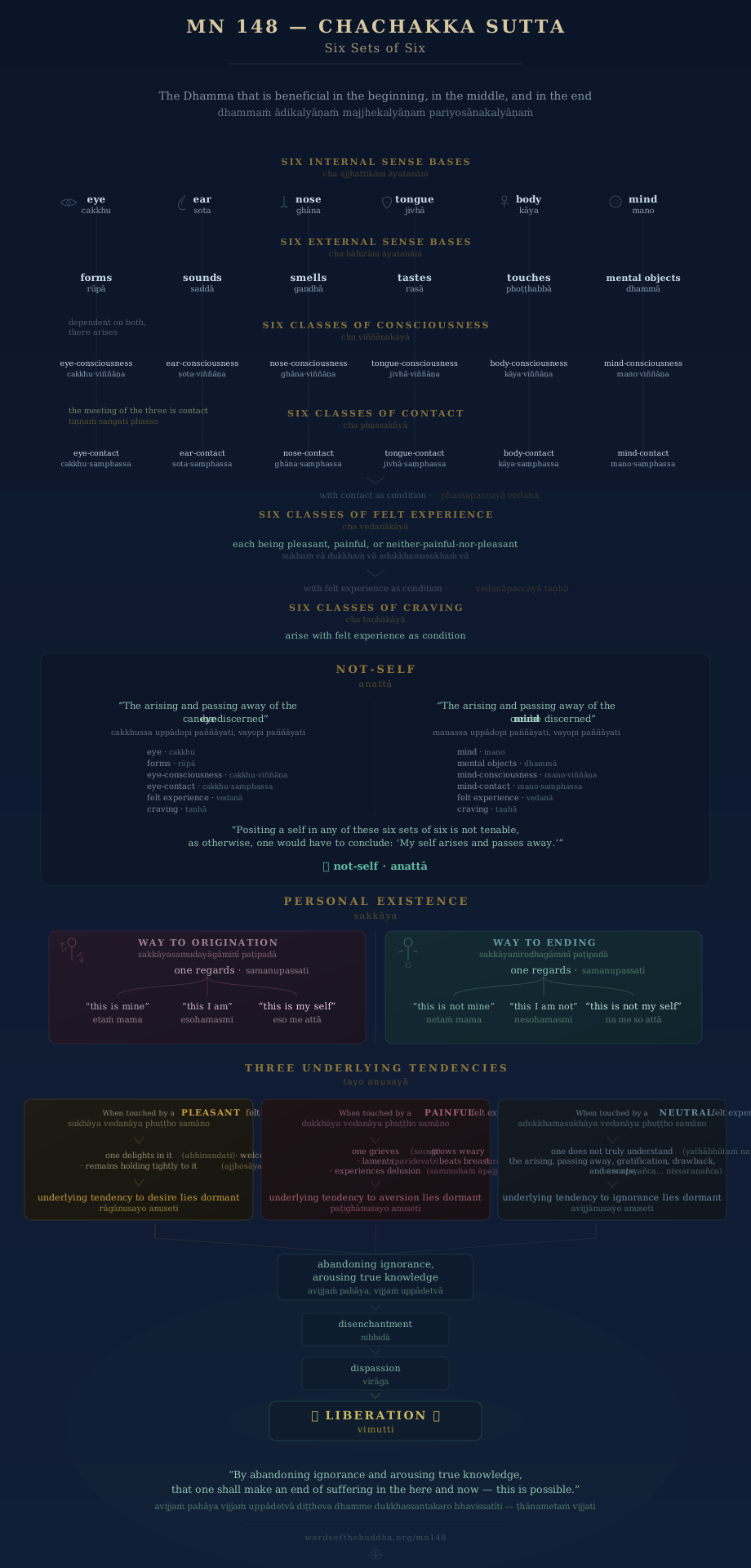
Evaṁ me sutaṁ— ekaṁ samayaṁ bhagavā sāvatthiyaṁ viharati jetavane anāthapiṇḍikassa ārāme. Tatra kho bhagavā bhikkhū āmantesi: “bhikkhavo”ti.
Thus have I heard—At one time, the Blessed One was dwelling at Sāvatthi, in Jeta’s Grove, Anāthapiṇḍika’s Park. There, he addressed the bhikkhus: “Bhikkhus.”
“Bhadante”ti te bhikkhū bhagavato paccassosuṁ. Bhagavā etadavoca:
“Venerable sir,” those bhikkhus replied to the Blessed One. The Blessed One said this:
“dhammaṁ vo, bhikkhave, desessāmi ādikalyāṇaṁ majjhekalyāṇaṁ pariyosānakalyāṇaṁ sātthaṁ sabyañjanaṁ, kevalaparipuṇṇaṁ parisuddhaṁ brahmacariyaṁ pakāsessāmi, yadidaṁ— cha chakkāni. Taṁ suṇātha, sādhukaṁ manasi karotha, bhāsissāmī”ti.
“Bhikkhus, I will teach you the Dhamma that is beneficial in the beginning, beneficial in the middle, and beneficial in the end, meaningful and well-phrased, and I will reveal the spiritual life that is entirely perfect and pure, namely, the six sets of six. Listen to this and pay close attention; I will speak.”
“Evaṁ, bhante”ti kho te bhikkhū bhagavato paccassosuṁ. Bhagavā etadavoca:
“Yes, venerable sir,” those bhikkhus replied to the Blessed One. The Blessed One then said this:
Six Sets of Six
“Cha ajjhattikāni āyatanāni veditabbāni, cha bāhirāni āyatanāni veditabbāni, cha viññāṇakāyā veditabbā, cha phassakāyā veditabbā, cha vedanākāyā veditabbā, cha taṇhākāyā veditabbā.
“The six internal sense bases should be understood, the six external sense bases should be understood, the six classes of consciousness should be understood, the six classes of contact should be understood, the six classes of felt experiences should be understood, the six classes of craving should be understood.
‘Cha ajjhattikāni āyatanāni veditabbānī’ti— iti kho panetaṁ vuttaṁ. Kiñcetaṁ paṭicca vuttaṁ? Cakkhāyatanaṁ, sotāyatanaṁ, ghānāyatanaṁ, jivhāyatanaṁ, kāyāyatanaṁ, manāyatanaṁ. ‘Cha ajjhattikāni āyatanāni veditabbānī’ti— iti yaṁ taṁ vuttaṁ, idametaṁ paṭicca vuttaṁ. Idaṁ paṭhamaṁ chakkaṁ.
‘The six internal sense bases should be understood’—this was said. With reference to what was this said? ‘The eye-base, the ear-base, the nose-base, the tongue-base, the body-base, the mind-base—the six internal sense bases should be understood’—thus, that was said with reference to this. This is the first set of six.
‘Cha bāhirāni āyatanāni veditabbānī’ti— iti kho panetaṁ vuttaṁ. Kiñcetaṁ paṭicca vuttaṁ? Rūpāyatanaṁ, saddāyatanaṁ, gandhāyatanaṁ, rasāyatanaṁ, phoṭṭhabbāyatanaṁ, dhammāyatanaṁ. ‘Cha bāhirāni āyatanāni veditabbānī’ti— iti yaṁ taṁ vuttaṁ, idametaṁ paṭicca vuttaṁ. Idaṁ dutiyaṁ chakkaṁ.
‘The six external sense bases should be understood’—this was said. With reference to what was this said? ‘The field of forms, the field of sounds, the field of odors, the field of tastes, the field of touch, the field of mental objects—the six external sense bases should be understood’—thus, that was said with reference to this. This is the second set of six.
‘Cha viññāṇakāyā veditabbā’ti— iti kho panetaṁ vuttaṁ. Kiñcetaṁ paṭicca vuttaṁ? Cakkhuñca paṭicca rūpe ca uppajjati cakkhuviññāṇaṁ, sotañca paṭicca sadde ca uppajjati sotaviññāṇaṁ, ghānañca paṭicca gandhe ca uppajjati ghānaviññāṇaṁ, jivhañca paṭicca rase ca uppajjati jivhāviññāṇaṁ, kāyañca paṭicca phoṭṭhabbe ca uppajjati kāyaviññāṇaṁ, manañca paṭicca dhamme ca uppajjati manoviññāṇaṁ. ‘Cha viññāṇakāyā veditabbā’ti— iti yaṁ taṁ vuttaṁ, idametaṁ paṭicca vuttaṁ. Idaṁ tatiyaṁ chakkaṁ.
‘The six classes of consciousness should be understood’—this was said. With reference to what was this said? Dependent on the eye and forms, eye-consciousness arises; dependent on the ear and sounds, ear-consciousness arises; dependent on the nose and odors, nose-consciousness arises; dependent on the tongue and tastes, tongue-consciousness arises; dependent on the body and tangible objects, body-consciousness arises; dependent on the mind and mental objects, mind-consciousness arises. ‘The six classes of consciousness should be understood’—thus, that was said with reference to this. This is the third set of six.
‘Cha phassakāyā veditabbā’ti— iti kho panetaṁ vuttaṁ. Kiñcetaṁ paṭicca vuttaṁ? Cakkhuñca paṭicca rūpe ca uppajjati cakkhuviññāṇaṁ, tiṇṇaṁ saṅgati phasso; sotañca paṭicca sadde ca uppajjati sotaviññāṇaṁ, tiṇṇaṁ saṅgati phasso; ghānañca paṭicca gandhe ca uppajjati ghānaviññāṇaṁ, tiṇṇaṁ saṅgati phasso; jivhañca paṭicca rase ca uppajjati jivhāviññāṇaṁ, tiṇṇaṁ saṅgati phasso; kāyañca paṭicca phoṭṭhabbe ca uppajjati kāyaviññāṇaṁ, tiṇṇaṁ saṅgati phasso; manañca paṭicca dhamme ca uppajjati manoviññāṇaṁ, tiṇṇaṁ saṅgati phasso. ‘Cha phassakāyā veditabbā’ti— iti yaṁ taṁ vuttaṁ, idametaṁ paṭicca vuttaṁ. Idaṁ catutthaṁ chakkaṁ.
‘The six classes of contact should be understood’—this was said. With reference to what was this said? Dependent on the eye and forms, eye-consciousness arises; the meeting of the three is contact. Dependent on the ear and sounds, ear-consciousness arises; the meeting of the three is contact. Dependent on the nose and odors, nose-consciousness arises; the meeting of the three is contact. Dependent on the tongue and tastes, tongue-consciousness arises; the meeting of the three is contact. Dependent on the body and tangible objects, body-consciousness arises; the meeting of the three is contact. Dependent on the mind and mental objects, mind-consciousness arises; the meeting of the three is contact. ‘The six classes of contact should be understood’—thus, that was said with reference to this. This is the fourth set of six.
‘Cha vedanākāyā veditabbā’ti— iti kho panetaṁ vuttaṁ. Kiñcetaṁ paṭicca vuttaṁ? Cakkhuñca paṭicca rūpe ca uppajjati cakkhuviññāṇaṁ, tiṇṇaṁ saṅgati phasso, phassapaccayā vedanā; sotañca paṭicca sadde ca uppajjati sotaviññāṇaṁ, tiṇṇaṁ saṅgati phasso, phassapaccayā vedanā; ghānañca paṭicca gandhe ca uppajjati ghānaviññāṇaṁ, tiṇṇaṁ saṅgati phasso, phassapaccayā vedanā; jivhañca paṭicca rase ca uppajjati jivhāviññāṇaṁ, tiṇṇaṁ saṅgati phasso, phassapaccayā vedanā; kāyañca paṭicca phoṭṭhabbe ca uppajjati kāyaviññāṇaṁ, tiṇṇaṁ saṅgati phasso, phassapaccayā vedanā; manañca paṭicca dhamme ca uppajjati manoviññāṇaṁ, tiṇṇaṁ saṅgati phasso, phassapaccayā vedanā. ‘Cha vedanākāyā veditabbā’ti— iti yaṁ taṁ vuttaṁ, idametaṁ paṭicca vuttaṁ. Idaṁ pañcamaṁ chakkaṁ.
‘The six classes of felt experiences should be understood’—this was said. With reference to what was this said? Dependent on the eye and forms, eye-consciousness arises; the meeting of the three is contact; with contact as condition, there is a felt experience. Dependent on the ear and sounds, ear-consciousness arises; the meeting of the three is contact; with contact as condition, there is a felt experience. Dependent on the nose and odors, nose-consciousness arises; the meeting of the three is contact; with contact as condition, there is a felt experience. Dependent on the tongue and tastes, tongue-consciousness arises; the meeting of the three is contact; with contact as condition, there is a felt experience. Dependent on the body and tangible objects, body-consciousness arises; the meeting of the three is contact; with contact as condition, there is a felt experience. Dependent on the mind and mental objects, mind-consciousness arises; the meeting of the three is contact; with contact as condition, there is a felt experience. ‘The six classes of felt experiences should be understood’—thus, that was said with reference to this. This is the fifth set of six.
‘Cha taṇhākāyā veditabbā’ti— iti kho panetaṁ vuttaṁ. Kiñcetaṁ paṭicca vuttaṁ? Cakkhuñca paṭicca rūpe ca uppajjati cakkhuviññāṇaṁ, tiṇṇaṁ saṅgati phasso, phassapaccayā vedanā, vedanāpaccayā taṇhā; sotañca paṭicca sadde ca uppajjati sotaviññāṇaṁ …pe… ghānañca paṭicca gandhe ca uppajjati ghānaviññāṇaṁ … jivhañca paṭicca rase ca uppajjati jivhāviññāṇaṁ … kāyañca paṭicca phoṭṭhabbe ca uppajjati kāyaviññāṇaṁ … manañca paṭicca dhamme ca uppajjati manoviññāṇaṁ, tiṇṇaṁ saṅgati phasso, phassapaccayā vedanā, vedanāpaccayā taṇhā. ‘Cha taṇhākāyā veditabbā’ti— iti yaṁ taṁ vuttaṁ, idametaṁ paṭicca vuttaṁ. Idaṁ chaṭṭhaṁ chakkaṁ.
‘The six classes of craving should be understood’—this was said. With reference to what was this said? Dependent on the eye and forms, eye-consciousness arises; the meeting of the three is contact; with contact as condition, there is a felt experience; with felt experience as condition, there is craving. Dependent on the ear and sounds, ear-consciousness arises ... dependent on the nose and odors, nose-consciousness arises ... dependent on the tongue and tastes, tongue-consciousness arises ... dependent on the body and tangible objects, body-consciousness arises ... dependent on the mind and mental objects, mind-consciousness arises; the meeting of the three is contact; with contact as condition, there is a felt experience; with felt experience as condition, there is craving. ‘The six classes of craving should be understood’—thus, that was said with reference to this. This is the sixth set of six.
Demonstrating the Not-Self Characteristic
‘Cakkhu attā’ti yo vadeyya taṁ na upapajjati. Cakkhussa uppādopi vayopi paññāyati. Yassa kho pana uppādopi vayopi paññāyati, ‘attā me uppajjati ca veti cā’ti iccassa evamāgataṁ hoti. Tasmā taṁ na upapajjati: ‘cakkhu attā’ti yo vadeyya. Iti cakkhu anattā.
If anyone says, ‘The eye is self,’ that is not tenable. The arising and passing away of the eye can be discerned. Since its arising and passing away can be discerned, one would have to conclude, ‘My self arises and passes away.’ Therefore, it is not tenable for anyone to say, ‘The eye is self.’ Thus the eye is not-self.
‘Rūpā attā’ti yo vadeyya taṁ na upapajjati. Rūpānaṁ uppādopi vayopi paññāyati. Yassa kho pana uppādopi vayopi paññāyati, ‘attā me uppajjati ca veti cā’ti iccassa evamāgataṁ hoti. Tasmā taṁ na upapajjati: ‘rūpā attā’ti yo vadeyya. Iti cakkhu anattā, rūpā anattā.
If anyone says, ‘Forms are self,’ that is not tenable. The arising and passing away of forms can be discerned. Since their arising and passing away can be discerned, one would have to conclude, ‘My self arises and passes away.’ Therefore, it is not tenable for anyone to say, ‘Forms are self.’ Thus the eye is not-self, and forms are not-self.
‘Cakkhuviññāṇaṁ attā’ti yo vadeyya taṁ na upapajjati. Cakkhuviññāṇassa uppādopi vayopi paññāyati. Yassa kho pana uppādopi vayopi paññāyati, ‘attā me uppajjati ca veti cā’ti iccassa evamāgataṁ hoti. Tasmā taṁ na upapajjati: ‘cakkhuviññāṇaṁ attā’ti yo vadeyya. Iti cakkhu anattā, rūpā anattā, cakkhuviññāṇaṁ anattā.
If anyone says, ‘Eye-consciousness is self,’ that is not tenable. The arising and passing away of eye-consciousness can be discerned. Since its arising and passing away can be discerned, one would have to conclude, ‘My self arises and passes away.’ Therefore, it is not tenable for anyone to say, ‘Eye-consciousness is self.’ Thus the eye is not-self, forms are not-self, and eye-consciousness is not-self.
‘Cakkhusamphasso attā’ti yo vadeyya taṁ na upapajjati. Cakkhusamphassassa uppādopi vayopi paññāyati. Yassa kho pana uppādopi vayopi paññāyati, ‘attā me uppajjati ca veti cā’ti iccassa evamāgataṁ hoti. Tasmā taṁ na upapajjati: ‘cakkhusamphasso attā’ti yo vadeyya. Iti cakkhu anattā, rūpā anattā, cakkhuviññāṇaṁ anattā, cakkhusamphasso anattā.
If anyone says, ‘Eye-contact is self,’ that is not tenable. The arising and passing away of eye-contact can be discerned. Since its arising and passing away can be discerned, one would have to conclude, ‘My self arises and passes away.’ Therefore, it is not tellable for anyone to say, ‘Eye-contact is self.’ Thus the eye is not-self, forms are not-self, eye-consciousness is not-self, and eye-contact is not-self.
‘Vedanā attā’ti yo vadeyya taṁ na upapajjati. Vedanāya uppādopi vayopi paññāyati. Yassa kho pana uppādopi vayopi paññāyati, ‘attā me uppajjati ca veti cā’ti iccassa evamāgataṁ hoti. Tasmā taṁ na upapajjati: ‘vedanā attā’ti yo vadeyya. Iti cakkhu anattā, rūpā anattā, cakkhuviññāṇaṁ anattā, cakkhusamphasso anattā, vedanā anattā.
If anyone says, ‘Felt experience is self,’ that is not tenable. The arising and passing away of felt experience can be discerned. Since its arising and passing away can be discerned, one would have to conclude, ‘My self arises and passes away.’ Therefore, it is not tenable for anyone to say, ‘Felt experience is self.’ Thus the eye is not-self, forms are not-self, eye-consciousness is not-self, eye-contact is not-self, and felt experience is not-self.
‘Taṇhā attā’ti yo vadeyya taṁ na upapajjati. Taṇhāya uppādopi vayopi paññāyati. Yassa kho pana uppādopi vayopi paññāyati, ‘attā me uppajjati ca veti cā’ti iccassa evamāgataṁ hoti. Tasmā taṁ na upapajjati: ‘taṇhā attā’ti yo vadeyya. Iti cakkhu anattā, rūpā anattā, cakkhuviññāṇaṁ anattā, cakkhusamphasso anattā, vedanā anattā, taṇhā anattā.
If anyone says, ‘Craving is self,’ that is not tenable. The arising and passing away of craving can be discerned. Since its arising and passing away can be discerned, one would have to conclude, ‘My self arises and passes away.’ Therefore, it is not tenable for anyone to say, ‘Craving is self.’ Thus the eye is not-self, forms are not-self, eye-consciousness is not-self, eye-contact is not-self, felt experience is not-self, and craving is not-self.
‘Sotaṁ attā’ti yo vadeyya …pe… ‘ghānaṁ attā’ti yo vadeyya …pe… ‘jivhā attā’ti yo vadeyya …pe… ‘kāyo attā’ti yo vadeyya …pe… ‘mano attā’ti yo vadeyya taṁ na upapajjati. Manassa uppādopi vayopi paññāyati. Yassa kho pana uppādopi vayopi paññāyati, ‘attā me uppajjati ca veti cā’ti iccassa evamāgataṁ hoti. Tasmā taṁ na upapajjati: ‘mano attā’ti yo vadeyya. Iti mano anattā.
If anyone says, ‘The ear is self’ ... If anyone says, ‘The nose is self’ ... If anyone says, ‘The tongue is self’ ... If anyone says, ‘The body is self’ ... If anyone says, ‘The mind is self,’ that is not tenable. The arising and passing away of the mind can be discerned. Since its arising and passing away can be discerned, one would have to conclude, ‘My self arises and passes away.’ Therefore, it is not tenable for anyone to say, ‘The mind is self.’ Thus the mind is not-self.
‘Dhammā attā’ti yo vadeyya taṁ na upapajjati. Dhammānaṁ uppādopi vayopi paññāyati. Yassa kho pana uppādopi vayopi paññāyati, ‘attā me uppajjati ca veti cā’ti iccassa evamāgataṁ hoti. Tasmā taṁ na upapajjati: ‘dhammā attā’ti yo vadeyya. Iti mano anattā, dhammā anattā. ‘Manoviññāṇaṁ attā’ti yo vadeyya taṁ na upapajjati. Manoviññāṇassa uppādopi vayopi paññāyati. Yassa kho pana uppādopi vayopi paññāyati, ‘attā me uppajjati ca veti cā’ti iccassa evamāgataṁ hoti. Tasmā taṁ na upapajjati: ‘manoviññāṇaṁ attā’ti yo vadeyya. Iti mano anattā, dhammā anattā, manoviññāṇaṁ anattā. ‘Manosamphasso attā’ti yo vadeyya taṁ na upapajjati. Manosamphassassa uppādopi vayopi paññāyati. Yassa kho pana uppādopi vayopi paññāyati, ‘attā me uppajjati ca veti cā’ti iccassa evamāgataṁ hoti. Tasmā taṁ na upapajjati: ‘manosamphasso attā’ti yo vadeyya. Iti mano anattā, dhammā anattā, manoviññāṇaṁ anattā, manosamphasso anattā. ‘Vedanā attā’ti yo vadeyya taṁ na upapajjati. Vedanāya uppādopi vayopi paññāyati. Yassa kho pana uppādopi vayopi paññāyati, ‘attā me uppajjati ca veti cā’ti iccassa evamāgataṁ hoti. Tasmā taṁ na upapajjati: ‘vedanā attā’ti yo vadeyya. Iti mano anattā, dhammā anattā, manoviññāṇaṁ anattā, manosamphasso anattā, vedanā anattā. ‘Taṇhā attā’ti yo vadeyya taṁ na upapajjati. Taṇhāya uppādopi vayopi paññāyati. Yassa kho pana uppādopi vayopi paññāyati, ‘attā me uppajjati ca veti cā’ti iccassa evamāgataṁ hoti. Tasmā taṁ na upapajjati: ‘taṇhā attā’ti yo vadeyya. Iti mano anattā, dhammā anattā, manoviññāṇaṁ anattā, manosamphasso anattā, vedanā anattā, taṇhā anattā.
If anyone says, ‘Mental objects are self,’ that is not tenable. The arising and passing away of mental objects can be discerned. Since their arising and passing away can be discerned, one would have to conclude, ‘My self arises and passes away.’ Therefore, it is not tenable for anyone to say, ‘Mental objects are self.’ Thus the mind is not-self, and mental objects are not-self. If anyone says, ‘Mind-consciousness is self,’ that is not tenable. The arising and passing away of mind-consciousness can be discerned. Since its arising and passing away can be discerned, one would have to conclude, ‘My self arises and passes away.’ Therefore, it is not tenable for anyone to say, ‘Mind-consciousness is self.’ Thus the mind is not-self, mental objects are not-self, and mind-consciousness is not-self. If anyone says, ‘Mind-contact is self,’ that is not tenable. The arising and passing away of mind-contact can be discerned. Since its arising and passing away can be discerned, one would have to conclude, ‘My self arises and passes away.’ Therefore, it is not tenable for anyone to say, ‘Mind-contact is self.’ Thus the mind is not-self, mental objects are not-self, mind-consciousness is not-self, and mind-contact is not-self. If anyone says, ‘Felt experience is self,’ that is not tenable. The arising and passing away of felt experience can be discerned. Since its arising and passing away can be discerned, one would have to conclude, ‘My self arises and passes away.’ Therefore, it is not tenable for anyone to say, ‘Felt experience is self.’ Thus the mind is not-self, mental objects are not-self, mind-consciousness is not-self, mind-contact is not-self, and felt experience is not-self. If anyone says, ‘Craving is self,’ that is not tenable. The arising and passing away of craving can be discerned. Since its arising and passing away can be discerned, one would have to conclude, ‘My self arises and passes away.’ Therefore, it is not tenable for anyone to say, ‘Craving is self.’ Thus the mind is not-self, mental objects are not-self, mind-consciousness is not-self, mind-contact is not-self, felt experience is not-self, and craving is not-self.
Personal Existence
Ayaṁ kho pana, bhikkhave, sakkāyasamudayagāminī paṭipadā— cakkhuṁ ‘etaṁ mama, esohamasmi, eso me attā’ti samanupassati;
Now this is the way leading to the origination of personal existence. One regards the eye thus: ‘This is mine, this I am, this is my self’;
rūpe ‘etaṁ mama, esohamasmi, eso me attā’ti samanupassati; cakkhuviññāṇaṁ ‘etaṁ mama, esohamasmi, eso me attā’ti samanupassati; cakkhusamphassaṁ ‘etaṁ mama, esohamasmi, eso me attā’ti samanupassati; vedanaṁ ‘etaṁ mama, esohamasmi, eso me attā’ti samanupassati; taṇhaṁ ‘etaṁ mama, esohamasmi, eso me attā’ti samanupassati; sotaṁ ‘etaṁ mama, esohamasmi, eso me attā’ti samanupassati …pe… ghānaṁ ‘etaṁ mama, esohamasmi, eso me attā’ti samanupassati …pe… jivhaṁ ‘etaṁ mama, esohamasmi, eso me attā’ti samanupassati …pe… kāyaṁ ‘etaṁ mama, esohamasmi, eso me attā’ti samanupassati …pe… manaṁ ‘etaṁ mama, esohamasmi, eso me attā’ti samanupassati, dhamme ‘etaṁ mama, esohamasmi, eso me attā’ti samanupassati, manoviññāṇaṁ ‘etaṁ mama, esohamasmi, eso me attā’ti samanupassati, manosamphassaṁ ‘etaṁ mama, esohamasmi, eso me attā’ti samanupassati, vedanaṁ ‘etaṁ mama, esohamasmi, eso me attā’ti samanupassati, taṇhaṁ ‘etaṁ mama, esohamasmi, eso me attā’ti samanupassati.
One regards forms thus: ‘This is mine, this I am, this is my self’; one regards eye-consciousness thus: ‘This is mine, this I am, this is my self’; one regards eye-contact thus: ‘This is mine, this I am, this is my self’; one regards felt experience thus: ‘This is mine, this I am, this is my self’; one regards craving thus: ‘This is mine, this I am, this is my self’. One regards the ear thus: ‘This is mine, this I am, this is my self’; ... One regards the nose thus: ‘This is mine, this I am, this is my self’; ... One regards the tongue thus: ‘This is mine, this I am, this is my self’; ... One regards the body thus: ‘This is mine, this I am, this is my self’; ... One regards the mind thus: ‘This is mine, this I am, this is my self’; one regards mental objects thus: ‘This is mine, this I am, this is my self’; one regards mind-consciousness thus: ‘This is mine, this I am, this is my self’; one regards mind-contact thus: ‘This is mine, this I am, this is my self’; one regards felt experience thus: ‘This is mine, this I am, this is my self’; one regards craving thus: ‘This is mine, this I am, this is my self’.
Ayaṁ kho pana, bhikkhave, sakkāyanirodhagāminī paṭipadā— cakkhuṁ ‘netaṁ mama, nesohamasmi, na meso attā’ti samanupassati.
Now this is the way leading to the ending of personal existence. One regards the eye thus: ‘This is not mine, this I am not, this is not my self’.
Rūpe ‘netaṁ mama, nesohamasmi, na meso attā’ti samanupassati. Cakkhuviññāṇaṁ ‘netaṁ mama, nesohamasmi, na meso attā’ti samanupassati. Cakkhusamphassaṁ ‘netaṁ mama, nesohamasmi, na meso attā’ti samanupassati. Vedanaṁ ‘netaṁ mama, nesohamasmi, na meso attā’ti samanupassati. Taṇhaṁ ‘netaṁ mama, nesohamasmi, na meso attā’ti samanupassati. Sotaṁ ‘netaṁ mama, nesohamasmi, na meso attā’ti samanupassati …pe… ghānaṁ ‘netaṁ mama, nesohamasmi, na meso attā’ti samanupassati …pe… jivhaṁ ‘netaṁ mama, nesohamasmi, na meso attā’ti samanupassati …pe… kāyaṁ ‘netaṁ mama, nesohamasmi, na meso attā’ti samanupassati …pe… manaṁ ‘netaṁ mama, nesohamasmi, na meso attā’ti samanupassati. Dhamme ‘netaṁ mama, nesohamasmi, na meso attā’ti samanupassati. Manoviññāṇaṁ ‘netaṁ mama, nesohamasmi, na meso attā’ti samanupassati. Manosamphassaṁ ‘netaṁ mama, nesohamasmi, na meso attā’ti samanupassati. Vedanaṁ ‘netaṁ mama, nesohamasmi, na meso attā’ti samanupassati. Taṇhaṁ ‘netaṁ mama, nesohamasmi, na meso attā’ti samanupassati.
One regards forms thus: ‘This is not mine, this I am not, this is not my self’; one regards eye-consciousness thus: ‘This is not mine, this I am not, this is not my self’; one regards eye-contact thus: ‘This is not mine, this I am not, this is not my self’; one regards felt experience thus: ‘This is not mine, this I am not, this is not my self’; one regards craving thus: ‘This is not mine, this I am not, this is not my self’. One regards the ear thus: ‘This is not mine, this I am not, this is not my self’; ... One regards the nose thus: ‘This is not mine, this I am not, this is not my self’; ... One regards the tongue thus: ‘This is not mine, this I am not, this is not my self’; ... One regards the body thus: ‘This is not mine, this I am not, this is not my self’; ... One regards the mind thus: ‘This is not mine, this I am not, this is not my self’; one regards mental objects thus: ‘This is not mine, this I am not, this is not my self’; one regards mind-consciousness thus: ‘This is not mine, this I am not, this is not my self’; one regards mind-contact thus: ‘This is not mine, this I am not, this is not my self’; one regards felt experience thus: ‘This is not mine, this I am not, this is not my self’; one regards craving thus: ‘This is not mine, this I am not, this is not my self’.
The Underlying Tendencies
Cakkhuñca, bhikkhave, paṭicca rūpe ca uppajjati cakkhuviññāṇaṁ, tiṇṇaṁ saṅgati phasso, phassapaccayā uppajjati vedayitaṁ sukhaṁ vā dukkhaṁ vā adukkhamasukhaṁ vā. So sukhāya vedanāya phuṭṭho samāno abhinandati abhivadati ajjhosāya tiṭṭhati. Tassa rāgānusayo anuseti. Dukkhāya vedanāya phuṭṭho samāno socati kilamati paridevati urattāḷiṁ kandati sammohaṁ āpajjati. Tassa paṭighānusayo anuseti. Adukkhamasukhāya vedanāya phuṭṭho samāno tassā vedanāya samudayañca atthaṅgamañca assādañca ādīnavañca nissaraṇañca yathābhūtaṁ nappajānāti. Tassa avijjānusayo anuseti. So vata, bhikkhave, sukhāya vedanāya rāgānusayaṁ appahāya dukkhāya vedanāya paṭighānusayaṁ appaṭivinodetvā adukkhamasukhāya vedanāya avijjānusayaṁ asamūhanitvā avijjaṁ appahāya vijjaṁ anuppādetvā diṭṭheva dhamme dukkhassantakaro bhavissatīti—netaṁ ṭhānaṁ vijjati.
Dependent on the eye and forms, eye-consciousness arises; the meeting of the three is contact; with contact as condition there arises what is felt as pleasant, painful, or neither-painful-nor-pleasant. Being touched by a pleasant felt experience, one delights in it, welcomes it, and remains holding tightly to it. The underlying tendency to desire lies dormant in them. Being touched by a painful felt experience, one grieves, grows weary, laments, beats their breast, and experiences delusion. The underlying tendency to aversion lies dormant in them. Being touched by a neither-painful-nor-pleasant felt experience, one does not understand as it truly is the arising, the passing away, the gratification, the drawback, and the escape regarding that felt experience. The underlying tendency to ignorance lies dormant in them. That one, without abandoning the underlying tendency to desire for pleasant felt experience, without dispelling the underlying tendency to aversion towards painful felt experience, without eradicating the underlying tendency to ignorance regarding neither-painful-nor-pleasant felt experience, without abandoning ignorance and arousing true knowledge, shall make an end of suffering in the here and now—this is not possible.
Sotañca, bhikkhave, paṭicca sadde ca uppajjati sotaviññāṇaṁ …pe… ghānañca, bhikkhave, paṭicca gandhe ca uppajjati ghānaviññāṇaṁ …pe… jivhañca, bhikkhave, paṭicca rase ca uppajjati jivhāviññāṇaṁ …pe… kāyañca, bhikkhave, paṭicca phoṭṭhabbe ca uppajjati kāyaviññāṇaṁ …pe… manañca, bhikkhave, paṭicca dhamme ca uppajjati manoviññāṇaṁ, tiṇṇaṁ saṅgati phasso, phassapaccayā uppajjati vedayitaṁ sukhaṁ vā dukkhaṁ vā adukkhamasukhaṁ vā. So sukhāya vedanāya phuṭṭho samāno abhinandati abhivadati ajjhosāya tiṭṭhati. Tassa rāgānusayo anuseti. Dukkhāya vedanāya phuṭṭho samāno socati kilamati paridevati urattāḷiṁ kandati sammohaṁ āpajjati. Tassa paṭighānusayo anuseti. Adukkhamasukhāya vedanāya phuṭṭho samāno tassā vedanāya samudayañca atthaṅgamañca assādañca ādīnavañca nissaraṇañca yathābhūtaṁ nappajānāti. Tassa avijjānusayo anuseti. So vata, bhikkhave, sukhāya vedanāya rāgānusayaṁ appahāya dukkhāya vedanāya paṭighānusayaṁ appaṭivinodetvā adukkhamasukhāya vedanāya avijjānusayaṁ asamūhanitvā avijjaṁ appahāya vijjaṁ anuppādetvā diṭṭheva dhamme dukkhassantakaro bhavissatīti—netaṁ ṭhānaṁ vijjati.
Dependent on the ear and sounds, ear-consciousness arises ... dependent on the nose and odors, nose-consciousness arises ... dependent on the tongue and tastes, tongue-consciousness arises ... dependent on the body and tangible objects, body-consciousness arises ... dependent on the mind and mental objects, mind-consciousness arises; the meeting of the three is contact; with contact as condition there arises what is felt as pleasant, painful, or neither-painful-nor-pleasant. Being touched by a pleasant felt experience, one delights in it, welcomes it, and remains holding tightly to it. The underlying tendency to desire lies dormant in them. Being touched by a painful felt experience, one grieves, grows weary, laments, beats their breast, and experiences delusion. The underlying tendency to aversion lies dormant in them. Being touched by a neither-painful-nor-pleasant felt experience, one does not understand as it truly is the arising, the passing away, the gratification, the drawback, and the escape regarding that felt experience. The underlying tendency to ignorance lies dormant in them. That one, without abandoning the underlying tendency to desire for pleasant felt experience, without dispelling the underlying tendency to aversion towards painful felt experience, without eradicating the underlying tendency to ignorance regarding neither-painful-nor-pleasant felt experience, without abandoning ignorance and arousing true knowledge, shall make an end of suffering in the here and now—this is not possible.
Dispelling the Underlying Tendencies
Cakkhuñca, bhikkhave, paṭicca rūpe ca uppajjati cakkhuviññāṇaṁ, tiṇṇaṁ saṅgati phasso, phassapaccayā uppajjati vedayitaṁ sukhaṁ vā dukkhaṁ vā adukkhamasukhaṁ vā. So sukhāya vedanāya phuṭṭho samāno nābhinandati nābhivadati nājjhosāya tiṭṭhati. Tassa rāgānusayo nānuseti. Dukkhāya vedanāya phuṭṭho samāno na socati na kilamati na paridevati na urattāḷiṁ kandati na sammohaṁ āpajjati. Tassa paṭighānusayo nānuseti. Adukkhamasukhāya vedanāya phuṭṭho samāno tassā vedanāya samudayañca atthaṅgamañca assādañca ādīnavañca nissaraṇañca yathābhūtaṁ pajānāti. Tassa avijjānusayo nānuseti. So vata, bhikkhave, sukhāya vedanāya rāgānusayaṁ pahāya dukkhāya vedanāya paṭighānusayaṁ paṭivinodetvā adukkhamasukhāya vedanāya avijjānusayaṁ samūhanitvā avijjaṁ pahāya vijjaṁ uppādetvā diṭṭheva dhamme dukkhassantakaro bhavissatīti—ṭhānametaṁ vijjati.
Dependent on the eye and forms, eye-consciousness arises; the meeting of the three is contact; with contact as condition there arises what is felt as pleasant, painful, or neither-painful-nor-pleasant. Being touched by a pleasant felt experience, one does not delight in it, does not welcome it, and does not remain holding tightly to it. The underlying tendency to desire does not lie dormant in them. Being touched by a painful felt experience, one does not grieve, does not grow weary, does not lament, does not beat their breast, and does not experience delusion. The underlying tendency to aversion does not lie dormant in them. Being touched by a neither-painful-nor-pleasant felt experience, one understands as it truly is the arising, the passing away, the gratification, the drawback, and the escape regarding that felt experience. The underlying tendency to ignorance does not lie dormant in them. That one, by abandoning the underlying tendency to desire for pleasant felt experience, by dispelling the underlying tendency to aversion towards painful felt experience, by eradicating the underlying tendency to ignorance regarding neither-painful-nor-pleasant felt experience, by abandoning ignorance and arousing true knowledge, shall make an end of suffering in the here and now—this is possible.
Sotañca, bhikkhave, paṭicca sadde ca uppajjati sotaviññāṇaṁ …pe….
Dependent on the ear and sounds, ear-consciousness arises ...
Ghānañca, bhikkhave, paṭicca gandhe ca uppajjati ghānaviññāṇaṁ …pe….
Dependent on the nose and odors, nose-consciousness arises ...
Jivhañca, bhikkhave, paṭicca rase ca uppajjati jivhāviññāṇaṁ …pe….
Dependent on the tongue and tastes, tongue-consciousness arises ...
Kāyañca, bhikkhave, paṭicca phoṭṭhabbe ca uppajjati kāyaviññāṇaṁ …pe….
Dependent on the body and tangible objects, body-consciousness arises ...
“Manañca, bhikkhave, paṭicca dhamme ca uppajjati manoviññāṇaṁ tiṇṇaṁ saṅgati phasso, phassapaccayā uppajjati vedayitaṁ sukhaṁ vā dukkhaṁ vā adukkhamasukhaṁ vā. So sukhāya vedanāya phuṭṭho samāno nābhinandati nābhivadati nājjhosāya tiṭṭhati. Tassa rāgānusayo nānuseti. Dukkhāya vedanāya phuṭṭho samāno na socati na kilamati na paridevati na urattāḷiṁ kandati na sammohaṁ āpajjati. Tassa paṭighānusayo nānuseti. Adukkhamasukhāya vedanāya phuṭṭho samāno tassā vedanāya samudayañca atthaṅgamañca assādañca ādīnavañca nissaraṇañca yathābhūtaṁ pajānāti. Tassa avijjānusayo nānuseti. So vata, bhikkhave, sukhāya vedanāya rāgānusayaṁ pahāya dukkhāya vedanāya paṭighānusayaṁ paṭivinodetvā adukkhamasukhāya vedanāya avijjānusayaṁ samūhanitvā avijjaṁ pahāya vijjaṁ uppādetvā diṭṭheva dhamme dukkhassantakaro bhavissatīti—ṭhānametaṁ vijjati.
Dependent on the mind and mental objects, mind-consciousness arises; the meeting of the three is contact; with contact as condition there arises what is felt as pleasant, painful, or neither-painful-nor-pleasant. Being touched by a pleasant felt experience, one does not delight in it, does not welcome it, and does not remain holding tightly to it. The underlying tendency to desire does not lie dormant in them. Being touched by a painful felt experience, one does not grieve, does not grow weary, does not lament, does not beat their breast, and does not experience delusion. The underlying tendency to aversion does not lie dormant in them. Being touched by a neither-painful-nor-pleasant felt experience, one understands as it truly is the arising, the passing away, the gratification, the drawback, and the escape regarding that felt experience. The underlying tendency to ignorance does not lie dormant in them. That one, by abandoning the underlying tendency to desire for pleasant felt experience, by dispelling the underlying tendency to aversion towards painful felt experience, by eradicating the underlying tendency to ignorance regarding neither-painful-nor-pleasant felt experience, by abandoning ignorance and arousing true knowledge, shall make an end of suffering in the here and now—this is possible.
Evaṁ passaṁ, bhikkhave, sutavā ariyasāvako cakkhusmiṁ nibbindati, rūpesu nibbindati, cakkhuviññāṇe nibbindati, cakkhusamphasse nibbindati, vedanāya nibbindati, taṇhāya nibbindati.
Seeing thus, the instructed disciple of the Noble Ones becomes disenchanted with the eye, becomes disenchanted with forms, becomes disenchanted with eye-consciousness, becomes disenchanted with eye-contact, becomes disenchanted with felt experience, becomes disenchanted with craving.
Sotasmiṁ nibbindati, saddesu nibbindati …pe… ghānasmiṁ nibbindati, gandhesu nibbindati … jivhāya nibbindati, rasesu nibbindati … kāyasmiṁ nibbindati, phoṭṭhabbesu nibbindati … manasmiṁ nibbindati, dhammesu nibbindati, manoviññāṇe nibbindati, manosamphasse nibbindati, vedanāya nibbindati, taṇhāya nibbindati. Nibbindaṁ virajjati, virāgā vimuccati. Vimuttasmiṁ vimuttamiti ñāṇaṁ hoti.
One becomes disenchanted with the ear, becomes disenchanted with sounds ... becomes disenchanted with the nose, becomes disenchanted with odors ... becomes disenchanted with the tongue, becomes disenchanted with tastes ... becomes disenchanted with the body, becomes disenchanted with tangible objects ... becomes disenchanted with the mind, becomes disenchanted with mental objects, becomes disenchanted with mind-consciousness, becomes disenchanted with mind-contact, becomes disenchanted with felt experience, becomes disenchanted with craving. Being disenchanted, one becomes dispassionate. Through dispassion, one is liberated. When liberated, there is the knowledge that one is liberated.
‘Khīṇā jāti, vusitaṁ brahmacariyaṁ, kataṁ karaṇīyaṁ, nāparaṁ itthattāyā’ti pajānātī”ti.
He knows clearly: ‘Birth is exhausted, the spiritual life has been lived, what had to be done has been done, there is no more coming to any state of existence.’”
Idamavoca bhagavā. Attamanā te bhikkhū bhagavato bhāsitaṁ abhinandunti. Imasmiṁ kho pana veyyākaraṇasmiṁ bhaññamāne saṭṭhimattānaṁ bhikkhūnaṁ anupādāya āsavehi cittāni vimucciṁsūti.
The Blessed One said this. The bhikkhus were delighted and pleased with the Blessed One’s words. As this discourse was being spoken, the minds of sixty bhikkhus were liberated from the taints without grasping.