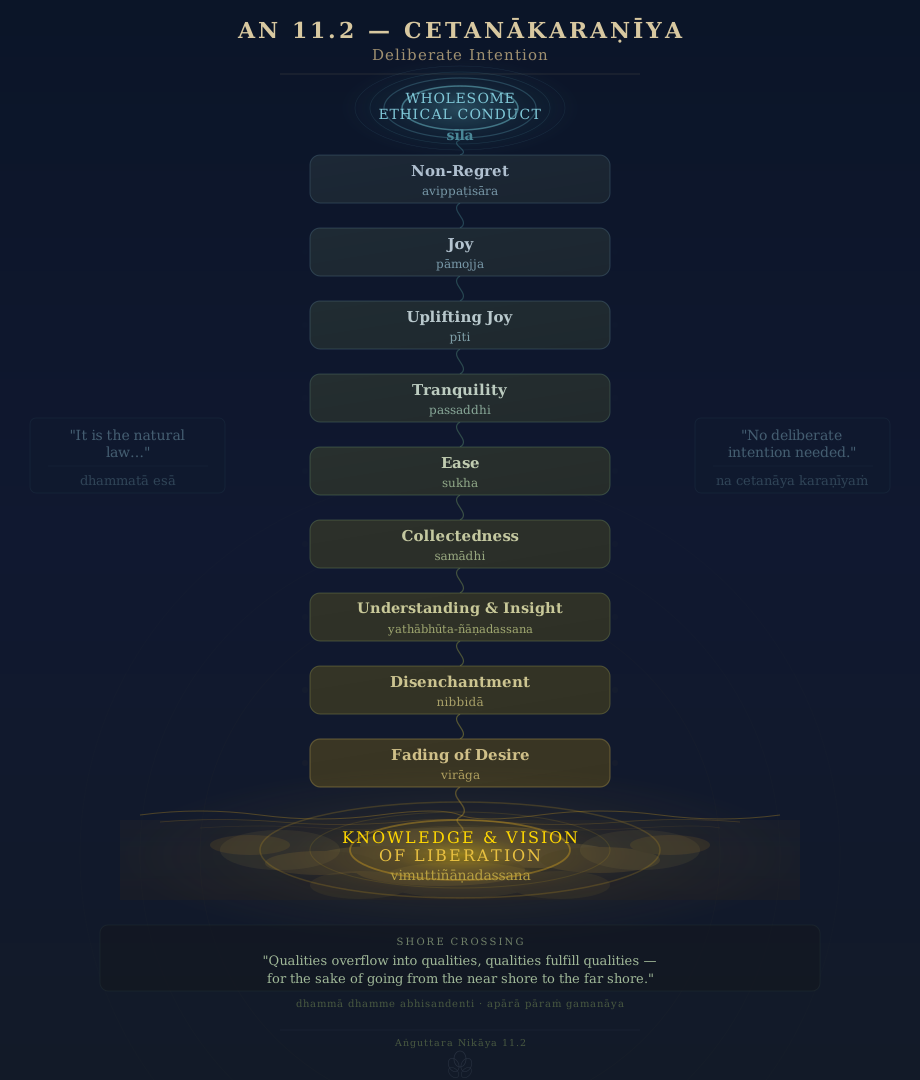
“Sīlavato, bhikkhave, sīlasampannassa na cetanāya karaṇīyaṁ: ‘avippaṭisāro me uppajjatū’ti. Dhammatā esā, bhikkhave, yaṁ sīlavato sīlasampannassa avippaṭisāro uppajjati.
“For one who is |virtuous::endowed with ethical conduct, morally complete [sīlavā]|, |accomplished in ethical conduct::of excellent morality; accomplished in virtue [sīlasampanna]|, bhikkhus — there is no need for a [deliberate] |intention::will [cetanā]|: ‘May non-regret arise in me.’ It is the |natural law::the nature of things, how qualities naturally unfold and fulfill one another [dhammatā]|, bhikkhus, that |non-regret::not experiencing remorse [avippaṭisāra]| arises in one who is virtuous, accomplished in ethical conduct.
Avippaṭisārissa, bhikkhave, na cetanāya karaṇīyaṁ: ‘pāmojjaṁ me uppajjatū’ti. Dhammatā esā, bhikkhave, yaṁ avippaṭisārissa pāmojjaṁ uppajjati.
For one who is free of regret, bhikkhus — there is no need for a deliberate intention: ‘May joy arise in me.’ It is the natural law, bhikkhus, that |joy::cheerfulness, gladness; a fresh and mild happiness arising from a sense of spiritual well-being and a clear conscience [pāmojja]| arises in one free of regret.
Pamuditassa, bhikkhave, na cetanāya karaṇīyaṁ: ‘pīti me uppajjatū’ti. Dhammatā esā, bhikkhave, yaṁ pamuditassa pīti uppajjati.
For one who is joyful, bhikkhus — there is no need for a deliberate intention: ‘May uplifting joy arise in me.’ It is the natural law, bhikkhus, that |uplifting joy::mental exhilaration; it ranges from a gentle delight to overwhelming rapture [pīti]| arises in one who is joyful.
Pītimanassa, bhikkhave, na cetanāya karaṇīyaṁ: ‘kāyo me passambhatū’ti. Dhammatā esā, bhikkhave, yaṁ pītimanassa kāyo passambhati.
For one whose mind is filled with uplifting joy, bhikkhus — there is no need for a deliberate intention: ‘May my body become tranquil.’ It is the natural law, bhikkhus, that the body |becomes tranquil::calms down, relaxes [passambhati]| for one whose mind is filled with uplifting joy.
Passaddhakāyassa, bhikkhave, na cetanāya karaṇīyaṁ: ‘sukhaṁ vediyāmī’ti. Dhammatā esā, bhikkhave, yaṁ passaddhakāyo sukhaṁ vediyati.
For one whose body is tranquil, bhikkhus — there is no need for a deliberate intention: ‘May I experience ease.’ It is the natural law, bhikkhus, that one whose body is tranquil experiences |ease::contentment, happiness, pleasant abiding [sukha]|.
Sukhino, bhikkhave, na cetanāya karaṇīyaṁ: ‘cittaṁ me samādhiyatū’ti. Dhammatā esā, bhikkhave, yaṁ sukhino cittaṁ samādhiyati.
For one at ease, bhikkhus — there is no need for a deliberate intention: ‘May my mind become collected.’ It is the natural law, bhikkhus, that the mind |becomes collected::is calmed, becomes composed, becomes stable [samādhiyati]| for one at ease.
Samāhitassa, bhikkhave, na cetanāya karaṇīyaṁ: ‘yathābhūtaṁ jānāmi passāmī’ti. Dhammatā esā, bhikkhave, yaṁ samāhito yathābhūtaṁ jānāti passati.
For one who is collected, bhikkhus — there is no need for a deliberate intention: ‘May I understand and see things as they truly are.’ It is the natural law, bhikkhus, that one who is collected understands and sees things |as they truly are::as they have come to be, in reality [yathābhūta]|.
Yathābhūtaṁ, bhikkhave, jānato passato na cetanāya karaṇīyaṁ: ‘nibbindāmī’ti. Dhammatā esā, bhikkhave, yaṁ yathābhūtaṁ jānaṁ passaṁ nibbindati.
For one who understands and sees things as they truly are, bhikkhus — there is no need for a deliberate intention: ‘May I become disenchanted.’ It is the natural law, bhikkhus, that one who understands and sees things as they truly are |becomes disenchanted::becomes disinterested, becomes disillusioned [nibbindati]|.
Nibbinnassa, bhikkhave, na cetanāya karaṇīyaṁ: ‘virajjāmī’ti. Dhammatā esā, bhikkhave, yaṁ nibbinno virajjati.
For one who is disenchanted, bhikkhus — there is no need for a deliberate intention: ‘May desire fade in me.’ It is the natural law, bhikkhus, that one who is disenchanted |becomes dispassionate::is detached [virajjati]|.
Virattassa, bhikkhave, na cetanāya karaṇīyaṁ: ‘vimuttiñāṇadassanaṁ sacchikaromī’ti. Dhammatā esā, bhikkhave, yaṁ viratto vimuttiñāṇadassanaṁ sacchikaroti.
For one who is dispassionate, bhikkhus — there is no need for a deliberate intention: ‘May I realize the knowledge and vision of liberation.’ It is the natural law, bhikkhus, that one in whom desire has faded realizes |knowledge and vision of liberation::understanding and realization of liberation, total understanding of emancipation [vimuttiñāṇadassana]|.
Iti kho, bhikkhave, virāgo vimuttiñāṇadassanattho vimuttiñāṇadassanānisaṁso, nibbidā virāgatthā virāgānisaṁsā, yathābhūtañāṇadassanaṁ nibbidatthaṁ nibbidānisaṁsaṁ, samādhi yathābhūtañāṇadassanattho yathābhūtañāṇadassanānisaṁso, sukhaṁ samādhatthaṁ samādhānisaṁsaṁ, passaddhi sukhatthā sukhānisaṁsā, pīti passaddhatthā passaddhānisaṁsā, pāmojjaṁ pītatthaṁ pītānisaṁsaṁ, avippaṭisāro pāmojjattho pāmojjānisaṁso, kusalāni sīlāni avippaṭisāratthāni avippaṭisārānisaṁsāni. Iti kho, bhikkhave, dhammā dhamme abhisandenti, dhammā dhamme paripūrenti apārā pāraṁ gamanāyā”ti.
Thus, bhikkhus, |fading of desire::dispassion, detachment [virāga]| has knowledge and vision of liberation as its purpose and benefit. Disenchantment has fading of desire as its purpose and benefit. |Understanding and insight into things as they truly are::knowing and seeing reality [yathābhūtañāṇadassana]| has disenchantment as its purpose and benefit. Collectedness has understanding and insight into things as they truly are as its purpose and benefit. Ease has collectedness as its purpose and benefit. Tranquility has ease as its purpose and benefit. Uplifting joy has tranquility as its purpose and benefit. Joy has uplifting joy as its purpose and benefit. Non-regret has joy as its purpose and benefit. Wholesome ethical conduct has non-regret as its purpose and benefit. Thus, bhikkhus, |qualities overflow into qualities::each quality floods and pours into the next, filling it to fullness [dhammā dhamme abhisandenti]|, qualities fulfill qualities — for the sake of going from the |near shore::this shore, the world of suffering and bondage [apāra]| to the |far shore::beyond, across, over, epithet of Nibbāna [pāra]|.”