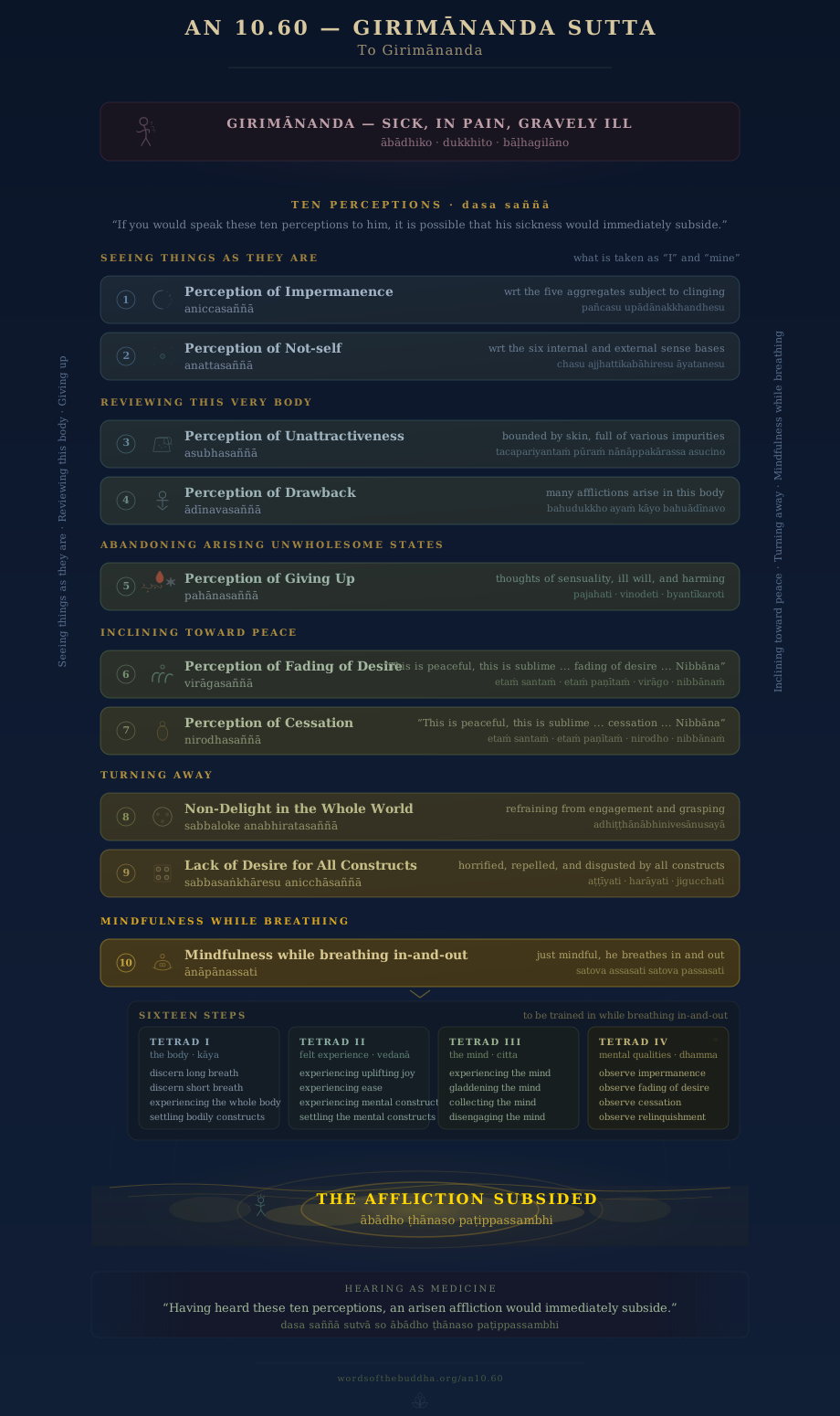
Ekaṁ samayaṁ bhagavā sāvatthiyaṁ viharati jetavane anāthapiṇḍikassa ārāme. Tena kho pana samayena āyasmā girimānando ābādhiko hoti dukkhito bāḷhagilāno. Atha kho āyasmā ānando yena bhagavā tenupasaṅkami; upasaṅkamitvā bhagavantaṁ abhivādetvā ekamantaṁ nisīdi. Ekamantaṁ nisinno kho āyasmā ānando bhagavantaṁ etadavoca:
At one time, the Blessed One was dwelling at Sāvatthi, in Jeta’s Grove, Anāthapiṇḍika’s Park. At that time, the venerable |Girimānanda::name of an arahant monk; lit. happy mountain [girimānanda]| was sick, experiencing pain, and gravely ill. Then the venerable Ānanda approached the Blessed One; having approached, he paid homage to the Blessed One and sat down to one side. Sitting to one side, the venerable Ānanda said to the Blessed One:
“Āyasmā, bhante, girimānando ābādhiko hoti dukkhito bāḷhagilāno. Sādhu, bhante, bhagavā yenāyasmā girimānando tenupasaṅkamatu anukampaṁ upādāyā”ti.
“Venerable sir, the venerable Girimānanda is sick, experiencing pain, and gravely ill. It would be good, venerable sir, if the Blessed One would approach the venerable Girimānanda out of compassion.”
“Sace kho tvaṁ, ānanda, girimānandassa bhikkhuno dasa saññā bhāseyyāsi, ṭhānaṁ kho panetaṁ vijjati yaṁ girimānandassa bhikkhuno dasa saññā sutvā so ābādho ṭhānaso paṭippassambheyya.
“If, Ānanda, you would speak about ten perceptions to the bhikkhu Girimānanda, it is possible that having heard these ten perceptions, his affliction would immediately subside.
Ten Perceptions
Katamā dasa? Aniccasaññā, anattasaññā, asubhasaññā, ādīnavasaññā, pahānasaññā, virāgasaññā, nirodhasaññā, sabbaloke anabhiratasaññā, sabbasaṅkhāresu anicchāsaññā, ānāpānassati.
What ten? Perception of impermanence, perception of not-self, perception of unattractiveness, perception of drawback, perception of giving up, perception of fading of desire, perception of cessation, perception of non-delight in the whole world, perception of lack of desire for all constructs, mindfulness while breathing in and out.
Katamā cānanda, aniccasaññā? Idhānanda, bhikkhu araññagato vā rukkhamūlagato vā suññāgāragato vā iti paṭisañcikkhati: ‘rūpaṁ aniccaṁ, vedanā aniccā, saññā aniccā, saṅkhārā aniccā, viññāṇaṁ aniccan’ti. Iti imesu pañcasu upādānakkhandhesu aniccānupassī viharati. Ayaṁ vuccatānanda, aniccasaññā.
1.) And what, Ānanda, is the |perception of impermanence::perception of instability, inconsistency [aniccasaññā]|? Here, Ānanda, a bhikkhu, having gone to the forest, to the foot of a tree, or to an empty hut, reflects thus: ‘|Form::materiality, material existence, experience of the material world, i.e. encompassing both one’s body and external objects, whether near or far, gross or subtle, deficient or refined; first of the five aggregates [rūpa]| is impermanent, |feeling::pleasant, neutral, or painful sensation, the experience felt on contact through eye, ear, nose, tongue, body, mind; second of the five aggregates [vedanā]| is impermanent, |perception::The mental process of recognizing and giving meaning to experience. It marks sensory information by signs, labels, or associations drawn from memory and the field of contact. Perception shapes how one experiences the world; third of the five aggregates [sañña]| is impermanent, |intentional constructs::the constructive activity that shapes each moment of experience, expressed as bodily, verbal, and mental formations; the accumulated conditioning — patterns, tendencies, and habits — produced by prior action [saṅkhārā]| are impermanent, |consciousness::quality of awareness — distinctive knowing that arises in dependence on the meeting of eye and form, ear and sound, nose and odor, tongue and taste, body and tangible object, mind and mind object [viññāṇa]| is impermanent.’ Thus he dwells observing impermanence in these |five aggregates subject to clinging::the physical and mental heaps that are appropriated, grasped at, or taken as self; the fivefold collection of form, feeling, perception, intentional constructs, and consciousness bound up with attachment [pañca + upādānakkhandha]|. This is called, Ānanda, the perception of impermanence.
Katamā cānanda, anattasaññā? Idhānanda, bhikkhu araññagato vā rukkhamūlagato vā suññāgāragato vā iti paṭisañcikkhati: ‘cakkhu anattā, rūpā anattā, sotaṁ anattā, saddā anattā, ghānaṁ anattā, gandhā anattā, jivhā anattā, rasā anattā, kāyā anattā, phoṭṭhabbā anattā, mano anattā, dhammā anattā’ti. Iti imesu chasu ajjhattikabāhiresu āyatanesu anattānupassī viharati. Ayaṁ vuccatānanda, anattasaññā.
2.) And what, Ānanda, is the |perception of not-self::recognition of impersonality [anattasaññā]|? Here, Ānanda, a bhikkhu, having gone to the forest, to the foot of a tree, or to an empty hut, reflects thus: ‘The eye is not-self, forms are not-self; the ear is not-self, sounds are not-self; the nose is not-self, odors are not-self; the tongue is not-self, tastes are not-self; the body is not-self, tangible objects are not-self; the mind is not-self, mind objects are not-self.’ Thus he dwells observing not-self in these six internal and external sense bases. This is called, Ānanda, the perception of not-self.
Katamā cānanda, asubhasaññā? Idhānanda, bhikkhu imameva kāyaṁ uddhaṁ pādatalā adho kesamatthakā tacapariyantaṁ pūraṁ nānāppakārassa asucino paccavekkhati: ‘atthi imasmiṁ kāye kesā lomā nakhā dantā taco, maṁsaṁ nhāru aṭṭhi aṭṭhimiñjaṁ vakkaṁ, hadayaṁ yakanaṁ kilomakaṁ pihakaṁ papphāsaṁ, antaṁ antaguṇaṁ udariyaṁ karīsaṁ, pittaṁ semhaṁ pubbo lohitaṁ sedo medo, assu vasā kheḷo siṅghāṇikā lasikā muttan’ti. Iti imasmiṁ kāye asubhānupassī viharati. Ayaṁ vuccatānanda, asubhasaññā.
3.) And what, Ānanda, is the perception of |unattractiveness::disagreeableness, recognizing the not aesthetically pleasing characteristics [asubha]|? Here, Ānanda, a bhikkhu reviews this very body from the soles of the feet upwards and from the top of the hair downwards, bounded by skin and full of various impurities thus: ‘In this body, there are hairs of the head, hairs of the body, nails, teeth, skin; flesh, sinews, bones, bone marrow, kidneys; heart, liver, inner membrane, spleen, lungs; intestines, mesentery, stomach contents, feces, [brain]; bile, phlegm, pus, blood, sweat, fat, tears, grease, saliva, nasal mucus, synovial fluid, and urine.’ Thus he dwells observing unattractiveness in this body.[1] This is called, Ānanda, the perception of unattractiveness.
Katamā cānanda, ādīnavasaññā? Idhānanda, bhikkhu araññagato vā rukkhamūlagato vā suññāgāragato vā iti paṭisañcikkhati: ‘bahudukkho kho ayaṁ kāyo bahuādīnavo. Iti imasmiṁ kāye vividhā ābādhā uppajjanti, seyyathidaṁ— cakkhurogo sotarogo ghānarogo jivhārogo kāyarogo sīsarogo kaṇṇarogo mukharogo dantarogo oṭṭharogo kāso sāso pināso ḍāho jaro kucchirogo mucchā pakkhandikā sūlā visūcikā kuṭṭhaṁ gaṇḍo kilāso soso apamāro daddu kaṇḍu kacchu nakhasā vitacchikā lohitaṁ pittaṁ madhumeho aṁsā piḷakā bhagandalā pittasamuṭṭhānā ābādhā semhasamuṭṭhānā ābādhā vātasamuṭṭhānā ābādhā sannipātikā ābādhā utupariṇāmajā ābādhā visamaparihārajā ābādhā opakkamikā ābādhā kammavipākajā ābādhā sītaṁ uṇhaṁ jighacchā pipāsā uccāro passāvo’ti. Iti imasmiṁ kāye ādīnavānupassī viharati. Ayaṁ vuccatānanda, ādīnavasaññā.
4.) And what, Ānanda, is the perception of |drawback::disadvantage, unsatisfactoriness, inadequacy, danger [ādīnava]|? Here, Ānanda, a bhikkhu, having gone to the forest, to the foot of a tree, or to an empty hut, reflects thus: ‘This body [is subject to] much suffering and with lots of drawbacks. Various |afflictions::disease, sickness, illness; lit. oppression [ābādhā]| arise in this body, namely: eye disease, ear disease, nose disease, tongue disease, body disease, head disease, external ear disease, mouth disease, tooth disease, lip disease; cough, asthma, catarrh, burning, fever, stomach ache, fainting, dysentery, colic, cholera, leprosy, boil, eczema, tuberculosis, epilepsy, ringworm, itch, scabies, nail disease, psoriasis, blood disease, bile disease, diabetes, hemorrhoids, pimple, fistula; illnesses originating from bile, illnesses originating from phlegm, illnesses originating from wind, illnesses originating from a conflict of humors, illnesses originating from changes in weather, illnesses originating from improper care, illnesses originating from assault, illnesses originating from the result of kamma; cold, heat, hunger, thirst, defecation, and urination.’ Thus he dwells observing drawback in this body. This is called, Ānanda, the perception of drawback.
Katamā cānanda, pahānasaññā? Idhānanda, bhikkhu uppannaṁ kāmavitakkaṁ nādhivāseti, pajahati, vinodeti, byantīkaroti, anabhāvaṁ gameti. Uppannaṁ byāpādavitakkaṁ nādhivāseti, pajahati, vinodeti, byantīkaroti, anabhāvaṁ gameti. Uppannaṁ vihiṁsāvitakkaṁ nādhivāseti, pajahati, vinodeti, byantīkaroti, anabhāvaṁ gameti. Uppannuppanne pāpake akusale dhamme nādhivāseti, pajahati, vinodeti, byantīkaroti, anabhāvaṁ gameti. Ayaṁ vuccatānanda, pahānasaññā.
5.) And what, Ānanda, is the perception of |giving up::letting go, abandoning, removing [pahāna]|? Here, Ānanda, a bhikkhu does not tolerate an arisen |thought of sensuality::thought related to enjoyment of sensual pleasures, sexual thought [kāmavitakka]|; he abandons it, dispels it, puts an end to it, and obliterates it. He does not tolerate an arisen |thought of ill will::intentional thought of mental rejection, hostility, or malevolence toward others; deliberate contemplation rooted in antipathy or wishing harm [byāpādavitakka]|; he abandons it, dispels it, puts an end to it, and obliterates it. He does not tolerate an arisen |thought of harming::thought of cruelty, violence, or aggression [vihiṃsāvitakka]|; he abandons it, dispels it, puts an end to it, and obliterates it. He does not tolerate any arisen unwholesome state; he abandons it, dispels it, puts an end to it, and obliterates it. This is called, Ānanda, the perception of giving up.
Katamā cānanda, virāgasaññā? Idhānanda, bhikkhu araññagato vā rukkhamūlagato vā suññāgāragato vā iti paṭisañcikkhati: ‘etaṁ santaṁ etaṁ paṇītaṁ yadidaṁ sabbasaṅkhārasamatho sabbūpadhippaṭinissaggo taṇhākkhayo virāgo nibbānan’ti. Ayaṁ vuccatānanda, virāgasaññā.
6.) And what, Ānanda, is the perception of |fading of desire::dispassion, detachment [virāga]|? Here, Ānanda, a bhikkhu, having gone to the forest, to the foot of a tree, or to an empty hut, reflects thus: ‘This is peaceful, this is sublime, namely |the stilling of all intentional constructs::calming of all intentions, volitions, mental activities. This is sometimes rendered as stilling of all formations [sabbasaṅkhārasamatha]|, the |relinquishing of all acquisitions::letting go of all attachments, releasing of all ‘I’, ‘me’, ‘mine’ making [sabbūpadhipaṭinissagga]|, the |wearing away of craving::depletion of craving, wanting, yearning, passion [taṇhākkhaya]|, fading of desire, |Nibbāna::complete cooling, letting go of everything, deathless, freedom from calamity, the non-disintegrating; lit. blowing away [nibbāna]|.’ This is called, Ānanda, the perception of fading of desire.
Katamā cānanda, nirodhasaññā? Idhānanda, bhikkhu araññagato vā rukkhamūlagato vā suññāgāragato vā iti paṭisañcikkhati: ‘etaṁ santaṁ etaṁ paṇītaṁ yadidaṁ sabbasaṅkhārasamatho sabbūpadhippaṭinissaggo taṇhākkhayo nirodho nibbānan’ti. Ayaṁ vuccatānanda, nirodhasaññā.
7.) And what, Ānanda, is the perception of |cessation::ending, termination [nirodha]|? Here, Ānanda, a bhikkhu, having gone to the forest, to the foot of a tree, or to an empty hut, reflects thus: ‘This is peaceful, this is sublime, namely the stilling of all intentional constructs, the relinquishing of all acquisitions, the wearing away of craving, cessation, Nibbāna.’ This is called, Ānanda, the perception of cessation.
Katamā cānanda, sabbaloke anabhiratasaññā? Idhānanda, bhikkhu ye loke upādānā cetaso adhiṭṭhānābhinivesānusayā, te pajahanto viharati anupādiyanto. Ayaṁ vuccatānanda, sabbaloke anabhiratasaññā.
8.) And what, Ānanda, is the |perception of non-delight::recognition of disenchantment with [anabhiratisaññā]| in regard to the whole world? Here, Ānanda, a bhikkhu dwells refraining from any |clinging::grasping, acquiring, appropriating, taking possession, identifying; fuel for fire; lit. taking near [upādāna]|, |determinations, attachments, and underlying tendencies::prejudices, adherences, and dormant proclivities [adhiṭṭhānābhinivesānusaya]| in regard to the whole world, abandoning them without clinging to them. This is called, Ānanda, the perception of non-delight in regard to the whole world.
Katamā cānanda, sabbasaṅkhāresu anicchāsaññā? Idhānanda, bhikkhu sabbasaṅkhāresu aṭṭīyati harāyati jigucchati. Ayaṁ vuccatānanda, sabbasaṅkhāresu anicchāsaññā.
9.) And what, Ānanda, is the |perception of lack of desire::recognition of freedom from need [anicchāsaññā]| [2] for all constructs? Here, Ānanda, a bhikkhu is horrified, repelled, and disgusted by all constructs. This is called, Ānanda, the perception of lack of desire for all constructs.
Mindfulness while breathing in and out
Katamā cānanda, ānāpānassati? Idhānanda, bhikkhu araññagato vā rukkhamūlagato vā suññāgāragato vā nisīdati pallaṅkaṁ ābhujitvā ujuṁ kāyaṁ paṇidhāya parimukhaṁ satiṁ upaṭṭhapetvā. So satova assasati satova passasati.
10.) And what, Ānanda, is |mindfulness while breathing in and out::mindfulness during inhalation and exhalation [ānāpānassati]|? Here, Ānanda, a bhikkhu, having gone to the forest, or to the foot of a tree, or to an empty hut, sits down; having folded his legs crosswise, aligns his body upright, and establishes mindfulness |as his primary focal point::as first priority, directed towards the meditation object; lit. around the front [parimukhaṁ]|. Just mindful, he breathes in; just mindful, he breathes out.
Mindfulness of Body
Dīghaṁ vā assasanto ‘dīghaṁ assasāmī’ti pajānāti. Dīghaṁ vā passasanto ‘dīghaṁ passasāmī’ti pajānāti. Rassaṁ vā assasanto ‘rassaṁ assasāmī’ti pajānāti. Rassaṁ vā passasanto ‘rassaṁ passasāmī’ti pajānāti. ‘Sabbakāyapaṭisaṁvedī assasissāmī’ti sikkhati. ‘Sabbakāyapaṭisaṁvedī passasissāmī’ti sikkhati. ‘Passambhayaṁ kāyasaṅkhāraṁ assasissāmī’ti sikkhati. ‘Passambhayaṁ kāyasaṅkhāraṁ passasissāmī’ti sikkhati.
1.) Breathing in long, he |discerns::distinguishes, understands, knows clearly [pajānāti]| the long in-breath; breathing out long, he discerns the long out-breath.
2.) Breathing in short, he discerns the short in-breath; breathing out short, he discerns the short out-breath.
3.) He trains to |experience the whole body::be conscious of the whole body, be sensitive to the whole process [sabbakāyapaṭisaṃvedī]| while breathing in; he trains to experience the whole body while breathing out.
4.) He trains to |settle::calm, still [passambhayanta]| the |bodily constructs::bodily processes associated with breathing, specifically the in-and-out breath. It encompasses the physical movements and sensations that arise from the act of breathing. [kāyasaṅkhārā]| while breathing in; he trains to settle the bodily constructs while breathing out.
Mindfulness of Felt Experience
‘Pītipaṭisaṁvedī assasissāmī’ti sikkhati. ‘Pītipaṭisaṁvedī passasissāmī’ti sikkhati. ‘Sukhapaṭisaṁvedī assasissāmī’ti sikkhati. ‘Sukhapaṭisaṁvedī passasissāmī’ti sikkhati. ‘Cittasaṅkhārapaṭisaṁvedī assasissāmī’ti sikkhati. ‘Cittasaṅkhārapaṭisaṁvedī passasissāmī’ti sikkhati. ‘Passambhayaṁ cittasaṅkhāraṁ assasissāmī’ti sikkhati. ‘Passambhayaṁ cittasaṅkhāraṁ passasissāmī’ti sikkhati.
1.) He trains to |experience uplifting joy::heartfelt or intense joy, feeling of love, rapture lit. lovely feeling [pītipaṭisaṃvedī]| while breathing in; he trains to experience uplifting joy while breathing out.
2.) He trains to |experience ease::contentment, happiness, pleasant abiding [sukhapaṭisaṃvedī]| while breathing in; he trains to experience ease while breathing out.
3.) He trains to |experience mental constructs::be sensitive to the mental processes; (comm) conscious of feeling and perception [cittasaṅkhārapaṭisaṃvedī]| while breathing in; he trains to experience mental constructs while breathing out.
4.) He trains to settle the mental constructs while breathing in; he trains to settle the mental constructs while breathing out.
Mindfulness of Mind and Mental Qualities
‘Cittapaṭisaṁvedī assasissāmī’ti sikkhati. ‘Cittapaṭisaṁvedī passasissāmī’ti sikkhati. Abhippamodayaṁ cittaṁ …pe… samādahaṁ cittaṁ …pe… vimocayaṁ cittaṁ …pe… aniccānupassī …pe… virāgānupassī …pe… nirodhānupassī …pe… ‘paṭinissaggānupassī assasissāmī’ti sikkhati. ‘Paṭinissaggānupassī passasissāmī’ti sikkhati.
1.) He trains to experience the mind while breathing in; he trains to experience the mind while breathing out.
3.) He trains to
4.) He trains to
1.) He trains to
2.) He trains to
3.) He trains to
He trains to
Ayaṁ vuccatānanda, ānāpānassati.
This is called, Ānanda, mindfulness while breathing in and out.
Sace kho tvaṁ, ānanda, girimānandassa bhikkhuno imā dasa saññā bhāseyyāsi, ṭhānaṁ kho panetaṁ vijjati yaṁ girimānandassa bhikkhuno imā dasa saññā sutvā so ābādho ṭhānaso paṭippassambheyyā”ti.
If, Ānanda, you would speak about these ten perceptions to the bhikkhu Girimānanda, it is possible that having heard these ten perceptions, his affliction would immediately subside.”
Atha kho āyasmā ānando bhagavato santike imā dasa saññā uggahetvā yenāyasmā girimānando tenupasaṅkami; upasaṅkamitvā āyasmato girimānandassa imā dasa saññā abhāsi. Atha kho āyasmato girimānandassa dasa saññā sutvā so ābādho ṭhānaso paṭippassambhi. Vuṭṭhahi cāyasmā girimānando tamhā ābādhā. Tathā pahīno ca panāyasmato girimānandassa so ābādho ahosīti.
Then the venerable Ānanda, having learned these ten perceptions in the presence of the Blessed One, approached the venerable Girimānanda; having approached, he spoke these ten perceptions to the venerable Girimānanda. Then, having heard these ten perceptions, the affliction of the venerable Girimānanda immediately subsided. The venerable Girimānanda recovered from that affliction, and in this way, the venerable Girimānanda was cured of his affliction.
See KP 3 Dvattiṁsākāra - Thirty-Two Parts of the Body for a detailed explanation of the parts of the body used for cultivating the perception of unattractiveness.
The Pāli term anicchāsaññā is rendered here as ‘perception of lack of desire’. It is occasionally rendered as ‘perception of impermanence’ due to a possible confusion with aniccasaññā. However, given that aniccasaññā wrt five aggregates (which cover all constructs) is already established as the first perception, such a duplication would not be logically consistent. Bhikkhu Ṭhānissaro’s rendering as ‘perception of undesirability’ is also an accurate alternative.