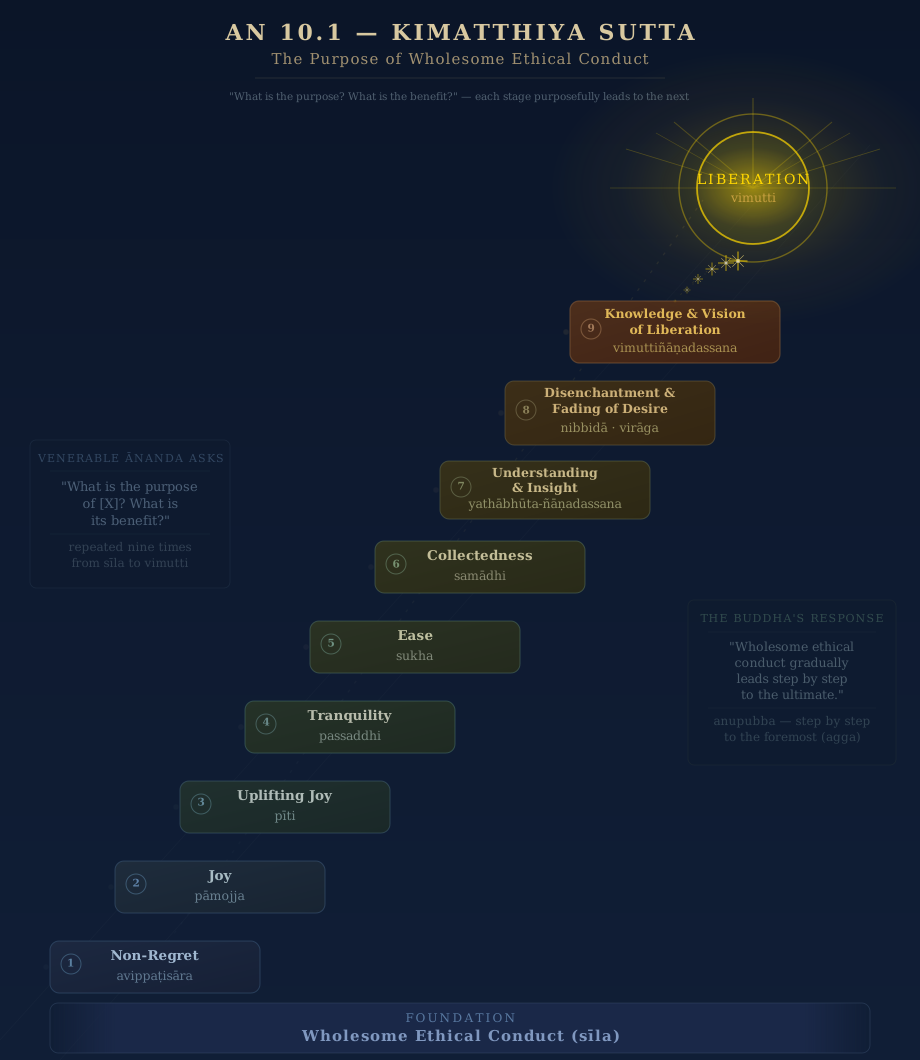
Evaṁ me sutaṁ— ekaṁ samayaṁ bhagavā sāvatthiyaṁ viharati jetavane anāthapiṇḍikassa ārāme. Atha kho āyasmā ānando yena bhagavā tenupasaṅkami; upasaṅkamitvā bhagavantaṁ abhivādetvā ekamantaṁ nisīdi. Ekamantaṁ nisinno kho āyasmā ānando bhagavantaṁ etadavoca:
Thus have I heard—At one time, the Blessed One was dwelling at Sāvatthi, in Jeta’s Grove, Anāthapiṇḍika’s Park. Then, venerable Ānanda approached the Blessed One; having approached, he paid homage to the Blessed One and sat down to one side. Seated to one side, venerable Ānanda said to the Blessed One:
“Kimatthiyāni, bhante, kusalāni sīlāni kimānisaṁsānī”ti?
1.) “Venerable sir, what is the purpose of |wholesome::healthy, beneficial, useful [kusala]| |ethical conduct::virtue, moral integrity [sīla]|? What is its benefit?”
“Avippaṭisāratthāni kho, ānanda, kusalāni sīlāni avippaṭisārānisaṁsānī”ti.
“The purpose of wholesome ethical conduct, Ānanda, is |non-regret::not experiencing remorse [avippaṭisāra]|; its benefit is non-regret.”
“Avippaṭisāro pana, bhante, kimatthiyo kimānisaṁso”ti?
2.) “Venerable sir, what is the purpose of non-regret? What is its benefit?”
“Avippaṭisāro kho, ānanda, pāmojjattho pāmojjānisaṁso”ti.
“The purpose of non-regret, Ānanda, is |joy::cheerfulness, gladness; a fresh and mild happiness arising from a sense of spiritual well-being and a clear conscience [pāmojja]|; its benefit is joy.”
“Pāmojjaṁ pana, bhante, kimatthiyaṁ kimānisaṁsan”ti?
3.) “Venerable sir, what is the purpose of joy? What is its benefit?”
“Pāmojjaṁ kho, ānanda, pītatthaṁ pītānisaṁsan”ti.
“The purpose of joy, Ānanda, is |uplifting joy::mental exhilaration; it ranges from a gentle delight to overwhelming rapture [pīti]|; its benefit is uplifting joy.”
“Pīti pana, bhante, kimatthiyā kimānisaṁsā”ti?
4.) “Venerable sir, what is the purpose of uplifting joy? What is its benefit?”
“Pīti kho, ānanda, passaddhatthā passaddhānisaṁsā”ti.
“The purpose of uplifting joy, Ānanda, is |tranquility::peace, serenity, stillness [passaddhi]|; its benefit is tranquility.”
“Passaddhi pana, bhante, kimatthiyā kimānisaṁsā”ti?
5.) “Venerable sir, what is the purpose of tranquility? What is its benefit?”
“Passaddhi kho, ānanda, sukhatthā sukhānisaṁsā”ti.
“The purpose of tranquility, Ānanda, is |ease::contentment, happiness, pleasant abiding [sukha]|; its benefit is ease.”
“Sukhaṁ pana, bhante, kimatthiyaṁ kimānisaṁsan”ti?
6.) “Venerable sir, what is the purpose of ease? What is its benefit?”
“Sukhaṁ kho, ānanda, samādhatthaṁ samādhānisaṁsan”ti.
“The purpose of ease, Ānanda, is |collectedness::stability of mind, stillness of mind, mental composure, concentration [samādhi]|; its benefit is collectedness.”
“Samādhi pana, bhante, kimatthiyo kimānisaṁso”ti?
7.) “Venerable sir, what is the purpose of collectedness? What is its benefit?”
“Samādhi kho, ānanda, yathābhūtañāṇadassanattho yathābhūtañāṇadassanānisaṁso”ti.
“The purpose of collectedness, Ānanda, is |understanding and insight into things as they truly are::knowing and seeing reality [yathābhūtañāṇadassana]|; its benefit is understanding and insight into things as they truly are.”
“Yathābhūtañāṇadassanaṁ pana, bhante, kimatthiyaṁ kimānisaṁsan”ti?
8.) “Venerable sir, what is the purpose of understanding and insight into things as they truly are? What is its benefit?”
“Yathābhūtañāṇadassanaṁ kho, ānanda, nibbidāvirāgatthaṁ nibbidāvirāgānisaṁsan”ti.
“The purpose of understanding and insight into things as they truly are, Ānanda, is |disenchantment::de-illusionment, disinterest, dispassion [nibbidā]| and fading of desire; its benefit is disenchantment and fading of desire.”
“Nibbidāvirāgo pana, bhante, kimatthiyo kimānisaṁso”ti?
9.) “Venerable sir, what is the purpose of disenchantment and fading of desire? What is its benefit?”
“Nibbidāvirāgo kho, ānanda, vimuttiñāṇadassanattho vimuttiñāṇadassanānisaṁso.
“The purpose of disenchantment and fading of desire, Ānanda, is |knowledge and vision of liberation::understanding and realization of liberation, total understanding of emancipation [vimuttiñāṇadassana]|; its benefit is understanding and insight into liberation.
Iti kho, ānanda, kusalāni sīlāni avippaṭisāratthāni avippaṭisārānisaṁsāni; avippaṭisāro pāmojjattho pāmojjānisaṁso; pāmojjaṁ pītatthaṁ pītānisaṁsaṁ; pīti passaddhatthā passaddhānisaṁsā; passaddhi sukhatthā sukhānisaṁsā; sukhaṁ samādhatthaṁ samādhānisaṁsaṁ; samādhi yathābhūtañāṇadassanattho yathābhūtañāṇadassanānisaṁso; yathābhūtañāṇadassanaṁ nibbidāvirāgatthaṁ nibbidāvirāgānisaṁsaṁ; nibbidāvirāgo vimuttiñāṇadassanattho vimuttiñāṇadassanānisaṁso. Iti kho, ānanda, kusalāni sīlāni anupubbena aggāya parentī”ti.
Thus, Ānanda, wholesome ethical conduct has non-regret as its purpose and benefit. Non-regret has joy as its purpose and benefit. Joy has uplifting joy as its purpose and benefit. Joyful pleasure has tranquility as its purpose and benefit. Tranquility has ease as its purpose and benefit. Ease has collectedness as its purpose and benefit. Collectedness has understanding and insight into things as they truly are as its purpose and benefit. Understanding and insight into things as they truly are has disenchantment and fading of desire as its purpose and benefit. Disenchantment and fading of desire has understanding and insight into liberation as its purpose and benefit. Thus, Ānanda, wholesome ethical conduct gradually leads step by step to the |ultimate::foremost, chief [agga]|.”